
The manufacture of plastic gears via injection molding is a cornerstone of modern precision engineering, offering significant advantages in noise reduction, weight savings, and cost-effective production for low to medium power transmissions. Among these, helical gears are particularly valued for their smooth, quiet operation due to the gradual engagement of their teeth. However, this very feature—the helical tooth flank—presents a unique and significant challenge in the mold design phase: demolding. Unlike spur gears, whose tooth flanks are parallel to the mold opening direction, the teeth of helical gears are inclined at a specific helix angle. Attempting to eject such a part with a straight-pull motion would cause severe interference, gouging the plastic part or preventing ejection entirely. Therefore, a successful demolding strategy must incorporate a rotational component synchronized with the axial ejection stroke. Over years of practice, I have developed and refined several effective mechanisms to solve this puzzle, all centered on integrating bearing technology to facilitate controlled rotation.
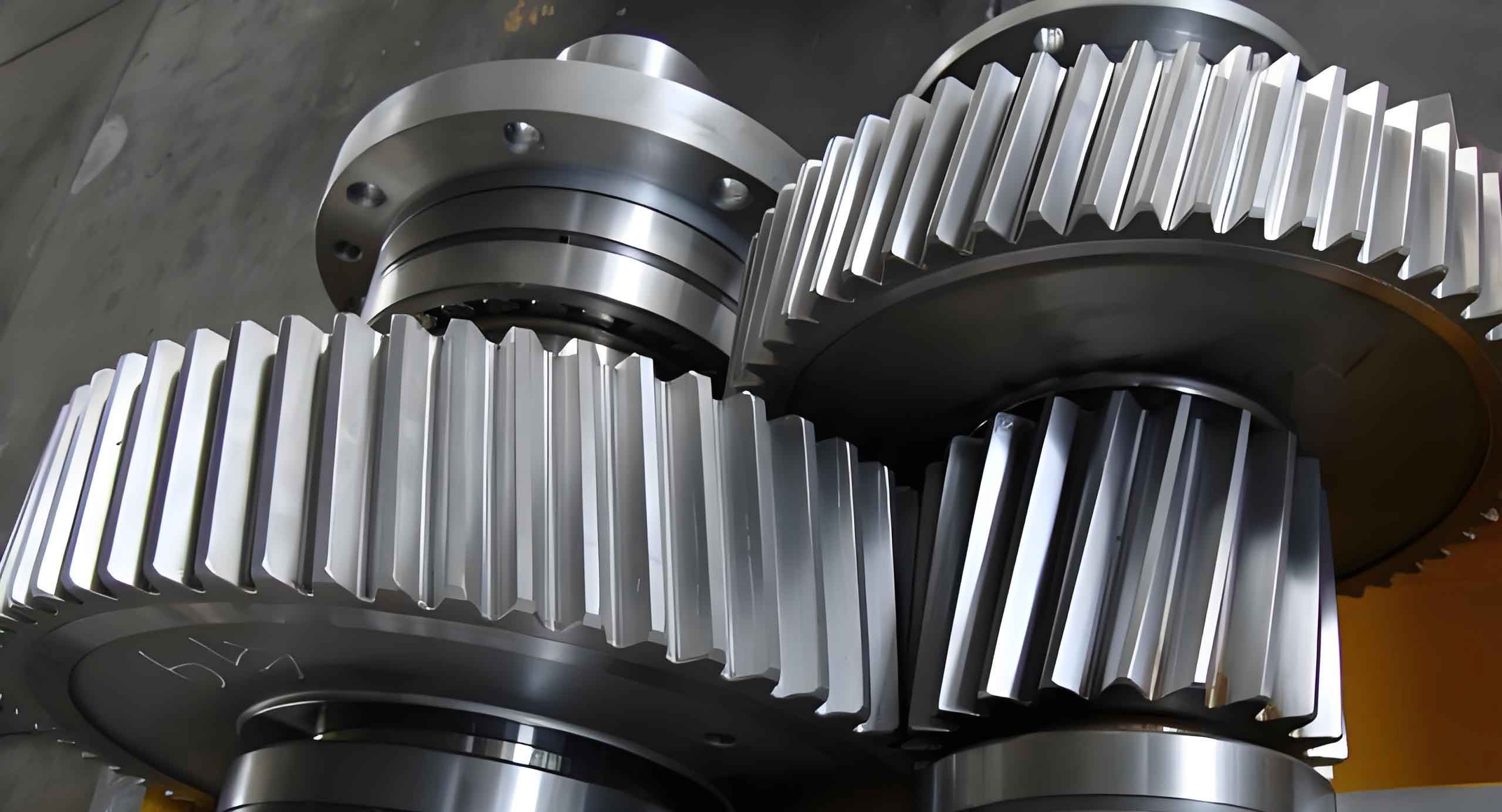
The core challenge stems from the geometry of the helical gear itself. The tooth flank is a three-dimensional, spiral involute surface. The lead of this spiral, defined by the helix angle β, creates an undercut relative to the primary mold opening axis. The fundamental demolding requirement can be expressed by a simple kinematic condition: for a gear with helix angle β and requiring an axial ejection travel `E`, the corresponding rotational displacement `θ` (in radians) must satisfy their geometric relationship. For a helical gear with pitch diameter `d_p`, the relationship between axial travel and rotation is given by:
$$ E = \theta \cdot \frac{d_p}{2} \cdot \tan(\beta) $$
Or conversely, the required rotation is:
$$ \theta = \frac{2E}{d_p \cdot \tan(\beta)} $$
This equation clearly shows that the required rotation is directly proportional to the ejection stroke and inversely proportional to the pitch diameter and the tangent of the helix angle. Successfully implementing this compound motion within the confines of a mold is the essence of the design. Based on where the rotational motion is imposed, the solutions fundamentally fall into two distinct categories, each with its own set of design rules and applications.
Category 1: Rotating Cavity, Stationary Part
This approach is elegantly simple in concept. The molded helical gear remains fixed relative to the machine’s ejection system (it does not spin), while the cavity insert that formed its teeth is allowed to rotate during ejection. This method is ideal when the plastic part has features that are positively locked against rotation on the moving side of the mold, such as splines, keyways, or being overmolded onto a non-round metal insert.
Mechanism and Execution: The heart of this design is a precision-machined cavity insert that houses the negative form of the helical gear teeth. This insert is not rigidly fixed. Instead, it is mounted inside a bearing, typically a single-row angular contact ball bearing, which is itself pressed into a stationary holder in the mold’s moving half. The bearing allows the insert to rotate freely but constrains its axial and radial movement. During ejection, standard ejector pins push directly on the non-toothed sections of the part (e.g., a hub or back face). As the part moves axially, the helical teeth, still engaged with the cavity, generate a torque. Since the part itself cannot rotate due to its anti-rotation features, this torque forces the cavity insert to rotate within its bearing. The insert spins, unscrewing itself from the plastic part, until the gear is completely free.
Critical Design Details:
- Cavity Insert: Must be a separate, hardened (e.g., H13 steel, hardened to 42-46 HRC) component. This allows for precise machining of the complex helical profile via wire EDM and simplifies replacement. Its external cylindrical mounting surface must be machined to a high-quality finish with a tight tolerance to fit the bearing’s inner race.
- Bearing Selection: Angular contact ball bearings are preferred because they can handle combined radial and axial loads generated during the unscrewing action. The bearing size is selected based on the expected torsional and axial ejection forces. The bore must match the insert’s O.D., and the O.D. must match the bore of the holder plate.
- Fits and Tolerances: Proper interference/slip fits are crucial. The cavity insert should have a `k6` fit with the bearing’s inner race to ensure a firm, non-slipping connection. The bearing’s outer race should have a light `M5` fit or a transition fit in the holder to prevent creep while allowing for proper installation without deforming the bearing.
- Assembly: The sub-assembly of the cavity insert and bearing should be pre-assembled and checked for smooth rotation before final mold assembly. Care must be taken not to over-preload the bearing when clamping the mold plates together.
Advantages and Limitations: The primary advantage is that it provides positive control over the part; the gear’s orientation and position are predictable. It also allows for other core pins or features to be present in the moving half without interference, as the part does not spin. The main limitation is spatial. The bearing assembly, especially for larger gears, consumes significant mold plate real estate, often limiting the design to a single-cavity layout. Furthermore, the presence of any undercut features on the moving side that would prevent the part from being simply pushed axially rules out this method.
Category 2: Rotating Part, Stationary Cavity
When the helical gear is a standalone component without rotation-locking features on its ejection side, or when multiple cavities are needed, the alternative is to let the part itself rotate. In this scheme, the cavity is fixed, and a specialized rotating ejector component imparts both the axial and rotational motion directly to the plastic gear. I have employed two principal designs within this category.
2.1 The Helical-Grooved Ejector Pin
This is a highly effective and mechanically deterministic solution. A custom ejector pin is machined with a helical groove on its body. A fixed pin (dowel) is installed in the support plate, engaging this groove. The rotating pin is mounted to the ejector plate via a bearing.
Mechanism and Execution: As the injection machine’s ejector rod pushes the ejector plate forward, the grooved pin is forced to advance. However, the fixed dowel pin, sitting in the helical groove, constrains its motion. The geometry of the groove converts the linear motion of the ejector plate into a compound linear-plus-rotary motion of the ejector pin. The pin’s tip, which contacts the plastic part, therefore pushes the helical gear out while simultaneously causing it to rotate, “unscrewing” it from the stationary cavity. The bearing (again, often an angular contact type) at the ejector plate connection manages the reactive forces and ensures smooth rotation.
Design Equations and Parameters: The groove on the pin is the key. Its helix angle and handedness (right-hand or left-hand) must precisely match that of the plastic helical gear. If `β_g` is the helix angle of the gear and `β_p` is the lead angle of the groove on the pin, for perfect kinematic transfer, we require `β_g = β_p`. The lead `L_p` of the pin’s groove, which is the axial distance for one full revolution, dictates the ejection stroke per rotation. The required ejection stroke `E` and the resulting number of pin rotations `N` are related by:
$$ E = N \cdot L_p $$
$$ \text{and} \quad L_p = \pi \cdot d_{pin\_groove} \cdot \tan(β_p) $$
Where `d_{pin\_groove}` is the mean diameter of the pin where the groove is machined. The groove must be long enough to accommodate the full ejection stroke without the fixed dowel disengaging.
2.2 The Rotating Ejector Sleeve (or “Push Tube”)
This design is exceptionally useful for thin-walled or small helical gears, particularly those with a through-hole and a back-side feature that can transmit torque. A tubular ejector rotates and moves axially over a fixed core pin to push the gear out.
Mechanism and Execution: The stationary core pin forms the gear’s inner diameter. A sleeve, or push tube, fits over this core pin. The front face of this sleeve is machined to match the non-helical back features of the gear (e.g., ribs, a patterned surface). The rear of the sleeve is mounted to the ejector plate via a thrust bearing arrangement, allowing it to rotate freely. During ejection, the sleeve is pushed forward. Its contact with the plastic part’s back face provides the axial force. The helical tooth form, stuck in the fixed cavity, generates a rotational force on the part. This rotation is transmitted to the ejector sleeve via the interlocking back-face features, causing the entire sleeve to rotate on its bearings as it advances, thereby demolding the gear.
Critical Design Details: The interface between the sleeve and the part must be designed to reliably transmit torque without slipping, often using a splined or ribbed pattern. The sleeve must be guided precisely along the fixed core pin, requiring a close sliding fit (`H7/f6` for example). The bearing arrangement typically involves one or two thrust ball bearings to handle the axial load of ejection while permitting free rotation. Radial location may be provided by a simple bushing or a deep-groove ball bearing.
The following table summarizes the key aspects of bearing integration across these different mechanisms:
| Demolding Mechanism | Primary Bearing Type | Key Function | Critical Design Parameters |
|---|---|---|---|
| Rotating Cavity | Angular Contact Ball Bearing | Allows cavity rotation under combined axial/radial load from part unscrewing. | Bore fit to cavity (k6), O.D. fit in plate (M5), bearing preload/clearance. |
| Helical-Grooved Pin | Angular Contact Ball Bearing | Allows pin rotation relative to ejector plate; reacts against axial force and groove-induced torque. | Mounting on ejector pin shank, alignment with fixed guide dowel. |
| Rotating Ejector Sleeve | Thrust Ball Bearing (paired with radial guide) | Supports high axial ejection load while allowing sleeve to rotate freely. | Bearing stack height (critical for preload), sleeve concentricity with core pin. |
Practical Application Scenarios and Decision Framework
Choosing the correct demolding strategy for a specific helical gear component requires a systematic evaluation of the part’s geometry and production requirements. Let’s consider the governing factors through a decision matrix.
Factor 1: Part Features on the Ejection Side. This is the most decisive factor. If the part has a keyed shaft, insert, or any feature that physically prevents it from rotating relative to the ejector system, then the Rotating Cavity method is logically enforced. The part is locked, so the cavity must move. Conversely, if the back side of the gear is free or has features suitable for driving rotation (like ribs or a patterned surface), then a Rotating Part method is viable.
Factor 2: Gear Size and Mold Cavitation. Bearing assemblies, especially for rotating cavities, are large. For a helical gear with a 100mm pitch diameter, the required bearing and housing can easily occupy a 150mm diameter circle in the mold plate. This often makes multi-cavity molds impractical or excessively large. Rotating part mechanisms, like the grooved pin, can be more compact in the mold footprint, allowing for family molds or multiple cavities. The rotating sleeve is very compact and excellent for small, high-volume helical gears.
Factor 3: Helix Angle and Accuracy Requirements. Very high helix angles (e.g., >30°) generate significant torsional forces during demolding. The rotating cavity method directly subjects the bearing to this torque. The grooved-pin method transforms this torque into a side load on the guide dowel. Both must be designed accordingly. For ultra-high precision helical gears, the rotating cavity method can offer advantages because the gear itself is not subjected to potential scoring or misalignment from a rotating ejector contact point; it is simply pushed out straight.
Factor 4: Mold Complexity and Maintenance. The rotating cavity design isolates the complex motion to a single, replaceable sub-assembly (cavity insert + bearing). Maintenance involves replacing this cartridge. The grooved pin is a sophisticated, high-wear component; if damaged, its replacement requires precise alignment with the fixed guide dowel. The rotating sleeve design involves close-fitting parts (sleeve and core pin) that can wear and affect concentricity.
The following table provides a guideline for selecting the appropriate demolding mechanism:
| Part Characteristics | Recommended Mechanism | Rationale |
|---|---|---|
| Gear is overmolded on a splined/keyed metal insert. | Rotating Cavity | Part cannot rotate; cavity must provide the rotational motion. |
| Single, large-diameter helical gear with high precision requirement. | Rotating Cavity | Good concentricity control; isolates part from complex ejector motion. |
| Multiple small helical gears in a multi-cavity mold. | Helical-Grooved Pins or Rotating Sleeves | More compact design allows for closer cavity spacing. |
| Helical gear with a through-hole and a patterned back face. | Rotating Ejector Sleeve | Utilizes part geometry to drive rotation; compact and efficient. |
| High helix angle, standalone gear with no back-side driving features. | Helical-Grooved Pin | Provides positive, mechanically defined rotation directly to the part. |
Fundamental Calculations for Demolding Helical Gears
Beyond the conceptual design, successful implementation requires precise calculation. Let’s consolidate the key formulas governing the demolding of helical gears.
1. Basic Helical Gear Geometry (for context):
The transverse pitch `p_t` is related to the normal pitch `p_n` (which is based on the standard normal module `m_n`) by the helix angle β:
$$ p_t = \frac{p_n}{\cos(\beta)} = \frac{\pi m_n}{\cos(\beta)} $$
The pitch diameter `d_p` is:
$$ d_p = \frac{z \cdot m_n}{\cos(\beta)} $$
where `z` is the number of teeth. This `d_p` is a critical parameter in demolding calculations.
2. Required Rotational Displacement (θ):
As established, for a clean demolding stroke `E`, the gear or cavity must rotate by an angle θ:
$$ θ = \frac{2E}{d_p \cdot \tan(\beta)} \quad \text{(in radians)} $$
To express this in degrees or number of turns, we convert:
$$ θ_{\text{degrees}} = θ \cdot \frac{180}{\pi} $$
$$ \text{Number of Turns, } N = \frac{θ}{2\pi} $$
3. Ejection Force with Rotation:
The total required ejection force `F_e` must overcome both friction and the component of force needed to generate rotation against the helical interference. A simplified model to estimate this includes:
– `F_friction`: The friction force from shrinkage on cores and lands.
– `F_helix`: The force to overcome the geometric locking of the helix.
`F_helix` can be approximated by considering the torque `T` needed to rotate the part/cavity against the friction on the tooth flanks and dividing by the effective moment arm (`d_p/2`). In practice, this is often estimated empirically or via complex FEA, but a conservative approach is to significantly increase the ejection force capacity calculated for a similar spur gear. A rule-of-thumb multiplier between 1.5 and 3.0 is common, depending on β, surface finish, and material.
4. Lead of a Helical-Grooved Pin (L_p):
For a grooved pin with a mean groove diameter `d_m`, machined with a groove angle `β_p` (equal to the gear’s helix angle β), the lead is:
$$ L_p = \pi \cdot d_m \cdot \tan(\beta_p) $$
The pin must be long enough so that the axial ejection stroke `E` is completed before the guide dowel reaches the end of the groove. Therefore, the groove’s axial length `L_g` must satisfy:
$$ L_g \ge E + \text{(safety margin)} $$
Conclusion
Designing an effective demolding system for injection-molded helical gears is a demanding yet solvable engineering challenge. The interference created by the helix angle mandates a compound ejection path—a combination of linear and rotary motion. The two principal philosophies, Rotating Cavity and Rotating Part, along with their sub-variants like the helical-grooved pin and rotating sleeve, provide a versatile toolkit for the mold designer. The choice hinges on a detailed analysis of the part’s geometry, required precision, production volume, and mold size constraints. In all successful implementations, the strategic use of precision bearings—angular contact for combined loads, thrust for axial loads—is the enabling technology that manages the forces and ensures smooth, reliable motion. By applying the principles and calculations outlined here, one can systematically develop robust mold designs that unlock the full potential of plastic helical gears for high-performance, quiet transmission systems. The key is to respect the geometry of the helix, provide a kinematically correct path for its release, and support that motion with appropriately selected and fitted mechanical components.