
Helical gears are fundamental components in mechanical power transmission systems, renowned for their high load-bearing capacity, smooth and quiet operation, and high transmission efficiency. Their unique geometry, with teeth cut at an angle to the gear axis, allows for gradual engagement and multiple tooth contact, which distributes load more effectively than spur gears. These advantages make helical gears ubiquitous in demanding applications across industries such as automotive, aerospace, marine, and industrial machinery. However, like all mechanical elements, helical gears are susceptible to failure under cyclic loading. Understanding the complex interplay of forces, stresses, and material behavior throughout the meshing cycle is crucial for reliable design and longevity. This study undertakes a comprehensive investigation into the mechanical performance and fatigue life prediction of helical gear pairs, integrating analytical calculations, advanced finite element analysis (FEA), and fatigue theory.
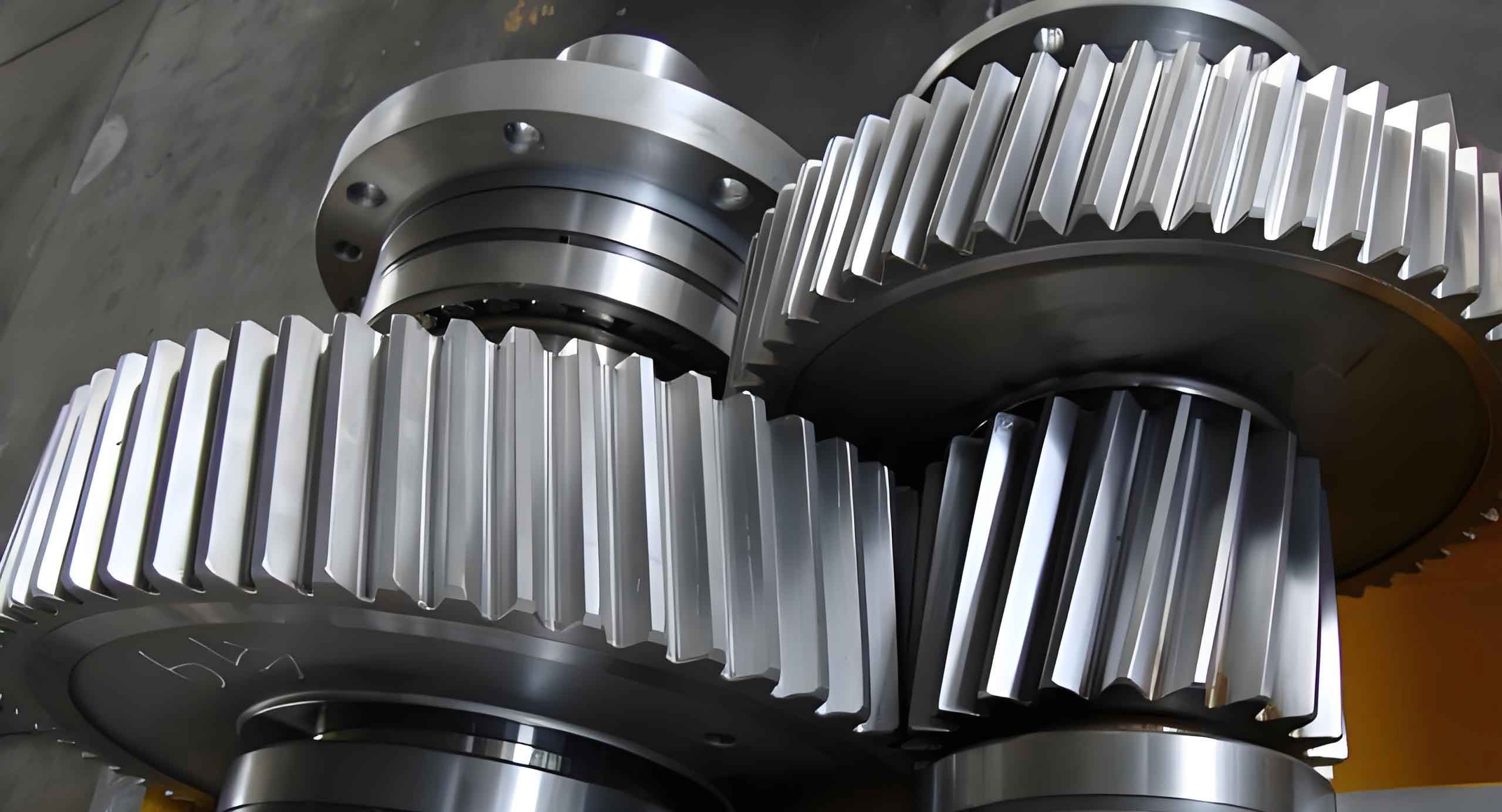
The primary failure modes for helical gears are tooth bending fatigue (leading to root fracture) and contact fatigue (leading to pitting and spalling on the tooth flank). These failures are directly linked to the fluctuating stresses experienced during the meshing process. The actual meshing condition of helical gears is complex, involving time-varying mesh stiffness, alternating single- and double-tooth contact zones, manufacturing errors, and dynamic effects from meshing impacts. Traditional design methods often rely on empirical factors and static strength calculations with high safety factors, which can lead to over- or under-design. This analysis leverages modern computational tools to simulate the true dynamic behavior of helical gears, providing deeper insight into stress evolution and enabling a physics-based approach to fatigue life prediction.
1. Parametric 3D Modeling of Helical Gears
Accurate geometric modeling is the cornerstone of any subsequent mechanical analysis. For helical gears, this requires a precise mathematical definition of the tooth profile, primarily the involute curve and the fillet (root transition) curve.
1.1 Mathematical Foundation of Tooth Geometry
The involute curve is generated by tracing a point on a taut string as it unwinds from a base circle. For a helical gear, this profile is defined in the normal plane. The parametric equations for an involute curve in Cartesian coordinates are:
$$
\begin{aligned}
x &= r_b (\sin(\theta) – \theta \cos(\theta)) \\
y &= r_b (\cos(\theta) + \theta \sin(\theta))
\end{aligned}
$$
where $r_b$ is the base circle radius and $\theta$ is the involute roll angle. The transition from the involute to the root circle is typically generated by the tip of the cutting tool (e.g., a hob or rack cutter). The fillet curve can be modeled as a trochoid, and its equation when using a rack cutter is given by:
$$
\begin{aligned}
x_f &= (r_p + \rho_a) \sin(\phi) – \rho_a \cos(\alpha_n – \phi) \\
y_f &= (r_p + \rho_a) \cos(\phi) + \rho_a \sin(\alpha_n – \phi)
\end{aligned}
$$
where $r_p$ is the pitch radius, $\rho_a$ is the cutter tip radius, $\alpha_n$ is the normal pressure angle, and $\phi$ is the angular parameter.
1.2 Parametric Modeling Workflow
This study employs a parametric modeling approach using CAD software (exemplified by UG/NX). The process is driven by relational expressions that define all geometric features based on fundamental design parameters. This ensures model accuracy and allows for easy design iterations. The key parameters for a helical gear are listed below:
| Parameter | Symbol | Description |
|---|---|---|
| Number of Teeth | $z$ | Defines gear size and ratio. |
| Normal Module | $m_n$ | Standardized size factor in the plane normal to the tooth. |
| Normal Pressure Angle | $\alpha_n$ | Angle between tooth profile and radial line at the pitch point in the normal plane. |
| Helix Angle | $\beta$ | Angle of tooth inclination relative to the gear axis. |
| Face Width | $b$ | Axial length of the gear teeth. |
The modeling workflow proceeds as follows: First, the key geometric relationships (e.g., pitch diameter $d = m_n z / \cos\beta$, base diameter $d_b = d \cos\alpha_t$, where $\alpha_t$ is the transverse pressure angle) are defined as expressions. These expressions, along with the involute and fillet equations, are input into the CAD system. Next, the basic circles (base, pitch, tip, root) are sketched. The involute and fillet curves are then constructed based on the equations and trimmed to form a single tooth profile in the transverse plane. This 2D profile is extruded along a helical path defined by the helix angle and face width to create the 3D helical tooth. Finally, the tooth is patterned circumferentially, and features like the bore, keyway, and chamfers are added to complete the solid model of the helical gear.
2. Load Distribution and Analytical Stress Calculation
The contact pattern and load sharing between mating helical gear teeth are dynamic. The total length of contact, governed by the contact ratio, is typically greater than the base pitch, leading to periods of both single-tooth-pair and double-tooth-pair contact within one mesh cycle.
2.1 Load Sharing Model
Figure 2 illustrates a typical load distribution along the path of contact (from start to end of active engagement, points A to D). Segments AB and CD are double-tooth-pair contact zones, while segment BC is a single-tooth-pair contact zone.
- At point A (entry), the new tooth pair shares the load, carrying approximately 40% of the total transmitted load.
- At point B (transition from double to single contact), the load on the leading tooth pair ramps up to 100%.
- Throughout the single-pair zone BC, one tooth pair carries the full load.
- At point C (transition from single to double contact), a new tooth pair enters contact, and the load on the first pair drops to 60%, then to 40% at point D.
This cyclic loading subjects the teeth to four significant load transitions (impacts) per mesh cycle, with the most severe stress occurring at the boundaries of the single-pair contact zone (points B and C). The total transmitted tangential force $F_t$ is calculated from the input power $P$ and rotational speed $n$: $F_t = \frac{2000 P}{\omega d_1} = \frac{19098 P}{n d_1}$ N, where $d_1$ is the pitch diameter of the pinion in mm, $P$ is in kW, and $n$ is in rpm.
2.2 Analytical Stress Formulas
The critical stresses for helical gear design are the contact (Hertzian) stress at the tooth flank and the bending stress at the tooth root. Standardized formulas account for geometry, load, and specific correction factors.
Contact Stress ($\sigma_H$): The maximum contact stress for helical gears is calculated using a refined version of the Hertzian contact formula, as standardized by organizations like AGMA and ISO.
$$
\sigma_H = Z_E Z_H Z_\epsilon Z_\beta \sqrt{\frac{F_t}{b d_1} \cdot \frac{u+1}{u} \cdot K_A K_V K_{H\beta} K_{H\alpha}}
$$
where:
$Z_E$ = Elasticity factor (material property),
$Z_H$ = Zone factor (accounts for tooth geometry at pitch point),
$Z_\epsilon$ = Contact ratio factor,
$Z_\beta$ = Helix angle factor,
$F_t$ = Tangential force,
$b$ = Face width,
$d_1$ = Pinion pitch diameter,
$u$ = Gear ratio ($z_2/z_1$),
$K_A$ = Application factor,
$K_V$ = Dynamic factor,
$K_{H\beta}$ = Face load distribution factor,
$K_{H\alpha}$ = Transverse load distribution factor.
Bending Stress ($\sigma_F$): The nominal bending stress at the tooth root is calculated using the Lewis formula with comprehensive correction factors.
$$
\sigma_F = \frac{F_t}{b m_n} Y_F Y_S Y_\epsilon Y_\beta K_A K_V K_{F\beta} K_{F\alpha}
$$
where:
$m_n$ = Normal module,
$Y_F$ = Tooth form factor (stress concentration),
$Y_S$ = Stress correction factor,
$Y_\epsilon$ = Contact ratio factor for bending,
$Y_\beta$ = Helix angle factor for bending,
$K_{F\beta}$ = Face load distribution factor for bending,
$K_{F\alpha}$ = Transverse load distribution factor for bending.
2.3 Case Study: Stress Variation Over a Mesh Cycle
For a concrete analysis, a helical gear pair with the following specifications and material properties is considered. The gears transmit $P = 7500$ kW at a pinion speed of $n = 1500$ rpm.
| Category | Parameter | Pinion | Gear |
|---|---|---|---|
| Geometry | Number of Teeth, $z$ | 24 | 46 |
| Normal Module, $m_n$ (mm) | 10 | ||
| Normal Pressure Angle, $\alpha_n$ | 20° | ||
| Helix Angle, $\beta$ | 45° | ||
| Face Width, $b$ (mm) | 150 | ||
| Material (20CrMnMo) | Young’s Modulus, $E$ (GPa) | 206 | |
| Poisson’s Ratio, $\nu$ | 0.3 | ||
| Density, $\rho$ (kg/m³) | 7900 | ||
| Tensile Strength, $\sigma_u$ (MPa) | 1180 | ||
| Contact Fatigue Limit, $\sigma_{Hlim}$ (MPa) | 1572 | ||
By calculating the contact and bending stresses at multiple discrete points along the path of contact using the formulas above (e.g., via MATLAB programming), the stress variation patterns are obtained. The contact stress follows the load-sharing pattern closely: it is lower in the double-pair zones (AB, CD) and peaks in the single-pair zone (BC), reaching a maximum of approximately 815 MPa at the point just after entering single-pair contact. This location is the critical point for contact fatigue (pitting). Conversely, the bending stress distribution shows a different characteristic. The maximum root bending stress, around 800 MPa, occurs not at the point of single-pair load peak, but at the position where the tooth is loaded at its tip (near point C), which creates the largest bending moment at the root. This point is the critical location for bending fatigue failure.
3. Finite Element Analysis (FEA) of Helical Gear Meshing
While analytical formulas provide valuable insights, they rely on simplifying assumptions about load distribution and stress concentration. Nonlinear finite element analysis offers a more realistic simulation of the contact mechanics between mating helical gears, capturing effects like localized deformation, precise load sharing, and true stress gradients.
3.1 FEA Methodology and Contact Modeling
This analysis employs an explicit dynamics solver (e.g., ANSYS LS-DYNA) suitable for large deformation and complex contact problems inherent in gear meshing. The process begins with importing the parametrically generated 3D CAD models of the pinion and gear. A high-quality hexahedral mesh is generated, with significant refinement in the contact regions on the tooth flanks and at the tooth roots to ensure stress accuracy. The material model is linear elastic, defined by Young’s modulus and Poisson’s ratio for 20CrMnMo steel.
The core of the simulation is defining the surface-to-surface contact between the gear teeth. An augmented Lagrange contact algorithm is preferred as it robustly enforces the “no-penetration” constraint. Contact pairs are established, with the active tooth flanks defined as contact and target surfaces. Key contact parameters include defining a contact stiffness factor and a damping coefficient. Boundary conditions are applied: the pinion shaft hole is fixed in all degrees of freedom except rotation about its axis, and the gear shaft hole is fixed only in radial and axial directions, allowing rotation. The input torque ($T = 9549 P / n$ Nm) is applied to the pinion as a forced rotational velocity, while a constant resistive torque is applied to the gear. The simulation runs for several mesh cycles to capture steady-state dynamic behavior.
3.2 FEA Results and Validation
The FEA yields detailed contour plots of stress, deformation, and contact pressure at every time step. By extracting data at key positions corresponding to the analytical study, a direct comparison can be made. The FEA-predicted contact stress history over one mesh cycle shows excellent qualitative agreement with the analytical load-sharing model. Quantitatively, the FEA results are slightly lower in the double-contact zones but match closely in the single-contact zone. More importantly, FEA reveals stress concentrations at the very beginning of contact (point A) due to the edge effect, which is not captured by standard analytical formulas. For bending stress, the FEA results also follow the general trend predicted by theory, successfully identifying the critical root fillet region. The maximum bending stress value from FEA is in good agreement with the analytical calculation, validating the model setup. This comparison confirms the FEA method’s correctness and its ability to provide a more nuanced view of stress states in helical gears.
| Metric | Theoretical Calc. Max. | FEA Predicted Max. | Comparison Note |
|---|---|---|---|
| Contact Stress, $\sigma_H$ | 815 MPa | ~800 MPa | Good agreement; FEA shows edge stress concentration at entry. |
| Bending Stress, $\sigma_F$ | 800 MPa | ~780 MPa | Good agreement; FEA precisely locates max stress in root fillet. |
3.3 Impact of Micro-Geometry Modifications (Tip Relief)
A significant advantage of FEA is evaluating design modifications. A common practice to reduce meshing impact and noise is to apply tip relief—a slight removal of material from the tip of the tooth. The FEA model can be modified to include this relief. Results show that introducing an optimized tip relief profile dramatically smoothens the load transition from double to single tooth contact. The sharp stress peak at the beginning of single-pair contact is substantially reduced. In the analyzed case, the maximum contact stress dropped from 815 MPa to approximately 284 MPa—an improvement of about 65%. This clearly demonstrates how micro-geometry optimization, guided by FEA, can effectively lower stress concentrations, reduce dynamic loads, and significantly extend the fatigue life of helical gears.
4. Fatigue Life Prediction for Helical Gears
Fatigue failure is a progressive, cumulative process. Predicting the life of helical gears requires combining the stress history obtained from dynamics/FEA with material fatigue properties and a damage accumulation rule.
4.1 Fatigue Life Calculation Framework
The overall process follows the flowchart in Figure 1. After determining the dynamic stress history (the “load spectrum”) for the critical locations on the helical gear teeth, fatigue analysis is performed. This study employs the stress-life (S-N) approach, suitable for high-cycle fatigue (HCF) where stresses are primarily elastic. The linear cumulative damage rule (Palmgren-Miner rule) is used to account for variable amplitude loading.
1. S-N Curve of the Material: The foundation is the material’s S-N curve, which relates the alternating stress amplitude $S_a$ to the number of cycles to failure $N$. For many steels, the finite-life region is a straight line on a log-log plot:
$$ S_a^m \cdot N = C \quad \text{or} \quad \log N = \log C – m \log S_a $$
where $m$ is the slope exponent and $C$ is a material constant. For 20CrMnMo carburized steel, typical values are $m \approx 15.29$ and $C \approx 3.68 \times 10^{56}$ for bending, derived from standardized data. The endurance limit $\sigma_{Hlim}$ for contact fatigue is also a key input.
2. Load Spectrum (Stress History): The stress-time data for the critical point (e.g., contact stress at the pitch line, bending stress at the root) over one mesh cycle is extracted from the dynamic analysis. This cycle repeats every rotation. The spectrum is rainflow-counted to identify the number and amplitude of individual stress cycles within the operational history.
3. Miner’s Cumulative Damage Rule: The rule states that failure occurs when the sum of the cycle fractions equals 1:
$$ D = \sum_{i=1}^{k} \frac{n_i}{N_i} = 1 $$
where $n_i$ is the number of cycles endured at a specific stress level $S_{a,i}$, and $N_i$ is the number of cycles to failure at that same stress level, read from the S-N curve. The total life in cycles is then the inverse of the damage per cycle multiplied by the number of cycles per operational block.
4.2 Life Prediction for the Case Study Helical Gears
Applying this framework to the analyzed helical gear pair:
- Critical Location: The contact fatigue critical location is on the flank where $\sigma_{H,max} \approx 815$ MPa occurs once per mesh cycle. The bending fatigue critical location is at the root fillet where $\sigma_{F,max} \approx 800$ MPa occurs once per mesh cycle.
- S-N Data: Using the material properties from Table 1 and assuming a reliability of 99%, the corrected bending endurance limit leads to an S-N curve. The “knee” of the curve, representing the infinite life limit, is at $N_0 = 5 \times 10^7$ cycles for a stress of $\sigma_{Hlim} = 1572$ MPa for contact and a corresponding value for bending.
- Damage Calculation: For contact fatigue, the applied maximum stress (815 MPa) is compared to the endurance limit (1572 MPa). Since the operating stress is below the corrected infinite life strength limit for contact, the predicted life for pitting is theoretically infinite ($>10^7$ cycles) for this stress level, assuming no significant subsurface defects. For bending fatigue, a similar comparison is made. The analysis must also consider the lower stress cycles occurring in the double-pair contact zones. Even though their amplitude is smaller, they contribute to cumulative damage according to Miner’s rule.
To perform a detailed and automated fatigue analysis integrating FEA stress results, load spectra, and material data, specialized software like ANSYS nCode DesignLife or FE-SAFE is used. These tools can directly read the FEA results, apply the appropriate S-N curves, execute the rainflow counting and Miner’s summation, and output life contours on the gear model, showing the predicted number of cycles to failure at every node. For the helical gears in this study, such an analysis would confirm that the high-cycle contact stress, while critical, is designed to be below the endurance limit for the target life. The bending stress, however, might be closer to its endurance limit and thus be the life-limiting factor. The analysis would provide a quantitative life prediction in cycles or operating hours, considering all stress cycles.
4.3 Factors Influencing Fatigue Life
It is crucial to acknowledge factors beyond the basic stress calculation that significantly affect the fatigue life of helical gears:
- Residual Stresses: Case-hardening processes like carburizing introduce beneficial compressive residual stresses in the surface and subsurface, greatly enhancing both contact and bending fatigue resistance.
- Surface Finish: Rough surfaces act as stress raisers and nucleation sites for fatigue cracks, reducing life. Grinding after heat treatment improves surface finish and life.
- Lubrication and Friction: Effective lubrication reduces friction, which lowers shear stresses in the contact zone and mitigates micropitting. It also helps in heat dissipation.
- Material Inclusions and Defects: Non-metallic inclusions in the steel can be initiation points for fatigue cracks, leading to premature failure.
- Assembly and Alignment Errors: Misalignment causes uneven load distribution across the face width, leading to edge loading and drastically reduced life.
A comprehensive fatigue life prediction model for highly reliable helical gears would incorporate probabilistic methods to account for the scatter in material properties, loading conditions, and manufacturing tolerances.
5. Conclusion
This comprehensive analysis has demonstrated an integrated methodology for evaluating the mechanical performance and predicting the fatigue life of helical gear drives. The process begins with precise parametric 3D modeling based on the mathematical equations of the involute and fillet curves. Analytical calculations of contact and bending stress provide a foundational understanding of the load-sharing behavior and stress variation over a mesh cycle, identifying critical locations for fatigue initiation.
Advanced nonlinear finite element analysis serves as a powerful validation and enhancement tool. It confirms the analytical stress trends while revealing additional nuances like stress concentrations at contact entry. FEA proves indispensable for evaluating design optimizations, such as tip relief, showing dramatic reductions in peak contact stress. The core of life prediction lies in combining the dynamic load spectrum (from FEA or multi-body dynamics) with the material’s S-N characteristics through the Palmgren-Miner cumulative damage rule.
For the specific case study of a high-power helical gear pair made from 20CrMnMo steel, the analysis indicated that the maximum operating contact stress was below the material’s endurance limit for the target reliability, suggesting a high potential for infinite life against pitting under the defined conditions. Bending stress was identified as a critical factor requiring careful attention. The successful application of this integrated analytical-FEA-fatigue approach provides a robust framework for the design, analysis, and optimization of reliable helical gear transmissions, enabling the development of more compact, efficient, and durable power transmission systems. Future work in this domain would focus on fully coupled thermo-mechanical analysis to account for friction heating, probabilistic life prediction, and the simulation of progressive damage and crack propagation within the gear tooth.