
In modern mechanical industries, the demand for high-power, high-speed, and heavy-duty gear transmission systems has been steadily increasing. Among various gear types, helical gears are widely used due to their smooth engagement, high load capacity, and reduced noise. To meet the stringent requirements of advanced applications, modification techniques, such as profile and lead modifications, are essential for enhancing the performance and durability of helical gears. Hard-faced helical gears, in particular, benefit from these modifications, and form-grinding has emerged as a dominant finishing process for achieving high precision and efficiency. However, the dynamic nature of contact lines between the grinding wheel and the gear during form-grinding of modified helical gears poses significant challenges in wheel profile design and tooth profile accuracy. In this article, I will present a comprehensive study on wheel profile optimization and tooth profile error analysis for form-grinding modified helical gears, focusing on numerical methods, error prediction, and compensation strategies.
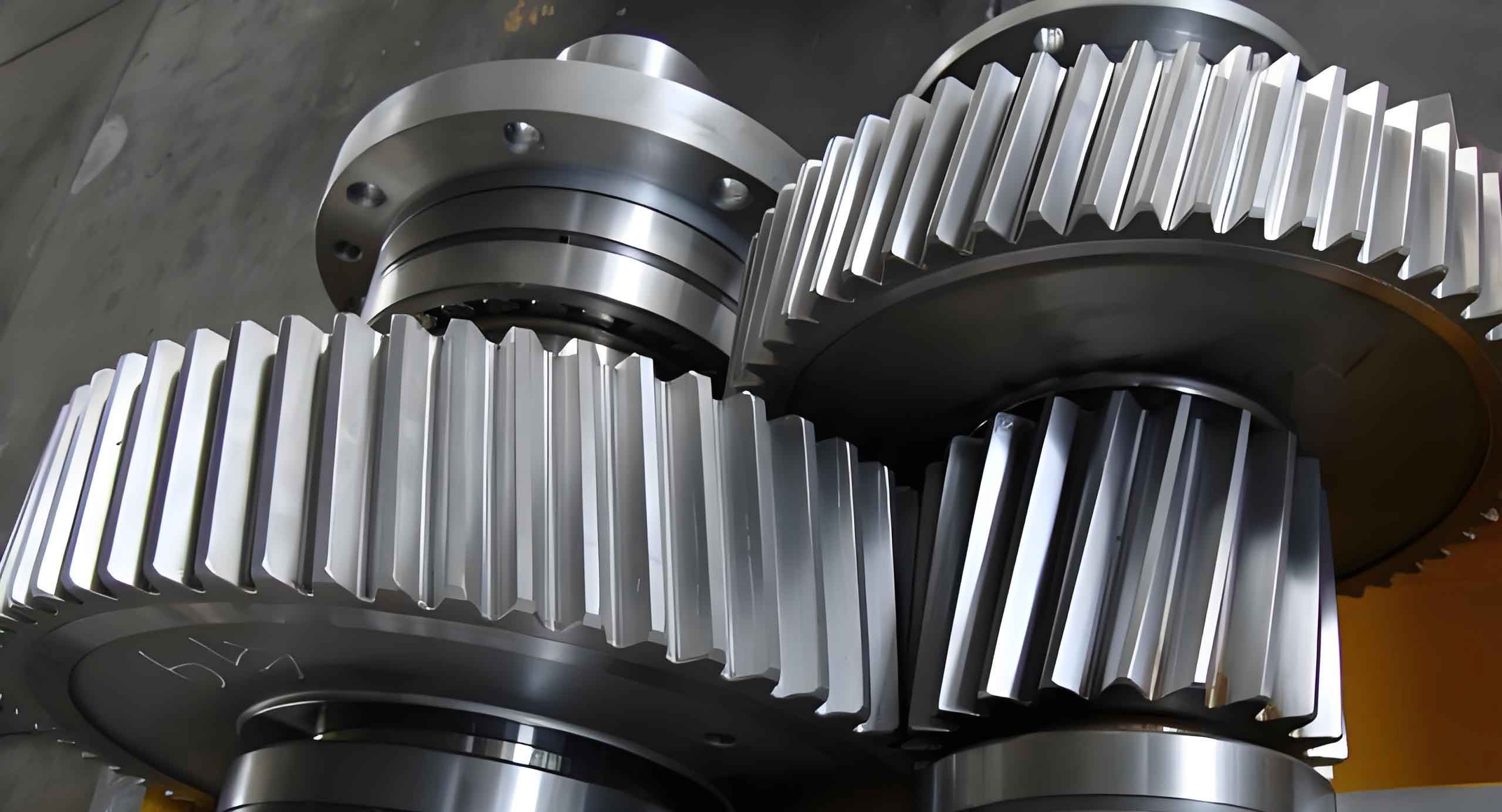
The use of helical gears in transmission systems is prevalent due to their ability to handle higher loads and operate more quietly compared to spur gears. However, under extreme conditions, such as high speeds or heavy loads, unmodified helical gears may suffer from edge contacts, stress concentrations, and vibrations. To mitigate these issues, gear modifications—including tip relief, root relief, and crowning—are applied to the tooth surfaces. Form-grinding is a preferred method for manufacturing these modified helical gears because it allows for precise control over tooth geometry, high grinding efficiency, and the potential to achieve accuracy levels up to grade 1-2, with stable grade 3. Despite these advantages, the form-grinding process for modified helical gears is complex due to the varying contact lines between the wheel and the gear. If the wheel profile is calculated based on a single cross-section of the gear, significant tooth profile errors can occur. Therefore, optimizing the wheel profile and analyzing tooth profile errors are critical for improving grinding precision.
In this work, I adopt a first-person perspective to detail the methodologies developed for wheel profile optimization and error analysis. The approach is based on numerical simulation, which accounts for the dynamic changes in contact conditions during grinding. I will begin by describing the mathematical model for calculating the wheel profile from the gear’s tooth geometry. Then, I will introduce an optimization technique that minimizes tooth profile errors through least-squares fitting of multiple wheel profiles. Following this, I will analyze the primary factors influencing tooth profile errors, such as wheel installation angle errors, center distance variations, and tangential displacements. I will also propose methods for predicting and compensating these errors. Finally, I will provide a detailed computational example to validate the effectiveness of the proposed methods, demonstrating how they can reduce errors and enhance the grinding quality of modified helical gears.
Mathematical Model for Wheel Profile Calculation in Form-Grinding
The form-grinding process for modified helical gears involves complex spatial relationships between the grinding wheel and the gear. To derive the wheel profile, it is essential to establish a coordinate system that captures the relative motions and geometries. For a right-handed modified helical gear, the grinding setup includes the gear’s rotation and axial movement, as well as the wheel’s rotation and radial附加 motion. The coordinate systems are defined as follows:
- Fixed coordinate system \( S(O-x, y, z) \).
- Gear coordinate system \( S_1(O_1-x_1, y_1, z_1) \), fixed to the gear with the \( z_1 \)-axis aligned with the gear’s rotational axis.
- Wheel coordinate system \( S_2(O_2-x_2, y_2, z_2) \), fixed to the wheel with the \( x_2 \)-axis aligned with the wheel’s rotational axis.
The wheel installation angle \( \Sigma \) is the angle between the \( z \)-axis and the \( z_2 \)-axis, typically set equal to the gear’s helix angle \( \beta \). The center distance \( a \) represents the shortest distance between the gear and wheel axes. During grinding, the gear rotates by an angle \( \phi \) and moves axially by a distance \( \xi = p\phi \), where \( p \) is the spiral parameter defined as \( p = \frac{m_n z}{2 \tan \beta} \), with \( m_n \) as the normal module and \( z \) as the number of teeth. The wheel also undergoes a radial附加 motion \( \Delta a \), which can be approximated for lead modification as:
$$ \Delta a = \Delta \delta \cos \beta_b \sin \alpha_n $$
where \( \Delta \delta \) is the lead modification amount at any point, \( \beta_b \) is the base helix angle, and \( \alpha_n \) is the normal pressure angle. The coordinate transformations between these systems are derived using homogeneous transformation matrices. The transformation from \( S \) to \( S_2 \) is given by:
$$ \begin{bmatrix} x_2 \\ y_2 \\ z_2 \\ 1 \end{bmatrix} = M_{20} \begin{bmatrix} x \\ y \\ z \\ 1 \end{bmatrix}, \quad M_{20} = \begin{bmatrix} \cos \Sigma & 0 & -\sin \Sigma & 0 \\ 0 & -1 & 0 & a \\ \sin \Sigma & 0 & \cos \Sigma & 0 \\ 0 & 0 & 0 & 1 \end{bmatrix} $$
The transformation from \( S_1 \) to \( S_2 \) is obtained by combining transformations through \( S \):
$$ \begin{bmatrix} x_2 \\ y_2 \\ z_2 \\ 1 \end{bmatrix} = M_{21} \begin{bmatrix} x_1 \\ y_1 \\ z_1 \\ 1 \end{bmatrix}, \quad M_{21} = M_{20} M_{01} = \begin{bmatrix} \cos \Sigma \cos \phi & \cos \Sigma \sin \phi & -\sin \Sigma & -\xi \sin \Sigma \\ \sin \phi & -\cos \phi & 0 & a \\ \sin \Sigma \cos \phi & \sin \Sigma \sin \phi & \cos \Sigma & \xi \cos \Sigma \\ 0 & 0 & 0 & 1 \end{bmatrix} $$
For any point \( P_1(x_1, y_1, 0) \) on the gear’s transverse tooth profile in \( S_1 \), its coordinates in \( S_2 \) are:
$$ \begin{aligned} x_2 &= x_1 \cos \Sigma \cos \phi + y_1 \cos \Sigma \sin \phi – \xi \sin \Sigma \\ y_2 &= x_1 \sin \phi – y_1 \cos \phi + (a – \Delta a) \\ z_2 &= x_1 \sin \Sigma \cos \phi + y_1 \sin \Sigma \sin \phi + \xi \cos \Sigma \end{aligned} $$
To obtain the wheel’s axial profile, point \( P_2 \) is rotated onto the \( x_2O_2y_2 \) plane. The corresponding point \( P_2′(x_2′, y_2′) \) is:
$$ x_2′ = x_2, \quad y_2′ = \sqrt{y_2^2 + z_2^2} $$
By varying \( \xi \) over the grinding range with small increments, and applying these transformations to all points on the transverse tooth profile, a point cloud is generated in the wheel’s axial plane. The envelope of this point cloud represents the calculated wheel profile. This method effectively simulates grinding the wheel using the gear’s tooth profile under the motion relationships of form-grinding.
Optimization of Wheel Profile Using Numerical Simulation
For modified helical gears, the tooth profile varies across different cross-sections perpendicular to the gear axis. Consequently, the ideal wheel profile differs for each section. To address this, I propose an optimization method based on numerical simulation. First, multiple transverse tooth profiles are simulated for \( m \) cross-sections along the gear axis, based on the modification curve. Each profile is discretized into \( n \) points, which are then transformed to the gear’s transverse plane via helical motion. Using the method described above, \( m \) wheel profiles are computed, each consisting of \( n \) points. These profiles are projected onto the \( x_2O_2y_2 \) plane, forming a point cloud of \( m \times n \) points. The optimized wheel profile is derived by fitting a curve to this point cloud using the least-squares method. The objective is to minimize the sum of squared distances between the fitted curve and the points, expressed as:
$$ \min \sum_{i=1}^{m} \sum_{j=1}^{n} \left[ f(x_{2ij}, y_{2ij}) \right]^2 $$
where \( f(x, y) = 0 \) represents the equation of the fitted curve. Common curve types include polynomials or splines. The optimization process reduces the overall tooth profile error by accounting for variations across all cross-sections of the helical gear.
Analysis of Tooth Profile Errors in Form-Grinding
Tooth profile errors in form-grinding arise from multiple sources, including machine tool inaccuracies, wheel dressing errors, and relative position errors between the wheel and gear. Among these, relative position errors are critical as they can be adjusted during the grinding process. The primary error factors include:
- Wheel installation angle error \( \Delta \Sigma \).
- Center distance error \( \Delta a \).
- Tangential error \( \Delta x \).
To analyze their impact, I developed a model for predicting the actual tooth profile ground with a given wheel profile. Starting from a point \( P_2(x_2, y_2, 0) \) on the wheel’s axial profile in \( S_2 \), it is rotated by an angle \( \theta \) to \( P_2′(x_2, y_2 \cos \theta, y_2 \sin \theta) \). This point is transformed to the fixed coordinate system \( S \) and then to the gear coordinate system \( S_1 \), considering errors. The transformation from \( S_2 \) to \( S \) with errors is:
$$ \begin{bmatrix} x \\ y \\ z \\ 1 \end{bmatrix} = M_{02} \begin{bmatrix} x_2 \\ y_2 \cos \theta \\ y_2 \sin \theta \\ 1 \end{bmatrix}, \quad M_{02} = \begin{bmatrix} \cos (\Sigma + \Delta \Sigma) & 0 & \sin (\Sigma + \Delta \Sigma) & \Delta x \\ 0 & -1 & 0 & a + \Delta a \\ -\sin (\Sigma + \Delta \Sigma) & 0 & \cos (\Sigma + \Delta \Sigma) & 0 \\ 0 & 0 & 0 & 1 \end{bmatrix} $$
The transformation to \( S_1 \) yields:
$$ \begin{aligned} x_1 &= x_2 \cos (\Sigma + \Delta \Sigma) \cos \phi + y_2 \sin \phi \cos \theta + y_2 \sin (\Sigma + \Delta \Sigma) \cos \phi \sin \theta – (a + \Delta a – \Delta a_{\text{mod}}) \sin \phi \\ y_1 &= x_2 \cos (\Sigma + \Delta \Sigma) \sin \phi – y_2 \cos \phi \cos \theta + y_2 \sin (\Sigma + \Delta \Sigma) \sin \phi \sin \theta + (a + \Delta a – \Delta a_{\text{mod}}) \cos \phi \\ z_1 &= -x_2 \sin (\Sigma + \Delta \Sigma) + y_2 \cos (\Sigma + \Delta \Sigma) \sin \theta – \xi \end{aligned} $$
where \( \Delta a_{\text{mod}} \) is the radial附加 motion for modification, and \( \xi = p\phi \). Setting \( z_1 = 0 \) for the transverse plane, the gear’s transverse tooth profile is obtained by varying \( \theta \) over a range. The actual tooth profile is the envelope of the resulting point cloud. Tooth profile error is defined as the deviation between the actual and theoretical profiles in the normal direction at each point. This model allows for simulating the effects of individual or combined errors on the ground tooth profile of helical gears.
| Error Factor | Symbol | Typical Range | Effect on Tooth Profile |
|---|---|---|---|
| Wheel Installation Angle Error | \( \Delta \Sigma \) | ±0.1° | Causes asymmetric deviations, affecting pressure angle |
| Center Distance Error | \( \Delta a \) | ±0.05 mm | Leads to uniform tooth thickness variations |
| Tangential Error | \( \Delta x \) | ±0.1 mm | Results in profile shifts and potential undercutting |
Prediction and Compensation of Tooth Profile Errors
Based on the error analysis, I propose methods for predicting and compensating tooth profile errors in form-grinding of helical gears. The prediction involves using the model above to compute the actual tooth profile for a given set of error parameters. By comparing it with the theoretical profile, the error distribution can be visualized. For compensation, the goal is to adjust the error parameters \( \Delta \Sigma \), \( \Delta a \), and \( \Delta x \) to minimize the overall error. This is formulated as an optimization problem:
$$ \min_{\Delta \Sigma, \Delta a, \Delta x} \left( \max | \delta_i | \right) $$
where \( \delta_i \) is the tooth profile error at point \( i \). An iterative approach is used: starting from initial error estimates, the actual profile is simulated, and the error parameters are adjusted based on the error trends. For example, if the error shows a consistent bias, \( \Delta a \) can be modified; if asymmetry is observed, \( \Delta \Sigma \) can be tuned. The compensation process continues until the tooth profile error falls within acceptable limits, such as those specified by gear accuracy standards.
To facilitate this, I developed an algorithm that integrates profile simulation and error compensation. The steps are:
- Input the gear parameters, modification curve, and initial wheel profile.
- Compute the theoretical tooth profiles for multiple cross-sections.
- Simulate the grinding process with current error parameters to get actual profiles.
- Calculate tooth profile errors by comparing actual and theoretical profiles.
- If errors exceed thresholds, adjust \( \Delta \Sigma \), \( \Delta a \), and \( \Delta x \) using gradient-based methods.
- Repeat steps 3-5 until convergence.
- Output the compensated error parameters for machine adjustment.
This approach enables real-time error correction during grinding, improving the accuracy of modified helical gears.
Computational Example and Results
To validate the methods, I applied them to a case study involving a right-handed helical gear with lead modification. The gear parameters are listed in Table 2. The lead modification amounts at six cross-sections are given in Table 3. The wheel installation angle was set to \( \Sigma = 15^\circ \), and the wheel diameter was chosen as 200 mm to avoid interference.
| Parameter | Symbol | Value |
|---|---|---|
| Normal Module | \( m_n \) | 5 mm |
| Number of Teeth | \( z \) | 15 |
| Normal Pressure Angle | \( \alpha_n \) | 20° |
| Helix Angle | \( \beta \) | 15° |
| Addendum Coefficient | \( h_{an}^* \) | 1 |
| Dedendum Coefficient | \( c_n^* \) | 0.25 |
| Face Width | \( B \) | 30 mm |
| Cross-Section | Axial Position (mm) | Modification Amount (mm) |
|---|---|---|
| 1 | 0 | -0.0521 |
| 2 | 6 | -0.0419 |
| 3 | 12 | -0.0318 |
| 4 | 18 | -0.0216 |
| 5 | 24 | -0.0115 |
| 6 | 30 | -0.0241 |
Using the numerical simulation method, I computed the wheel profiles corresponding to each cross-section. The results showed variations in wheel geometry, as summarized in Table 4. The optimized wheel profile was obtained via least-squares fitting, reducing the point cloud to a smooth curve. To assess tooth profile errors, I simulated grinding with the optimized wheel profile and calculated errors at each cross-section. The maximum error before compensation was approximately 15 μm, as shown in Table 5 for cross-section 1. After applying error compensation with adjusted parameters \( \Delta \Sigma = -0.1^\circ \), \( \Delta a = 0.055 \) mm, and \( \Delta x = 0.06 \) mm, the errors were reduced to below 8 μm across all sections, meeting grade 4 accuracy requirements. This demonstrates the effectiveness of the optimization and compensation methods for helical gears.
| Cross-Section | Point Index | \( x_2′ \) (mm) | \( y_2′ \) (mm) |
|---|---|---|---|
| 1 | 1 | 50.12 | 100.34 |
| 1 | 2 | 49.87 | 99.78 |
| 2 | 1 | 50.05 | 100.21 |
| 2 | 2 | 49.91 | 99.65 |
| 3 | 1 | 49.98 | 100.08 |
| 3 | 2 | 49.95 | 99.52 |
| Tooth Profile Point | Theoretical Normal (mm) | Error Before (μm) | Error After (μm) |
|---|---|---|---|
| Tip | 5.000 | 12.3 | 5.2 |
| Mid | 4.500 | 14.8 | 7.1 |
| Root | 4.000 | 15.1 | 7.8 |
The results highlight the importance of wheel profile optimization and error compensation in achieving high precision for modified helical gears. The methods presented here can be integrated into CNC form-grinding machines to enhance control systems and improve manufacturing outcomes.
Discussion on Advanced Topics and Future Directions
The study on wheel profile optimization and error analysis for helical gears opens avenues for further research. One key area is the integration of real-time monitoring systems into the grinding process. By using sensors to measure actual wheel and gear positions, dynamic adjustments can be made to error parameters, enabling adaptive control. Additionally, the use of artificial intelligence, such as machine learning algorithms, could predict errors based on historical data and optimize grinding parameters automatically. Another direction involves extending the methods to other gear types, such as double-helical gears or non-circular gears, where modification techniques are also critical. The mathematical models developed here can be adapted by modifying the coordinate transformations and modification curves.
Moreover, the impact of wheel wear on tooth profile errors should be considered. In prolonged grinding operations, wheel degradation can alter the wheel profile, leading to increasing errors. Incorporating wear models into the optimization process could allow for periodic wheel dressing or profile updates. For helical gears with complex modifications, such as topological modifications involving both profile and lead changes, the numerical simulation method can be enhanced by using higher-order surfaces or finite element analysis to capture more accurate contact conditions.
From a practical standpoint, the implementation of these methods in industrial settings requires robust software tools. I envision developing a user-friendly interface that allows engineers to input gear parameters, modification data, and error tolerances, and then outputs optimized wheel profiles and compensation parameters. This would streamline the grinding process for helical gears, reducing setup times and improving consistency.
Conclusion
In this article, I have presented a comprehensive approach to wheel profile optimization and tooth profile error analysis for form-grinding of modified helical gears. The methods are based on numerical simulation, coordinate transformations, and least-squares fitting, which together address the challenges posed by dynamic contact lines during grinding. By optimizing the wheel profile across multiple cross-sections, tooth profile errors can be significantly reduced. Furthermore, the analysis of error factors such as wheel installation angle, center distance, and tangential errors provides insights into their effects, enabling effective prediction and compensation. The computational example demonstrates that with optimized profiles and compensated errors, tooth profile accuracy can reach grade 4 or better, making the methods suitable for high-precision applications. These findings contribute to the advancement of form-grinding technology for helical gears, with potential applications in automotive, aerospace, and industrial machinery sectors. Future work will focus on real-time adaptation, AI integration, and expansion to more complex gear geometries, further enhancing the manufacturing of high-performance helical gears.