
The accurate and efficient mechanical analysis of gear systems is a cornerstone of modern mechanical engineering design. Among various gear types, helical gears are prized for their operational superiority, offering smoother engagement, higher load-carrying capacity, and reduced noise and vibration compared to their spur gear counterparts. These advantages stem from the gradual, line-contact engagement of their helically inclined teeth. To ensure the reliability and durability of these critical components, precise stress analysis is paramount. The Finite Element Method (FEM) has emerged as the most powerful and versatile tool for this purpose, enabling engineers to predict complex stress states under operational loads.
The fidelity of any finite element analysis is intrinsically linked to the quality and appropriateness of the underlying mesh. The fundamental challenge lies in balancing computational accuracy against resource expenditure. A coarse mesh yields rapid results but may miss critical stress concentrations, leading to non-conservative and potentially dangerous designs. Conversely, an excessively refined mesh delivers high accuracy at the cost of prohibitive computation time and memory usage. The relationship is non-linear; initially, increasing mesh density significantly improves result accuracy with modest increases in solve time. However, beyond a certain point, further refinement yields diminishing returns in accuracy while causing computational cost to escalate dramatically. The optimal mesh is one that provides sufficient accuracy for engineering decisions without unnecessary computational overhead, representing the “knee” in the curve of precision versus time. This paper explores and presents a methodology for adaptive mesh refinement specifically tailored for the finite element analysis of helical gears, automating the search for this optimal balance.
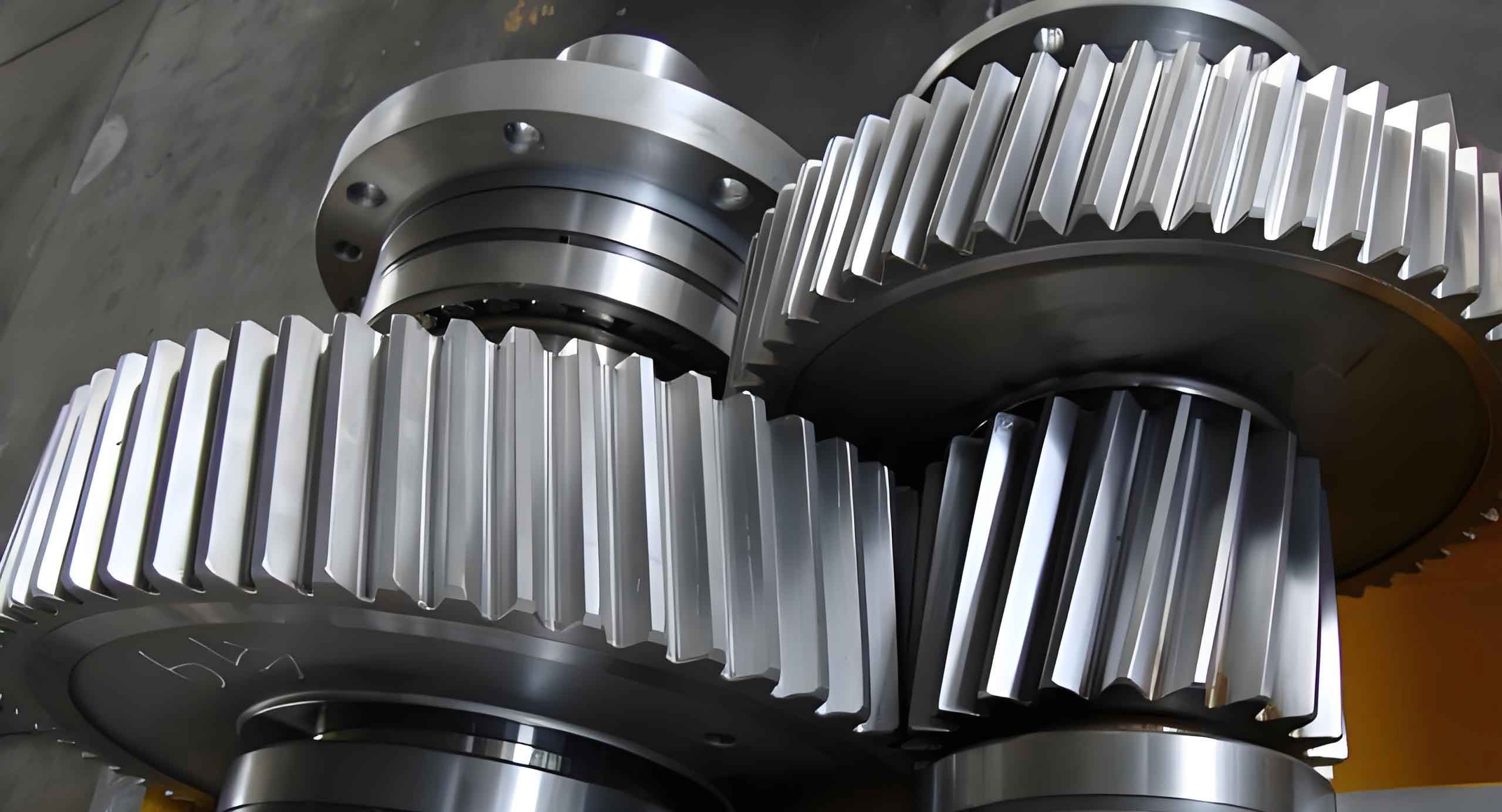
Automatic Generation of the Helical Gear Finite Element Model
The first step towards automated analysis is the robust and parametric generation of the finite element mesh for helical gears. A single helical gear tooth’s geometry is complex, defined in cross-section by an involute profile for the active flank and a trochoidal or other generated transition curve connecting to the gear body. Extruding this profile along a helical path creates the three-dimensional solid. Our methodology focuses on discretizing this geometry programmatically.
The process begins with the precise definition of node coordinates on a representative transverse (cross-sectional) plane. The model centers on analyzing a “master” tooth, flanked by segments of its immediate neighbors to correctly model load sharing and boundary constraints. The coordinates for the master tooth’s involute and root fillet are calculated first. The coordinates for the left and right neighboring tooth segments are then generated by rotating the master tooth’s profile coordinates by the angular tooth pitch, $ \theta_p = 2\pi / Z $, where $Z$ is the number of teeth. For the left neighbor, the transformation is:
$$ x_l = x_m \cos(\theta_p) – y_m \sin(\theta_p) $$
$$ y_l = x_m \sin(\theta_p) + y_m \cos(\theta_p) $$
and for the right neighbor:
$$ x_r = x_m \cos(\theta_p) + y_m \sin(\theta_p) $$
$$ y_r = y_m \cos(\theta_p) – x_m \sin(\theta_p) $$
where $(x_m, y_m)$ are the master tooth coordinates and $(x_l, y_l)$, $(x_r, y_r)$ are the resulting coordinates for the left and right segments, respectively.
The gear body nodes are generated radially inward from the root circle. A structured approach is used, defining layers of nodes at decreasing radii. The angular positions of these nodes are aligned with key points on the master and neighboring tooth roots to ensure a smooth transition from the finely meshed tooth to the coarser gear body. This structured approach in the transverse plane facilitates high-quality quadrilateral and hexahedral element generation.
The true three-dimensional geometry of the helical gear is achieved by “twisting” this transverse section along the gear’s axis. A point on the transverse plane at axial position $z_1$ is related to its corresponding point on a plane at the gear face (z=0) by a rotational transformation proportional to the helical lead. The transformation from the face coordinates $(x_1, y_1, 0)$ to the coordinates at an axial station $z$ is given by:
$$
\begin{bmatrix}
x \\
y \\
z
\end{bmatrix}
=
\begin{bmatrix}
\cos(\psi z) & \sin(\psi z) & 0 \\
-\sin(\psi z) & \cos(\psi z) & 0 \\
0 & 0 & 1
\end{bmatrix}
\begin{bmatrix}
x_1 \\
y_1 \\
0
\end{bmatrix}
+
\begin{bmatrix}
0 \\
0 \\
z
\end{bmatrix}
$$
where $\psi = \tan(\beta_b) / r_b$ is the twist rate, $\beta_b$ is the base circle helix angle, and $r_b$ is the base circle radius. By dividing the gear facewidth into a series of axial layers and applying this transformation to all nodes on the base transverse section, the full three-dimensional point cloud for the gear sector is generated. Connecting these points with hexahedral (brick) elements creates a high-quality, structured mesh ideal for stress analysis. The resulting automatic model generation ensures consistency, repeatability, and facilitates parametric studies.
The Core Challenge and Parameter Selection for Adaptive Refinement
With an automatic meshing procedure established, the central challenge becomes determining the appropriate mesh density. For the analysis of helical gears under bending load, the critical failure mode is fatigue crack initiation at the tooth root fillet. Therefore, the maximum tensile stress at the root, often at the midpoint of the facewidth on the loaded side, is the primary quantity of interest ($\sigma_{root}$). This stress value is highly sensitive to mesh density, especially in the region of the stress concentration.
Our adaptive strategy focuses on the axial (facewidth) direction refinement. Initial investigations revealed that the in-plane (transverse) mesh, focused on resolving the root fillet curve, could be standardized to a density that provided consistent baseline accuracy. The major variable, and the one with significant impact on computational cost, became the number of element layers through the facewidth ($N_z$).
We hypothesize that for a given gear geometry and load, $\sigma_{root}$ will converge asymptotically to the “true” value as $N_z$ increases. The goal of adaptive refinement is to find the smallest $N_z$ for which the computed $\sigma_{root}$ is within an acceptable tolerance of this converged value. To establish this relationship, a parametric study was conducted. Multiple helical gears with identical geometric parameters (module, pressure angle, helix angle, number of teeth) but varying facewidths ($b$) were analyzed. For each facewidth, the finite element analysis was run with increasing $N_z$, and the resulting $\sigma_{root}$ was recorded. The data from such a study is exemplified below:
| Axial Elements, $N_z$ | $\sigma_{root}$ for b=30 mm (MPa) | $\sigma_{root}$ for b=35 mm (MPa) | $\sigma_{root}$ for b=40 mm (MPa) | $\sigma_{root}$ for b=45 mm (MPa) | $\sigma_{root}$ for b=50 mm (MPa) |
|---|---|---|---|---|---|
| 6 | 60.61 | 51.76 | 36.32 | 41.13 | 39.24 |
| 8 | 52.04 | 46.88 | 30.10 | 35.62 | 26.69 |
| 10 | 51.71 | 43.98 | 33.06 | 34.24 | 30.12 |
| 12 | 50.93 | 42.69 | 34.07 | 36.76 | 24.51 |
| 14 | 50.72 | 43.60 | 33.05 | 36.75 | 24.73 |
The data clearly shows a convergence trend. For instance, for a 30 mm facewidth, the stress changes sharply from 60.61 MPa to 52.04 MPa when increasing $N_z$ from 6 to 8, but then stabilizes around 51 MPa for $N_z$ = 10, 12, and 14. Similar stabilization points are observable for other facewidths. This stabilization indicates the point of acceptable convergence. Using curve-fitting techniques (e.g., in MATLAB), we can model $\sigma_{root}$ as a function of $N_z$ for each $b$, such as:
$$ \sigma_{root}(N_z) \approx \alpha – \beta e^{-\gamma N_z} $$
where $\alpha, \beta, \gamma$ are fitting parameters, and $\alpha$ represents the asymptotically converged stress value. The adaptive criterion can then be defined as finding $N_z$ where the relative change between successive refinements falls below a threshold, e.g., $ |(\sigma_{root}(N_z) – \sigma_{root}(N_z-2)) / \sigma_{root}(N_z)| < 1\% $.
The Chimobi Ratio: A Generalized Adaptive Parameter
While the direct relationship between $b$ and the optimal $N_z$ is useful, it is highly specific to a single gear module. To generalize the adaptive rule for a broader range of helical gears, we introduce a dimensionless parameter called the “Chimobi Ratio” ($C_r$), defined as the ratio of facewidth to normal module:
$$ C_r = \frac{b}{m_n} $$
The normal module, $m_n$, is a fundamental parameter defining the size of gear teeth. Intuitively, a gear with a large facewidth relative to its tooth size (high $C_r$) will experience more significant variations in stress along the facewidth and may require a finer axial mesh to capture potential localized effects like edge loading or deflections. Conversely, a gear with a low $C_r$ may be adequately modeled with fewer axial layers.
By analyzing the convergence data from gears with different modules and facewidths, we can correlate the optimal, stabilized $N_z$ with the Chimobi Ratio. This leads to the creation of a generalized lookup or rule-based table for automatic mesh refinement.
| Chimobi Ratio Range, $C_r = b/m_n$ | Recommended Number of Axial Elements, $N_z$ | Engineering Rationale |
|---|---|---|
| $C_r < 13.3$ | 8 | Short, stubby teeth. Stress state is relatively uniform along facewidth. Coarser mesh is sufficient and efficient. |
| $13.3 \leq C_r < 17.8$ | 10 | Moderate facewidth. Requires standard refinement to capture root stress gradient. |
| $17.8 \leq C_r < 22.2$ | 12 | Longer facewidth. Finer mesh needed to model potential stress variations and bending deflections accurately. |
| $C_r \geq 22.2$ | 14 (or more) | Very high facewidth-to-module ratio. Demands high refinement to resolve complex 3D bending and contact edge effects. |
This generalized approach significantly enhances the utility of the adaptive method. The finite element preprocessing algorithm can now automatically calculate $C_r$ for any given helical gear design and select the appropriate $N_z$ from this table. This ensures that the generated mesh is neither too coarse (risking inaccuracy) nor too fine (wasting resources), but is optimally tailored for the specific geometric proportions of the gear under analysis. The convergence of the root stress $\sigma_{root}$ serves as the implicit, physics-based validation for the thresholds established in the table.
Mathematical Foundation and Algorithmic Integration
The adaptive process can be formalized into an algorithm integrated within an automated FEA workflow for helical gears. The core mathematical operations involve coordinate generation, transformation, and the stress convergence check.
Let us define the key geometric and mesh parameters:
- $m_n$: Normal module
- $Z$: Number of teeth
- $\alpha_n$: Normal pressure angle
- $\beta$: Helix angle (at reference circle)
- $b$: Facewidth
- $N_{transverse}$: Fixed number of element layers in the tooth profile direction (e.g., from root to tip).
- $N_{axial}$: Variable number of element layers along the facewidth, initially set based on $C_r$.
The algorithm proceeds as follows:
Step 1: Calculate Chimobi Ratio and Initialize Mesh.
$$ C_r = \frac{b}{m_n} $$
Determine initial $N_{axial}^{init}$ using Table 2 (e.g., if $C_r = 16$, then $N_{axial}^{init} = 10$).
Step 2: Generate Base Mesh.
Generate nodal coordinates for the transverse plane sector (master tooth + neighbors + body) using standard gear geometry equations for the involute and trochoidal fillet. Create a structured 2D mesh on this plane with $N_{transverse}$ layers.
Step 3: Generate 3D Mesh.
For each axial layer $k = 0, 1, …, N_{axial}^{init}$, calculate its axial position $z_k = k \cdot \Delta z$, where $\Delta z = b / N_{axial}^{init}$. Generate the 3D nodes for layer $k$ by applying the helical transformation to all 2D base nodes:
$$
\begin{bmatrix}
x^{(k)} \\
y^{(k)} \\
z^{(k)}
\end{bmatrix}
= \mathbf{R}(\psi z_k) \, \mathbf{p}_{2D} +
\begin{bmatrix}
0 \\
0 \\
z_k
\end{bmatrix}, \quad \text{where} \quad \mathbf{R}(\theta)=
\begin{bmatrix}
\cos \theta & \sin \theta & 0 \\
-\sin \theta & \cos \theta & 0 \\
0 & 0 & 1
\end{bmatrix}
$$
and $\mathbf{p}_{2D} = [x_{2D}, y_{2D}, 0]^T$. Connect nodes from adjacent layers to form hexahedral elements.
Step 4: Solve and Evaluate.
Apply boundary conditions (fixed constraints on the gear bore) and loading (a distributed load or prescribed displacement simulating meshing contact on the tooth flank). Perform the finite element solve to obtain the stress field. Extract the tensile stress at the root midpoint, $\sigma_{root}^{(current)}$.
Step 5: Adaptive Check and Refinement Loop.
This step can be implemented in two ways:
- Rule-Based (One-Step): Use the initial $N_{axial}^{init}$ from Step 1 as the final mesh. This is fast and relies on the pre-established correlations in Table 2 being accurate for the gear class.
- Iterative Convergence-Based: For maximum robustness, an iterative loop can be used. Store $\sigma_{root}^{(current)}$. Refine the mesh globally by increasing $N_{axial}$ (e.g., $N_{axial}^{new} = N_{axial}^{current} + 2$), regenerate the mesh, and re-solve to get $\sigma_{root}^{(new)}$. Check the convergence criterion:
$$ \frac{|\sigma_{root}^{(new)} – \sigma_{root}^{(current)}|}{\sigma_{root}^{(new)}} \leq \epsilon $$
where $\epsilon$ is a user-defined tolerance (e.g., 0.01 or 1%). If converged, stop. If not, set $\sigma_{root}^{(current)} = \sigma_{root}^{(new)}$ and repeat the refinement loop. The initial guess from the $C_r$ table ensures this loop starts close to the solution, minimizing iterations.
Discussion, Extensions, and Conclusion
The presented methodology successfully addresses the precision-efficiency trade-off in the finite element analysis of helical gears by introducing an adaptive mesh refinement scheme governed by the Chimobi Ratio ($C_r$) and the convergence behavior of the critical root stress. This approach automates a key engineering decision, moving beyond simplistic global refinement or reliance on user experience. The automatic mesh generation ensures model consistency, while the adaptive logic embedded in Table 2 provides a physically reasoned and generalizable rule for selecting axial mesh density.
The focus here has been on bending stress analysis, which is crucial for tooth integrity. However, the complete analysis of helical gears also requires accurate modeling of contact stresses along the tooth flank. The principles of adaptive refinement are equally applicable, even more critical, for contact analysis. A similar adaptive strategy could be developed where the mesh density in the region of potential contact is refined based on the convergence of contact pressure ($p_{max}$) or subsurface shear stresses. A combined adaptive scheme, with independent control over root fillet mesh and contact zone mesh, would represent a comprehensive solution for high-fidelity gear analysis. The helical transformation and structured mesh generation approach provides an excellent foundation for implementing such local refinements.
Furthermore, the concept of the Chimobi Ratio could be expanded and refined. The current thresholds (13.3, 17.8, 22.2) were derived from a specific study. A more extensive parametric study encompassing a wider range of modules, helix angles, and load conditions could lead to a more nuanced function, perhaps $N_{axial}^{opt} = f(C_r, \beta, …)$, or the incorporation of a second dimensionless parameter like the addendum ratio. Machine learning techniques could be employed to optimize this function from a large dataset of converged FEA results.
In conclusion, mastering finite element mesh generation and refinement is essential for leveraging the full power of computational analysis in mechanical design. For helical gears, which are ubiquitous in power transmission, this work demonstrates a practical path towards intelligent, self-adapting simulation workflows. By parameterizing the mesh density through the Chimobi Ratio and targeting the convergence of key physical outputs like root stress, engineers can achieve reliable, high-quality results with controlled computational effort. This not only accelerates the design cycle but also builds greater confidence in the simulation-driven development of robust and efficient gear systems.