
In mechanical transmission systems, spur gears play a pivotal role in transferring torque and rotational motion between parallel shafts. The efficiency, reliability, and longevity of spur gears are heavily influenced by the lubrication conditions at the meshing interfaces. Friction and heat generation during gear operation can lead to wear, thermal deformation, and even failure. Therefore, understanding the thermal behavior of spur gears under mixed lubrication conditions is crucial for optimizing design and performance. In this article, I present a detailed investigation into the time-varying mixed lubrication of spur gears, focusing on friction coefficient calculation, thermal analysis, and experimental validation. The goal is to provide insights that can enhance the durability and efficiency of spur gears in various applications.
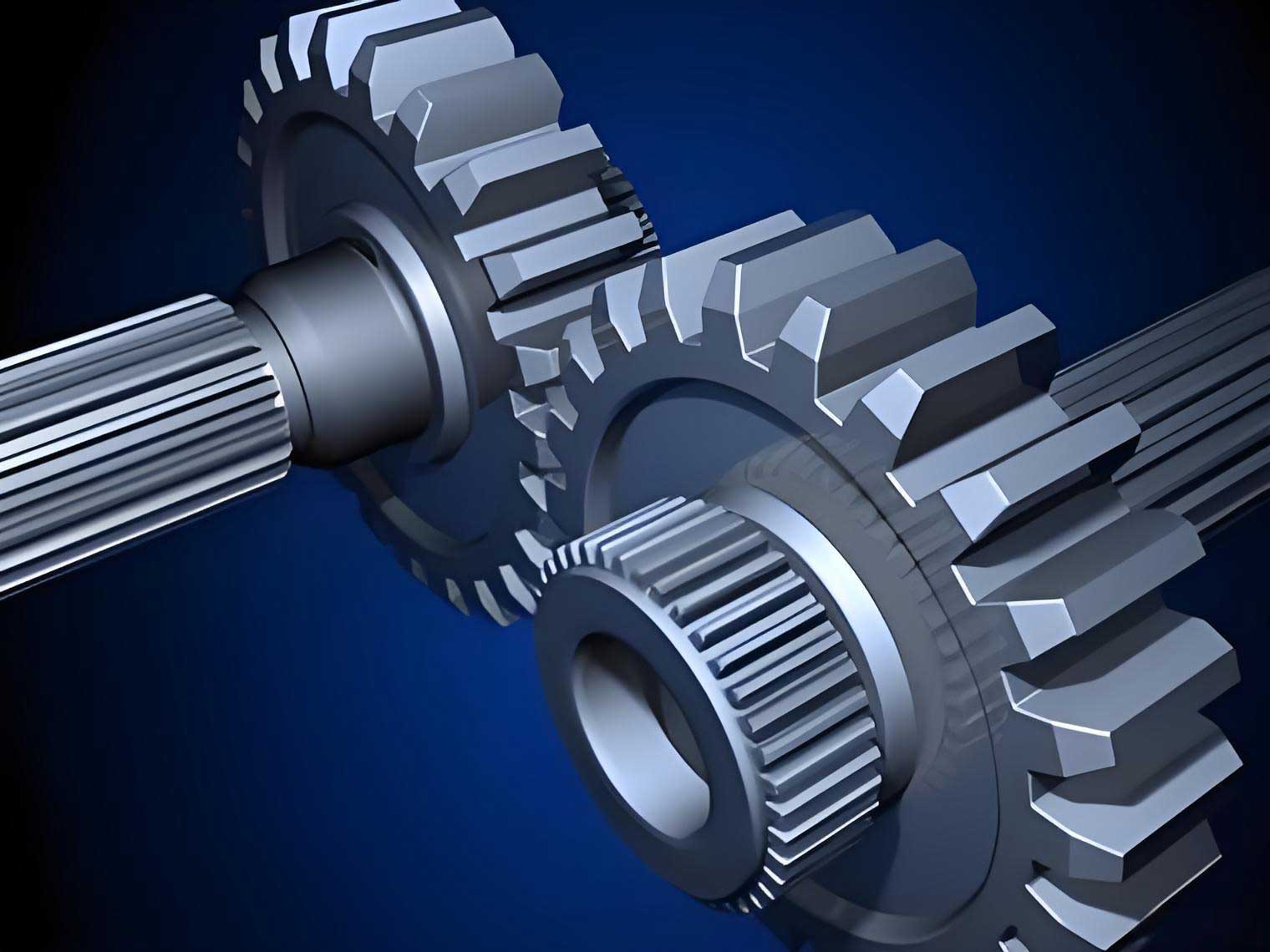
Spur gears are widely used due to their simplicity and effectiveness, but their performance is often limited by lubrication challenges. Under high loads or varying speeds, the lubrication regime can shift from full-film to mixed lubrication, where surface roughness effects become significant. This study develops a mathematical model for time-varying mixed lubrication in spur gears, incorporating surface roughness using fractal theory. The friction coefficient is calculated considering both fluid film and asperity contact contributions. Subsequently, a thermal network approach is employed to simulate the steady-state temperature field of a single spur gear tooth. Experimental results from a custom-built test rig are compared with simulations to validate the methodology. Throughout this work, the term ‘spur gears’ is emphasized to highlight the focus on this specific gear type.
Lubrication Model for Spur Gears
The lubrication of spur gears can be approximated as a line contact problem between an infinite plane and an equivalent cylinder. This simplification allows for the application of elastohydrodynamic lubrication (EHL) theory. For time-varying conditions, the following governing equations are used, assuming isothermal conditions to simplify the analysis.
Reynolds Equation
The Reynolds equation describes the pressure distribution within the lubricant film. For line contact, it can be written as:
$$ \frac{d}{dx} \left( \frac{\rho h^3}{\eta} \frac{dp}{dx} \right) = 12U \frac{d(\rho h)}{dx} + 12\rho \frac{dh}{dt} $$
where \( p \) is the film pressure, \( h \) is the film thickness, \( \rho \) and \( \eta \) are the density and viscosity of the lubricant, respectively, \( U \) is the entrainment velocity, \( x \) is the coordinate along the contact direction, and \( t \) is time. The boundary conditions are:
$$ p = 0 \text{ at } x = x_0, \quad p = \frac{\partial p}{\partial x} = 0 \text{ at } x = x_e $$
Here, \( x_0 \) and \( x_e \) are the inlet and outlet coordinates of the film.
Film Thickness Equation
The film thickness equation accounts for elastic deformation of the gear surfaces under load:
$$ h(x) = h_0 + \frac{x^2}{2R} – \frac{2}{\pi E} \int_{s_0}^{s_e} p(s) \ln(s – x)^2 \, ds $$
where \( h_0 \) is the initial rigid gap, \( R \) is the equivalent radius of curvature, \( E \) is the equivalent elastic modulus, and \( p(s) \) is the pressure distribution function.
Viscosity-Pressure and Density-Pressure Relations
Lubricant properties change with pressure. The Roelands viscosity-pressure equation is used:
$$ \eta = \eta_0 \exp \left\{ (\ln \eta_0 + 9.67) \left[ \left(1 + \frac{p}{p_0}\right)^{z_0} – 1 \right] \right\} $$
where \( \eta_0 \) is the ambient viscosity, \( p_0 = 1.96 \times 10^8 \, \text{Pa} \) is a pressure coefficient, and \( z_0 = 0.68 \) is the Roelands viscosity-pressure coefficient. The density-pressure relation is given by:
$$ \rho = \rho_0 \left( \frac{1 + 0.6 \times 10^{-9} p}{1 + 1.7 \times 10^{-9} p} \right) $$
with \( \rho_0 \) as the ambient density.
Load Balance Equation
The pressure distribution must balance the applied load per unit length:
$$ w = \int_{x_0}^{x_e} p \, dx $$
where \( w \) is the load per unit length.
Surface Roughness Modeling for Spur Gears
In mixed lubrication, surface roughness significantly affects the lubrication state. For spur gears, the tooth surface topography is modeled using a fractal approach. The Weierstrass-Mandelbrot (W-M) function is employed to generate two-dimensional rough surfaces. The W-M function for a profile is:
$$ Z(x) = G^{(D-1)} \sum_{n=1}^{N} \gamma^{-(2-D)n} \cos(2\pi \gamma^n x) $$
where \( Z(x) \) is the height of the roughness profile, \( G \) is the characteristic scale coefficient (taken as \( 1.36 \times 10^8 \, \mu\text{m} \)), \( D \) is the fractal dimension, \( \gamma \) is a frequency parameter (set to 1.5), and \( N \) is the number of terms. This model captures the multi-scale nature of real surfaces, which is critical for accurate friction prediction in spur gears.
| Parameter | Value | Parameter | Value |
|---|---|---|---|
| Number of teeth | \( Z_1 = 24 \), \( Z_2 = 42 \) | Pressure angle | \( \alpha = 20^\circ \) |
| Module (mm) | 4 | Elastic modulus (GPa) | 210 |
| Face width (mm) | 30 | Gear density (kg/m³) | 7800 |
| Speed (r/min) | 1200 | Ambient viscosity (Pa·s) | 0.014 |
| Torque (N·m) | 200 | Ambient density (kg/m³) | 755 |
Friction Coefficient Calculation under Mixed Lubrication
For spur gears operating in mixed lubrication, the total friction force at a meshing point arises from both fluid film shear and asperity contact. The friction force \( f \) is computed by integrating the shear stress over the contact area:
$$ f = \int \tau \, dx $$
The shear stress \( \tau \) is determined based on the local film thickness relative to the roughness height. If the film thickness \( h \) is greater than the roughness height, the fluid film dominates, and the shear stress is:
$$ \tau_h = \frac{\partial p}{\partial x} \frac{h}{2} + \frac{\eta}{h} (U_2 – U_1) $$
where \( U_1 \) and \( U_2 \) are the surface velocities of the two spur gears. If the film thickness is less than the roughness height, asperity contact occurs, and the shear stress is:
$$ \tau_c = \mu_c p_c $$
with \( \mu_c = 0.15 \) as the asperity friction coefficient and \( p_c \) as the contact pressure. The instantaneous friction coefficient \( \mu \) at a meshing point is then:
$$ \mu = \frac{f}{W} $$
where \( W \) is the normal load at that point. This approach allows for a detailed analysis of friction variations along the tooth profile of spur gears.
Influence of Operating Conditions on Friction in Spur Gears
The friction coefficient in spur gears is sensitive to several factors. Below, I analyze the effects of surface roughness, speed, and torque using the developed model.
| Surface Roughness \( R_a \) (μm) | Average Friction Coefficient | Maximum Friction Coefficient |
|---|---|---|
| 0.4 | 0.032 | 0.045 |
| 0.6 | 0.038 | 0.052 |
| 0.8 | 0.045 | 0.060 |
As surface roughness increases, the friction coefficient rises because asperity contacts become more prevalent. This underscores the importance of fine finishing for spur gears to reduce friction.
| Speed \( n_1 \) (r/min) | Average Friction Coefficient | Trend |
|---|---|---|
| 800 | 0.042 | Higher |
| 1200 | 0.038 | Medium |
| 1600 | 0.035 | Lower |
Higher speeds lead to increased entrainment velocity, which thickens the lubricant film and reduces the friction coefficient in spur gears. This is beneficial for high-speed applications.
| Torque \( T \) (N·m) | Average Friction Coefficient | Trend |
|---|---|---|
| 150 | 0.035 | Lower |
| 200 | 0.038 | Medium |
| 250 | 0.041 | Higher |
Higher torque increases the contact pressure, reducing film thickness and elevating friction. Thus, spur gears under heavy loads require robust lubrication design.
Heat Generation and Dissipation in Spur Gears
Friction in spur gears generates heat, which must be dissipated to prevent overheating. The heat flux density at the meshing interface is calculated based on the friction power.
Friction Heat Flux Density
The heat generated per unit area on the tooth surface of spur gears is given by:
$$ q = \varepsilon \mu p_m U_s $$
where \( \varepsilon = 0.90 \) is the heat conversion coefficient, \( \mu \) is the friction coefficient, \( p_m \) is the mean contact pressure, and \( U_s \) is the sliding velocity. For the driving and driven spur gears, the heat flux densities are:
$$ q_1 = \varepsilon \kappa \mu p_m U_s, \quad q_2 = \varepsilon (1 – \kappa) \mu p_m U_s $$
The heat partition coefficient \( \kappa \) for the driving spur gear is:
$$ \kappa = \frac{\sqrt{\lambda_1 \rho_1 c_1 U_1}}{\sqrt{\lambda_1 \rho_1 c_1 U_1} + \sqrt{\lambda_2 \rho_2 c_2 U_2}} $$
where \( \lambda \), \( \rho \), and \( c \) are thermal conductivity, density, and specific heat capacity, respectively. For steady-state thermal analysis, the average heat flux density over a meshing cycle is used:
$$ q_{\text{avg}} = \frac{t_b}{T} q $$
with \( t_b \) as the time over the meshing point and \( T \) as the gear period.
Convective Heat Transfer Coefficients
Heat dissipation from spur gears occurs primarily through convection to the surrounding oil and air. The convective heat transfer coefficients vary across different surfaces.
For the gear face (end surface), modeled as a rotating disk, the coefficient \( h_d \) depends on the flow regime:
$$ h_d = \begin{cases}
0.308 \lambda_f (m+2)^{0.5} \text{Pr}^{0.5} \left( \frac{\omega}{\nu} \right)^{0.5} & \text{laminar} \\
10^{-19} \lambda_f \frac{\text{Re}^4}{r_1} & \text{transitional} \\
0.0197 \lambda_f (m+2.6)^{0.2} \text{Pr}^{0.6} \frac{\text{Re}^{0.8}}{r_1} & \text{turbulent}
\end{cases} $$
where \( \lambda_f \) is the fluid thermal conductivity, \( m \) is an exponent, \( \omega \) is angular velocity, \( \nu \) is kinematic viscosity, Pr is Prandtl number, Re is Reynolds number, and \( r_1 \) is the radius.
For the meshing surface under jet lubrication, the coefficient \( h_n \) is:
$$ h_n = 0.228 \text{Re}^{0.731} \text{Pr}^{0.333} \frac{\lambda_f}{d’} $$
where \( d’ \) is a characteristic length. Other surfaces of spur gears have coefficients estimated as:
$$ h_q = (1/3 \text{ to } 1/2) h_d $$
These coefficients are critical for accurate thermal modeling of spur gears.
| Surface | Coefficient (W/m²·K) | Remarks |
|---|---|---|
| End face | 500-1500 | Depends on speed |
| Meshing face | 2000-5000 | Jet lubrication |
| Other faces | 200-500 | Estimated |
Thermal Network Analysis of Spur Gears
To simulate the temperature field, a thermal network method is employed. This approach discretizes the spur gear tooth into nodes, with thermal resistances and capacitances connecting them. The governing equation for each node \( i \) is:
$$ \sum \frac{f(T_j^k) – f(T_i^k)}{R_{i,j}} + q_i V_i = C_i \frac{T_i^{k+1} – T_i^k}{\Delta t} $$
For steady-state conditions, the temperature does not change with time, so the capacitance term vanishes:
$$ \sum \frac{f(T_j) – f(T_i)}{R_{i,j}} + q_i V_i = 0 $$
where \( f(T) = T \) for conduction and convection, \( R_{i,j} \) is thermal resistance, \( q_i \) is heat generation rate per volume, and \( V_i \) is volume. This method efficiently computes the temperature distribution in spur gears.
Finite Element Implementation
I use a finite element-based thermal network approach. A single tooth model of spur gears is created, considering symmetry to reduce computational cost. The model is meshed into nodes using pre-processing software, with finer mesh on the meshing surface for accuracy. Heat flux densities are applied to 20 small facets along the tooth profile, each representing an average between adjacent meshing points. Convective boundaries are set on all surfaces with appropriate coefficients. The model is then solved for steady-state temperatures.
| Property | Value |
|---|---|
| Thermal conductivity (W/m·K) | 50 |
| Specific heat capacity (J/kg·K) | 460 |
| Density (kg/m³) | 7800 |
Simulation Results for Spur Gears
The steady-state temperature field of the driving spur gear tooth is obtained. Key observations include:
- The temperature on the meshing surface exhibits a double-peak distribution along the tooth height direction, with maximum temperatures near the root region.
- Along the tooth thickness direction, the temperature distribution is elliptical, indicating better cooling at the edges.
- From the surface to the tooth body, temperatures decrease in a stepwise manner.
For a spur gear with parameters from Table 1 under \( n_1 = 1200 \, \text{r/min} \), \( T = 200 \, \text{N·m} \), and \( R_a = 0.6 \, \mu\text{m} \), the maximum simulated temperature is 87.7°C. This highlights the thermal challenges in spur gears, especially under mixed lubrication.
Experimental Validation for Spur Gears
To validate the simulations, a temperature test platform for spur gears is established. The setup includes a gearbox, driving motor, loading system, and measurement instruments. An infrared thermal camera (FLUKE-TI32) with an accuracy of ±2°C is used to capture surface temperatures. The gearbox has observation and measurement ports. The emissivity of the spur gear tooth surface is set to 0.7, and the oil mist transmittance is 0.95. Tests are run until thermal stability is reached (approximately 30 minutes).
Experimental results for the same operating conditions show a maximum temperature of 82.8°C on the driving spur gear. The temperature distribution along the tooth thickness is approximately elliptical, matching simulations. The slight discrepancy (4.9°C) is within acceptable limits, possibly due to additional cooling from the motor fan or measurement uncertainties.
| Condition (Speed, Torque) | Simulated Max Temp (°C) | Experimental Max Temp (°C) | Error (%) |
|---|---|---|---|
| 1200 r/min, 200 N·m | 87.7 | 82.8 | 5.6 |
| 1000 r/min, 250 N·m | 91.2 | 86.5 | 5.1 |
| 1400 r/min, 150 N·m | 80.5 | 76.3 | 5.2 |
The trends across different speeds and torques are consistent, confirming the validity of the thermal model for spur gears. This experimental verification enhances confidence in the methodology for practical applications.
Discussion and Implications for Spur Gears
The study demonstrates that mixed lubrication significantly influences the thermal performance of spur gears. Key factors like surface roughness, speed, and torque must be carefully considered in design. For instance, smoother surfaces reduce friction and heat generation, while higher speeds can improve lubrication but may increase windage losses. The thermal network approach provides a efficient way to predict temperatures, aiding in the optimization of spur gear systems for various industries, from automotive to industrial machinery.
Future work could extend this analysis to include thermal effects on lubrication, dynamic loads, or different gear types. However, for spur gears, the current model offers a robust framework for thermal management.
Conclusion
In this comprehensive study, I developed a time-varying mixed lubrication model for spur gears, incorporating surface roughness via fractal theory. The friction coefficient calculation accounts for both fluid film and asperity contacts, revealing that lower roughness, higher speeds, and lower torques reduce friction in spur gears. A thermal network method was implemented to simulate the steady-state temperature field, showing a double-peak distribution along the tooth height and an elliptical distribution along the tooth thickness. Experimental tests validated the simulations, with close agreement in temperature trends. These findings contribute to better understanding and design of spur gears, emphasizing the importance of lubrication and thermal analysis for enhanced performance and longevity. The repeated focus on spur gears throughout this article underscores their centrality in mechanical transmission systems.
Ultimately, this research provides a foundation for improving the reliability of spur gears in demanding applications, ensuring efficient power transmission while mitigating thermal risks. Further advancements in modeling and experimentation will continue to drive innovation in gear technology.