
In mechanical power transmission systems, spur gears are fundamental components due to their simplicity and efficiency. However, they are susceptible to various failure modes under cyclic loading, with crack initiation and propagation being a critical one. This failure often originates at the root fillet region, a known stress concentration area, and can lead to catastrophic tooth breakage if left undetected. Understanding the path a crack will take and predicting the remaining useful life of a gear with a nascent crack are therefore paramount for predictive maintenance and system reliability. This article details a comprehensive methodology, from finite element simulation of crack growth to the construction of a life estimation model, specifically for spur gears.
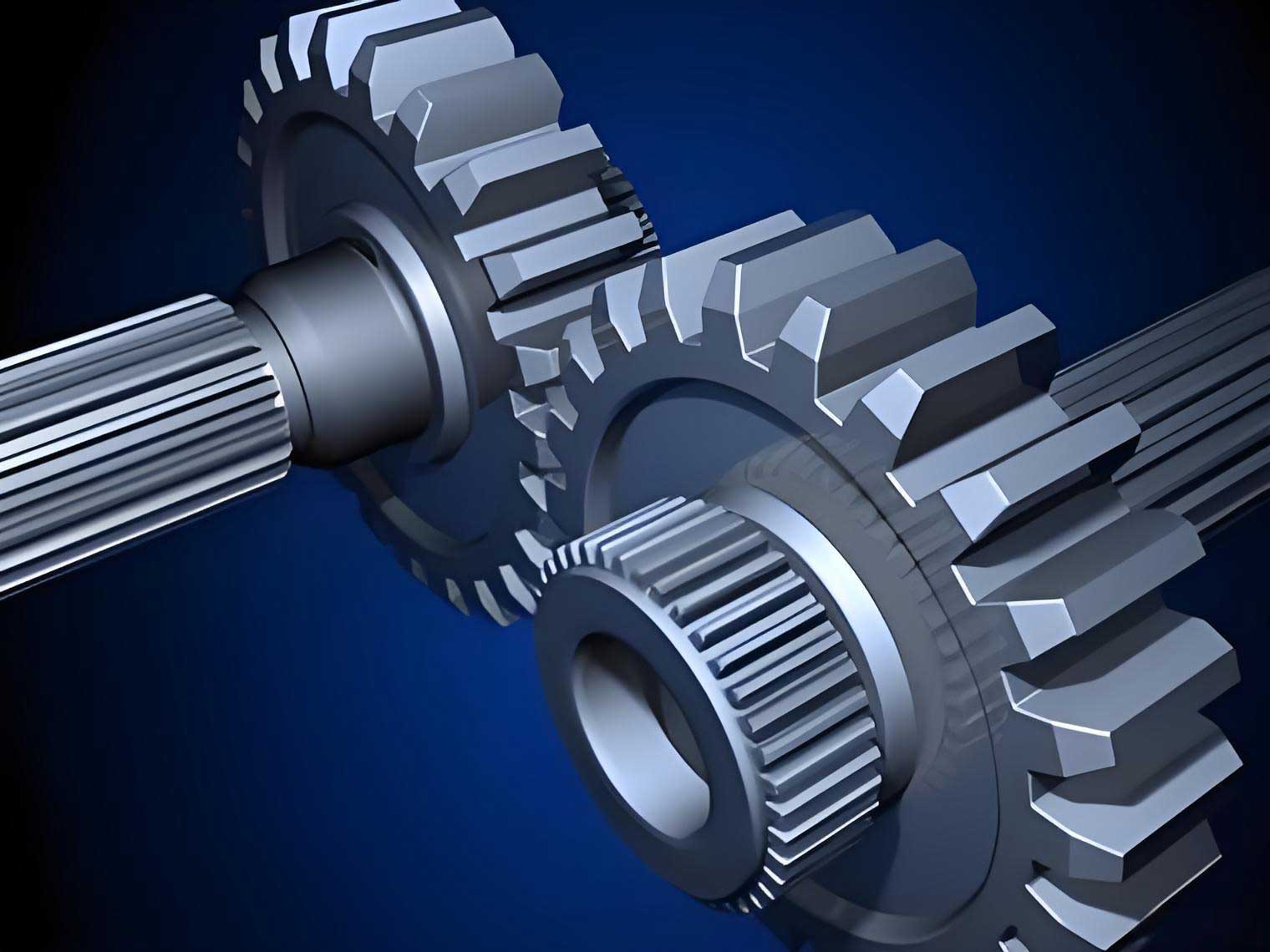
The primary objective of this work is to establish a simulation-based framework for analyzing root crack propagation in spur gears and subsequently estimating their operational life. The approach integrates fracture mechanics principles with advanced finite element analysis. We first identify the critical location for crack initiation through stress analysis. Then, using the eXtended Finite Element Method (XFEM), we simulate the progressive path of a crack emanating from the root fillet. Key fracture parameters, namely the Stress Intensity Factors (SIFs), are extracted at various crack lengths. Finally, by correlating crack growth rate with the SIF range via the Paris law, we develop an integral model to calculate the number of loading cycles a cracked spur gear can withstand before failure.
1. Theoretical Foundation: Paris Crack Propagation Law
The stable propagation phase of a fatigue crack is most commonly described by the Paris-Erdogan law, a cornerstone of linear elastic fracture mechanics. This empirical model relates the crack growth per cycle to the range of the stress intensity factor at the crack tip. For mode-I (opening mode) crack growth, which is dominant in gear teeth bending fatigue, the law is expressed as:
$$ \frac{da}{dN} = C (\Delta K_I)^m $$
where:
• \( a \) is the crack length.
• \( N \) is the number of loading cycles.
• \( \Delta K_I \) is the range of the mode-I stress intensity factor (\( \Delta K_I = K_{I,max} – K_{I,min} \)) during a load cycle.
• \( C \) and \( m \) are material constants that depend on the environment, load ratio, and the material’s microstructure.
To estimate the total life from an initial crack size \( a_0 \) to a critical size \( a_{cr} \), the Paris law is integrated:
$$ N = \int_{a_0}^{a_{cr}} \frac{1}{C (\Delta K_I(a))^m} \, da $$
The core challenge in applying this formula to spur gears lies in defining the functional relationship \( \Delta K_I = f(a) \), as the stress intensity factor varies with the evolving crack geometry and its interaction with the complex gear tooth stress field. This relationship is the key output sought from the finite element simulation.
2. Finite Element Modeling of Spur Gear and Crack Propagation
2.1 Gear Geometry and Material
A three-dimensional model of a spur gear pair was created. The gear geometry follows standard involute profile specifications. The material selected for both gears is a common gear steel, 20CrNiMo, with its elastic properties and Paris law constants summarized in the table below. These constants are typically obtained from standard fracture mechanics handbooks or experiments on compact tension specimens of the same material.
| Parameter | Pinion | Gear | Unit |
|---|---|---|---|
| Number of Teeth, \( z \) | 18 | 27 | – |
| Module, \( m_n \) | 2 | mm | |
| Pressure Angle, \( \alpha \) | 20 | ° | |
| Young’s Modulus, \( E \) | 205 | GPa | |
| Poisson’s Ratio, \( \nu \) | 0.29 | – | |
| Paris Constant, \( C \) | 4.77 × 10⁻⁹ | (MPa√m, m/cycle units) | |
| Paris Exponent, \( m \) | 2.06 | – | |
The pinion was defined as the driving gear, and a resisting torque was applied to the driven gear to simulate a standard power transmission scenario.
2.2 Stress Analysis and Crack Initiation Site
Prior to introducing a crack, a static stress analysis of the meshing spur gears was performed. The maximum principal stress contour plot clearly indicates that the highest tensile stresses, apart from the contact region, occur at the root fillet on the loaded side of the tooth. This region experiences cyclic bending stress as teeth enter and exit mesh, making it the most probable site for fatigue crack initiation in spur gears. This finding aligns perfectly with classical gear bending fatigue theory and serves as the justification for placing the initial crack in the subsequent analysis.
2.3 XFEM Simulation and Crack Path Prediction
To model arbitrary crack growth without remeshing, the eXtended Finite Element Method (XFEM) within ABAQUS was employed. An enriched domain was defined around the suspected initiation zone at the root fillet of one tooth on the larger gear. A small, initial flaw (seed crack) was introduced at this location, oriented perpendicular to the tooth root surface (modeling a classic bending-induced crack).
The simulation then calculated the incremental propagation of this crack based on a chosen fracture criterion, such as the maximum hoop stress criterion. The resulting crack path curves from the root into the gear body, which is characteristic of tooth bending failures in spur gears. This simulated path is crucial as it defines the geometry for SIF calculation at each step.
2.4 Calculation of Stress Intensity Factors
As the crack extends in the simulation, the stress field at its tip changes. The primary fracture parameter, the mode-I Stress Intensity Factor \( K_I \), was computed at several discrete crack lengths using the interaction integral method available in ABAQUS. This method provides accurate SIF values for mixed-mode cracking in linear elastic materials. The output data, which forms the basis for the life prediction model, is a set of paired values: crack length \( a \) and the corresponding stress intensity factor range \( \Delta K_I \) over one full meshing cycle. A subset of this simulated data is presented below.
| Crack Length, \( a \) (mm) | Stress Intensity Factor Range, \( \Delta K_I \) (MPa√m) |
|---|---|
| 0.50 | 39.5 |
| 0.75 | 45.2 |
| 1.00 | 52.8 |
| 1.25 | 61.9 |
| 1.50 | 73.0 |
| 1.75 | 85.5 |
| 2.00 | 99.8 |
3. Deriving the Crack Driving Force Function \( \Delta K_I(a) \)
The discrete data points \( (a, \Delta K_I) \) must be converted into a continuous function \( f(a) \) to perform the integration in the Paris law. The shape of this function is suggested by the theory of crack growth in finite geometries. In the stable growth region (Paris regime), the log-log plot of \( da/dN \) vs. \( \Delta K \) is linear, implying a power-law relationship. However, for a crack growing in a complex, finite structure like a gear tooth, the relationship between \( \Delta K_I \) and \( a \) is often better represented by an exponential function as the geometric correction factor changes rapidly.
To determine the most accurate fit, four candidate functions were applied to the first 10 data points from the simulation. The performance of each fitted function was then validated against the remaining 5 data points. The candidate functions were:
- Exponential: \( \Delta K_I = \alpha e^{\beta a} \)
- Power: \( \Delta K_I = \gamma a^{\delta} \)
- Polynomial (3rd order): \( \Delta K_I = c_3 a^3 + c_2 a^2 + c_1 a + c_0 \)
- Linear: \( \Delta K_I = k a + b \)
The quality of fit was evaluated using the coefficient of determination \( R^2 \) and the relative error for the validation points.
| Fitted Function | Equation | Coefficient of Determination \( R^2 \) |
|---|---|---|
| Exponential | \( \Delta K_I = 30.36 \cdot e^{0.456 a} \) | 0.9502 |
| Polynomial | \( \Delta K_I = -24.04a^3 + 24.27a^2 + 13.54a + 29.27 \) | 0.9487 |
| Linear | \( \Delta K_I = 18.66a + 29.28 \) | 0.9400 |
| Power | \( \Delta K_I = 46.47 \cdot a^{0.220} \) | 0.9176 |
| Validation Point (a in mm) | Relative Error: Exponential (%) | Relative Error: Power (%) | Relative Error: Polynomial (%) | Relative Error: Linear (%) |
|---|---|---|---|---|
| 1.60 | -0.38 | -0.38 | -3.46 | 0.47 |
| 1.70 | 7.36 | 5.86 | 0.79 | 7.91 |
| 1.80 | 0.97 | -1.73 | -8.42 | 1.14 |
| 1.90 | -2.01 | -5.95 | -14.79 | -2.25 |
| 2.00 | -0.76 | -6.12 | -17.95 | -1.45 |
The exponential function demonstrated the highest \( R^2 \) value and consistently low relative errors across the validation range. The polynomial fit, while having a high \( R^2 \), showed significant and increasing error for longer cracks, indicating poor extrapolation behavior. Therefore, the exponential function is selected as the most robust and physically plausible representation of the \( \Delta K_I(a) \) relationship for this specific spur gear configuration:
$$ \Delta K_I(a) = 30.36 \cdot e^{0.456 a} $$
where \( a \) is in mm and \( \Delta K_I \) is in MPa√m.
4. Life Estimation Model for Cracked Spur Gears
With the driving force function established, the life estimation model can be finalized by substituting it into the integrated Paris law. The limits of integration must be defined:
• The initial crack length \( a_0 \) is assumed to be the size of a detectable flaw or a typical initiation size, often taken as 0.1 mm or smaller. For this analysis, we use \( a_0 = 0.01 \) mm.
• The critical crack length \( a_{cr} \) is the length at which failure is assumed to occur. This could be defined by a fracture toughness criterion (\( K_I = K_{IC} \)) or a practical threshold for safe operation. Here, we define it as a crack length of 2.0 mm, beyond which the crack growth is assumed to accelerate rapidly towards unstable fracture.
Substituting the exponential function and the material constants into the life integral gives:
$$ N_f = \int_{a_0}^{a_{cr}} \frac{1}{C \, [30.36 \cdot e^{0.456 a}]^m} \, da = \int_{0.01}^{2.0} \frac{1}{(4.77 \times 10^{-9}) \, [30.36 \cdot e^{0.456 a}]^{2.06}} \, da $$
This integral can be solved analytically. Simplifying the constant terms:
Let \( A = C \cdot (30.36)^m = 4.77 \times 10^{-9} \cdot (30.36)^{2.06} \approx 4.77 \times 10^{-9} \cdot 1170.5 \approx 5.58 \times 10^{-6} \).
Let \( B = 0.456 \cdot m = 0.456 \cdot 2.06 \approx 0.939 \).
The integral becomes:
$$ N_f = \frac{1}{A} \int_{0.01}^{2.0} e^{-B a} \, da = \frac{1}{A} \left[ -\frac{1}{B} e^{-B a} \right]_{0.01}^{2.0} = -\frac{1}{A B} \left( e^{-B \cdot 2.0} – e^{-B \cdot 0.01} \right) $$
Plugging in the numerical values:
$$ N_f = -\frac{1}{(5.58 \times 10^{-6}) \cdot 0.939} \left( e^{-0.939 \cdot 2.0} – e^{-0.939 \cdot 0.01} \right) $$
$$ N_f \approx -\frac{1}{5.24 \times 10^{-6}} \left( e^{-1.878} – e^{-0.00939} \right) $$
$$ N_f \approx -190,840 \cdot \left( 0.1529 – 0.9907 \right) $$
$$ N_f \approx -190,840 \cdot (-0.8378) \approx 159,900 \text{ cycles} $$
This result, approximately 160,000 loading cycles from a 0.01 mm crack to a 2.0 mm crack, highlights a crucial point. While the design life of spur gears often targets regimes like \( 10^7 \) cycles for high-cycle fatigue before crack initiation, the propagation life from a small, pre-existing defect can be orders of magnitude shorter. This underscores the severe impact of even minor flaws on the functional lifespan of spur gears and the importance of early crack detection in predictive maintenance strategies.
5. Discussion and Implications
The methodology presented provides a powerful simulation-driven tool for assessing the structural integrity of spur gears with root cracks. The use of XFEM allows for the prediction of complex crack paths without the computational burden of re-meshing, while the derived \( \Delta K_I(a) \) function enables a closed-form life estimate. The key findings are:
- Crack Initiation and Path: The root fillet region is confirmed as the critical location for crack initiation in spur gears under bending fatigue. The simulated crack path, curving from the root into the tooth body, is consistent with observed failure modes in practical applications.
- Driving Force Relationship: For the analyzed spur gear geometry, an exponential function provides the most accurate fit for the relationship between crack length and the stress intensity factor range, outperforming simpler linear or power-law fits.
- Life Estimation: The integration of the exponential \( \Delta K_I(a) \) function with the Paris law yields a quantifiable remaining life. The calculated propagation life is significantly shorter than typical total design life, emphasizing that the crack growth phase can be a substantial portion of a component’s useful life and a critical period for monitoring.
Limitations and Future Work: This model operates within the framework of linear elastic fracture mechanics and assumes the validity of the Paris law throughout the growth range. It does not account for crack closure effects, variable amplitude loading, or the potential transition to mixed-mode (I+II) growth at certain stages, which might alter the path and rate. Future work could involve:
• Experimental validation using gear fatigue tests to calibrate the SIF solution and Paris constants more precisely.
• Investigation of the effects of residual stresses from manufacturing processes like shot peening or carburizing on the initial \( \Delta K_I \) and crack growth rate.
• Extension of the model to consider pitting-induced cracks or cracks propagating from other defects within spur gears.
• Development of a probabilistic framework to account for uncertainties in initial flaw size, material properties, and loading conditions.
In conclusion, this integrated simulation and modeling approach offers a rigorous pathway for the fault prognosis and health management of spur gears. By enabling the prediction of both crack propagation behavior and residual life, it provides valuable insights for scheduling maintenance, preventing catastrophic failures, and ultimately enhancing the reliability and safety of gear-driven mechanical systems.