
In the realm of foundry operations, the design and functionality of molten iron ladles are critical for efficiency, safety, and productivity. Over the years, I have observed a significant shift from traditional worm gear ladles to more advanced spur gear ladles. This transition is driven by the inherent advantages of spur gears, such as higher efficiency, reduced wear, and smoother operation. In this article, I will delve into the technical intricacies of spur gear foundry ladles, comparing them with conventional worm gear ladles, and explore how spur gears are revolutionizing the industry. I will use mathematical formulas and tables to summarize key concepts, ensuring a comprehensive understanding of these systems.
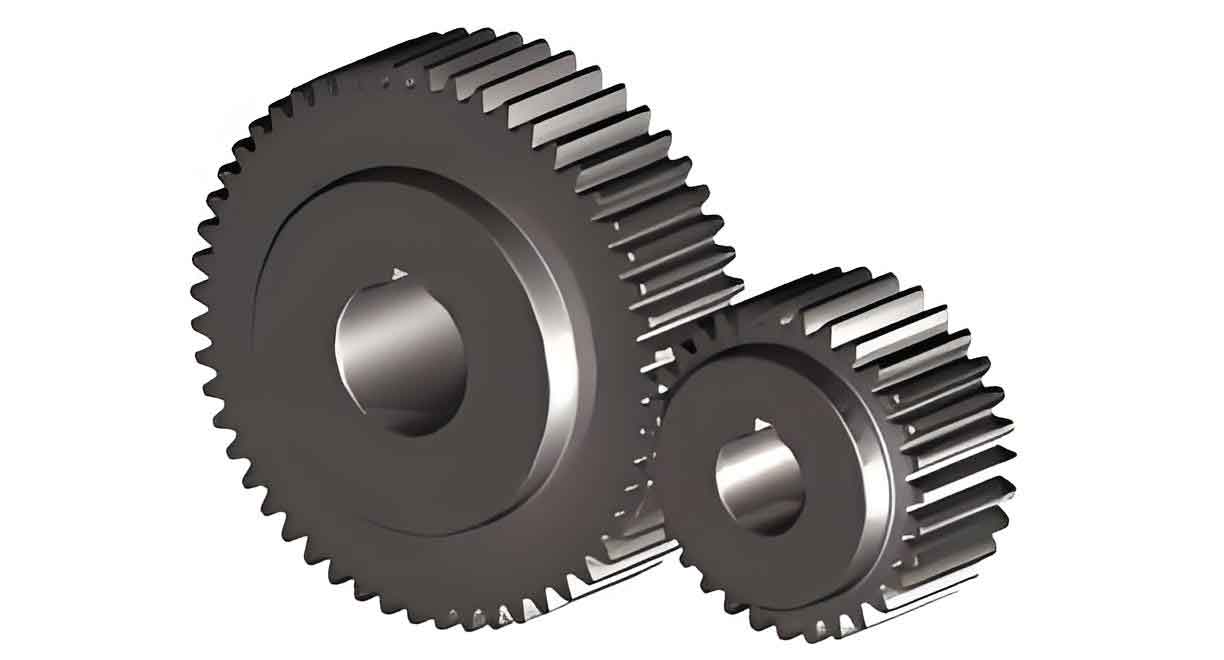
The fundamental principle behind any foundry ladle involves the rotation of the ladle body to pour molten iron. This rotation is typically achieved through a gear system connected to a handwheel or motor. The positioning of the rotational axis relative to the ladle’s center of gravity is crucial for determining operational characteristics like safety and ease of use. In spur gear ladles, the use of spur gears—straight-cut gears that transmit motion between parallel shafts—offers a more efficient and durable solution compared to the worm gears used in traditional designs.
Let me begin by explaining the concept of the center of gravity and rotational axis in foundry ladles. The empty ladle, composed of refractory lining and steel plate, has a specific center of gravity. When filled with molten iron to its rated capacity, the combined system has a synthetic center of gravity. The rotational axis is chosen based on these centers of gravity to achieve desired behaviors. For instance, if the axis is above both the empty and full ladle centers of gravity, the ladle is termed a “safety ladle.” In this configuration, the gravitational force always acts to upright the ladle, preventing accidental pouring even if the locking mechanism fails. The moment generated by gravity can be expressed as:
$$ M = F_g \times d $$
where \( M \) is the moment, \( F_g \) is the gravitational force, and \( d \) is the perpendicular distance from the axis to the line of action of the force. For a safety ladle, the moment is positive (uprighting) throughout the pouring process, ensuring stability.
Conversely, a “lightweight ladle” has its axis positioned between the synthetic center of gravity when full and the empty ladle’s center of gravity. This reduces the force required for operation but introduces dynamic effects like “nodding” or “kowtowing,” where the ladle jerks due to gear backlash. Spur gear ladles, with their precise manufacturing and minimal backlash, mitigate this issue significantly. The efficiency of spur gear systems can be as high as 97%, compared to worm gear systems, which often have efficiencies below 40% due to sliding friction. The efficiency \( \eta \) for gear systems can be approximated as:
$$ \eta = \frac{P_{out}}{P_{in}} \times 100\% $$
where \( P_{out} \) is the output power and \( P_{in} \) is the input power. For spur gears, the high efficiency stems from rolling contact, whereas worm gears suffer from sliding friction, leading to higher wear and energy loss.
The braking mechanism in spur gear ladles is another area of innovation. Inspired by hand chain hoists, these ladles employ a spiral load brake that automatically locks and releases during operation. This design allows for smooth, controlled pouring without sudden movements. In small spur gear ladles, a single brake is used for unidirectional pouring, eliminating nodding phenomena. For larger ladles, dual brakes enable bidirectional locking, enhancing safety during both pouring and uprighting. The braking torque \( T_b \) can be calculated based on the friction coefficient \( \mu \) and normal force \( N \):
$$ T_b = \mu \times N \times r $$
where \( r \) is the effective radius. This mechanism, combined with spur gears, ensures reliable performance over extended periods.
To illustrate the differences between spur gear and worm gear ladles, I have compiled a comparative table below. This table highlights key parameters such as efficiency, wear characteristics, installation complexity, and operational smoothness. The data underscores why spur gears are becoming the preferred choice in modern foundries.
| Parameter | Spur Gear Ladle | Worm Gear Ladle |
|---|---|---|
| Gear Type | Spur gears (straight-cut) | Worm and wheel |
| Mechanical Efficiency | Up to 97% | Typically 30-40% |
| Friction Type | Rolling friction | Sliding friction |
| Wear Rate | Low, due to rolling contact | High, due to sliding contact |
| Backlash and Nodding | Minimal, as spur gears can be precision-made | Pronounced, especially with wear |
| Installation Complexity | Moderate, with easier alignment | High, requiring precise perpendicularity |
| Braking System | Hand chain hoist-style automatic brake | Often relies on worm self-locking |
| Operational Force | Lower, due to high efficiency | Higher, due to low efficiency |
| Lifespan | Longer, with reduced maintenance | Shorter, requiring frequent adjustments |
In practical applications, spur gear ladles have been successfully implemented in capacities ranging from 1 ton to 5 tons. These ladles adhere to national standards, such as GB/T25714—2010 for parameters and technical conditions, and JBT 5771—1991 for ladle body specifications. The load-bearing components, like the吊攀 (lifting lugs), are forged from high-strength steel, ensuring durability. The bearing holes in the吊杆 (lifting rods) are machined post-welding to maintain precision alignment, which is essential for the smooth operation of spur gears.
The advantages of spur gear ladles extend beyond efficiency. For example, during pouring, the force required to lift the ladle body is reduced, making it easier for operators to handle. This is particularly beneficial in shift pouring scenarios where multiple pours are required. The mathematical relationship for the lifting force \( F_l \) can be derived from the moment balance:
$$ F_l \times L_a = W \times d_g $$
where \( L_a \) is the lever arm length, \( W \) is the weight of the ladle and molten iron, and \( d_g \) is the horizontal distance from the axis to the center of gravity. With spur gears, the reduced friction means that \( F_l \) is lower, enhancing operator comfort.
Moreover, the design of spur gear ladles allows for modularity and scalability. For larger ladles, manual operation remains feasible due to the high efficiency of spur gears, eliminating the need for electric motors and cables in some cases. This simplifies maintenance and reduces operational costs. The gear ratio \( i \) for spur gear systems is given by:
$$ i = \frac{N_{driver}}{N_{driven}} $$
where \( N_{driver} \) and \( N_{driven} \) are the number of teeth on the driving and driven spur gears, respectively. By optimizing this ratio, designers can achieve the desired torque and speed for pouring control.
In contrast, traditional worm gear ladles suffer from several drawbacks. The worm and wheel configuration involves a sliding contact that generates significant heat and wear over time. The self-locking property of worm gears, while useful for safety, comes at the cost of low efficiency. The lead angle \( \lambda \) of the worm must be less than the friction angle \( \phi \) for self-locking:
$$ \lambda < \phi $$
This constraint limits the gear’s performance, often resulting in efficiencies around 30%. Additionally, the installation of worm gear systems requires precise alignment of perpendicular and intersecting axes, increasing complexity and the likelihood of nodding as gears wear.
To further emphasize the benefits of spur gears, consider the wear dynamics. The wear rate \( w \) in gears can be modeled using Archard’s equation:
$$ w = k \frac{F_n \times v}{H} $$
where \( k \) is a wear coefficient, \( F_n \) is the normal force, \( v \) is the sliding velocity, and \( H \) is the hardness. For spur gears, the sliding velocity is minimal due to rolling action, leading to lower \( w \). In worm gears, high sliding velocities accelerate wear, necessitating frequent replacements and adjustments.
The adoption of spur gear ladles is not just a theoretical improvement; it is backed by real-world success stories. For instance, in foundries that have switched to spur gear systems, operators report smoother pouring cycles and reduced physical strain. The absence of nodding phenomena means that molten iron is delivered consistently, improving casting quality. The braking system, inspired by hand chain hoists, provides intuitive control, allowing operators to focus on the pouring process without worrying about sudden ladle movements.
Looking ahead, the trend toward spur gear technology in foundry ladles is expected to accelerate. As industries prioritize energy efficiency and operator safety, the high-performance characteristics of spur gears make them an ideal choice. The modular design also facilitates integration with automated systems, paving the way for smart foundries. In such environments, sensors can monitor gear wear and braking performance, enabling predictive maintenance and minimizing downtime.
In conclusion, the evolution from worm gear to spur gear foundry ladles represents a significant advancement in casting technology. The use of spur gears—with their high efficiency, durability, and smooth operation—addresses the limitations of traditional designs. Through mathematical analysis and comparative tables, I have demonstrated how spur gear ladles reduce operational forces, minimize wear, and eliminate nodding. As foundries worldwide seek to optimize their processes, spur gear ladles are poised to become the standard, driven by their proven benefits and alignment with industrial trends. The future of foundry operations is undoubtedly geared toward spur gears, promising a new era of efficiency and reliability.