
The reliable transmission of motion and power is a cornerstone of mechanical systems, and among the various means to achieve this, gear drives stand as the predominant and most critical form. As machinery evolves towards higher precision, increased speed, and greater power density, the demands placed on transmission systems escalate accordingly. Within this context, the dynamic contact performance of meshing gears becomes paramount, directly influencing the overall machine’s operational stability, noise, vibration, and service life. Failures such as pitting, wear, and tooth breakage are often precipitated by excessive dynamic loads and resonant vibrations arising during operation. Therefore, a comprehensive investigation into the dynamic characteristics of spur gears is not merely an academic exercise but an essential engineering practice for enhancing performance and reliability. This article, from my perspective as an analyst, delves into the dynamic behavior of spur gears by employing Finite Element Analysis (FEA) within the ANSYS Workbench environment. The core of the investigation lies in two complementary analyses: modal analysis, to uncover the inherent vibrational properties, and harmonic response analysis, to predict the system’s behavior under sustained oscillatory loads. The ultimate goal is to identify critical resonant frequencies and stress concentrations, thereby providing a theoretical foundation for optimizing gear design to avoid resonance and minimize failure modes.
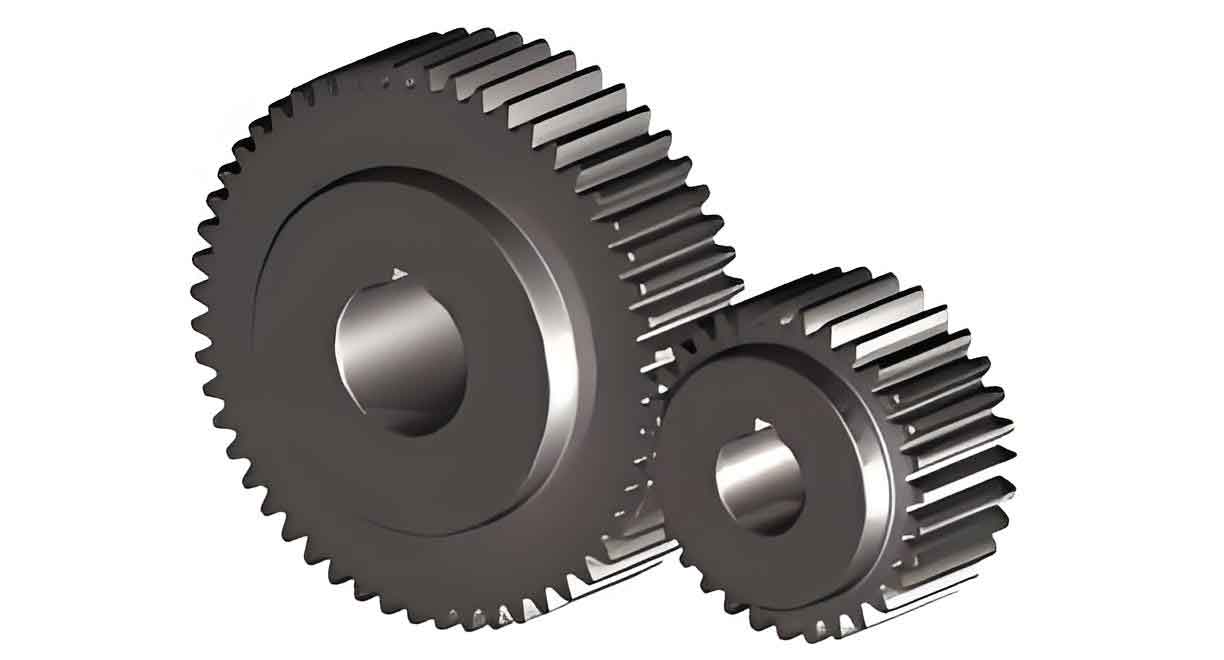
The dynamic interaction between meshing spur gears is a complex, time-varying, non-linear contact problem. Traditional analytical methods, often based on Hertzian contact theory, involve significant simplifications and assumptions that can compromise accuracy. Modern computational techniques, particularly FEA, offer a powerful alternative. They allow for the modeling of complex geometries, material properties, and boundary conditions, yielding detailed insights into stress, strain, and deformation fields that are otherwise difficult or impossible to obtain. For dynamic assessments, modal analysis serves as the fundamental first step. It reveals the natural frequencies and corresponding mode shapes—the inherent ways in which a structure prefers to vibrate when disturbed. Understanding these is crucial because if an external excitation frequency (e.g., from engine rpm or mesh frequency) coincides with a natural frequency, resonance occurs, leading to dramatically amplified vibrations and potential rapid failure.
Theoretical Foundation and Simplified Dynamic Model
To lay the groundwork for the finite element analysis, it is instructive to consider a simplified analytical model of a spur gear pair. The complex three-dimensional gear system can be conceptually reduced to a single-degree-of-freedom (SDOF) torsional vibration model for fundamental understanding. This model represents the essential dynamics of the rotating inertias and the meshing stiffness.
The equation of motion for an undamped SDOF system is given by:
$$m\ddot{x}(t) + kx(t) = 0$$
where \( m \) is the equivalent mass, \( k \) is the equivalent stiffness, \( x(t) \) is the displacement, and \( \ddot{x}(t) \) is the acceleration. The natural angular frequency \( \omega_n \) of this free-vibrating system is:
$$\omega_n = \sqrt{\frac{k}{m}}$$
The corresponding natural frequency \( f_n \) in Hertz and the natural period \( T_n \) are:
$$f_n = \frac{\omega_n}{2\pi} = \frac{1}{2\pi}\sqrt{\frac{k}{m}}$$
$$T_n = \frac{2\pi}{\omega_n} = 2\pi\sqrt{\frac{m}{k}}$$
For a pair of spur gears, the key dynamic parameter is the time-varying meshing stiffness \( k_v(t) \). This variation occurs because the number of tooth pairs in contact changes as the gears rotate (from one pair to two pairs and back in a standard spur gear mesh). This varying stiffness acts as a parametric excitation within the system. The fundamental formula for the natural frequency of the gear mesh, considering this time-varying stiffness, can be expressed as:
$$f_n = \frac{1}{2\pi}\sqrt{\frac{k_v(t)}{m_{eq}}} = \frac{1}{2\pi}\sqrt{\frac{\sum k_{vt}}{m_{eq}}}$$
Here, \( k_{vt} \) represents the stiffness of individual tooth pairs in contact, and \( m_{eq} \) is the equivalent mass of the gear pair referred to the line of action. This simplified model highlights the direct relationship between mesh stiffness, system inertia, and natural frequency, guiding our interpretation of the more detailed FEA results.
Finite Element Modeling and Preprocessing for Spur Gears
Transitioning from theory to simulation requires creating an accurate digital twin of the spur gear pair. For this analysis, I modeled a gear pair from a representative machine tool drive. The parameters are summarized in the table below.
| Parameter | Pinion (Driver) | Gear (Driven) |
|---|---|---|
| Number of Teeth (Z) | 24 | 56 |
| Module (m) | 3 mm | 3 mm |
| Pressure Angle (α) | 20° | 20° |
| Face Width (B) | 15 mm | 15 mm |
| Material | 20Cr | 40Cr |
The modeling process began with parametric creation of the spur gear profiles using dedicated CAD software (like Pro/ENGINEER or similar), ensuring accurate involute tooth geometry. The assembled pair was then exported in a neutral format (IGES) for seamless import into ANSYS Workbench. Defining material properties accurately is critical. The properties assigned are as follows:
| Material Property | Value (for both steels) |
|---|---|
| Young’s Modulus (E) | 2.06 x 10¹¹ Pa |
| Poisson’s Ratio (ν) | 0.3 |
| Density (ρ) | 7.8 x 10³ kg/m³ |
Meshing is a pivotal step that dictates solution accuracy and computational cost. For the complex, non-prismatic geometry of spur gears, an automatic tetrahedral mesh (using the “Tetrahedrons” method in Workbench) is often the most efficient and robust choice. It conforms well to curved surfaces and allows for local refinement in high-stress regions like the tooth root and contact zones. The final mesh for this spur gear pair consisted of approximately 17,000 elements and 32,000 nodes, providing a good balance between detail and solve time. Finally, boundary conditions were applied: fixed supports were applied to the inner bore surfaces of both gears to simulate their connection to shafts, and static loads representing the transmitted torque were applied to several teeth in the mesh zone. The tangential force \(F_t\) and radial force \(F_r\) were calculated from the input power (7.5 kW) and speed (1440 rpm):
$$T = \frac{9550 \cdot P}{n} = \frac{9550 \cdot 7.5}{1440} \approx 49.74 \text{ Nm}$$
$$F_t = \frac{2T}{d_1} = \frac{2 \cdot 49.74}{0.072} \approx 1381.7 \text{ N}$$
$$F_r = F_t \cdot \tan(\alpha) \approx 1381.7 \cdot \tan(20^\circ) \approx 502.9 \text{ N}$$
These forces were applied to the relevant tooth surfaces of the pinion, with equal and opposite reactions on the driven spur gear.
Modal Analysis of the Spur Gear Pair
Modal analysis was performed to extract the inherent vibration characteristics of the assembled spur gear system, specifically its natural frequencies and mode shapes. This is a linear perturbation analysis that solves the eigenvalue problem derived from the system’s mass and stiffness matrices, ignoring damping and non-linearities for this phase. The governing equation is:
$$ ( [K] – \omega_i^2 [M] ) \{\phi_i\} = 0 $$
where \([K]\) is the stiffness matrix, \([M]\) is the mass matrix, \(\omega_i\) is the i-th natural angular frequency, and \(\{\phi_i\}\) is the corresponding mode shape vector (eigenvector). The analysis was set to solve for the first eight modes, as lower-order modes typically dominate the dynamic response of structures like spur gears. The results are summarized comprehensively below.
| Mode Order | Natural Frequency (Hz) | Description of Mode Shape (Vibration Character) |
|---|---|---|
| 1 | 2331.3 | Negligible global deformation; primarily local, low-energy distortion. |
| 2 | 2468.5 | Similar to Mode 1, with minimal discernible global movement. |
| 3 | 2809.4 | First significant global mode: clear bending vibration of the gear body along the axis perpendicular to the gear face (Z-axis). |
| 4 | 3254.5 | Combined bending and torsional mode. The gear body exhibits bending along two axes (X and Z) coupled with a twisting (torsion) about the Y-axis (the axis of rotation). |
| 5 | 4487.2 | A higher-order combined mode, again showing bending along X and Z axes with torsion about Y. The deformation pattern is more complex than Mode 4. |
| 6 | 4646.4 | Returns to a pattern with no pronounced global deformation, similar to Modes 1 and 2. |
| 7 | 6392.4 | Highly complex, three-dimensional deformation involving a mix of bending, twisting, and possibly some circumferential modes. |
| 8 | 7063.1 | The most complex mode among the first eight, showing intricate, multi-nodal deformation patterns across the gear body. |
The analysis of these results for the spur gear pair is revealing. The first two modes, while having distinct frequencies, do not represent strong global resonant threats as the deformation is minimal. The critical frequency band for potential resonance in this specific spur gear set lies between approximately 2809 Hz and 4487 Hz (Modes 3, 4, and 5). Within this band, the dominant failure-inducing mode shape is bending (Mode 3), as bending stresses directly correlate with tooth root bending fatigue failure—a common failure mode for spur gears. The combined bending-torsion modes (4 and 5) also represent significant dynamic responses. Therefore, during the design and operation of this transmission, excitation frequencies (such as mesh frequency \(f_m = Z \times n/60\) and its harmonics) must be steered clear of this 2809-4487 Hz range to avoid resonant amplification of stresses. Modes 7 and 8, while at very high frequencies, are less likely to be excited by typical operational forces but could be relevant for high-frequency noise analysis.
Harmonic Response Analysis of the Spur Gears
While modal analysis identifies *where* resonance might occur, harmonic response analysis predicts *how* the spur gears will behave when subjected to continuous sinusoidal (harmonic) loading across a range of frequencies. This is crucial for assessing vibration levels, dynamic stresses, and displacements under steady-state oscillatory conditions, such as those caused by unbalance or torque fluctuations. The harmonic response analysis solves the complex equation of motion for forced vibration:
$$ ( -\Omega^2 [M] + i\Omega [C] + [K] ) \{u(\Omega)\} = \{F(\Omega)\} $$
Here, \(\Omega\) is the forcing frequency (in rad/s), \([C]\) is the damping matrix, \(i\) is the imaginary unit, \(\{u(\Omega)\}\) is the complex displacement vector (containing magnitude and phase information), and \(\{F(\Omega)\}\) is the complex force vector. In this analysis, a constant amplitude sinusoidal force (based on the static \(F_t\) and \(F_r\)) was applied to the gear teeth, and the frequency was swept from 0 Hz to a value beyond the highest modal frequency of interest, typically up to 8000 Hz in this case.
The primary output is a Frequency Response Function (FRF), often plotted as displacement (or stress) amplitude versus frequency. I conducted two key harmonic response studies on the spur gear model to investigate damping effects. First, a baseline analysis with minimal system damping was run. The resulting FRF curve showed pronounced peaks exactly at the natural frequencies identified in the modal analysis, particularly the large amplitude peak near 4500 Hz, correlating with Modes 4 and 5. At this forcing frequency of 4500 Hz, the maximum von Mises stress in the pinion was found to be approximately 13.44 MPa, located at the inner bore. While this stress is well below the yield strength of 20Cr steel, it confirms the resonant amplification effect.
Second, to model a more realistic scenario, an analysis was performed with a higher, non-zero damping ratio (\(\zeta = 0.05\) or 5%). Damping is a critical, often uncertain, parameter in gear systems, arising from material hysteresis, lubrication, and structural joints. The results were striking. The amplitude of the response peaks in the FRF was significantly reduced. The peak response near 4500 Hz was attenuated, and the corresponding maximum von Mises stress dropped to about 5.95 MPa. This demonstrates a fundamental principle in dynamics: increasing system damping is one of the most effective ways to suppress resonant vibration amplitudes and the associated dynamic stresses in spur gears. The harmonic response analysis thus provides a direct visualization of how damping controls the severity of the response at critical frequencies and offers a quantitative measure of dynamic stress levels across the operating spectrum.
Synthesis of Results and Engineering Implications for Spur Gear Design
The combined findings from the modal and harmonic response analyses yield a powerful, actionable insight set for the design and application of spur gears. The core conclusions and recommendations are as follows:
- Resonance Avoidance Map: The modal analysis provides a clear “resonance avoidance map.” For the analyzed spur gear pair, the excitation frequencies should be designed to avoid the band from 2809 Hz to 4487 Hz. This involves calculating the mesh frequency \(f_m\) and its harmonics (\(2f_m, 3f_m, …\)) for all intended operational speeds (rpm) and ensuring they do not coincide with this critical band. If overlap is unavoidable, structural modifications (stiffening ribs, web design changes, material selection) should be considered to shift the natural frequencies.
- Critical Failure Mode Identification: The first significant global mode (Mode 3 at 2809.4 Hz) is a pure bending mode. This indicates that the primary global dynamic weakness of this spur gear body is in bending stiffness. Design efforts to increase resistance to bending fatigue, such as optimizing the rim and web geometry, will not only improve static strength but also positively impact dynamic performance by potentially increasing this first bending natural frequency.
- Quantification of Damping Benefits: The harmonic response analysis quantitatively demonstrates the profound impact of damping. A damping ratio increase to a realistic 5% reduced resonant dynamic stresses by more than 50% in the analyzed case. This underscores the importance of considering damping sources in the system—for instance, through the use of elastomeric couplings, optimized gear lubrication (squeeze film damping), or even constrained layer damping treatments on the gear web in extreme applications. Designing for higher inherent damping can be as valuable as designing for higher stiffness.
- Validation of Structural Integrity: Even under the resonant condition with low damping, the predicted maximum dynamic von Mises stress (13.44 MPa) was orders of magnitude below the material’s yield and endurance limits. This validates the static strength design of the spur gears for the given load. However, it is crucial to remember that resonant conditions, if sustained, can lead to high-cycle fatigue failure even at relatively low stress amplitudes, making resonance avoidance the primary goal.
- Methodology Advantage: The employed FEA methodology within ANSYS Workbench offers a significant advantage over traditional analytical methods. It accounts for the full 3D geometry of the spur gears, complex boundary conditions, and the interaction between the pinion and gear. The visual output of mode shapes and FRF curves provides an intuitive and deep understanding of the system dynamics that is difficult to achieve through purely analytical calculations.
In conclusion, the dynamic analysis of spur gears through integrated modal and harmonic response FEA is an indispensable tool in modern mechanical design. It moves beyond static stress checks to proactively address the vibrational behavior that governs noise, durability, and reliability. By identifying critical natural frequencies, visualizing mode shapes to pinpoint structural weaknesses, and quantifying the effects of damping on resonant response, engineers can design spur gear transmissions that are not only strong but also smooth, quiet, and long-lasting, effectively mitigating the root causes of dynamic failure.