
In modern mechanical transmission systems, the reliable and efficient operation of gear components is paramount. Among various gear types, spur gears are widely adopted due to their straightforward design, ease of manufacturing, and power transmission efficiency. However, prolonged operation under high stress and demanding conditions renders them susceptible to various failure modes, with tooth breakage being one of the most severe and critical faults. A broken tooth can lead to sudden transmission failure, causing significant downtime and potential safety hazards. Therefore, a profound understanding of the dynamic characteristics of spur gears, especially under fault conditions, is essential for predictive maintenance and system reliability enhancement.
Traditionally, research on gear faults has extensively focused on vibration signal analysis and the evaluation of basic performance parameters under conditions like misalignment, pitting, or cracking. Numerous studies have employed experimental and numerical simulation methods to diagnose these faults. However, a direct and detailed investigation into the relationship between the degree of tooth breakage and the fundamental intrinsic properties—specifically, the modal characteristics—of spur gears remains relatively sparse. Modal analysis, which reveals the natural frequencies and corresponding mode shapes of a structure, forms the cornerstone of dynamic response prediction and resonance avoidance. Any geometric alteration, such as material loss from a broken tooth, inevitably modifies these intrinsic properties.
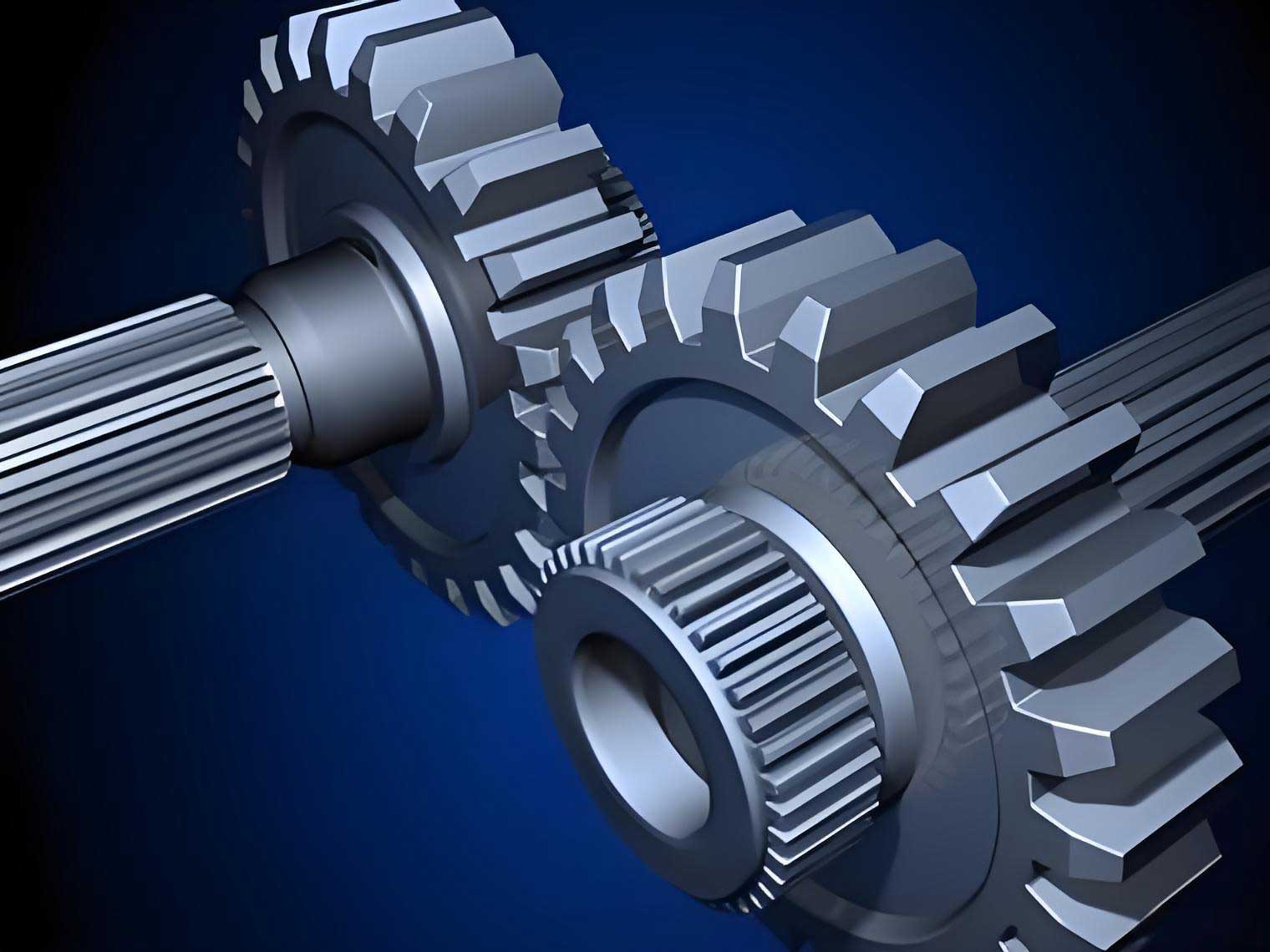
This article presents a comprehensive finite element method (FEM) based study to analyze the modal characteristics of spur gears. The primary objectives are twofold: first, to establish a robust and efficient FEM workflow by determining the optimal mesh configuration that balances computational accuracy and resource efficiency for modal analysis of spur gears; second, to systematically investigate the influence of progressively increasing broken tooth severity on the natural frequencies and mode shapes of spur gears. The insights gained are crucial for developing more accurate fault detection algorithms based on shifts in dynamic signatures.
1. Fundamentals of Finite Element Modal Analysis for Spur Gears
Modal analysis is a technique used to determine the inherent vibration characteristics of a structure. For spur gears, these characteristics are the natural frequencies, mode shapes, and damping ratios. The undamped free vibration equation governing the motion is derived from the general equation of motion:
$$ [M]\{\ddot{u}\} + [K]\{u\} = \{0\} $$
where $[M]$ is the mass matrix, $[K]$ is the stiffness matrix, $\{u\}$ is the displacement vector, and $\{\ddot{u}\}$ is the acceleration vector. Assuming harmonic motion $\{u\} = \{\phi\} e^{i \omega t}$, the equation simplifies to the classic eigenvalue problem:
$$ ([K] – \omega^2 [M]) \{\phi\} = \{0\} $$
Here, $\omega$ represents the circular natural frequency (rad/s), and $\{\phi\}$ is the corresponding eigenvector or mode shape. The natural frequency in Hertz is $f = \omega / (2\pi)$. The solution yields a set of eigenvalues ($\omega_i^2$) and eigenvectors ($\{\phi_i\}$), typically ordered from the lowest (fundamental) frequency upwards. For the analysis of spur gears, the low-order modes (e.g., first 5 to 10) are of primary interest as they are most susceptible to excitation and have the greatest influence on dynamic response.
The finite element method discretizes the complex geometry of spur gears into a finite number of simple elements, allowing for the numerical solution of this eigenvalue problem. The accuracy of this solution is highly dependent on the fidelity of the finite element model, particularly the mesh quality. The process for conducting a finite element modal analysis of spur gears involves several key steps, as outlined below.
1.1 Parametric Modeling and Material Definition
Accurate geometric representation is the first critical step. A parametric model of the spur gear was created to allow for easy modification of key design parameters. The modeling process begins with the generation of the involute tooth profile based on fundamental gear geometry formulas. The coordinates for the involute curve are defined parametrically. Subsequently, operations such as extrusion, patterning, and Boolean subtraction are performed to create the solid three-dimensional model featuring a central bore. The specific parameters for the spur gear analyzed in this study are summarized in Table 1.
| Parameter | Value | Unit |
|---|---|---|
| Number of Teeth (z) | 37 | – |
| Module (m) | 2.5 | mm |
| Pressure Angle (α) | 20 | ° |
| Face Width (b) | 10 | mm |
| Young’s Modulus (E) | 211 | GPa |
| Poisson’s Ratio (ν) | 0.3 | – |
| Density (ρ) | 7850 | kg/m³ |
This model is then imported into a commercial finite element analysis suite (e.g., ANSYS Workbench). The material properties listed in Table 1 are assigned to the gear body, defining its elastic and inertial behavior.
1.2 Finite Element Mesh Generation and Boundary Conditions
Mesh generation is arguably the most influential step in terms of result accuracy and computational cost. The geometry is subdivided into small, interconnected elements. Two primary element types are considered for three-dimensional solid models like spur gears: tetrahedral (Tet) and hexahedral (Hex) elements. Hexahedral elements generally offer better accuracy with fewer elements for regular geometries but can be more challenging to generate for complex shapes. Tetrahedral elements provide greater flexibility for meshing intricate geometries. The element size is a critical control parameter, directly affecting the number of nodes and elements. A balance must be struck between mesh refinement (for accuracy) and model size (for efficiency).
After meshing, appropriate boundary conditions are applied to simulate the gear’s operational constraints. For a modal analysis intended to find free vibration characteristics, only constraint conditions are needed, excluding external loads. Typically, the inner surface of the central bore, which interfaces with the shaft, is considered fixed. This is applied as a “Fixed Support” boundary condition, constraining all translational degrees of freedom. This simulates the condition where the gear is rigidly mounted on a shaft.
1.3 Solution and Post-Processing
With the model fully defined, the eigenvalue solver is executed. The Block Lanczos algorithm is often employed for its efficiency in extracting multiple modes of large models. The solver computes the requested number of natural frequencies and their corresponding mode shapes. Post-processing involves visualizing these mode shapes as animated deformation plots and extracting the numerical values of the frequencies. The mode shapes for a disk-like structure such as spur gears are often characterized by the number of nodal diameters. For instance, the first two modes are usually a pair of orthogonal one-nodal-diameter modes, followed by two-nodal-diameter modes, and so on. These visualizations and data form the basis for understanding the dynamic behavior of the spur gears.
2. Optimization of Mesh Strategy for Modal Analysis of Spur Gears
Before investigating faulty spur gears, it is imperative to establish a reliable and efficient baseline simulation procedure. The choice of mesh type and element size significantly impacts the computed natural frequencies. An overly coarse mesh may yield inaccurate results, while an excessively fine mesh leads to prohibitively long solution times without substantial gain in accuracy. This section details a systematic study to find the optimal mesh configuration for the modal analysis of the spur gear defined in Table 1.
A comprehensive matrix of simulations was performed, varying the element type (Tetrahedral vs. Hexahedral) and the global element size (ranging from 2.0 mm down to 0.4 mm). For each configuration, key metrics were recorded: number of nodes, number of elements, solution time, and the extracted natural frequencies for the first four distinct modal families (one-, two-, three-, and four-nodal-diameter modes). The results are consolidated in Table 2.
| Element Type | Element Size (mm) | Solution Time (s) | Nodes | Elements | 1 Nodal Diameter (Hz) | 2 Nodal Diameters (Hz) | 3 Nodal Diameters (Hz) | 4 Nodal Diameters (Hz) |
|---|---|---|---|---|---|---|---|---|
| Tetrahedral | 2.0 | 19 | 102,910 | 68,490 | 6588.2 | 7611.0 | 12257 | 18925 |
| 1.5 | 47 | 232,109 | 159,468 | 6584.3 | 7607.1 | 12251 | 18912 | |
| 1.2 | 233 | 447,734 | 312,167 | 6582.4 | 7605.2 | 12247 | 18905 | |
| 1.0 | 1140 | 748,031 | 528,967 | 6581.1 | 7604.1 | 12246 | 18903 | |
| 0.6 | 5261 | 1,440,201 | 1,029,302 | 6579.9 | 7603.1 | 12245 | 18900 | |
| Hexahedral | 2.0 | 14 | 55,236 | 15,116 | 6586.9 | 7608.0 | 12248 | 18906 |
| 1.5 | 27 | 115,046 | 31,499 | 6583.4 | 7605.6 | 12246 | 18903 | |
| 1.2 | 57 | 214,500 | 58,575 | 6581.6 | 7604.0 | 12245 | 18900 | |
| 1.0 | 227 | 333,869 | 91,867 | 6580.9 | 7603.4 | 12244 | 18998 | |
| 0.6 | 816 | 1,356,412 | 365,841 | 6579.0 | 7602.0 | 12243 | 18897 | |
| 0.4 | 2320 | 4,165,597 | 1,114,757 | 6578.2 | 7601.5 | 12243 | 18897 |
The analysis of the data in Table 2 reveals several important trends regarding the simulation of spur gears:
- Convergence with Mesh Refinement: For both element types, as the mesh is refined (element size decreases), the computed natural frequencies consistently decrease, asymptotically approaching a converged value. This is a classic behavior in finite element analysis. The change in frequency between the 0.6 mm and 0.4 mm hexahedral mesh is less than 1 Hz for all modes, indicating that the solution has nearly converged at that level.
- Computational Efficiency: The solution time increases dramatically with mesh refinement. The hexahedral mesh with 0.4 mm size takes over 2300 seconds, whereas the 1.0 mm hexahedral mesh solves in only 227 seconds—an order of magnitude faster while providing very accurate results.
- Element Type Comparison: Hexahedral elements demonstrate superior efficiency. A hexahedral mesh produces far fewer elements and nodes than a tetrahedral mesh of comparable element size, leading to significantly shorter solution times. For instance, the 1.0 mm hexahedral mesh has ~92k elements and solves in 227s, while the 1.0 mm tetrahedral mesh has ~529k elements and requires 1140s. Furthermore, the frequency results from the hexahedral mesh are consistently slightly lower (and closer to the converged value from the finest mesh) than those from a tetrahedral mesh with a similar nominal size.
- Optimal Configuration: Based on a comprehensive assessment of solution accuracy (proximity to converged results), model size, and computational time, the optimal mesh configuration for this specific spur gear model is identified as a hexahedral element type with a global element size of 1.0 mm. This configuration offers an excellent compromise, providing results within a few Hertz of the fully converged solution while maintaining a manageable and efficient model.
This optimized mesh strategy ensures that subsequent analyses of spur gears, including those with faults, are both reliable and computationally feasible.
3. Modal Analysis of Spur Gears with Progressive Tooth Breakage
Having established a robust simulation baseline, we now investigate the core issue: the impact of broken tooth faults on the modal characteristics of spur gears. A broken tooth represents a localized loss of mass and a modification of the gear’s structural stiffness distribution. To model this progressively, a parametric broken tooth model is created. The fault is defined by the depth of material removed from the tip of a single tooth, measured radially inwards from the tip circle. This depth, denoted as \( L \), is varied to simulate increasing severity of breakage: 0 mm (healthy), 0.5 mm, 1.0 mm, 1.5 mm, and 2.0 mm.
The modal analysis, using the optimized 1.0 mm hexahedral mesh, is repeated for each of these five fault models. The boundary condition (fixed inner bore) remains unchanged. The first ten natural frequencies and their associated mode shapes are extracted. The results are presented in Table 3.
| Mode Order | Natural Frequency (Hz) for Broken Tooth Depth L | Primary Mode Shape Characteristic | ||||
|---|---|---|---|---|---|---|
| 0 mm | 0.5 mm | 1.0 mm | 1.5 mm | 2.0 mm | ||
| 1 | 6580.9 | 6580.9 | 6581.0 | 6581.1 | 6581.0 | One Nodal Diameter |
| 2 | 6581.0 | 6584.3 | 6588.3 | 6592.5 | 6597.2 | One Nodal Diameter |
| 3 | 6942.0 | 6943.8 | 6945.9 | 6948.4 | 6951.0 | Nodal Circle |
| 4 | 7603.4 | 7603.6 | 7603.7 | 7603.7 | 7603.8 | Two Nodal Diameters |
| 5 | 7603.5 | 7607.5 | 7612.5 | 7618.2 | 7624.6 | Two Nodal Diameters |
| 6 | 10402.0 | 10404.0 | 10407.0 | 10410.0 | 10413.0 | Nodal Circle |
| 7 | 12244.0 | 12244.0 | 12244.0 | 12244.0 | 12244.0 | Three Nodal Diameters |
| 8 | 12244.0 | 12251.0 | 12261.0 | 12271.0 | 12282.0 | Three Nodal Diameters |
| 9 | 18898.0 | 18898.0 | 18899.0 | 18899.0 | 18899.0 | Four Nodal Diameters |
| 10 | 18898.0 | 18912.0 | 18928.0 | 18946.0 | 18965.0 | Four Nodal Diameters |
The analysis of these results yields significant insights into the behavior of faulty spur gears:
3.1 Invariance of Mode Shapes
A critical observation is that the fundamental character of the mode shapes remains unchanged despite the broken tooth. For example, the first two modes remain a pair of one-nodal-diameter modes, modes 4 and 5 remain two-nodal-diameter modes, and so on. The spatial pattern of deformation is not fundamentally altered by the localized fault. However, the broken tooth introduces a geometric asymmetry. This breaks the perfect axi-symmetry of the healthy spur gear, causing the degenerate mode pairs (e.g., modes 1 & 2, 4 & 5, 7 & 8, 9 & 10 in the healthy gear which had identical or nearly identical frequencies) to split into two distinct frequencies. One mode of the pair becomes more sensitive to the fault than the other.
3.2 Frequency Shift Patterns
The data reveals a clear and consistent pattern in frequency shifts for spur gears with a broken tooth:
- Insensitive Modes: One mode from each previously degenerate pair (Modes 1, 4, 7, 9) shows virtually no change in frequency with increasing broken tooth depth \( L \). The change is less than 1 Hz even for \( L = 2.0 \) mm.
- Sensitive Modes: The complementary mode in each pair (Modes 2, 5, 8, 10) exhibits a significant and monotonic increase in natural frequency as \( L \) increases.
This phenomenon can be explained by considering the interaction between the mode shape’s deformation pattern and the location of the stiffness reduction/mass loss. The broken tooth locally reduces stiffness. For a mode shape that has an antinode (point of maximum deformation) near the broken tooth, the effective stiffness of that particular mode decreases, which would normally lower its frequency. However, there is also a concurrent loss of mass. The net effect depends on which factor dominates. In this case, for the sensitive modes, the reduction in effective modal mass appears to outweigh the reduction in effective modal stiffness at the fault location, leading to a net increase in frequency. The insensitive modes likely have a nodal line or minimal deformation near the broken tooth, making them largely unaffected by the local change.
3.3 Magnitude of Frequency Change
The magnitude of the frequency shift for the sensitive modes is not constant across different modal families. It increases with the modal order. We can quantify this by calculating the frequency difference (\( \Delta f \)) between the faulty gear (L=2.0 mm) and the healthy gear (L=0 mm) for the sensitive modes of each family:
- One-nodal-diameter sensitive mode (Mode 2): \( \Delta f = 6597.2 – 6581.0 = 16.2 \) Hz
- Two-nodal-diameter sensitive mode (Mode 5): \( \Delta f = 7624.6 – 7603.5 = 21.1 \) Hz
- Three-nodal-diameter sensitive mode (Mode 8): \( \Delta f = 12282.0 – 12244.0 = 38.0 \) Hz
- Four-nodal-diameter sensitive mode (Mode 10): \( \Delta f = 18965.0 – 18898.0 = 67.0 \) Hz
This trend indicates that higher-order modes of spur gears are more significantly influenced by the broken tooth fault. This can be understood because higher-order modes involve more complex, localized deformation patterns with shorter wavelengths. A local geometric defect like a broken tooth thus has a more pronounced interaction with these localized deformation fields compared to the global, low-order bending modes of the gear body.
The relationship between the frequency shift (\( \Delta f \)) and the broken tooth depth (\( L \)) for a given sensitive mode can be approximated. Plotting the data suggests a non-linear, potentially quadratic relationship. A simplified model could be expressed as:
$$ \Delta f_i = C_i \cdot L^n $$
where \( \Delta f_i \) is the frequency shift for the i-th sensitive mode, \( C_i \) is a mode-dependent coefficient that increases with modal order, and \( n \) is an exponent greater than 1, indicating the shift accelerates with deeper breakage. This has important implications for fault severity estimation in spur gears.
4. Discussion and Engineering Implications
The findings from this detailed finite element study on spur gears have several important theoretical and practical implications for the design and health monitoring of gear transmission systems.
For Simulation Practice: The mesh sensitivity analysis underscores the importance of a verified simulation setup. Blindly using default mesh settings can lead to results that are either inaccurate or computationally wasteful. The identified optimal configuration—hexahedral elements at 1.0 mm size for this specific gear—provides a guideline. For spur gears of different sizes, a similar convergence study based on a non-dimensional parameter like elements per tooth or element size relative to module (\( m \)) should be conducted. The general principle of preferring hexahedral elements for efficient accuracy in regular gear geometries holds.
For Fault Diagnosis: The modal analysis results provide a clear “fingerprint” for broken tooth faults in spur gears. The key diagnostic indicators are:
- Mode Splitting: The separation of previously degenerate mode pairs (e.g., the split between Mode 1 and Mode 2 frequencies) is a direct consequence of the broken tooth breaking the gear’s symmetry. Monitoring this split can be a powerful detection tool.
- Frequency Increase in Specific Modes: Contrary to the intuitive notion that damage always lowers natural frequencies, the study shows that a broken tooth in spur gears can cause specific frequencies to increase. This is a critical insight for condition monitoring algorithms that might otherwise only look for frequency decreases.
- Severity Proportionality: The magnitude of the frequency shift in the sensitive modes is monotonically related to the broken tooth depth (\( L \)). This relationship, particularly its stronger effect on higher-order modes, can be leveraged to not only detect the presence of a fault but also to quantify its severity. Advanced signal processing techniques like operational modal analysis could potentially extract these subtle shifts from vibration data during operation.
For Dynamic Design and Resonance Avoidance: Designers must consider the shift in natural frequencies due to potential faults. A spur gear system designed to avoid resonance with excitation sources (like mesh frequency) in its healthy state might inadvertently enter a resonant condition as a tooth begins to break, leading to accelerated failure. The results indicate that the risk is higher for excitations that could couple with the higher-order, more sensitive modes of the spur gears.
Theoretical Considerations: The observed behavior can be framed within perturbation theory. The broken tooth is a localized perturbation to the mass and stiffness matrices of the healthy spur gear system (\( [M_0] \) and \( [K_0] \)). The perturbations are \( [\Delta M] \) (negative, representing mass loss) and \( [\Delta K] \) (negative, representing stiffness reduction). The change in the eigenvalue (\( \lambda_i = \omega_i^2 \)) for the i-th mode due to these perturbations can be approximated by:
$$ \Delta \lambda_i \approx \frac{\{\phi_i\}_0^T ([\Delta K] – \lambda_i [\Delta M]) \{\phi_i\}_0}{\{\phi_i\}_0^T [M_0] \{\phi_i\}_0} $$
where \( \{\phi_i\}_0 \) is the mode shape of the healthy gear. The sign and magnitude of \( \Delta \lambda_i \) (and hence \( \Delta f_i \)) depend on the modal displacements at the fault location, which explains why some modes are sensitive and others are not. For the sensitive modes of the spur gears studied, the term involving \( [\Delta M] \) dominates, leading to a positive \( \Delta \lambda_i \).
5. Conclusion
This investigation employed a systematic finite element approach to analyze the intrinsic modal properties of spur gears, with a focus on optimizing analysis parameters and understanding the impact of broken tooth faults. The study conclusively demonstrates that for efficient and accurate modal analysis of the given spur gear geometry, a hexahedral-dominated mesh with an element size of 1.0 mm represents the optimal configuration, effectively balancing solution accuracy with computational resource demands.
Furthermore, the research provides significant new insights into the dynamic behavior of faulty spur gears. It was found that while the fundamental character of the mode shapes remains unaltered, a broken tooth introduces asymmetry, splitting degenerate mode pairs and causing a distinct and measurable increase in the natural frequency of one mode from each pair. Crucially, this frequency shift intensifies with both the depth of the tooth breakage and the order of the mode. Higher-order modes exhibit a more pronounced sensitivity to the fault.
These findings have direct and valuable applications. They provide a theoretical basis for developing advanced vibration-based condition monitoring techniques for spur gears, moving beyond simple amplitude-based alerts to frequency-domain fingerprinting capable of both detecting and quantifying the severity of tooth breakage. For design engineers, the results highlight the importance of considering fault-induced frequency shifts during the dynamic design phase to ensure robust operation throughout a gear’s lifecycle. Future work could extend this analysis to investigate the effects of multiple broken teeth, different fault locations, and the interaction between broken teeth and other common faults like cracks in spur gears, further enriching the understanding of gear system dynamics under deteriorating conditions.