
Spur gears are among the most fundamental and widely used machine elements for transmitting power and motion. The drive towards lightweighting in industries such as automotive, aerospace, and robotics has spurred significant interest in manufacturing high-performance aluminum alloy components. Traditional manufacturing routes, such as gravity casting, often introduce defects like porosity and shrinkage, compromising the structural integrity of critical parts like spur gears. Machining from wrought stock, while yielding good properties, is highly material-inefficient and can sever favorable grain flow lines. Squeeze casting, a hybrid process combining casting and forging principles, presents a compelling near-net-shape alternative. It involves solidifying molten metal under a high pressure within the mushy zone, which acts to suppress gas porosity, feed shrinkage, and refine the microstructure through a combination of enhanced heat transfer and plastic deformation. This process is particularly advantageous for complex shapes like spur gears, where achieving uniform density and properties throughout the tooth profile is paramount.
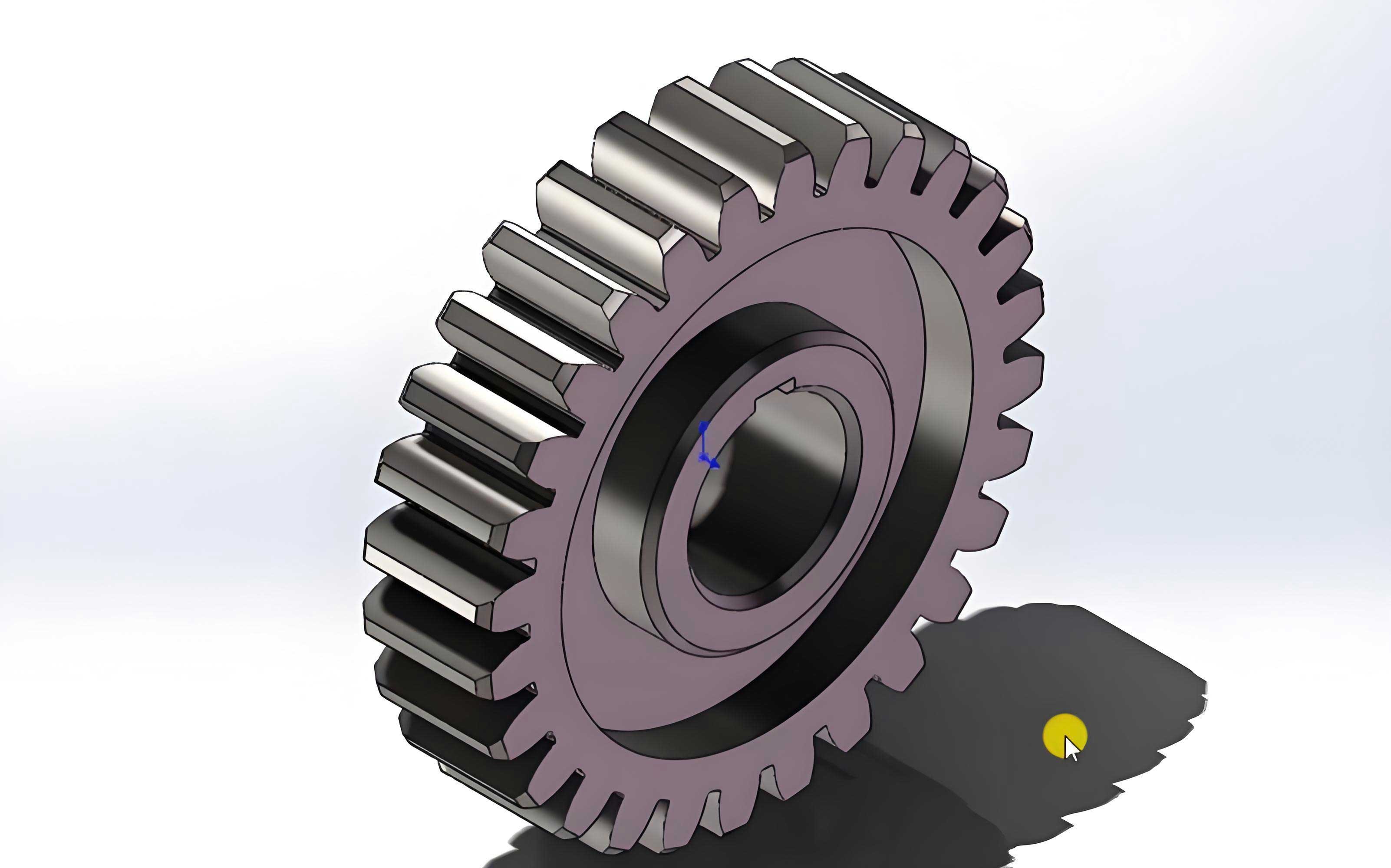
This study investigates the fabrication of standard cylindrical spur gears from a 6082 Al-Mg-Si alloy via squeeze casting. The 6082 alloy is a heat-treatable wrought alloy known for its good corrosion resistance and medium strength, but its relatively wide freezing range can make it prone to segregation and hot tearing during conventional casting. The objective is to understand the influence of key process parameters, specifically the applied forming pressure, on the macro-forming quality, microstructural characteristics, and mechanical properties of the produced spur gears. Furthermore, the effect of subsequent T6 heat treatment on the final performance is evaluated to establish a comprehensive processing route.
1. Experimental Methodology
1.1 Material and Gear Geometry
The base material used was a commercial 6082 aluminum alloy. Its chemical composition, verified by X-ray fluorescence spectroscopy, is presented in Table 1. The target component was a standard involute spur gear with a module of 3 mm and 17 teeth. The key geometric parameters are summarized in Table 2. The horizontal projected area of the gear cavity was approximately 1988.82 mm².
| Si | Fe | Cu | Mn | Mg | Cr | Zn | Ti | Al |
|---|---|---|---|---|---|---|---|---|
| 1.0 | 0.5 | 0.1 | 0.65 | 0.9 | 0.25 | 0.2 | 0.1 | Bal. |
| Module (mm) | Number of Teeth | Pressure Angle (°) | Pitch Diameter (mm) | Root Diameter (mm) | Tip Diameter (mm) | Addendum (mm) | Dedendum (mm) |
|---|---|---|---|---|---|---|---|
| 3 | 17 | 20 | 51.0 | 43.5 | 57.0 | 3.0 | 3.75 |
1.2 Squeeze Casting Procedure
The squeeze casting trials were conducted on a 1000 kN hydraulic press. A floating die assembly was employed to improve melt flow and feeding during the initial stages of pressurization. The die was preheated to 300°C and coated with a graphite-based lubricant. Approximately 240g of 6082 alloy was melted in a graphite crucible at 740°C, degassed using C₂Cl₆, and held for 5 minutes. The molten metal was then promptly poured into the die cavity. The upper punch descended at a high speed initially, then slowed to 2 mm/s upon contacting the melt. Different final nominal loads of 100, 200, 300, 400, 500, and 600 kN were applied and held for 30 seconds. These correspond to nominal pressures (Load/Projected Area) of approximately 50, 100, 150, 200, 250, and 300 MPa, respectively.
A critical correction must be applied to these nominal pressures. The floating die assembly was supported by springs, which exerted a counter-pressure during the squeeze stroke. The actual net pressure on the solidifying spur gear is given by:
$$
P_{net} = P_{nominal} – P_{spring}
$$
where the spring pressure \(P_{spring}\) was calculated to be approximately 20 MPa based on the spring constant, compression stroke, and gear area. Therefore, the actual net forming pressures studied were 30, 80, 130, 180, 230, and 280 MPa.
1.3 Microstructural and Mechanical Characterization
The macro-quality of the spur gears was visually inspected. For microstructural analysis, samples were sectioned from two critical locations: the center of the gear web (Location C) and the tip region of a tooth (Location T). These samples were prepared by standard metallographic techniques, electrolytically etched, and observed using optical microscopy. The average grain size was measured using the linear intercept method. Vickers microhardness was mapped across six distinct locations on the gear cross-section, including the rim, web, and tooth root areas, to assess property uniformity. A minimum of five indents were taken per location.
Gears produced at the optimal pressure (230 MPa net) were subjected to T6 heat treatment: solution treatment at 545°C for 50 minutes followed by water quenching, and artificial aging at 160°C for times ranging from 2 to 8 hours. Tensile specimens were machined from the gear web along the radial direction. Tensile tests were conducted at a strain rate of 0.05 s⁻¹. Fracture surfaces of the tensile specimens were examined using scanning electron microscopy (SEM).
2. Results and Discussion
2.1 Influence of Forming Pressure on Macro-Forming Quality
The macroscopic integrity of the squeeze-cast spur gears was highly dependent on the applied net forming pressure. At the lowest pressure (30 MPa), severe defects were evident. A large shrinkage cavity was present in the central hub region, indicating inadequate feeding during solidification. Furthermore, several teeth exhibited incomplete filling at their tips and flanks, a classic “misrun” defect resulting from premature freezing of the metal before it could completely replicate the intricate die geometry of the spur gear.
As the forming pressure increased, these defects were progressively eliminated. At 130 MPa, the external tooth profiles were fully formed and sharp, and the major shrinkage cavity was absent. Pressures of 180 MPa and above yielded spur gears with excellent surface finish, complete tooth fill, and no visible macroscopic porosity or shrinkage. The mechanism for this improvement is twofold. First, the applied pressure drastically improves the fluidity of the melt, enabling it to flow into and fill the entire tooth cavity before a solid skin forms. Second, and more critically, the sustained high pressure acts throughout the solidification sequence. It compensates for both liquid contraction and solidification shrinkage by forcing liquid metal (liquid feeding) and plastically deforming the already-solidified skeleton (mass feeding) into the remaining interdendritic spaces. This combined feeding mechanism is essential for producing sound, pore-free spur gears, especially in alloys with wide freezing ranges.
2.2 Microstructural Evolution with Forming Pressure
The microstructures at the gear center (C) and tooth tip (T) for different forming pressures are shown in Figure 1 (descriptions). At low pressure (30-80 MPa), the microstructure consisted of coarse, columnar dendritic grains. Some micro-porosity and inter-dendritic shrinkage were also visible. Increasing the pressure to 130 MPa resulted in a significant refinement of the dendritic structure and the elimination of most micro-porosity. At the highest pressures (230-280 MPa), the microstructure was predominantly fine equiaxed grains.
The quantitative analysis of grain size is paramount. The average grain size at both locations decreased monotonically with increasing net forming pressure before plateauing. For instance, at the gear center, the grain size reduced from ~127 µm at 30 MPa to ~97 µm at 230 MPa, a refinement of approximately 24%. A similar trend was observed at the tooth tip. Furthermore, the disparity in grain size between the gear center (which solidifies last) and the tooth tip (which solidifies first) diminished with increasing pressure, indicating improved microstructural homogeneity throughout the spur gear.
The refinement and homogenization mechanisms are directly linked to the pressure. According to the Clausius-Clapeyron equation, applied pressure increases the equilibrium melting temperature \(T_m\):
$$
\frac{\Delta T_m}{\Delta P} = \frac{T_m (V_m^L – V_m^S)}{\Delta H_m}
$$
where \(\Delta T_m\) is the change in melting point, \(\Delta P\) is the pressure change, \(V_m^L\) and \(V_m^S\) are the molar volumes of the liquid and solid, and \(\Delta H_m\) is the latent heat of fusion. This translates to an increased effective undercooling (\(\Delta T\)) at the solidification front, which enhances the nucleation rate and reduces the critical nucleation radius, leading to a finer grain structure. Additionally, the high pressure ensures perfect contact between the casting and the die wall, maximizing heat transfer and thus increasing the cooling rate, which also promotes grain refinement. Finally, the pressure can cause fragmentation of initial dendritic arms, providing additional nucleation sites. The convergence of grain size between center and rim at high pressure suggests that these effects become dominant over the natural thermal gradient from the die wall to the casting center.
2.3 Mechanical Property Distribution and Hardness
The microhardness profile across the squeeze-cast spur gears served as an effective indicator of mechanical property uniformity. Two key trends were observed. First, the average hardness at any given location increased with forming pressure, correlating directly with the grain refinement. The Hall-Petch relationship describes this strengthening:
$$
\sigma_y = \sigma_0 + k_y d^{-1/2}
$$
where \(\sigma_y\) is the yield strength, \(\sigma_0\) and \(k_y\) are material constants, and \(d\) is the average grain diameter. Finer grains create more grain boundary area, which impedes dislocation motion, increasing strength and hardness. At 230 MPa, the hardness in the central web increased by over 35% compared to the gear formed at 30 MPa.
Second, the spatial variation in hardness across the gear was reduced at higher pressures. At low pressure, regions near the die wall (tooth tip, outer rim) were significantly harder than the central web due to faster cooling and finer grains. At 230 MPa, the hardness map showed a much more uniform distribution, with the maximum deviation between the hardest (tooth flank) and softest (central web) points being less than 10% of the average value. This uniformity is critical for spur gears, as it ensures consistent load-bearing capacity and wear resistance across all teeth, preventing premature failure from localized weakness.
2.4 Enhancement through T6 Heat Treatment
The as-cast spur gears, even those produced at optimal pressure, have strength limited by the supersaturation of alloying elements. T6 heat treatment was employed to achieve precipitation strengthening. The solution treatment (545°C) dissolves soluble intermetallic phases, such as Mg₂Si, into the aluminum matrix to form a supersaturated solid solution. Quenching retains this state at room temperature. Subsequent artificial aging (160°C) controls the precipitation of fine, coherent metastable phases that provide maximum strengthening.
The tensile properties of the spur gear material as a function of aging time are plotted in Figure 2 (description). The ultimate tensile strength (UTS) increased to a peak of 335 MPa after 6 hours of aging, accompanied by an elongation of 11.8%. Further aging to 8 hours led to a decrease in UTS, indicative of over-aging. The precipitation sequence in 6082 alloy is:
$$ \alpha_{SSSS} \rightarrow \text{GP zones} \rightarrow \beta” \rightarrow \beta’ \rightarrow \beta (\text{Mg}_2\text{Si}) $$
Peak strength corresponds to a high density of needle-shaped \(\beta”\) precipitates, which are fully coherent with the matrix and create immense strain fields that block dislocations. Over-aging involves the coarsening of these precipitates and their transformation to the semi-coherent \(\beta’\) and finally the incoherent equilibrium \(\beta\) phase, which provides less effective strengthening.
SEM fractography of the tensile specimens corroborated this. The peak-aged (6h) specimen exhibited a dimpled rupture morphology with deep, equiaxed dimples, characteristic of ductile microvoid coalescence. In contrast, the over-aged (8h) specimen showed a mixture of shallower dimples and some flat, faceted areas, suggesting a more brittle fracture mode associated with precipitate coarsening and reduced interface cohesion.
The achieved strength of 335 MPa after squeeze casting and T6 treatment is noteworthy. It approaches the typical strength range of 6082 alloy in the T6 condition produced via conventional forging and heat treatment (~360 MPa), demonstrating the capability of the squeeze casting route to produce high-integrity, high-performance aluminum alloy spur gears in a near-net-shape manner.
3. Conclusions
This study successfully demonstrated the feasibility of manufacturing high-quality 6082 aluminum alloy spur gears via squeeze casting. The forming pressure was identified as the most critical process parameter, governing a triad of outcomes: macro-integrity, microstructural refinement, and mechanical property uniformity.
- Macro-integrity: Increasing the net forming pressure from 30 MPa to 130-180 MPa eliminated major defects such as shrinkage cavities and misruns, resulting in spur gears with complete tooth fill and sound bodies. The pressure facilitates melt flow and provides continuous feeding during solidification.
- Microstructural Control: Higher forming pressures led to significant grain refinement, reducing the average grain size by up to 24%. This is attributed to increased undercooling, enhanced heat transfer, and possible dendrite fragmentation. Furthermore, the disparity in microstructure between rapidly cooled surfaces (tooth tips) and slower-cooled interiors (gear web) was minimized at high pressures (≥180 MPa), promoting homogeneity.
- Mechanical Performance: The microhardness increased uniformly across the gear with increasing pressure, following the Hall-Petch relationship. A net forming pressure of 230 MPa yielded an optimal combination of fine, uniform microstructure and high, consistent hardness. Subsequent T6 heat treatment (545°C/50min + 160°C/6h) precipitated strengthening phases, elevating the tensile strength to 335 MPa with 11.8% elongation, achieving performance levels close to those of forged components.
In summary, squeeze casting, when operated with sufficiently high forming pressure followed by optimized heat treatment, is a highly effective process for the near-net-shape fabrication of complex, high-performance aluminum alloy spur gears. It ensures excellent geometrical accuracy, a defect-free dense structure, a refined and uniform microstructure, and consequently, isotropic and enhanced mechanical properties suitable for demanding structural applications.