
In power transmission systems, the vibration and noise generated by gear meshing remain significant challenges affecting performance, reliability, and acoustic comfort. The inherent time-varying stiffness and transmission error during the meshing process are primary excitation sources for these dynamic issues. Among various gear types, spur gears are widely used due to their simplicity in design and manufacturing. To mitigate these dynamic problems, gear micro-geometry modifications, or “profile modifications,” are extensively employed. These modifications involve the selective removal of a small amount of material from the tooth flanks to compensate for manufacturing errors, elastic deformations under load, and to smooth the transition of load sharing between tooth pairs, thereby minimizing transmission error fluctuation and impact forces.
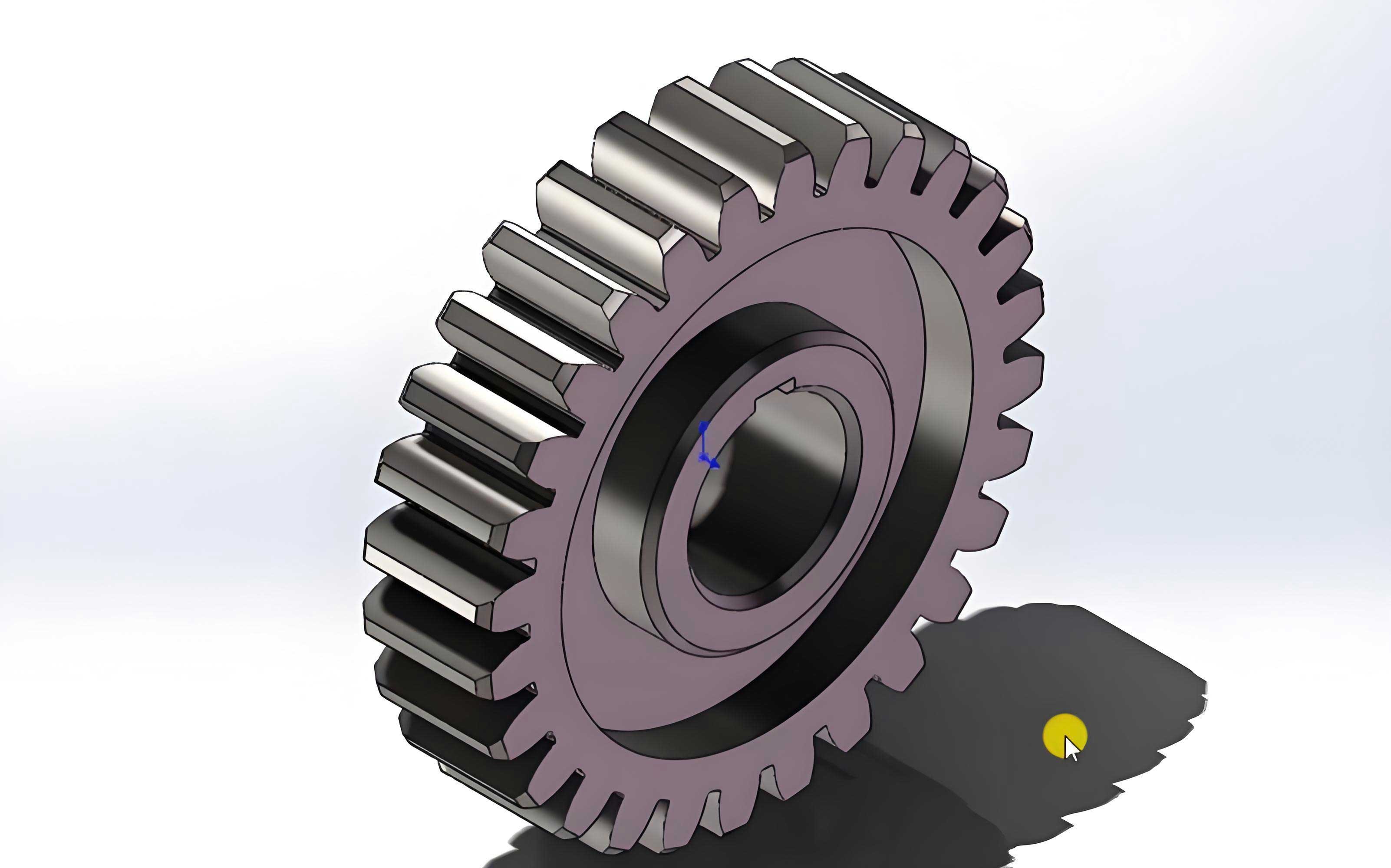
Traditional methods for determining modification parameters often rely on ISO standards or empirical formulas, which may not yield optimal results for specific operating conditions. Furthermore, accurately and efficiently calculating the mesh stiffness—a fundamental parameter for dynamic analysis and modification design—is crucial. While the Finite Element Method (FEM) offers high accuracy, it is computationally expensive, especially for iterative optimization processes. This work presents an integrated methodology combining an analytical energy-based model for efficient mesh stiffness calculation with a Genetic Algorithm (GA) for the optimal design of modification parameters for spur gears, aiming to minimize transmission error and vibration.
Fundamentals of Gear Tooth Modification
Gear tooth modifications are primarily categorized into lead (or longitudinal) modification and profile (or transverse) modification. For spur gears, both types are critical for achieving uniform load distribution and smooth meshing.
Lead Crowning
Lead crowning involves removing material along the tooth width to create a slightly convex surface. This compensates for potential misalignments (e.g., shaft deflection, assembly errors) and edge-loading conditions. The crowning amount, $C_c$, is typically defined at the center of the tooth face width. A common empirical formula from ISO standards is:
$$C_c = 0.5 F_{\beta x}$$
where $F_{\beta x}$ is the effective equivalent misalignment. Excessive crowning can reduce the effective contact area, while insufficient crowning may not prevent edge loading.
Profile Modification
Profile modification involves altering the tooth profile, primarily near the tip and/or root, to prevent interference and reduce meshing impact at the start and end of contact. Key parameters include the maximum modification depth $\Delta_{max}$, the length of modification $L_a$, and the modification curve shape (linear, parabolic, etc.).
The maximum profile modification is often estimated based on the static transmission error caused by tooth deflection under load. An ISO-based empirical formula is:
$$
\Delta_{max} = \frac{K_A F_t / b}{\varepsilon_{\alpha} C_{\gamma}}
$$
where:
- $K_A$ is the application factor.
- $F_t$ is the nominal tangential load.
- $b$ is the face width.
- $\varepsilon_{\alpha}$ is the transverse contact ratio.
- $C_{\gamma}$ is the mesh stiffness per unit face width.
The modification length $L_a$ determines how far along the line of action the modification extends from the theoretical start or end of single-tooth contact. Two common approaches are:
- Long Relief: $L_a = P_b (\varepsilon_{\alpha} – 1)$
- Short Relief: $L_a = P_b (\varepsilon_{\alpha} – 1) / 2$
where $P_b$ is the base pitch.
The modification curve defines the distribution of material removal. Common curves include:
- Linear: $\Delta(x) = \Delta_{max} \frac{x}{L_a}$
- Parabolic: $\Delta(x) = \Delta_{max} \left[ 0.44\left(\frac{x}{L_a}\right) + 0.56\left(\frac{x}{L_a}\right)^2 \right]$
where $x$ is the coordinate along the line of action from the modification start point.
Analytical Calculation of Mesh Stiffness Using Energy Method
The time-varying mesh stiffness of a gear pair is the primary internal excitation source. For spur gears, an efficient and accurate analytical model is essential for dynamic analysis and optimization. The Energy Method, based on the potential energy stored in a cantilever beam model of the gear tooth, provides a robust alternative to FEM.
In this model, a single tooth is treated as a non-uniform cantilever beam fixed at the root circle. Under a load $F$ applied at the contact point along the line of action, the total energy stored includes components from bending, shear, axial compression, Hertzian contact deformation, and the flexibility of the gear body (foundation).
The load $F$ can be decomposed into radial ($F_a$) and tangential ($F_b$) components relative to the tooth centerline at the root: $F_a = F \sin\alpha_1$ and $F_b = F \cos\alpha_1$, where $\alpha_1$ is the load angle relative to the tooth centerline.
The potential energies and their corresponding stiffnesses are derived as follows:
1. Bending Stiffness ($k_b$):
The bending potential energy $U_b$ is given by:
$$
U_b = \frac{F^2}{2k_b} = \int_{0}^{d} \frac{[M(x)]^2}{2EI_x} dx
$$
where $M(x) = F_b(d-x) – F_a h$, $d$ is the distance from the load point to the root, $h$ is the moment arm for the radial component, $E$ is Young’s modulus, and $I_x$ is the area moment of inertia at distance $x$ from the root. Therefore,
$$
\frac{1}{k_b} = \int_{0}^{d} \frac{[(d-x)\cos\alpha_1 – h\sin\alpha_1]^2}{E I_x} dx
$$
2. Shear Stiffness ($k_s$):
The shear potential energy $U_s$ is:
$$
U_s = \frac{F^2}{2k_s} = \int_{0}^{d} \frac{1.2 F_b^2}{2G A_x} dx
$$
where $G$ is the shear modulus and $A_x$ is the cross-sectional area. Thus,
$$
\frac{1}{k_s} = \int_{0}^{d} \frac{1.2 \cos^2\alpha_1}{G A_x} dx
$$
3. Axial Compression Stiffness ($k_a$):
The axial compression energy $U_a$ is:
$$
U_a = \frac{F^2}{2k_a} = \int_{0}^{d} \frac{F_a^2}{2E A_x} dx
$$
Leading to:
$$
\frac{1}{k_a} = \int_{0}^{d} \frac{\sin^2\alpha_1}{E A_x} dx
$$
4. Hertzian Contact Stiffness ($k_h$):
The contact deformation energy for two cylinders in contact is:
$$
U_h = \frac{F^2}{2k_h} = \frac{2F^2(1-\nu^2)}{\pi E B}
$$
Therefore,
$$
\frac{1}{k_h} = \frac{4(1-\nu^2)}{\pi E B}
$$
where $\nu$ is Poisson’s ratio and $B$ is the effective face width (usually the smaller of the two gear widths).
5. Gear Body (Foundation) Stiffness ($k_f$):
This accounts for the deflection of the gear structure supporting the tooth. A widely accepted formula is:
$$
\frac{1}{k_f} = \frac{\cos^2\alpha_1}{EB} \left\{ L^* \left( \frac{u_f}{S_f} \right)^2 + M^* \left( \frac{u_f}{S_f} \right) + P^* (1+Q^* \tan^2\alpha_1) \right\}
$$
where $u_f$ is the distance from the load point to the center of the gear rim, $S_f$ is the tooth root thickness, and $L^*$, $M^*$, $P^*$, $Q^*$ are polynomial coefficients dependent on the gear geometry.
Total Mesh Stiffness:
For a single tooth pair in contact, the equivalent mesh stiffness $k_{single}$ is the series combination of all stiffness components from both the pinion (p) and gear (g):
$$
\frac{1}{k_{single}} = \frac{1}{k_h} + \sum_{i=p,g} \left( \frac{1}{k_{b,i}} + \frac{1}{k_{s,i}} + \frac{1}{k_{a,i}} + \frac{1}{k_{f,i}} \right)
$$
The total mesh stiffness $k_t$ of a spur gear pair varies with the contact ratio. For a double-tooth contact zone, $k_t$ is the sum of the stiffnesses of the two engaged pairs. The time-varying pattern of $k_t$ over a mesh cycle is a fundamental excitation.
Validation Against FEM:
To validate the Energy Method, the mesh stiffness of a sample spur gear pair was calculated and compared with results from a detailed 3D finite element analysis. The gear parameters are listed in Table 1.
| Parameter | Pinion | Gear |
|---|---|---|
| Number of Teeth, $z$ | 19 | 48 |
| Module, $m_n$ (mm) | 3 | 3 |
| Pressure Angle, $\alpha$ (deg) | 20 | 20 |
| Face Width, $b$ (mm) | 20 | 18 |
| Young’s Modulus, $E$ (GPa) | 206 | |
| Poisson’s Ratio, $\nu$ | 0.3 | |
| Addendum Coefficient, $h_a^*$ | 1.0 | |
The comparison of the mesh stiffness over one complete mesh cycle is shown in Figure 1. The Energy Method (solid line) closely follows the FEM results (dashed line). The characteristic “M-shape” with two peaks in the double-contact zones and one lower plateau in the single-contact zone is accurately captured.
Quantitatively, the maximum stiffness in the single-tooth contact region was $2.738 \times 10^8$ N/m (Energy Method) versus $2.715 \times 10^8$ N/m (FEM), an error of 0.84%. In the double-tooth contact region, the maximum stiffness was $4.724 \times 10^8$ N/m versus $4.671 \times 10^8$ N/m, an error of 1.12%. This excellent agreement confirms the accuracy of the Energy Method while offering a computational speed several orders of magnitude faster than FEM, making it highly suitable for iterative optimization routines.
Optimization Framework Based on Genetic Algorithm
To find the optimal modification parameters that minimize vibration excitation, a multi-parameter optimization problem is formulated. The goal is to minimize the peak-to-peak Static Transmission Error (STE), which is a direct indicator of kinematic excitation and is highly correlated with dynamic response. The STE is calculated from the loaded tooth contact analysis using the energy-based mesh stiffness model, incorporating the geometry changes introduced by the modifications.
Design Variables:
For a typical tip-relief modification combined with lead crowning on spur gears, the key variables are:
- Maximum Profile Relief Amount, $\Delta_{max}$ (µm).
- Profile Relief Length, $L_a$ (mm).
- Lead Crowning Amount, $C_c$ (µm).
A parabolic profile modification curve is assumed for its smooth transition properties.
Objective Function:
The objective is to minimize the peak-to-peak amplitude of the STE, $STE_{pp}$, over one mesh cycle under the design load.
$$
\text{Minimize: } f(\Delta_{max}, L_a, C_c) = STE_{pp}(\Delta_{max}, L_a, C_c)
$$
The STE calculation integrates the deflection of the teeth under load, which is the inverse of the time-varying mesh stiffness $k_t(\theta)$, minus the geometric transmission error introduced by the modifications themselves.
Genetic Algorithm Implementation:
The Genetic Algorithm, a robust evolutionary optimization technique inspired by natural selection, is employed to solve this nonlinear problem. Its ability to explore a global search space and avoid local minima makes it ideal for gear optimization. The implementation steps are as follows:
- Encoding: Each set of modification parameters ($\Delta_{max}$, $L_a$, $C_c$) is encoded as a binary string (chromosome).
- Initialization: An initial population of $N=100$ random chromosomes is generated within specified bounds (e.g., $\Delta_{max} \in [0, 8]$ µm, $L_a \in [0, 6]$ mm, $C_c \in [0, 8]$ µm).
- Fitness Evaluation: For each chromosome, the corresponding gear geometry is generated, the mesh stiffness and STE are calculated using the Energy Method, and $STE_{pp}$ is determined. The fitness is defined as the inverse of $STE_{pp}$ (higher fitness is better).
- Selection: Individuals are selected for reproduction using a roulette-wheel selection method, where the probability of selection is proportional to their fitness.
- Crossover & Mutation: Selected parents undergo crossover (with a probability of 0.5) to produce offspring, exchanging segments of their binary strings. Mutation (with a probability of 0.5) randomly flips bits in the offspring’s string to introduce new genetic material and maintain population diversity.
- New Generation: The new population replaces the old one, and the process repeats from step 3.
- Termination: The algorithm terminates after a predefined number of generations (e.g., 100) or when convergence is achieved (minimal improvement in the best fitness over several generations).
The flow of this integrated optimization process is illustrated in Figure 2, combining the analytical stiffness model with the iterative search of the GA.
Case Study: Optimization Results and Comparative Analysis
The proposed methodology is applied to the example spur gear pair from Table 1, operating under a nominal torque of 50 Nm on the pinion. Three design scenarios are compared:
- Unmodified Gears: Baseline with no intentional modification.
- ISO-Based Modification: Parameters calculated using the empirical ISO formulas presented earlier.
- GA-Optimized Modification: Parameters obtained from the Energy Method/GA optimization framework.
The optimization was run with the bounds mentioned, seeking to minimize $STE_{pp}$. The convergence history of the GA is shown in Figure 3, where the best fitness (inverse of $STE_{pp}$) increases rapidly and then plateaus, indicating convergence to an optimal solution.
The resulting modification parameters and the corresponding peak-to-peak Static Transmission Error for all three cases are summarized in Table 2.
| Design Case | $\Delta_{max}$ (µm) | $L_a$ (mm) | $C_c$ (µm) | $STE_{pp}$ (µm) |
|---|---|---|---|---|
| Unmodified | 0.00 | 0.00 | 0.00 | 2.316 |
| ISO-Based | 7.81 | 5.05 | 6.34 | 0.728 |
| GA-Optimized | 6.93 | 3.41 | 5.67 | 0.414 |
The results are striking. The unmodified spur gears exhibit a large $STE_{pp}$ of 2.316 µm, indicating significant kinematic excitation. Applying ISO-based modifications reduces this error by about 68.5% to 0.728 µm, demonstrating the effectiveness of standard practices. However, the GA-optimized modification achieves a further reduction of 43.1% relative to the ISO case, yielding the lowest $STE_{pp}$ of 0.414 µm—an overall reduction of 82.1% compared to the unmodified gears.
The optimized parameters differ from the ISO values: a slightly lower relief amount (6.93 vs. 7.81 µm), a significantly shorter relief length (3.41 vs. 5.05 mm), and a slightly lower crowning amount (5.67 vs. 6.34 µm). This highlights that the empirical ISO formulas, while useful, do not necessarily provide the globally optimal combination for a specific gear set and loading condition. The GA successfully found a better balance among the three parameters to minimize the transmission error fluctuation.
To evaluate robustness, the $STE_{pp}$ for the three designs was calculated across a range of applied torques, from 25 Nm to 100 Nm. The results are plotted in Figure 4. The GA-optimized modification consistently yields the lowest transmission error across the entire load range, confirming that the optimization is not limited to a single operating point but provides superior performance under varying loads.
Stress Analysis:
A critical secondary benefit of optimal modification is the reduction of contact stress concentrations. A comparative non-linear static contact stress analysis was performed using FEM for the unmodified and GA-optimized gear pair under the 50 Nm load. The results are shown in Figure 5. The unmodified gears show a classic elliptical contact patch with a maximum contact stress of 1.219 GPa. The GA-optimized gears show a more centralized and uniform contact pattern, with the maximum contact stress reduced to 0.533 GPa. This represents a substantial reduction of approximately 56.3%, which directly contributes to improved surface durability and pitting resistance of the spur gears.
Conclusion
This work successfully developed and demonstrated an integrated methodology for the vibration analysis and micro-geometry optimization of spur gears. The core of the approach is the synergy between an efficient analytical model and a robust global search algorithm.
First, the Energy Method was validated as a highly accurate and computationally efficient tool for calculating the time-varying mesh stiffness of spur gears. Its results showed excellent agreement with detailed finite element analysis but at a fraction of the computational cost, making it ideal for integration into an iterative optimization loop.
Second, a Genetic Algorithm was effectively employed to solve the multi-parameter optimization problem for gear tooth modification. The algorithm successfully identified the optimal combination of profile relief (maximum depth and length) and lead crowning amount to minimize the peak-to-peak Static Transmission Error, the primary source of gear vibration excitation.
The case study provided clear, quantitative evidence of the methodology’s superiority. Compared to both unmodified gears and gears modified according to standard ISO empirical formulas, the GA-optimized design achieved the lowest transmission error (0.414 µm) and the most significant reduction in contact stress (56.3%). Furthermore, the optimized design maintained its advantage across a range of operating torques.
In conclusion, the proposed framework of combining the Energy Method with a Genetic Algorithm offers a powerful, practical, and efficient pathway for the design of high-performance, low-vibration spur gears. It moves beyond rule-of-thumb modifications towards a scientifically optimized solution, directly contributing to improved dynamic behavior, reduced noise, and enhanced durability in gear transmission systems.