
Gear transmission is a fundamental component in mechanical systems. Among various failure modes, tooth breakage originating from excessive root bending stress is a primary concern. The root stress in spur gears is a critical factor determining their load-bearing capacity and service life. Traditionally, mating spur gears in a pair share identical module and pressure angle. A well-established principle, however, suggests that correct meshing is possible even with differing modules, provided the normal base pitch of the two gears is equal. While the root stress calculation for conventional gear pairs with equal modules is thoroughly researched, the characteristics and computation of root stress in gear pairs with different modules—hereafter referred to as multi-modulus gear pairs—remain less explored.
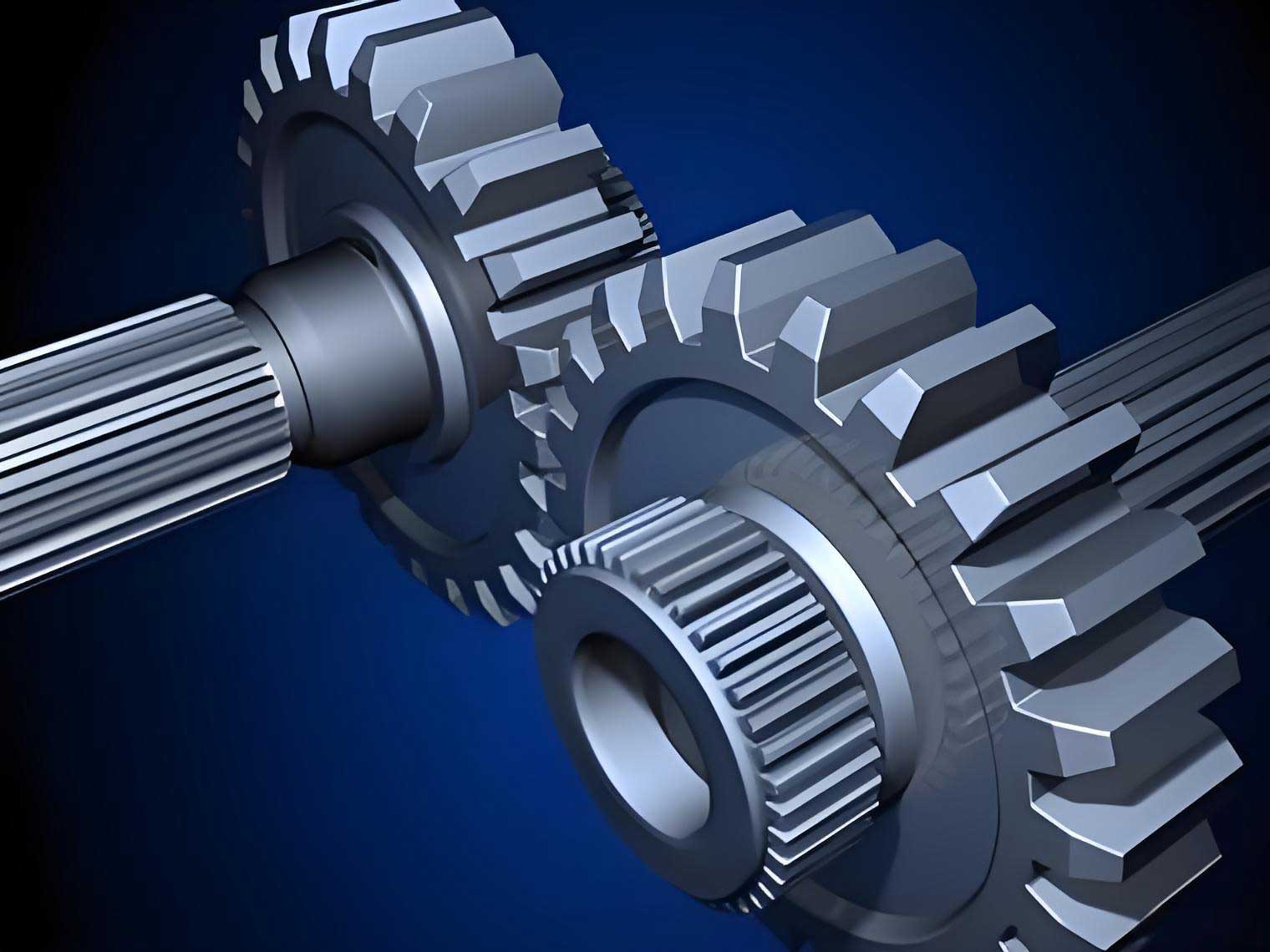
This article aims to derive the root stress formula for multi-modulus involute spur gears based on the Plane Section Method, which is the foundation of the International Organization for Standardization (ISO) approach for calculating gear load capacity. Subsequently, the influence of the modulus ratio on the root stress of both the driving (pinion) and driven (gear) members will be systematically analyzed. This investigation provides a theoretical basis for the design and application of multi-modulus spur gears, offering a potential pathway to optimize bending strength.
Fundamental Theory and Correct Meshing Condition for Multi-Modulus Gears
The core principle enabling the meshing of spur gears with different modules lies in the invariance of the normal base pitch. For a pair of involute spur gears to mesh correctly, their normal base pitches must be equal. The normal base pitch $p_{bn}$ is defined as the distance between corresponding points on adjacent tooth profiles measured along the line of action, or alternatively, along the base circle. It can be expressed in terms of the module $m$ and the pressure angle $\alpha$ as:
$$ p_{bn} = \pi m \cos \alpha $$
For a multi-modulus gear pair, let the driving pinion have a module $m_p$ and a pressure angle $\alpha_p$, and the driven gear have a module $m_g$ and a pressure angle $\alpha_g$. The correct meshing condition is therefore:
$$ p_{bn,p} = p_{bn,g} $$
$$ \pi m_p \cos \alpha_p = \pi m_g \cos \alpha_g $$
This simplifies to the fundamental relation for multi-modulus spur gears:
$$ m_p \cos \alpha_p = m_g \cos \alpha_g \quad \text{(1)} $$
The ratio of the driving gear module to the driven gear module is defined as the modulus ratio $\delta_m$:
$$ \delta_m = \frac{m_p}{m_g} $$
Equation (1) implies that a change in module must be compensated by a corresponding change in the pressure angle to maintain a constant normal base pitch. This interrelationship is the key to designing functional multi-modulus spur gears.
Geometric Parameter Calculation for Multi-Modulus Spur Gears
Calculating the root stress requires precise knowledge of the gear geometry. A pivotal parameter is the operating pressure angle $\alpha_v$, also known as the working pressure angle or the angle of obliquity. For standard gear pairs, it often equals the reference pressure angle, but for gear pairs with profile shifts or, as in our case, differing base pitches, it must be calculated.
The operating pressure angle $\alpha_v$ is determined from the condition that the sum of the tooth thicknesses on the operating pitch circles of the two mating spur gears must equal the operating circular pitch $p_w$. Assuming no backlash for theoretical calculation:
$$ p_w = s_{wp} + s_{wg} \quad \text{(2)} $$
The operating circular pitch $p_w$ is related to the base pitch and the operating pressure angle:
$$ p_w = \frac{\pi m_p \cos \alpha_p}{\cos \alpha_v} = \frac{\pi m_g \cos \alpha_g}{\cos \alpha_v} \quad \text{(3)} $$
The tooth thickness on the operating pitch circle for a gear with profile shift is given by:
$$ s_w = \frac{m \cos \alpha}{\cos \alpha_v} \left[ \frac{\pi}{2} + 2x \tan \alpha + z (\text{inv} \, \alpha – \text{inv} \, \alpha_v) \right] $$
Applying this to both gears in the multi-modulus pair:
$$
\begin{aligned}
s_{wp} &= \frac{m_p \cos \alpha_p}{\cos \alpha_v} \left[ \frac{\pi}{2} + 2x_p \tan \alpha_p + z_p (\text{inv} \, \alpha_p – \text{inv} \, \alpha_v) \right] \\
s_{wg} &= \frac{m_g \cos \alpha_g}{\cos \alpha_v} \left[ \frac{\pi}{2} + 2x_g \tan \alpha_g + z_g (\text{inv} \, \alpha_g – \text{inv} \, \alpha_v) \right]
\end{aligned}
\quad \text{(4)}
$$
where $x_p$ and $x_g$ are the profile shift coefficients, $z_p$ and $z_g$ are the numbers of teeth, and $\text{inv} \, \alpha = \tan \alpha – \alpha$ is the involute function.
Substituting equations (3) and (4) into condition (2) and simplifying, we obtain the formula for calculating the operating pressure angle of a multi-modulus gear pair:
$$ \text{inv} \, \alpha_v = \frac{2(x_g \tan \alpha_g + x_p \tan \alpha_p) + (z_g \, \text{inv} \, \alpha_g + z_p \, \text{inv} \, \alpha_p)}{z_p + z_g} \quad \text{(5)} $$
Once $\alpha_v$ is known, other critical geometric parameters such as center distance, contact ratio, and the precise location of the highest point of single tooth contact (HPSTC) can be derived, forming the basis for stress calculation.
Derivation of Root Stress Formula Using the Plane Section Method
The Plane Section Method, foundational to the ISO standard, models the tooth as a cantilever beam. The critical root stress is calculated assuming the load is applied at the most unfavorable point, typically the HPSTC, and the critical cross-section is a plane perpendicular to the tooth’s neutral axis at the root fillet. The geometric parameters for this method are illustrated conceptually, where $F$ is the normal load, $\alpha_F$ is the load angle, $h_F$ is the bending moment arm, and $s_F$ is the thickness of the critical root section.
The nominal tooth root stress $\sigma_{F0}$ is calculated using the form factor $Y_F$ and the stress correction factor $Y_S$:
$$ \sigma_{F0} = \frac{F_t}{b m} Y_F Y_S $$
For a multi-modulus pair, the tangential force $F_t$ is the same at the operating pitch circle for both mating spur gears, as per the principle of action and reaction. However, the reference module used in the formula differs. Therefore, the basic value of tooth root stress for the driving pinion ($\sigma_{F0}^p$) and the driven gear ($\sigma_{F0}^g$) must be expressed separately.
The tangential force is $F_t = \frac{2T}{d}$, where $T$ is the torque and $d$ is the reference diameter. For the pinion, $d_p = m_p z_p$, and for the gear, $d_g = m_g z_g$. Recognizing that $\frac{F_t}{m_p} = \frac{2T}{m_p^2 z_p}$ and $\frac{F_t}{m_g} = \frac{2T}{m_g^2 z_g}$, and incorporating the modulus ratio $\delta_m = m_p/m_g$, we can derive the following consistent forms:
$$
\begin{aligned}
\sigma_{F0}^p &= \frac{F_t}{b_1 m_g \delta_m} Y_F^p Y_S^p \\
\sigma_{F0}^g &= \frac{\delta_m F_t}{b_2 m_g} Y_F^g Y_S^g
\end{aligned}
\quad \text{(6)}
$$
Here, $b_1$ and $b_2$ are the face widths of the pinion and gear, respectively. The form factor $Y_F$ accounts for the tooth shape and the point of load application. For a load applied at an external point, it is given by:
$$ Y_F = \frac{6 \left( \frac{h_F}{m} \right) \cos \alpha_F}{\left( \frac{s_F}{m} \right)^2 \cos \alpha} \quad \text{(7)} $$
Note that in equation (7), $m$, $\alpha$, $h_F$, and $s_F$ are specific to each gear in the pair. The parameters $h_F/m$ and $s_F/m$ are dimensionless geometry factors that depend on the number of teeth, profile shift coefficient, pressure angle, and the load application point (HPSTC). Their determination for multi-modulus spur gears follows the same procedural standards (e.g., ISO 6336-3) but uses the specific geometric parameters ($m_p, \alpha_p$ or $m_g, \alpha_g$) for each member.
The stress correction factor $Y_S$ accounts for the stress concentration at the root fillet and is calculated as:
$$ Y_S = (1.2 + 0.13 L) q_s^{ \frac{1}{1.21 + \frac{2.3}{L} } } \quad \text{(8)} $$
where $L = h_F / s_F$ and $q_s = s_F / (2\rho_F)$, with $\rho_F$ being the root fillet radius at the 30° tangent point. Again, these factors are calculated independently for the pinion and gear of the multi-modulus pair.
The final calculated tooth root stress $\sigma_F$ incorporates several application factors:
$$
\begin{aligned}
\sigma_{F}^p &= \sigma_{F0}^p \cdot K_A^p K_V^p K_{F\beta}^p K_{F\alpha}^p \\
\sigma_{F}^g &= \sigma_{F0}^g \cdot K_A^g K_V^g K_{F\beta}^g K_{F\alpha}^g
\end{aligned}
\quad \text{(9)}
$$
where:
- $K_A$ is the application factor,
- $K_V$ is the dynamic factor,
- $K_{F\beta}$ is the face load distribution factor for tooth root stress,
- $K_{F\alpha}$ is the transverse load distribution factor.
While these factors account for real-world conditions (load fluctuations, dynamic effects, misalignments), for a comparative theoretical analysis of modulus ratio influence, they can initially be assumed equal to 1.0 or considered identical for both gears under the same operating conditions.
Analysis of Root Stress Characteristics in Multi-Modulus Spur Gears
To investigate the effect of the modulus ratio $\delta_m$, a specific case study is established. The primary objective is to observe trends while keeping the driven gear’s basic parameters fixed and varying the pinion’s module and pressure angle according to Equation (1).
The base operating conditions and fixed parameters for the driven gear are as follows:
| Parameter | Symbol | Value | Unit |
|---|---|---|---|
| Input Power | $P$ | 1.64 | kW |
| Input Speed (Pinion) | $n_p$ | 1750 | rpm |
| Driven Gear Module | $m_g$ | 1.25 | mm |
| Driven Gear Pressure Angle | $\alpha_g$ | 20.0 | ° |
| Number of Teeth (Pinion) | $z_p$ | 19 | – |
| Number of Teeth (Gear) | $z_g$ | 23 | – |
| Face Width (Both) | $b$ | 16 | mm |
| Profile Shift (Both) | $x_p, x_g$ | 0.0 | – |
To prevent excessive tooth tip thinning on the pinion, the modulus ratio is limited. A series of cases with increasing $\delta_m$ is analyzed. For each case, the pinion module $m_p$ is calculated as $m_p = \delta_m \cdot m_g$, and its corresponding pressure angle $\alpha_p$ is derived from Equation (1): $\alpha_p = \arccos(\cos \alpha_g / \delta_m)$.
| Case | Modulus Ratio $\delta_m$ | Pinion Module $m_p$ (mm) | Pinion Pressure Angle $\alpha_p$ (°) |
|---|---|---|---|
| 1 | 1.00 | 1.250 | 20.00 |
| 2 | 1.02 | 1.275 | 22.89 |
| 3 | 1.04 | 1.300 | 25.37 |
| 4 | 1.06 | 1.325 | 27.56 |
| 5 | 1.08 | 1.350 | 29.53 |
Using the Plane Section Method formulas (6, 7, 8, 9) with application factors set to 1.0 for isolation of geometric effects, the peak root stresses for the pinion and gear are calculated for each case. The results clearly demonstrate a significant trend.
| Case | $\delta_m$ | Pinion Root Stress $\sigma_F^p$ (MPa) | Gear Root Stress $\sigma_F^g$ (MPa) |
|---|---|---|---|
| 1 | 1.00 | 152.4 | 138.7 |
| 2 | 1.02 | 147.1 | 141.5 |
| 3 | 1.04 | 142.3 | 144.4 |
| 4 | 1.06 | 138.0 | 147.4 |
| 5 | 1.08 | 134.1 | 150.6 |
The data reveals a consistent pattern: the pinion root stress decreases monotonically as the modulus ratio increases, while the gear root stress increases. This behavior can be explained mechanically. The tangential load $F_t$ transmitted is constant for a given input torque. As $\delta_m$ increases, the pinion’s module $m_p$ increases, leading to a larger tooth cross-section at the root for the same number of teeth. Effectively, the bending resistance area of the pinion tooth increases, reducing the nominal bending stress ($\sigma \propto M / (Width * Thickness^2)$).
Conversely, the driven gear’s module $m_g$ and thus its tooth dimensions remain unchanged. However, its load-sharing role relative to the strengthened pinion leads to a relative increase in its stress level. The total transmitted power remains constant, but the geometric disparity shifts the bending stress distribution. This finding is crucial: for a standard involute spur gear pair, slightly increasing the pinion’s module (and correspondingly its pressure angle) according to multi-modulus theory can significantly reduce the pinion’s root stress, thereby enhancing its bending fatigue life. This is particularly advantageous as the pinion is usually the weaker member due to fewer teeth and a higher number of load cycles.
Finite Element Analysis Validation
To validate the theoretical results obtained from the Plane Section Method, Finite Element Analysis (FEA) was conducted on the multi-modulus spur gears models. For computational efficiency, a three-tooth segment model encompassing the loaded tooth and its two adjacent teeth was created for both the pinion and gear. Contact analysis was set up between the mating tooth flanks. A fine mesh was applied globally, with further refinement in the contact and root fillet regions to ensure accuracy in stress results. A static structural analysis was performed: a driving torque was applied to the pinion, while the gear’s inner hub was fully constrained. The peak von Mises stress in the root fillet region was extracted for both gears at the configuration corresponding to the HPSTC.
The FEA results for the peak root stress across the different modulus ratios are summarized below and plotted against the theoretical values.
| Case | $\delta_m$ | FEA: Pinion Stress (MPa) | FEA: Gear Stress (MPa) |
|---|---|---|---|
| 1 | 1.00 | 158.2 | 143.1 |
| 2 | 1.02 | 152.7 | 146.3 |
| 3 | 1.04 | 147.8 | 149.5 |
| 4 | 1.06 | 143.5 | 152.8 |
| 5 | 1.08 | 139.4 | 156.2 |
The FEA results confirm the fundamental trend predicted by the Plane Section Method. The pinion stress shows a clear decreasing trend with increasing $\delta_m$, and the gear stress shows a clear increasing trend. The absolute values from FEA are slightly higher, which is expected as FEA captures the full 3D stress concentration at the root fillet more accurately than the simplified beam model. However, the excellent correlation in the trend validates the applicability of the derived Plane Section Method formulas for analyzing multi-modulus spur gears. The minor quantitative differences fall within the typical variance between analytical and numerical methods in gear stress analysis.
Design Implications and Conclusion
The analysis of multi-modulus spur gears presents a compelling design alternative for specific applications. The primary conclusions are as follows:
- Root Stress Trend: In a multi-modulus involute spur gear pair, the peak root bending stress of the driving pinion decreases as the modulus ratio $\delta_m$ increases. Conversely, the peak root stress of the driven gear increases with $\delta_m$. This trade-off is governed by the change in the pinion’s tooth cross-sectional area relative to a constant transmitted load.
- Strength Balancing: This characteristic can be strategically used to balance the bending strength between the pinion and the gear. Since the pinion is typically subjected to more load cycles and is often the critical component for bending fatigue, increasing its module (within limits dictated by tooth tip thickness and contact ratio) provides a direct method to lower its root stress and enhance its life, without changing the center distance or the gear ratio. This is a significant advantage over traditional equal-module designs.
- Method Validity: The theoretical root stress calculation for multi-modulus spur gears based on the extended Plane Section Method, incorporating the correct meshing condition (Eq. 1) and the modified stress basic value formulas (Eq. 6), is feasible and provides results consistent with more computationally intensive Finite Element Analysis.
The design of multi-modulus spur gears requires careful consideration beyond root stress. The increased pressure angle on the pinion affects the contact ratio (potentially lowering it), the tooth contact pattern, and the contact (Hertzian) stress. A comprehensive design must involve a trade-off analysis between bending strength, contact strength, efficiency, and noise. Future work could explore optimized selection of modulus ratio and profile shift combinations to achieve desired performance targets for both bending and pitting resistance in multi-modulus spur gears. Nevertheless, this investigation establishes a solid theoretical foundation, demonstrating that deviating from the traditional equal-module paradigm offers a valuable tool for the mechanical designer seeking to optimize the performance of spur gears.