
In the realm of mechanical engineering, spur gears stand as fundamental components for transmitting motion and power in various machinery. Traditionally, these spur gears are manufactured using generative methods, such as hobbing or shaping, where tool profiles envelope involute tooth profiles onto gear blanks. However, with the advancement of manufacturing technologies, metal plastic forming techniques have emerged as a superior alternative, offering significant advantages over conventional cutting processes. As a researcher in this field, I have dedicated extensive study to the precision extrusion forming of spur gears, focusing on innovative approaches like split-flow forming principles and precision machining methods. This article delves into the intricate details of these processes, emphasizing the benefits and methodologies for producing high-quality spur gears through plastic deformation.
Metal plastic forming, particularly extrusion, is an advanced manufacturing technology that excels in efficiency, material savings, and enhancement of material microstructures. For spur gears, which are disk-shaped components with radially outward protruding teeth, the application of extrusion techniques can revolutionize production. The teeth, distributed along the outer periphery, constitute the primary formed section, and their precise fabrication is critical for gear performance. In this context, I explore the closed extrusion process for spur gears, which involves pre-forming a blank and then extruding it into the final shape. However, due to the small volume of the tooth sections relative to the gear body and the confined space in the die cavity, material flow faces high frictional resistance, making tooth tip filling challenging. Even under high forming pressures, achieving合格 parts can be difficult. To address this, I have investigated the split-flow principle, which effectively reduces forming pressure and ensures complete tooth filling, paving the way for precision forming of spur gears.
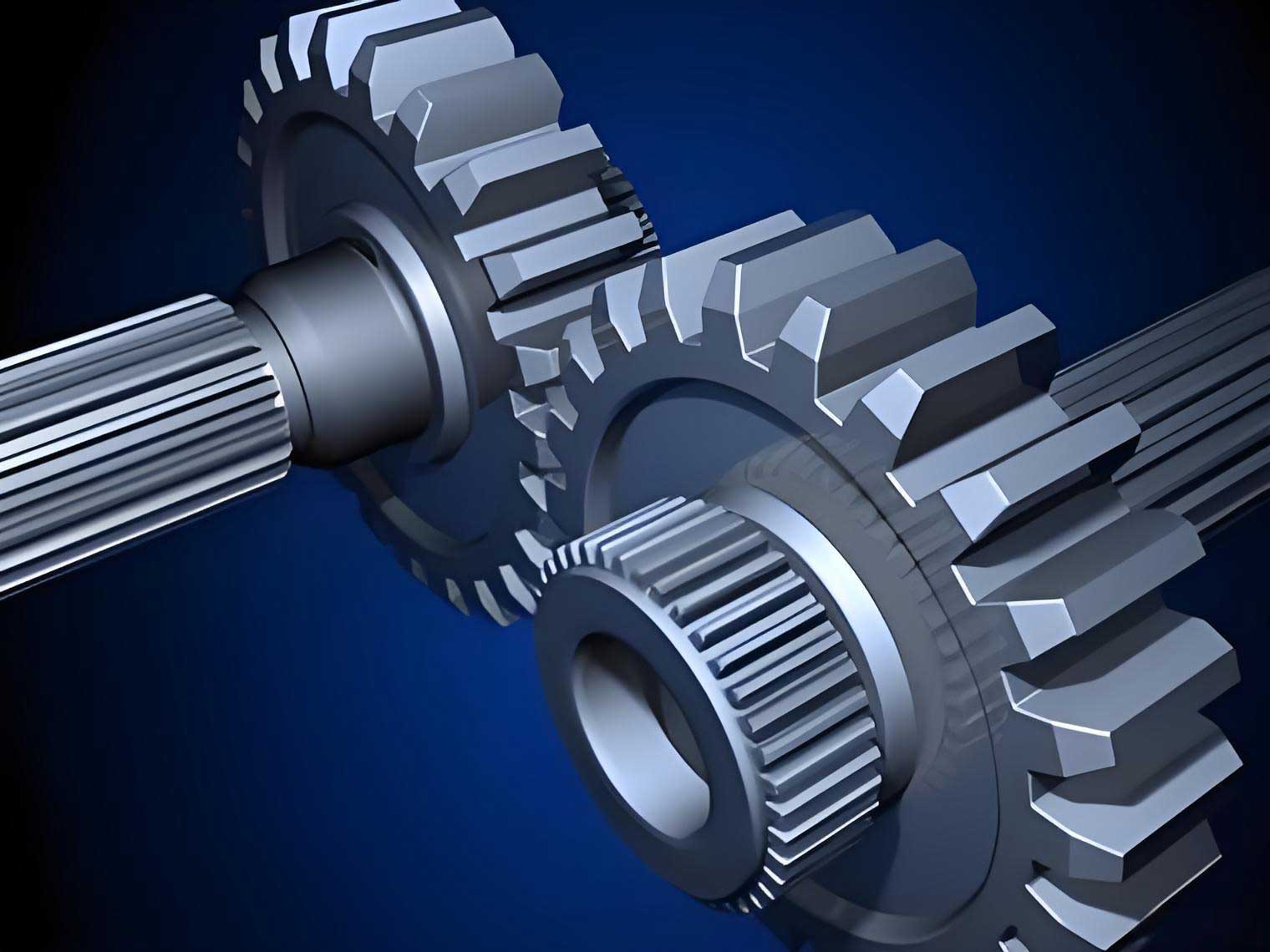
The extrusion process for spur gears begins with an analysis of the forming principles. In metal plastic deformation, the extrusion ratio (or reduction in area) is a key factor influencing deformation pressure. For spur gears, the extrusion ratio during forming can be expressed as:
$$ \lambda = \frac{A_c}{A_f} $$
where \( \lambda \) is the extrusion ratio, \( A_c \) is the contact area between the workpiece and die, and \( A_f \) is the free surface area of the workpiece. As deformation progresses, the contact area increases, leading to a rise in extrusion ratio and, consequently, higher forming pressure. This is particularly problematic in the final stages of tooth formation for spur gears, where the contact area approaches the total surface area, causing a sharp increase in pressure. Excessive pressure can lead to premature die wear or elastic deformation, compromising gear accuracy. To mitigate this, the split-flow principle is employed. By introducing分流孔 (split-flow holes) in the die or blank, the free surface area is maintained, reducing the extrusion ratio and lowering forming pressure. This principle is illustrated through two configurations: one where material flows into分流孔 in the die, and another where预制的 holes in the blank facilitate flow. In both cases, the pressure remains stable, enabling complete tooth filling for spur gears without excessive force.
The relationship between forming pressure and stroke in split-flow extrusion for spur gears can be described by an empirical formula:
$$ P = k \cdot \lambda^n $$
where \( P \) is the extrusion pressure, \( k \) and \( n \) are experimental constants dependent on extrusion conditions, and \( \lambda \) is the extrusion ratio. For spur gears, using split-flow methods, \( \lambda \) is controlled, preventing the pressure surge observed in closed extrusion. To quantify this, I have developed a table comparing pressure values at different stages for both methods:
| Forming Stage | Closed Extrusion Pressure (MPa) | Split-Flow Extrusion Pressure (MPa) |
|---|---|---|
| Initial Compression | 150 | 120 |
| Mid-Stage Tooth Filling | 300 | 180 |
| Final Tooth Tip Filling | >500 (incomplete) | 220 (complete) |
This table highlights the efficacy of split-flow extrusion in reducing pressure and ensuring full tooth formation for spur gears. Additionally, the precision of extruded spur gears is influenced by factors such as temperature, die elastic deformation, and forming pressure. While hot extrusion at elevated temperatures (e.g., 800°C) enhances material plasticity and lowers pressure, it introduces thermal distortions that degrade accuracy. For instance, with a thermal expansion coefficient of steel at approximately \( 1.2 \times 10^{-5} \, \text{/°C} \), a temperature rise of 100°C can cause dimensional changes of around 0.12%, which is unacceptable for high-precision spur gears. Therefore, cold extrusion at room temperature is preferred, but it requires low-pressure forming to minimize die elastic deformation.
To achieve low-pressure precision forming for spur gears, I have incorporated a floating die mechanism. In the final stage of tooth formation, the die cavity for the teeth is vibrated vertically, altering the frictional resistance direction and promoting material flow. This reduces the forming pressure significantly, as shown in the following comparison for spur gears:
| Die Configuration | Forming Pressure for Complete Tooth Tip Filling (MPa) |
|---|---|
| Fixed Die with Split-Flow | 350 |
| Floating Die with Split-Flow | 220 |
The floating die technique, combined with split-flow, ensures that spur gears are formed with minimal elastic deformation, achieving accuracies comparable to IT7 grade machined gears and surface roughness lower than ground spur gears. Other critical factors for precision include严格控制 blank quality and dimensions, as variations in化学成分 or size can affect forming pressure, and managing extrusion time to prevent die temperature rise. Lubrication is also essential to reduce friction and enhance flow during the extrusion of spur gears.
The precision extrusion forming process for spur gears can be summarized in three distinct stages, each contributing to the final quality. First, pre-forming involves closed extrusion where the blank plastically flows outward under pressure into the die tooth cavity. As resistance increases, pressure rises, and this stage concludes when further flow is hindered. Second, split-flow extrusion is initiated by activating分流孔, allowing material to flow inward, which creates a counter-pressure that promotes outward flow and further completes tooth filling for the spur gears. Third, precision extrusion employs the floating die vibration in the final moments to eliminate frictional barriers, enabling low-pressure formation of tooth tips and ensuring dimensional accuracy. This multi-stage approach is encapsulated in the formula for overall forming efficiency:
$$ \eta = \frac{V_f}{V_i} \cdot \frac{1}{P_{avg}} $$
where \( \eta \) is the forming efficiency, \( V_f \) is the final volume of the spur gear teeth, \( V_i \) is the initial blank volume, and \( P_{avg} \) is the average forming pressure. Higher efficiency indicates better material utilization and lower energy consumption for spur gear production.
Looking ahead, the field of precision forming for spur gears continues to evolve. While cutting processes have achieved sub-micron accuracy, precision forging is still advancing toward micron-level tolerances. Further research is needed in理论 and工艺 methods to bridge this gap. For instance, for medium-carbon steel or low-alloy steel spur gears with large modules (e.g., above 5 mm), warm extrusion at temperatures of 500–700°C can reduce deformation resistance, but it requires模具 with cooling systems and specialized lubrication to maintain accuracy. Alternatively, roll forming通过回转加压 can enable localized plastic deformation for spur gears, allowing small forces to form large diameters, though it involves high局部应力 and longer processing times. The choice of method depends on specific requirements for spur gears, such as material, size, and production volume.
In conclusion, the precision extrusion forming process for spur gears represents a significant leap in manufacturing technology. By leveraging split-flow principles and floating die mechanisms, it is possible to produce high-quality spur gears with reduced material waste, improved mechanical properties, and lower costs compared to traditional methods. As I continue to explore this area, I am optimistic about the potential for further innovations that will enhance the precision and applicability of spur gears in various industries. The integration of advanced simulations and real-time monitoring could also optimize process parameters, making extrusion an even more viable option for mass production of spur gears. Ultimately, the goal is to achieve net-shape forming that eliminates后续 machining, aligning with sustainable manufacturing practices for spur gears.