
In the field of mechanical engineering, gear transmission systems are pivotal for power transfer, especially in applications requiring high speed, heavy load, and high reliability. Among various gear types, the spur gear is widely used due to its simplicity and efficiency. However, as demands for higher performance increase, understanding the contact behavior under load becomes crucial. This article delves into the analysis of loading contact characteristics in spur gear meshing, focusing on virtual manufacturing for precise modeling, finite element analysis for stress evaluation, and Hertz contact theory for theoretical validation. We aim to provide a comprehensive study that can aid in optimizing spur gear design and predicting fatigue failure.
The spur gear, characterized by straight teeth parallel to the axis, is fundamental in many industrial applications. Its meshing process involves complex contact interactions that affect stress distribution and overall durability. Traditional strength calculation methods often fall short in handling intricate load conditions and boundary effects. With advancements in computational technology, numerical methods like finite element analysis (FEA) have emerged as reliable tools for spur gear analysis. In this work, we employ a multi-faceted approach to investigate spur gear contact, combining virtual manufacturing for accurate geometry, FEA for detailed stress patterns, and Hertz theory for analytical insights. This integrated methodology ensures a robust understanding of spur gear behavior under quasi-static loading conditions.
To begin, we emphasize the importance of precise geometric modeling for spur gears. The accuracy of the gear tooth profile directly influences contact analysis results. Virtual manufacturing techniques simulate real-world machining processes, such as hobbing, to generate high-fidelity spur gear models. By replicating the cutting action in software environments, we can create digital representations that mirror actual spur gear teeth, including the involute profile and root fillet. This process not only enhances model precision but also allows for iterative design improvements without physical prototyping. For instance, using computer-aided design (CAD) tools, we can define cutting paths and parameters to produce spur gear geometries that adhere to standard specifications. The virtual manufacturing workflow typically involves defining the tool geometry, setting up relative motions, and performing Boolean operations to carve out tooth spaces. Through this, we achieve a detailed spur gear model that serves as the foundation for subsequent analyses.
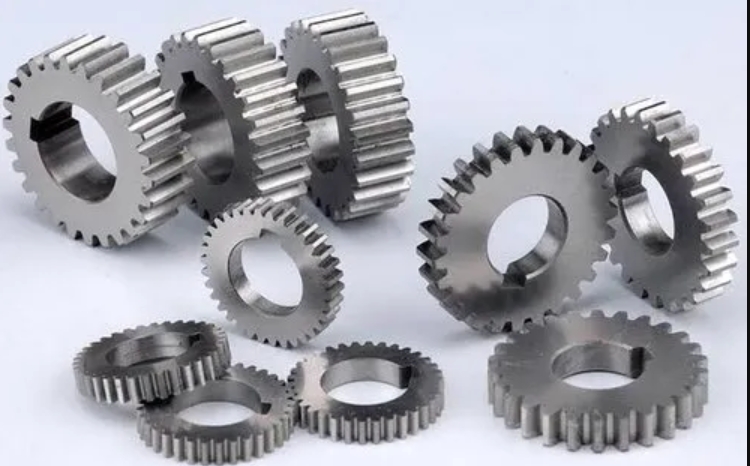
In our study, we focus on a standard spur gear with key parameters summarized in Table 1. These parameters are essential for both virtual manufacturing and analytical calculations. The spur gear is designed with a module of 3 mm, 60 teeth, and a pressure angle of 20°, which are common in industrial applications. The virtual manufacturing process involves simulating the hobbing operation using a rack-type cutter, where the cutter translates and rotates relative to the gear blank. By automating this process through scripting, we generate a cutting trace that defines the tooth surfaces. Subsequently, we reconstruct these surfaces using non-uniform rational B-splines (NURBS) to ensure smoothness and continuity, critical for finite element meshing. This approach yields a spur gear model with minimal errors, as verified by comparing measured dimensions against theoretical values. For example, the tooth thickness and root radius show deviations of less than 0.0012 mm, confirming the model’s accuracy.
| Parameter | Symbol | Value |
|---|---|---|
| Module | m | 3 mm |
| Number of Teeth | z | 60 |
| Face Width | b | 20 mm |
| Pressure Angle | α | 20° |
| Addendum Coefficient | h*_a | 1 |
| Dedendum Coefficient | c* | 0.25 |
| Profile Shift Coefficient | x | 0 |
Once the spur gear geometry is established, we proceed to finite element analysis to study contact characteristics under load. The FEA model is built considering quasi-static loading conditions, where inertial effects are neglected, and the system is assumed to be in equilibrium at each instant. We develop a three-dimensional contact model involving five teeth to capture interactions between multiple spur gear pairs. This multi-tooth approach is necessary to account for load sharing and stress variations during meshing. The finite element mesh is generated using hexahedral elements, with refinement in contact regions and tooth roots to ensure accuracy. Material properties for the spur gear are listed in Table 2, assuming isotropic linear elastic behavior. Boundary conditions are applied to simulate realistic operating scenarios: the driving spur gear is given a small rotational displacement to induce slow motion, while the driven spur gear is subjected to a constant torque. Constraints are imposed on other degrees of freedom to replicate mounting conditions. The contact formulation includes normal and tangential conditions, with a Coulomb friction model to account for sliding effects.
| Property | Symbol | Value |
|---|---|---|
| Young’s Modulus | E | 209 GPa |
| Shear Modulus | G | 79.4 GPa |
| Poisson’s Ratio | ν | 0.3 |
| Density | ρ | 7800 kg/m³ |
The finite element analysis yields detailed insights into contact forces and stresses during spur gear meshing. We extract contact forces from three adjacent tooth pairs over a full meshing cycle, as shown in Figure 1 (note: figures are referenced conceptually; the actual image link is inserted earlier). The results indicate that each spur gear tooth pair experiences similar loading patterns, with contact forces peaking in the single-tooth contact region. The maximum contact force observed is approximately 1182 N, occurring when only one pair of spur gear teeth bears the full load. Additionally, we note impact forces at the entry and exit points of meshing, attributed to sudden engagement and disengagement. These impacts can lead to higher transient stresses, which are critical for fatigue analysis. The contact force variation also allows us to calculate the actual contact ratio, which differs from the theoretical value due to load-induced deformations. Using the time-based method, we derive an actual contact ratio of 1.92, slightly higher than the theoretical 1.78, highlighting the influence of loading on spur gear meshing dynamics.
Furthermore, we analyze the root bending stress in the spur gear teeth. The maximum tensile stress at the root fillet is found to be 38.17 MPa under single-tooth contact conditions. This value aligns well with empirical formulas from literature, such as those by Charbert, Niemann, and Fillize, as compared in Table 3. The consistency validates our FEA model for spur gear bending stress assessment. The stress distribution on the spur gear tooth surface is also examined, revealing concentration areas near the pitch line and root region. These findings underscore the importance of accurate modeling for predicting spur gear failure modes, such as bending fatigue.
| Method | Maximum Stress (MPa) |
|---|---|
| Charbert Formula | 36.87 |
| Niemann Formula | 37.49 |
| Fillize Formula | 46.81 |
| FEA Numerical Result | 38.17 |
To complement the numerical analysis, we employ Hertz contact theory to derive analytical expressions for contact stress in spur gear meshing. The Hertz model approximates the contact between two spur gear teeth as equivalent cylinders with radii equal to the curvature radii at the contact point. This simplification is valid for small contact areas and linear elastic materials. The curvature radii for a spur gear pair can be expressed as:
$$ \rho_1 = \frac{d’_1}{2} \sin \alpha’_t $$
$$ \rho_2 = \frac{d’_2}{2} \sin \alpha’_t $$
where \( d’_1 \) and \( d’_2 \) are the pitch diameters of the driving and driven spur gears, respectively, and \( \alpha’_t \) is the operating pressure angle. The contact half-width \( a \) and maximum contact stress \( \sigma_H \) for a spur gear pair under normal load \( F_n \) per unit face width are given by:
$$ \sigma_H = \sqrt{ \frac{K F_n}{b} \cdot \frac{1}{\rho_1} + \frac{1}{\rho_2} }{ \pi \left( \frac{1 – \nu_1^2}{E_1} + \frac{1 – \nu_2^2}{E_2} \right) } $$
Here, \( K \) is a load factor accounting for dynamic effects, \( b \) is the face width of the spur gear, and \( E_1, E_2, \nu_1, \nu_2 \) are the elastic moduli and Poisson’s ratios of the spur gear materials. For identical spur gears, this simplifies further. By applying the contact forces obtained from FEA as \( F_n \), we compute the Hertz contact stress throughout the meshing cycle. The results, plotted against FEA-derived stresses, show similar trends but with notable differences due to gear deformations and edge effects. Specifically, the Hertz model predicts smoother stress variations, while FEA captures impact spikes at meshing entry and exit. The maximum Hertz contact stress is around 495 MPa, whereas FEA indicates peaks up to 545 MPa, a difference of about 10% attributed to local stress concentrations and nonlinearities in the spur gear contact.
The comparative analysis between Hertz theory and FEA for spur gear contact stress is summarized in Table 4. This table highlights key metrics such as stress values at critical points, emphasizing the influence of modeling assumptions. The Hertz approach provides a quick analytical estimate but may underestimate stresses in dynamic spur gear scenarios. In contrast, FEA offers detailed insights but requires more computational resources. For spur gear design, a hybrid approach is often beneficial: using Hertz theory for initial sizing and FEA for refinement.
| Meshing Phase | Hertz Stress (MPa) | FEA Stress (MPa) | Deviation |
|---|---|---|---|
| Entry Point | 380 | 400 | 5.3% |
| Single-Tooth Region | 495 | 545 | 10.1% |
| Exit Point | 375 | 390 | 4.0% |
Beyond stress analysis, we explore the relationship between contact force and contact stress in spur gear meshing. Our FEA results indicate an approximately linear correlation, as expressed by:
$$ \sigma_H \propto F_n $$
This linearity holds for the elastic range and simplifies predictive models for spur gear performance. However, deviations occur under impact conditions, where nonlinear effects dominate. We also investigate the effect of spur gear parameters on contact behavior. For instance, varying the module or pressure angle alters curvature radii and thus stress levels. Using parametric studies, we derive optimization guidelines for spur gear design to minimize contact stress while maintaining strength. Equations for sensitivity analysis can be formulated, such as:
$$ \frac{\partial \sigma_H}{\partial m} = -\frac{1}{2} \sqrt{ \frac{K F_n}{b} \cdot \frac{1}{\rho_1^2} \frac{\partial \rho_1}{\partial m} + \frac{1}{\rho_2^2} \frac{\partial \rho_2}{\partial m} }{ \pi \left( \frac{1 – \nu_1^2}{E_1} + \frac{1 – \nu_2^2}{E_2} \right) } $$
where \( m \) is the module of the spur gear. Such derivatives help in understanding how small changes in spur gear geometry affect contact stresses, aiding in iterative design improvements.
In addition to static analysis, we consider dynamic factors that influence spur gear contact. Although our primary focus is quasi-static loading, real-world spur gear operations involve vibrations and speed variations. These dynamic effects can exacerbate contact stresses, particularly in high-speed spur gear applications. Future work could extend our FEA model to include transient dynamics, using equations of motion such as:
$$ M \ddot{u} + C \dot{u} + Ku = F(t) $$
where \( M \), \( C \), and \( K \) are mass, damping, and stiffness matrices for the spur gear system, \( u \) is displacement, and \( F(t) \) is time-varying load. This would allow for a more comprehensive analysis of spur gear contact under realistic operating conditions.
Another aspect worth discussing is the role of lubrication in spur gear contact. While our model assumes dry contact, actual spur gears often operate with lubricants that reduce friction and wear. The Hertz theory can be extended to elastohydrodynamic lubrication (EHL) models, where film thickness affects stress distribution. For spur gears, the minimum film thickness \( h_{\text{min}} \) can be estimated using:
$$ h_{\text{min}} \propto \left( \frac{\eta_0 u}{E’ R} \right)^{0.7} $$
with \( \eta_0 \) as lubricant viscosity, \( u \) as rolling speed, \( E’ \) as reduced modulus, and \( R \) as equivalent radius. Incorporating EHL into spur gear analysis would provide insights into pitting and scuffing failures, common in heavily loaded spur gears.
To further enhance the spur gear model, we can incorporate manufacturing imperfections, such as profile errors or misalignments. These imperfections alter contact patterns and stress distributions. For example, a lead crowning on spur gear teeth can mitigate edge loading. The modified tooth profile can be described by polynomial functions, and FEA can be used to assess its impact on contact stress. This aligns with the virtual manufacturing theme, as CAD tools allow for easy incorporation of such modifications into the spur gear geometry.
In conclusion, our analysis of spur gear meshing under load demonstrates the effectiveness of combining virtual manufacturing, finite element analysis, and Hertz contact theory. The precise spur gear model built through virtual techniques ensures accurate geometry, leading to reliable FEA results. The contact forces and stresses derived from FEA reveal critical insights into spur gear behavior, including impact effects at meshing boundaries and stress concentrations in root regions. The Hertz theoretical calculations provide a benchmark, showing good agreement with numerical results but highlighting limitations in dynamic scenarios. This integrated approach not only validates the spur gear contact model but also offers practical value for optimizing spur gear design against fatigue and wear. Future research could expand into dynamic analysis, lubrication effects, and advanced materials for spur gears, further enhancing their performance in demanding applications.
Overall, the study underscores the importance of detailed modeling and analysis for spur gear systems. By leveraging computational tools, engineers can predict and mitigate failure modes, leading to more robust and efficient spur gear transmissions. The methodologies discussed here are applicable to a wide range of spur gear designs, from small precision instruments to large industrial machinery, making this work a valuable contribution to the field of mechanical engineering.