
The pursuit of high-precision, high-strength components with excellent surface quality has led to the continuous development of advanced sheet metal forming processes. Among these, fine-blanking stands out for its ability to produce parts with a full-sheared, smooth surface over a significant portion of the cut edge. However, when applied to complex geometries like spur gears, particularly those with significant thickness or made from less ductile materials, conventional fine-blanking faces challenges. A critical defect often observed in such components is the formation of a pronounced collapse angle, or rollover, at the tooth tip region. This geometrical imperfection reduces the effective contact area during gear meshing, potentially leading to stress concentration, accelerated wear, and compromised load-bearing capacity, thereby affecting the overall performance and service life of the spur gear.
To address the limitations of standard fine-blanking for challenging applications, a variant known as closed-extruding fine-blanking has been developed. This process integrates elements of extrusion within a constrained die cavity. Despite its advantages in forming difficult materials, the occurrence of a large collapse angle remains a significant quality concern in the production of spur gears using this method. This article delves into a comprehensive analysis of the root causes behind collapse angle formation during the closed-extruding fine-blanking of spur gears and systematically investigates the influence of key process parameters on its magnitude, aiming to establish effective control strategies.
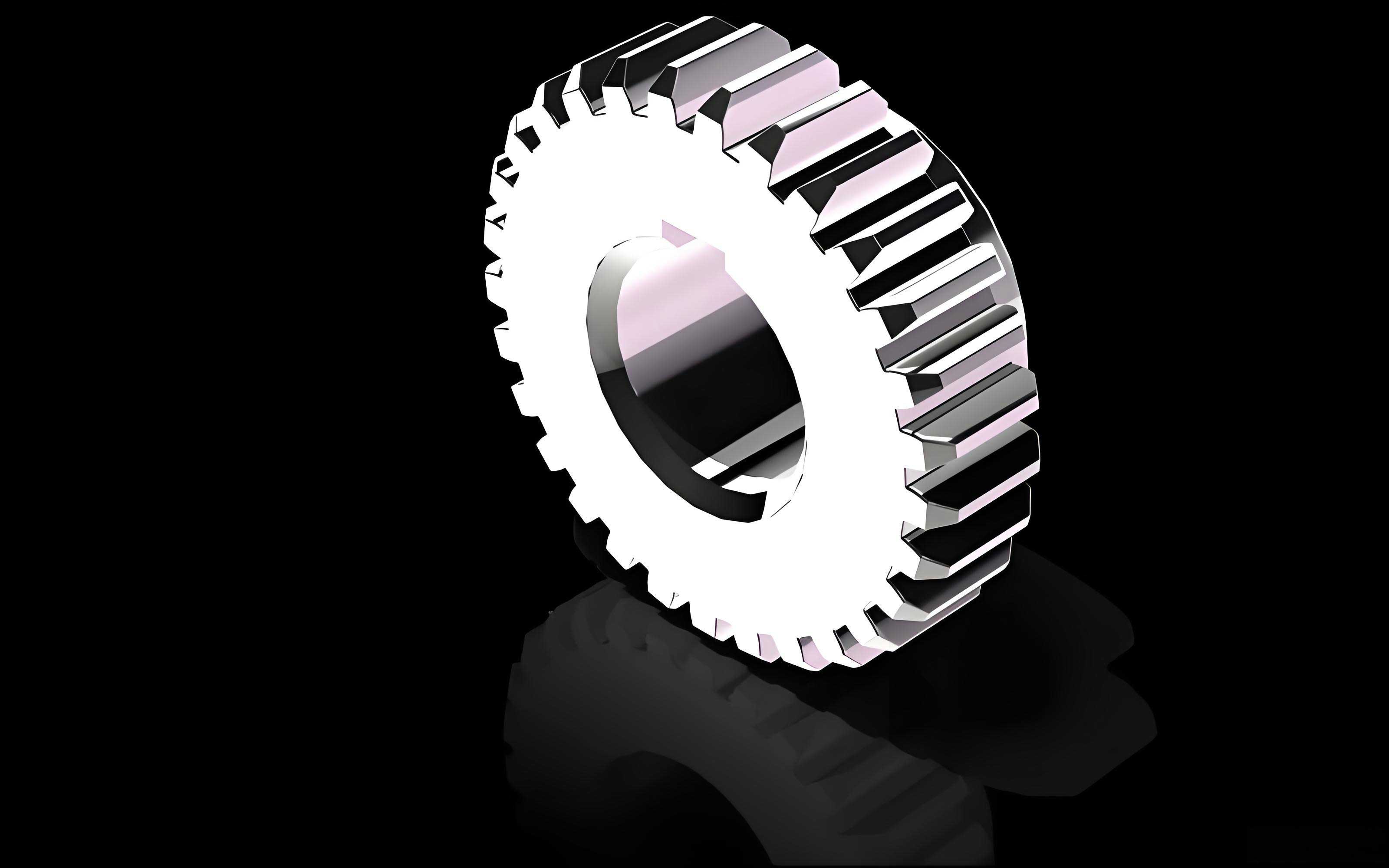
Understanding Collapse Angle Formation: A Material Flow Perspective
The formation of a collapse angle is fundamentally linked to the non-uniform flow of material during the initial stage of the punch penetration. In closed-extruding fine-blanking of a spur gear, the deformation mechanics are complex due to the intricate tooth profile. To unravel this, a combined approach of finite element (FE) simulation and physical grid experiment analysis was employed, focusing on the contrasting material behavior at the tooth root and the tooth tip of the spur gear.
Finite Element Modeling and Analysis
A three-dimensional FE model was constructed to simulate the closed-extruding fine-blanking process for a spur gear with 20 teeth and a module of 1.5 mm, made from AISI 1035 steel with an initial thickness of 8 mm. The model comprised the punch, main die (female die), auxiliary die, and counterpunch, all modeled as rigid bodies. The billet was modeled as an elastoplastic material. A critical aspect of simulating fracture in such processes is the choice of a suitable damage model. The Brozzo ductile fracture criterion, which accounts for the influence of stress triaxiality, was adopted. Its integral form is given by:
$$ \int_{0}^{\overline{\varepsilon}_f} \frac{2\sigma^*}{3(\sigma^* – \sigma_m)} d\overline{\varepsilon} = C $$
where $\sigma^*$ is the maximum principal stress, $\sigma_m$ is the mean (hydrostatic) stress, $\overline{\varepsilon}$ is the equivalent plastic strain, $\overline{\varepsilon}_f$ is the equivalent strain at fracture, and $C$ is a material constant. The simulation parameters are summarized in the table below.
| Parameter | Value / Description |
|---|---|
| Material (Billet) | AISI 1035 Steel |
| Stress-Strain Law | $\sigma = 183\overline{\varepsilon}^{-0.467}\dot{\overline{\varepsilon}}^{-0.00049} + 630$ MPa |
| Punch Speed | 2 mm/s |
| Friction Factor (Shear) | 0.12 |
| Brozzo Constant (C) | 0.2 |
| Number of Billet Elements | 60,000 (with local refinement) |
The simulation results revealed a stark difference in material flow velocity between the tooth root and tooth tip profiles of the developing spur gear. The velocity field was analyzed at different stages of punch travel.
| Process Stage | Flow Velocity at Tooth Root Profile (mm/s) | Flow Velocity at Tooth Tip Profile (mm/s) |
|---|---|---|
| Early Penetration | Relatively uniform from core to side | High gradient: Fast at core, slow near tip |
| Mid Penetration | Maintains uniform flow | Gradient intensifies; core material flows significantly faster |
| Near Fracture | Continues uniform downward movement | Severe disparity; tip-side material lags far behind |
The data clearly indicates that while material in the tooth root region descends uniformly, the flow at the tooth tip is highly inhomogeneous. The central core material beneath the punch face moves downward rapidly, whereas the material adjacent to the future tooth tip sidewall experiences much slower flow. This velocity gradient is the direct precursor to collapse angle formation.
Grid Experiment Validation and Mechanistic Insight
To physically validate the numerical findings, a grid experiment was conducted. A longitudinal section of a billet was etched with a precise 1 mm x 1 mm coordinate grid. This marked billet was then subjected to the closed-extruding fine-blanking process. Examination of the deformed grid pattern in the sectional view provided unambiguous evidence of the deformation mechanics.
- Tooth Root Region: The grid squares showed slight, relatively uniform distortion and a small upward displacement, consistent with controlled, uniform compression and flow into the die cavity.
- Tooth Tip Region: The grid squares exhibited severe distortion and a pronounced upward and outward displacement, forming a characteristic “bulge” corresponding to the collapse angle. This visual evidence confirmed the significant shear and non-uniform flow predicted by the simulation.
The primary driver of this non-uniform flow is friction. During the formation of the tooth tip in a spur gear, the material is subjected to frictional forces on three distinct surfaces:
1. The end face (against the auxiliary die or counterpunch).
2. The two lateral faces forming the tooth flanks (against the main die walls).
This “triple-action” friction creates a major constraint on material flow near the tooth tip periphery. In contrast, material in the central region beneath the punch face and at the tooth root is less constrained, primarily experiencing friction on one or two surfaces. According to the principle of minimum resistance, the less-constrained central material flows more easily into the die opening, pulling away from the highly constrained tip material. This differential flow velocity causes the tip material to be dragged upward and deformed plastically before fracture initiates, manifesting as the collapse angle. The effect is exacerbated as the tooth tip narrows, further increasing the relative constraint. Therefore, the fundamental cause of collapse angle in closed-extruding fine-blanking of a spur gear is the friction-induced inhomogeneity in material flow velocity.
Controlling the Collapse Angle: Parametric Influence and Optimization
Since the collapse angle stems from flow inhomogeneity, control strategies must focus on promoting more uniform deformation or mitigating the factors that cause the disparity. Three critical process parameters in closed-extruding fine-blanking were investigated for their effect on the collapse angle height (h) of the finished spur gear.
1. Influence of Counterpunch Force (Fc)
The counterpunch force plays a vital role in establishing a beneficial triaxial compressive stress state, which suppresses premature fracture and influences material flow. Experiments were conducted with varying counterpunch forces while keeping other parameters constant.
| Counterpunch Force, Fc (kN) | Measured Collapse Angle Height, h (mm) | Qualitative Effect on Material Flow |
|---|---|---|
| 0 | 3.62 | Minimal constraint on billet; material flows easily into central gap, maximizing tip lag. |
| 6 | 2.56 | Increased compression improves stress state and slightly restricts central flow, reducing disparity. |
| 12 | 2.46 | Stronger compression further homogenizes flow, leading to the smallest collapse angle. |
The relationship is clearly inverse. A higher counterpunch force applies greater pressure on the end face of the billet, increasing the compressive stress throughout the deformation zone. This not only delays the onset of ductile fracture but also provides a “back pressure” that resists the uncontrolled downward rush of the central material. It forces more material to flow radially to fill the tooth cavity, thereby providing better support to the tooth tip region and reducing the velocity gradient. The effect tends to saturate at very high forces, but within practical ranges, increasing Fc is a highly effective method to control collapse angle in spur gear fine-blanking.
2. Influence of Bypass (Pressure Relief) Chamber Diameter (db)
To reduce the extreme forming loads and protect the die, a bypass or pressure relief chamber is often incorporated at the center of the billet. This chamber, however, alters the material flow pattern. The effect of its diameter was studied.
| Bypass Chamber Diameter, db (mm) | Measured Collapse Angle Height, h (mm) | Qualitative Effect on Material Flow |
|---|---|---|
| 4 | 2.50 | Small chamber; minimal diversion of material, flow is primarily axial/radial into teeth. |
| 8 | 2.96 | Larger chamber provides an easy flow path, drawing material axially and reducing radial flow to tooth tips. |
| 12 | 3.98 | Very large chamber severely weakens the billet core, causing massive axial flow and severe tip material lag. |
The relationship is directly proportional. A larger bypass chamber acts as a low-resistance sink for material directly under the punch. This promotes significant axial flow into the chamber itself at the expense of the radial flow needed to fill the outer tooth cavities of the spur gear. Consequently, the material intended for the tooth tip region is “stolen,” exacerbating the flow velocity difference between the center and the periphery. This results in a larger, more pronounced collapse angle. Therefore, while necessary for load management, the bypass chamber should be designed with the minimum feasible diameter to minimize its adverse effect on the tooth profile quality of the spur gear.
3. Influence of Outer Ring Filling Ratio (η)
The outer ring filling ratio is defined as the percentage of the annular space between the main and auxiliary dies that is initially filled by the billet. It determines the initial radial constraint on the material.
$$ \eta = \frac{A_{billet, outer}}{A_{cavity, outer}} \times 100\% $$
| Outer Ring Filling Ratio, η (%) | Measured Collapse Angle Height, h (mm) | Qualitative Effect on Material Flow |
|---|---|---|
| 88 | 2.92 | Significant initial gap. Early stage deformation involves material flowing radially to fill the gap, depleting the tooth tip region. |
| 94 | 2.48 | Smaller gap. Less radial flow diversion, more material is available for axial forming of teeth. |
| 99 | 1.92 | Near-complete fill. Strong initial radial constraint forces material to flow axially into the tooth cavities from the start, supporting the tip. |
The relationship is inverse. A higher filling ratio means the billet nearly completely occupies the outer die cavity from the beginning of the stroke. This imposes an immediate radial constraint, effectively “locking” the material and forcing the punch pressure to be channeled primarily into axial deformation—flowing into the intricate tooth profiles of the spur gear. There is little to no empty space for the material to flow into radially, ensuring that the deformation is dedicated to forming the part. This promotes more uniform axial flow and provides continuous material support to the tooth tip, drastically reducing the collapse angle. Maximizing the outer ring filling ratio is thus a crucial pre-condition for achieving high-quality spur gear blanks.
Synthesis and Practical Guidelines for Spur Gear Production
Based on the systematic investigation into the formation mechanism and parametric influences, the following conclusions and integrated control strategy can be formulated for the closed-extruding fine-blanking of spur gears:
- Root Cause: The collapse angle on the tooth tip of a fine-blanked spur gear is primarily caused by friction-induced inhomogeneous material flow. The triple friction acting on the tooth tip region severely constrains its flow, causing it to lag behind the less-constrained central material, resulting in plastic upheaval before shearing.
- Parametric Dependencies: The collapse angle height (h) exhibits the following functional relationships with key process parameters:
- Inversely proportional to the counterpunch force ($h \propto 1/F_c$).
- Directly proportional to the size of the bypass chamber ($h \propto d_b$).
- Inversely proportional to the outer ring filling ratio ($h \propto 1/\eta$).
These relationships can be conceptually summarized in a combined form: $$ h \approx k \cdot \frac{d_b}{F_c \cdot \eta} $$ where k is a constant incorporating material properties, friction, and gear geometry.
- Optimization Strategy: To effectively minimize the collapse angle and improve the geometric accuracy of the spur gear, the process should be tuned as follows:
- Apply the highest feasible counterpunch force within the press and tooling capacity to enhance compressive stress and homogenize flow.
- Design the bypass (pressure relief) chamber with the smallest possible diameter sufficient to control forming loads, to prevent it from diverting crucial material flow.
- Maximize the outer ring filling ratio, ideally to near 100%, by using a billet with an accurately machined outer diameter. This ensures immediate radial constraint and directs all deformation energy into forming the tooth profile.
Implementing this multi-parameter approach addresses the flow inhomogeneity from different angles, leading to a synergistic reduction in the collapse angle defect.
This integrated understanding of cause and effect provides a solid foundation for process design and troubleshooting in the closed-extruding fine-blanking of high-precision spur gear components, enabling the production of stronger, more reliable gears for demanding mechanical applications.