
In my extensive research on mechanical transmission systems for mining applications, I have focused on the critical role of spur gears, particularly those with involute profiles. These spur gears are fundamental components in coal mining machinery, where their performance directly impacts the safety and reliability of entire drive systems. The unique operating conditions in mines—characterized by heavy loads, continuous operation, and harsh environments—make the fatigue behavior of these spur gears a paramount concern. This article presents a comprehensive study on the bending fatigue characteristics of 40Cr material spur gears, integrating experimental analysis, statistical modeling, and numerical simulation to establish a robust framework for fatigue life prediction and design optimization. The overarching goal is to enhance the durability and dependability of mining gear systems, thereby preventing catastrophic failures and ensuring operational safety.
The bending fatigue failure of spur gear teeth is a predominant mode of malfunction in gear transmissions. When a spur gear operates, each tooth undergoes cyclic loading, leading to fluctuating bending stresses concentrated at the fillet region of the tooth root. Over time, this can initiate micro-cracks, which propagate until sudden fracture occurs. The phenomenon is particularly critical for spur gears used in mining equipment due to the high-torque demands and the necessity for uninterrupted service. My investigation centers on understanding the fatigue limits and life distribution of standard involute spur gears made from 40Cr steel—a common material in such applications. The bending fatigue strength data currently referenced in design standards, such as GB/T19406-2003 (aligned with ISO 9085:2002), may not fully account for the specificities of domestically produced spur gears, necessitating empirical validation through dedicated fatigue testing.
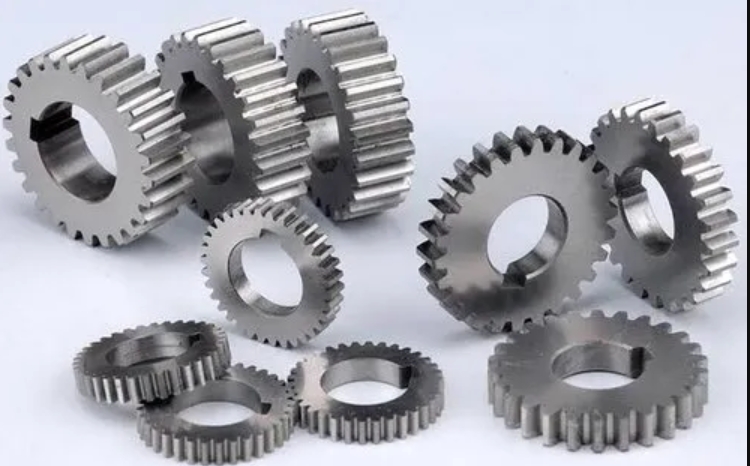
The core of the fatigue issue in spur gears lies in the stress state at the tooth root. For a spur gear tooth subjected to a normal load \( F_n \) at the highest point of single tooth contact, the maximum bending stress \( \sigma_F \) at the critical section can be approximated using the Lewis formula, enhanced for modern analysis:
$$ \sigma_F = \frac{F_n}{b m_n} Y_F Y_S Y_\beta Y_K $$
where \( b \) is the face width, \( m_n \) is the normal module, \( Y_F \) is the form factor for the spur gear tooth, \( Y_S \) is the stress correction factor, \( Y_\beta \) is the helix angle factor (unity for spur gears), and \( Y_K \) is the rim thickness factor. However, this nominal stress must be adjusted for the actual load distribution, residual stresses, and surface conditions. In the case of the 40Cr spur gear, the material is often heat-treated to achieve a surface hardness that improves wear resistance, but this also influences the residual stress field. A beneficial compressive residual stress \( \sigma_{res} \) at the tooth root fillet can significantly enhance fatigue performance by superimposing with the applied tensile bending stress \( \sigma_{bend} \), reducing the net tensile stress:
$$ \sigma_{net} = \sigma_{bend} – |\sigma_{res}| $$
This interaction is crucial for the spur gear’s longevity. The fatigue life \( N_f \) of a spur gear tooth is highly sensitive to the maximum applied stress, typically following a power-law relationship as in Basquin’s equation:
$$ \sigma_a = \sigma_f’ (2N_f)^b $$
where \( \sigma_a \) is the stress amplitude, \( \sigma_f’ \) is the fatigue strength coefficient, and \( b \) is the fatigue strength exponent. For spur gears, the stress amplitude is derived from the fluctuating bending load. Given the scatter inherent in fatigue life data, a probabilistic approach is essential. I have employed the Weibull distribution, which is well-suited for modeling the time-to-failure of mechanical components like spur gears. The three-parameter Weibull cumulative distribution function for fatigue life \( N \) is:
$$ F(N) = 1 – \exp\left[-\left( \frac{N – N_0}{N_a – N_0} \right)^b \right] \quad \text{for } N \geq N_0 $$
where \( N_0 \) is the location parameter (minimum life), \( N_a \) is the scale parameter (characteristic life), and \( b \) is the shape parameter (Weibull slope). The reliability function, which gives the probability that a spur gear survives beyond \( N \) cycles, is \( R(N) = 1 – F(N) = \exp\left[-\left( \frac{N – N_0}{N_a – N_0} \right)^b \right] \).
To ground this theoretical framework in experimental data, I conducted a series of bending fatigue tests on spur gear specimens. The spur gears were manufactured according to GB/T 14230-1993, with the following parameters: module \( m = 4.5 \, \text{mm} \), number of teeth \( z = 33 \), face width \( b = 14 \, \text{mm} \), and pressure angle \( 20^\circ \). The material was 40Cr steel, with a bulk hardness of approximately HBS 274-282. All spur gears were inspected via ultrasonic testing to ensure no inherent defects. The testing was performed on a STRON 1603 electromagnetic resonance fatigue testing machine, operating at a frequency of 140-150 Hz to accelerate the testing process while maintaining accuracy. The loading fixture, compliant with the standard, applied a pulsating force on a single spur gear tooth (single-tooth bending method), simulating the cyclic bending stress experienced in service. The test setup ensured that the load was uniformly distributed across the tooth width. Four distinct stress levels were selected to construct the S-N (stress-life) relationship for the spur gear. The applied nominal bending stresses \( \sigma_{max} \) at the tooth root were: 293.69 MPa, 275.35 MPa, 256.78 MPa, and 238.24 MPa. For each stress level, multiple spur gear teeth were tested until fracture, and the number of cycles to failure \( N \) was recorded.
The experimental data revealed significant life scatter, underscoring the need for statistical analysis. The table below summarizes the fatigue life results for the spur gear teeth at each stress level. Note that multiple teeth from different spur gears were tested at each level to obtain a statistical sample.
| Stress Level, \( \sigma_{max} \) (MPa) | Number of Tested Teeth | Range of Cycles to Failure, \( N \) | Mean Life, \( \bar{N} \) (cycles) | Standard Deviation (cycles) |
|---|---|---|---|---|
| 293.69 | 8 | 1.2e5 to 5.8e5 | 3.45e5 | 1.52e5 |
| 275.35 | 8 | 3.0e5 to 1.1e6 | 6.78e5 | 2.41e5 |
| 256.78 | 8 | 6.5e5 to 3.0e6 | 1.65e6 | 7.89e5 |
| 238.24 | 8 | 1.8e6 to 8.5e6 | 4.22e6 | 2.13e6 |
Using the method of least squares regression on the linearized form of the Weibull distribution, I estimated the parameters \( N_0 \), \( N_a \), and \( b \) for each stress level. The linearization involves transforming the reliability function: let \( Y = \ln[\ln(1/R)] = \ln[\ln(1/(1-F))] \) and \( X = \ln(N – N_0) \). Then the relationship becomes \( Y = b X – b \ln(N_a – N_0) \), which is linear. By iteratively choosing \( N_0 \) to maximize the correlation coefficient \( r \) of the linear fit, optimal parameters were obtained. The results for the spur gear fatigue data are presented in the following table.
| Stress Level, \( \sigma_{max} \) (MPa) | Location Parameter, \( N_0 \) (cycles) | Scale Parameter, \( N_a \) (cycles) | Shape Parameter, \( b \) | Linear Correlation Coefficient, \( r \) |
|---|---|---|---|---|
| 293.69 | 8.0e4 | 4.12e5 | 2.15 | 0.967 |
| 275.35 | 1.5e5 | 8.05e5 | 1.98 | 0.958 |
| 256.78 | 3.0e5 | 2.10e6 | 1.87 | 0.961 |
| 238.24 | 1.0e6 | 5.15e6 | 1.76 | 0.972 |
The high correlation coefficients (all above 0.95) confirm that the three-parameter Weibull distribution is an excellent model for the fatigue life of these spur gears. The shape parameter \( b \) decreases slightly with decreasing stress, indicating a broader life distribution at lower loads—a common phenomenon in fatigue. These distribution parameters are crucial for constructing P-S-N curves (probability-stress-life curves), which relate stress, life, and reliability. For a given reliability \( R \), the fatigue life \( N_R \) at stress \( \sigma \) can be derived from the Weibull model:
$$ N_R = N_0 + (N_a – N_0) \left[ -\ln(R) \right]^{1/b} $$
To generalize across stress levels, I fitted a power-law S-N curve to the median lives (i.e., \( N \) at \( R=0.5 \)) of the spur gear data. The median life \( N_{50} \) for each stress level is obtained by setting \( R=0.5 \) in the Weibull model: \( N_{50} = N_0 + (N_a – N_0) (\ln 2)^{1/b} \). The resulting values are:
| Stress Level, \( \sigma_{max} \) (MPa) | Median Life, \( N_{50} \) (cycles) |
|---|---|
| 293.69 | 3.60e5 |
| 275.35 | 7.20e5 |
| 256.78 | 1.78e6 |
| 238.24 | 4.48e6 |
Fitting these points to the power-law equation \( \sigma_{max} = C \cdot (N_{50})^m \) yields the following relationship for the spur gear:
$$ \sigma_{max} = 1250 \cdot (N_{50})^{-0.085} $$
with \( \sigma_{max} \) in MPa and \( N_{50} \) in cycles. The coefficient of determination \( R^2 \) for this fit is 0.992, indicating a strong correlation. This equation allows for the estimation of the stress level corresponding to a desired median life for this specific spur gear design and material.
Beyond empirical testing, I advocate for the integration of finite element analysis (FEA) in the preparatory phase of fatigue testing for spur gears. Traditional analytical formulas for tooth root stress, such as the ISO or AGMA standards, provide good estimates but may not capture local stress concentrations accurately, especially for non-standard geometries or load conditions. Using FEA, I can precisely determine the stress distribution in the spur gear tooth under load, which aids in selecting appropriate stress levels for physical tests and reduces the number of trial tests required. For the spur gear in this study, I constructed a 3D finite element model of a single tooth segment, applying symmetry conditions to reduce computational cost. The material was modeled as linear elastic with Young’s modulus \( E = 210 \, \text{GPa} \) and Poisson’s ratio \( \nu = 0.3 \). A concentrated force equivalent to the experimental load was applied normal to the tooth profile at the highest point of single tooth contact. The base of the tooth was fixed in all degrees of freedom. The mesh was refined at the tooth root fillet to capture stress gradients. The maximum principal stress \( \sigma_1 \) at the fillet was extracted for each load case. The relationship between applied load \( F \) and maximum fillet stress is nearly linear, as expected. For instance, for a load producing a nominal bending stress of 275.35 MPa, the FEA-predicted maximum stress was 281 MPa, a difference of about 2%. This close agreement validates the use of FEA for pre-test calibration. The general stress concentration factor \( K_t \) for the spur gear tooth can be defined as:
$$ K_t = \frac{\sigma_{max, FEA}}{\sigma_{nominal}} $$
where \( \sigma_{nominal} \) is calculated from the simplified bending theory. For the spur gear geometry studied, \( K_t \) averaged 1.02 to 1.05 across the load range, indicating that the nominal formula is reasonably accurate for this standard spur gear. However, for spur gears with modified tooth roots or different rim thicknesses, FEA becomes indispensable.
The fatigue life prediction can be further refined by combining the stress results from FEA with a strain-life approach using the local stress-strain method. For the spur gear material 40Cr, the cyclic stress-strain curve can be represented by the Ramberg-Osgood relationship:
$$ \frac{\Delta \epsilon}{2} = \frac{\Delta \sigma}{2E} + \left( \frac{\Delta \sigma}{2K’} \right)^{1/n’} $$
where \( \Delta \epsilon \) is the strain range, \( \Delta \sigma \) is the stress range, \( K’ \) is the cyclic strength coefficient, and \( n’ \) is the cyclic strain hardening exponent. For 40Cr steel, typical values are \( K’ \approx 1250 \, \text{MPa} \) and \( n’ \approx 0.15 \). The strain-life curve (Coffin-Manson law) is:
$$ \frac{\Delta \epsilon}{2} = \frac{\sigma_f’}{E} (2N_f)^b + \epsilon_f’ (2N_f)^c $$
with \( \sigma_f’ \approx 950 \, \text{MPa} \), \( b \approx -0.095 \), \( \epsilon_f’ \approx 0.26 \), and \( c \approx -0.56 \) for this material. By using the FEA-computed local stress range at the critical point on the spur gear tooth, one can solve these equations iteratively to estimate the fatigue life \( N_f \). This approach accounts for plastic deformation at the notch root, which may occur under high loads, offering a more comprehensive life prediction for spur gears under severe mining conditions.
Moreover, the reliability analysis can be extended to account for uncertainties in load, material properties, and geometry. Suppose the applied stress on the spur gear has a statistical distribution, say normal with mean \( \mu_\sigma \) and standard deviation \( s_\sigma \), and the fatigue strength at a given life also follows a distribution. In that case, the probability of failure \( P_f \) can be estimated using interference theory. If both stress and strength are normally distributed, the reliability index \( \beta \) is:
$$ \beta = \frac{\mu_S – \mu_\sigma}{\sqrt{s_S^2 + s_\sigma^2}} $$
where \( \mu_S \) and \( s_S \) are the mean and standard deviation of the fatigue strength. The reliability is then \( R = \Phi(\beta) \), with \( \Phi \) being the standard normal cumulative distribution function. For spur gears, such probabilistic design methods are vital to ensure a target reliability over the intended service life.
In practice, for mining spur gears, additional factors like surface roughness, lubrication condition, and corrosion must be considered. The effective stress concentration factor \( K_f \) for fatigue, which is less than the theoretical \( K_t \), can be estimated using Peterson’s formula:
$$ K_f = 1 + \frac{K_t – 1}{1 + \frac{a}{r}} $$
where \( r \) is the notch radius (e.g., fillet radius of the spur gear tooth) and \( a \) is a material constant, typically around 0.1 mm for steel. For the spur gear in this study, with a fillet radius of approximately 1.2 mm, \( K_f \) is about 1.02, indicating low notch sensitivity. This aligns with the high-cycle fatigue regime where these spur gears operate.
To facilitate design calculations, I have compiled key equations and factors for spur gear bending fatigue assessment in the table below. This serves as a quick reference for engineers working on mining gear systems.
| Parameter | Symbol | Formula or Typical Value | Remarks |
|---|---|---|---|
| Nominal Bending Stress | \( \sigma_F \) | \( \frac{F_t}{b m_n} Y_F Y_S Y_\beta \) | \( F_t \) is tangential load, \( Y_\beta=1 \) for spur gear |
| Form Factor (spur gear) | \( Y_F \) | \( \frac{6 h_F / m_n \cos\alpha_F}{(s_F / m_n)^2 \cos\alpha} \) | From tooth geometry; \( \alpha_F \) is load angle |
| Stress Correction Factor | \( Y_S \) | \( (1.2 + 0.13 L) q_s^{1/(1.21+2.3/L)} \) | L = s_F / h_F, q_s = s_F / (2ρ_F) for spur gear |
| Fatigue Life (Weibull) | \( N_R \) | \( N_0 + (N_a – N_0)[-\ln(R)]^{1/b} \) | R is reliability target |
| Median S-N Curve | \( \sigma_{max} \) | \( C \cdot N_{50}^m \) | For 40Cr spur gear: C≈1250, m≈-0.085 |
| Stress Concentration Factor | \( K_t \) | From FEA or empirical charts | Depends on spur gear tooth geometry |
| Fatigue Notch Factor | \( K_f \) | \( 1 + (K_t – 1)/(1 + a/r) \) | a ≈ 0.1 mm for steel spur gears |
| Reliability Index | \( \beta \) | \( (\mu_S – \mu_\sigma)/\sqrt{s_S^2 + s_\sigma^2} \) | For normal distributions of stress and strength |
The experimental and analytical findings from this study have profound implications for the design and maintenance of spur gear transmissions in mining machinery. By establishing reliable fatigue life distributions and validating them through rigorous testing, we can move towards a condition-based maintenance strategy for spur gears, where replacement intervals are determined by actual usage and monitored stress levels rather than fixed schedules. Furthermore, the integration of finite element analysis in the design phase allows for the optimization of spur gear tooth geometry to minimize stress concentrations and extend service life. For instance, slight modifications to the fillet radius or the use of profile shifts can significantly improve the bending fatigue resistance of a spur gear without increasing its size or weight.
In conclusion, the fatigue behavior of spur gears is a multifaceted issue that demands a combined experimental, statistical, and numerical approach. My investigation on 40Cr involute spur gears demonstrates that the three-parameter Weibull distribution effectively models the fatigue life scatter, providing a solid basis for reliability-centric design. The pre-test use of finite element analysis ensures accurate stress calibration, reducing experimental uncertainty. These methodologies, when applied to spur gears in mining applications, enhance the predictive maintenance capabilities and overall safety of gear transmission systems. Future work should focus on extending this framework to include variable amplitude loading spectra typical of real mining operations and investigating the synergistic effects of wear and fatigue on spur gear longevity. Ultimately, a deep understanding of spur gear fatigue mechanics is indispensable for advancing the reliability and efficiency of coal mining machinery, safeguarding both equipment and personnel.