
In the field of heavy machinery, such as high-pressure drilling mud pumps, marine propulsion systems, and wind turbine gearboxes, herringbone gears play a critical role due to their high load-bearing capacity, low noise, and smooth transmission characteristics. The symmetry of the herringbone gear tooth profile directly impacts the meshing performance, transmission efficiency, and service life of the equipment. With advancements in CNC technology, the machining of herringbone gears has become highly precise, allowing for minimal left-right symmetry errors. However, the high cost and stringent environmental requirements of such CNC machines limit their adoption in small and medium-sized enterprises. In our manufacturing practice, we have relied on traditional SYKES gear planers for machining integral herringbone gears, where manual marking methods were used for height inspection and symmetry control of the left and right helical tooth forms. This approach suffers from significant subjective errors, poor repeatability, lack of quantitative data, and adverse effects on final assembly quality, often leading to issues like gear tooth backside contact and abnormal noises during operation. To address these challenges, we have developed a novel device and method for detecting and controlling the symmetry error of herringbone gears through height error measurement, which has proven effective in enhancing machining accuracy and assembly quality, thereby improving operational stability and reducing maintenance costs.
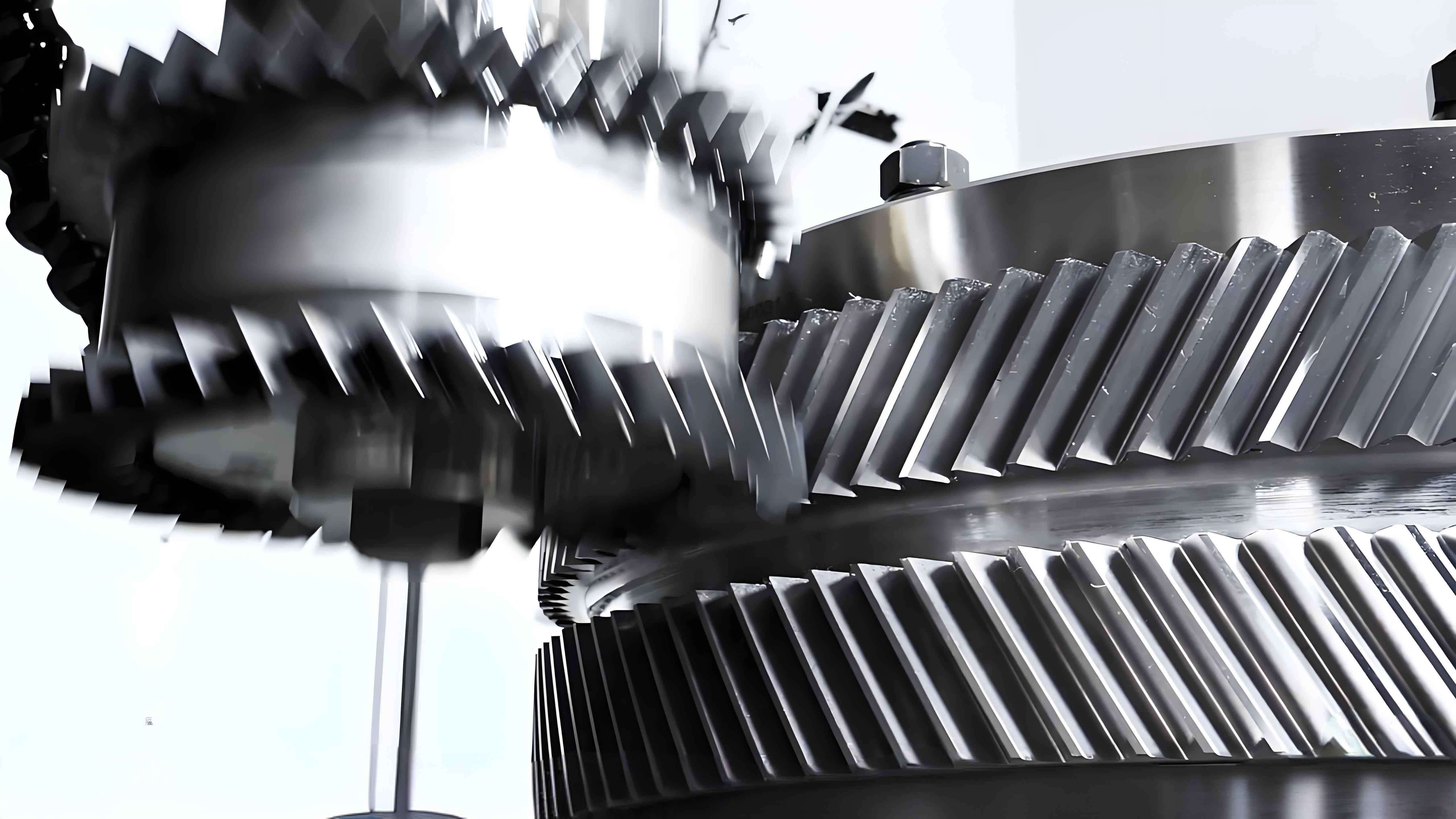
Herringbone gears are essential components in many industrial applications, and their precision is paramount for optimal performance. Traditional detection techniques for herringbone gears can be broadly categorized into contact and non-contact methods. Contact methods, such as manual marking and micrometer measurements, offer simplicity but are prone to human error and inefficiency. For instance, micrometer measurements can achieve accuracies of 0.01 mm but are slow and unsuitable for simultaneous measurement of left and right tooth surfaces. Non-contact methods, including laser scanning and coordinate measuring machines (CMMs), provide high precision but are costly, require controlled environments, and are often impractical for large herringbone gears in workshop conditions. Table 1 summarizes a comparison of these techniques, highlighting the limitations that prompted our development of a new solution focused on herringbone gear symmetry control.
| Technique | Accuracy | Efficiency | Cost | Suitability for Herringbone Gears |
|---|---|---|---|---|
| Manual Marking | 0.5–0.8 mm | Low | Low | Poor, due to subjective errors |
| Micrometer Measurement | 0.01 mm | Very Low | Low | Limited, for point measurements |
| Laser Scanning | Micron-level | Medium | High | Good, but sensitive to environment |
| CMM | Highest | Low | Very High | Poor, for large herringbone gears |
| Our New Device | 0.1 mm or better | High | Moderate | Excellent, for workshop use |
The design principle of our herringbone gear height detection device is based on mechanical contact measurement. In theory, for a perfectly symmetric herringbone gear, any pair of points A1 and A2 on the left and right tooth surfaces, symmetric about the central plane, will have equal distances L1 and L2 from the symmetry center, as well as equal heights h1 and h2 from the tooth top. However, if a symmetry error exists, when L1 = L2, the heights will differ, i.e., h1 ≠ h2. Conversely, if h1 = h2, then L1 ≠ L2. In practice, controlling the height constancy is challenging, so we set L1 = L2 by using symmetric measurement points and measure h1 and h2 to compute the height difference Δh. This allows us to calculate the deviation ΔL from the symmetry center. The relationship can be expressed mathematically using the spiral angle β of the herringbone gear, typically around 30° for mud pump applications. The formulas are as follows:
First, the height difference is measured: $$ \Delta h = h_{\text{left}} – h_{\text{right}} $$ where \( h_{\text{left}} \) and \( h_{\text{right}} \) are the readings from the left and right dial indicators, respectively. If the dial indicators are calibrated with an initial offset \( a \), the corrected height difference is: $$ \Delta h = h_{\text{left}} – h_{\text{right}} – a $$
Then, the symmetry deviation ΔL is derived from the geometry of the herringbone gear tooth profile: $$ \Delta L = \frac{\Delta h}{\tan \beta} $$ where \( \beta \) is the spiral angle. For instance, with \( \beta = 30^\circ \), \( \tan 30^\circ = \frac{1}{\sqrt{3}} \approx 0.577 \), so: $$ \Delta L = \frac{\Delta h}{0.577} $$
Finally, the machine adjustment amount λ is computed using an equipment-specific adjustment coefficient \( i \): $$ \lambda = \Delta L \times i $$ This adjustment is applied to correct the symmetry error during machining, ensuring precise alignment of the herringbone gear teeth.
The overall architecture of our herringbone gear detection device consists of two main modules: the positioning module and the measurement module. This design aims to provide high-precision benchmark positioning, dual-gauge synchronous measurement, and modular adaptability for various herringbone gear sizes. The key components are detailed in Table 2, which outlines their materials, functions, and specifications to ensure robust performance in industrial environments.
| Component | Material | Function | Specifications |
|---|---|---|---|
| Inspection Body (V-block) | NAK80 Mold Steel | Radial positioning via V-bench | Hardness HRC 40–45, 60° angle |
| Positioning Side Plates | Carbon Steel | Axial positioning on gear width | Adjustable with screws |
| Dial Indicators | Precision Instruments | Height measurement | Graduation 0.01 mm or 0.001 mm |
| Probe Heads | T8 Carbon Tool Steel | Contact with herringbone gear tooth surface | 5 mm diameter spherical tip |
| Calibration Seat | Steel Alloy | Initial calibration of dial indicators | Ensures zero error alignment |
The positioning module is critical for establishing a stable reference. The inspection body, made of NAK80 mold steel, offers high wear resistance and dimensional stability, with a V-shaped基准面 that conforms to the tooth tip circle of the herringbone gear. The side plates ensure tight contact with the gear width faces, minimizing axial movement during measurement. For herringbone gears with large relief grooves, the inspection body can be modified to use groove width faces as axial benchmarks, enhancing accuracy for specific applications. The measurement module incorporates symmetrically arranged dial indicators, which can be either mechanical percent gauges with 0.01 mm divisions or micrometer gauges with 0.001 mm divisions, depending on the required precision for the herringbone gear inspection. The spherical probe heads, polished to reduce friction, engage with the tooth surfaces at the pitch circle location, enabling simultaneous data acquisition from both sides of the herringbone gear.
The working principle and operational流程 of our herringbone gear height detection device involve a systematic procedure to ensure reliable and quantifiable results. First, the positioning module is assembled and mounted on the herringbone gear by aligning the V-block with the tooth tip circle and securing it with side plates and adjusting screws. This step guarantees that the measurement基准 is fixed relative to the gear axis. Next, the dial indicators are calibrated using a dedicated calibration seat to set initial readings or record any offset. Then, the measurement module is inserted into the inspection body’s gauge holder, allowing both probes to contact the left and right tooth surfaces. Readings are taken at multiple circumferential positions, typically every 90°, to account for any variations across the herringbone gear. Table 3 summarizes the data processing steps, illustrating how average values are computed to derive the symmetry error for the herringbone gear.
| Step | Action | Formula or Output |
|---|---|---|
| 1 | Measure height readings at 4 positions | \( h_{\text{left},j}, h_{\text{right},j} \) for \( j = 1 \) to 4 |
| 2 | Compute height differences per position | \( \Delta h_j = h_{\text{left},j} – h_{\text{right},j} – a \) |
| 3 | Calculate average height difference | \( \overline{\Delta h} = \frac{\sum_{j=1}^{4} \Delta h_j}{4} \) |
| 4 | Determine symmetry deviation ΔL | \( \Delta L = \frac{\overline{\Delta h}}{\tan \beta} \) |
| 5 | Compute machine adjustment λ | \( \lambda = \Delta L \times i \) |
In practice, this method has been extensively applied in the production of herringbone gears for mud pumps, demonstrating significant improvements. By using the calculated adjustment λ to fine-tune the machining equipment, we have achieved symmetry errors of less than 0.1 mm for herringbone gears, meeting stringent assembly and testing standards. This reduction in error has directly contributed to enhanced meshing performance and reduced operational failures. To quantify the impact, Table 4 presents a comparison of key metrics before and after implementing our herringbone gear height detection device, highlighting benefits such as increased productivity and lower defect rates in herringbone gear manufacturing.
| Metric | Before Implementation (Traditional Method) | After Implementation (New Device) | Improvement |
|---|---|---|---|
| Symmetry Error Range | 0.5–0.8 mm | < 0.1 mm | Reduced by over 80% |
| Measurement Time per Gear | ~30 minutes | ~10 minutes | Reduced by 67% |
| Assembly Rejection Rate | 15% | 3% | Reduced by 80% |
| Operational Noise Issues | Frequent | Rare | Significantly minimized |
| Cost per Inspection | Low (but high error cost) | Moderate (with high accuracy) | Better value overall |
The effectiveness of our herringbone gear height detection device stems from its ability to provide quantitative data in real-time during the machining process, enabling proactive adjustments rather than post-production verification. This is particularly valuable for herringbone gears used in demanding applications like high-pressure mud pumps, where even minor misalignments can lead to catastrophic failures. The modular design allows for adaptation to different herringbone gear sizes and configurations, making it a versatile tool across various industries. Moreover, the device operates reliably in workshop environments with oil, dust, and vibrations, overcoming the limitations of non-contact methods that require clean, controlled conditions. By focusing on mechanical simplicity and precision, we have created a solution that balances accuracy, affordability, and usability for herringbone gear production.
From a theoretical perspective, the underlying principles of herringbone gear symmetry can be further explored through geometric modeling. Consider a herringbone gear with a spiral angle β and tooth width W. The ideal symmetry plane is defined by the central axis, and any deviation ΔL results in a height difference Δh as described earlier. For a more general case, if the left and right tooth surfaces are represented by parametric equations, the error analysis can be extended. For example, let the left tooth surface be defined by a function \( z_L(x, y) \) and the right by \( z_R(x, y) \), where z is the height coordinate. The symmetry condition requires \( z_L(x, y) = z_R(-x, y) \) for corresponding points. In practice, deviations occur, and our device measures the integrated effect at specific points. Using the average height difference, we can estimate the overall symmetry error E for the herringbone gear as: $$ E = \frac{1}{N} \sum_{k=1}^{N} | \Delta h_k | $$ where N is the number of measurement points. This metric helps in quality control and process optimization for herringbone gear manufacturing.
In conclusion, the development and application of our herringbone gear height detection device have revolutionized the way we control symmetry errors in herringbone gear production. By leveraging mechanical contact measurement with dual dial indicators, we achieve high-precision, quantifiable data that guides machine adjustments, resulting in herringbone gears with symmetry errors under 0.1 mm. This advancement not only enhances the performance and reliability of herringbone gears in critical systems like mud pumps but also reduces downtime and maintenance costs. The device’s modularity and environmental robustness make it suitable for widespread use in traditional manufacturing settings, addressing the gaps left by expensive or sensitive technologies. As herringbone gears continue to be vital components in heavy machinery, innovations like this detection method play a crucial role in advancing manufacturing quality and efficiency. Future work may involve integrating digital sensors for automated data logging or expanding the design to accommodate even larger herringbone gears, further solidifying its value in the industry.