
In my extensive experience with industrial machinery, I have consistently observed that ball mills are among the most critical equipment in mineral processing plants. Their operational availability directly dictates production throughput. The heart of the ball mill’s drive system is often the reducer, and within it, the herringbone gears play a pivotal role. These herringbone gears, with their characteristic double-helical design intended to cancel axial thrust, are nonetheless susceptible to various failure modes that can lead to unscheduled downtime, significant economic loss, and safety concerns. This article delves into a detailed first-person analysis of the common failure forms of herringbone gears in such reducers, explores their root causes through engineering principles, and presents comprehensive improvement strategies supported by tables and theoretical models.
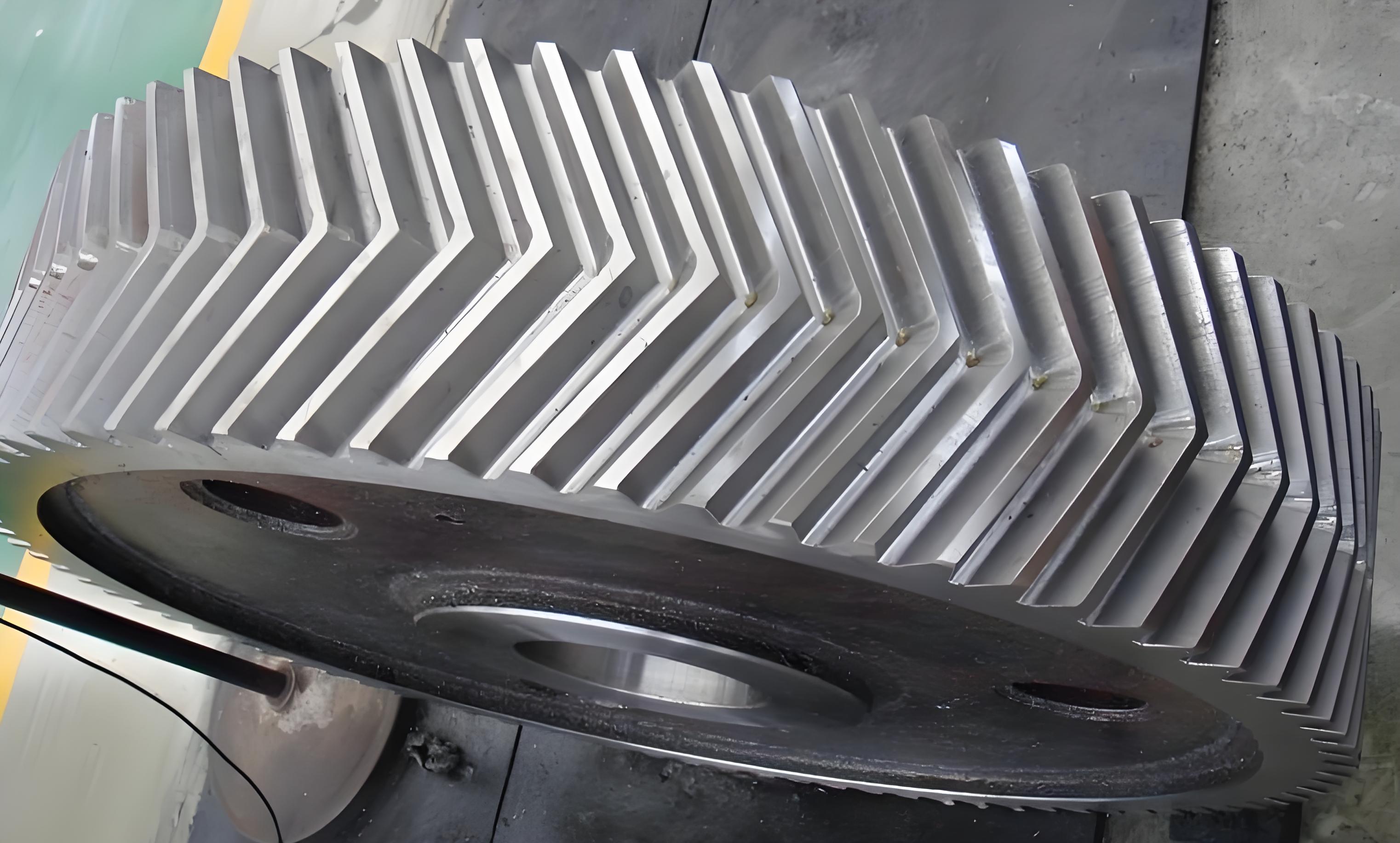
The design and operation of herringbone gears present unique challenges. While their geometry offers advantages in load distribution and smooth operation, the manufacturing precision required is exceptionally high. In the context of a Ø2700×3600 ball mill reducer, operating under heavy, cyclical loads, the failure of these herringbone gears becomes a primary limiting factor for equipment reliability. My investigations have repeatedly shown that failures are rarely due to a single cause but are typically the result of interacting factors including material science, tribology, manufacturing quality, and operational practices. Understanding these interactions is key to developing robust solutions.
Current State and Failure Mode Analysis of Herringbone Gears
Through prolonged observation and failure analysis of multiple reducers, I have cataloged the primary failure modes of herringbone gears. The following table summarizes these modes, their manifestations, and primary root causes from a mechanical engineering standpoint.
| Failure Mode | Visual/Symptomatic Manifestation | Primary Root Causes & Mechanisms |
|---|---|---|
| Tooth Flank Wear | Progressive loss of material from the tooth profile, leading to changed tooth shape and increased backlash. | Although operating in a closed system, abrasive wear is minimal. The dominant mechanism is adhesive wear due to sliding friction under load. The wear rate \( W \) can be modeled approximately by Archard’s equation: $$ W = K \frac{F_N s}{H} $$ where \( K \) is a wear coefficient, \( F_N \) is the normal load, \( s \) is the sliding distance, and \( H \) is the material hardness. For herringbone gears, uneven wear across the two helices due to minor misalignments is a common issue. |
| Tooth Flank Pitting (Fatigue Pitting) | Formation of small pits or craters on the contact surface, typically near the pitch line. | This is a classic surface fatigue failure. The theoretical line contact under load becomes a small elliptical area due to elastic deformation, generating high Hertzian contact stresses. The maximum subsurface shear stress \( \tau_{max} \) drives fatigue crack initiation. The contact stress \( \sigma_H \) can be estimated using the Hertz formula for cylinders: $$ \sigma_H = \sqrt{ \frac{F}{b} \cdot \frac{1}{\rho_{eff}} \cdot \frac{E_{eff}}{2\pi} } $$ where \( \frac{1}{\rho_{eff}} = \frac{1}{\rho_1} \pm \frac{1}{\rho_2} \), \( \frac{1}{E_{eff}} = \frac{1-\nu_1^2}{E_1} + \frac{1-\nu_2^2}{E_2} \), \( F \) is the normal load per unit face width \( b \), and \( \rho \) are radii of curvature. When the stress cycles exceed the material’s endurance limit, micro-cracks form and propagate, causing material to spall. |
| Tooth Flank Scuffing (Galling or Adhesive Wear) | Severe scoring and material transfer between mating teeth, often in the direction of sliding. | This occurs when the lubricant film breaks down under extreme pressure and temperature. The flash temperature \( T_f \) at the contact is critical. The Blok flash temperature theory provides insight: $$ T_f = \frac{\mu \cdot v_s \cdot \sqrt{F/b}}{k \cdot \sqrt{\rho_{eff}}} $$ where \( \mu \) is the coefficient of friction, \( v_s \) is the sliding velocity, and \( k \) is the thermal diffusivity. If \( T_f \) exceeds a critical value for the lubricant-material combination, localized welding and tearing occur. Poor lubrication, overload, and misalignment in herringbone gears are common contributors. |
| Tooth Flank Plastic Flow | Permanent deformation or rippling of the tooth surface, often along the direction of sliding. | This failure mode indicates that the contact stress has exceeded the yield strength of the gear material at operating temperature. It is prominent when surface hardness is inadequate. The von Mises yield criterion can be applied to subsurface stresses. The condition \( \sigma_{vm} \geq \sigma_y \) leads to plastic deformation, where \( \sigma_{vm} \) is the von Mises stress and \( \sigma_y \) is the yield strength. Frequent starts under high load exacerbate this problem for herringbone gears. |
| Tooth Breakage | Complete or partial fracture of a tooth, often catastrophic. | This is the most severe and common failure for these herringbone gears. It results from a combination of factors: 1) Asymmetric Helix Geometry: Manufacturing errors lead to uneven load sharing between the two helices, causing localized overstress. 2) Overload Fracture: Sudden impact or short-term overload, particularly problematic if heat treatment (e.g., flame hardening) results in excessive hardness and brittleness. 3) Bending Fatigue Fracture: Initiated at the root fillet due to cyclic bending stress. The nominal bending stress \( \sigma_b \) at the root can be calculated using the Lewis formula, modified by factors (K-factors): $$ \sigma_b = \frac{F_t}{b \cdot m_n} \cdot Y_F \cdot Y_S \cdot K_A \cdot K_V \cdot K_{F\beta} \cdot K_{F\alpha} $$ where \( F_t \) is tangential load, \( m_n \) is normal module, \( Y_F \) is form factor, \( Y_S \) is stress correction factor, and the K-factors account for application, dynamic load, face load distribution, and transverse load distribution. Stress concentration at the root fillet \( K_f \) greatly amplifies the local stress: \( \sigma_{max} = K_f \cdot \sigma_b \). 4) Material Defects: Inclusions, porosity, or improper microstructure act as crack initiation sites. |
The interplay between these failure modes is significant. For instance, initial pitting can change the tooth profile, leading to dynamic loads that precipitate tooth breakage. Wear can reduce tooth thickness, increasing bending stress. Therefore, a holistic view is essential when analyzing herringbone gear failures.
Comprehensive Improvement Strategies and Solutions
Based on my direct involvement in troubleshooting and redesign efforts, I propose the following integrated improvement measures. These are not merely theoretical but have been validated in practice to extend the service life of herringbone gears significantly.
1. Addressing Tooth Flank Wear
For herringbone gears, the goal is to minimize adhesive wear and ensure uniform wear across both helical sections. The key strategies are:
- Material and Hardness: Select hardened steel grades (e.g., case-hardened steels like 20MnCr5 or through-hardened alloys like 42CrMo4) to achieve high surface hardness (58-62 HRC for case-hardened, 300-350 HB for through-hardened). The relationship between hardness \( H \) and wear rate \( W \) is inverse, as shown in Archard’s equation.
- Surface Finish: Implement precision grinding or honing after heat treatment to achieve a low surface roughness \( R_a \) (target below 0.4 μm). This reduces the asperity contact and friction coefficient.
- Lubrication: Use high-viscosity, extreme pressure (EP) gear oils with anti-wear additives (e.g., ZDDP). The film parameter \( \Lambda \) should be maintained above 2 for elastohydrodynamic lubrication (EHL): $$ \Lambda = \frac{h_{min}}{\sqrt{R_{q1}^2 + R_{q2}^2}} $$ where \( h_{min} \) is the minimum EHL film thickness calculated by Dowson-Higginson equation, and \( R_q \) is the RMS surface roughness.
- Operational Tactic: Periodically reverse the rotation direction of the reducer output shaft (if the drive system allows). This practice helps equalize wear on both flanks of the herringbone gear teeth, mitigating issues from minor asymmetries.
2. Preventing Tooth Flank Pitting
Pitting is a fatigue process, so improvements focus on increasing the fatigue strength of the contact surface.
- Material and Heat Treatment: Case hardening (carburizing or nitriding) is highly effective as it creates a hard, compressive residual stress layer on the surface, resisting crack initiation. The core remains tough to withstand bending loads.
- Contact Stress Reduction: Increase the radius of curvature (larger gear diameter or pressure angle modification) to reduce \( \sigma_H \) in the Hertz formula. Optimize the macro-geometry (profile modification, tip relief) to improve load distribution.
- Lubrication: High viscosity oils increase \( h_{min} \), providing better separation. Anti-pitting additives (e.g., sulfur-phosphorus types) form protective films on surfaces.
- Surface Integrity: Superfinishing processes like shot peening after grinding introduce beneficial compressive stresses and smooth the surface, dramatically increasing pitting resistance. The endurance limit for pitting \( \sigma_{Hlim} \) can be raised by 10-20%.
3. Mitigating Tooth Flank Scuffing
Scuffing prevention revolves around maintaining the lubricant film and reducing friction.
- Lubricant Selection: The primary defense is using special high-viscosity synthetic oils with robust anti-scuffing (EP) additives. These additives react chemically with the metal surface under high temperature to form a sacrificial layer, preventing metal-to-metal contact.
- Gear Design: For herringbone gears, ensuring perfect alignment during installation minimizes localized high sliding and pressure. Crowning or lead modification can help accommodate misalignment.
- Surface Treatment: Coatings like phosphate, black oxide, or modern DLC (Diamond-Like Carbon) coatings can significantly reduce the coefficient of friction \( \mu \), thereby lowering the flash temperature \( T_f \).
- Cooling: Enhance the reducer’s cooling system (e.g., oil coolers, increased flow rate) to keep bulk oil temperature low, which helps maintain oil viscosity and film strength.
4. Avoiding Tooth Flank Plastic Flow
This failure is a strength issue. The solutions are straightforward but critical.
- Increase Surface Hardness: As with other modes, a hard surface resists deformation. Ensure the heat treatment process achieves the specified hardness uniformly across the entire tooth flank of the herringbone gear.
- Operational Discipline: Implement strict controls to avoid sustained overloading and minimize frequent start-stop cycles, which generate high transient torques. Use soft starters or variable frequency drives (VFDs) for smooth acceleration.
- Lubricant Viscosity: High viscosity oil supports the load hydrodynamically, reducing the effective stress on the asperities.
5. Eliminating Tooth Breakage
Tooth breakage is the most complex to address, requiring improvements across manufacturing, design, and quality control. The following table outlines the targeted measures for each root cause of breakage in herringbone gears.
| Root Cause of Breakage | Specific Improvement Measures | Technical Rationale & Impact |
|---|---|---|
| Asymmetric Helix Geometry |
|
This is the most crucial improvement. Traditional methods (machine face width first, then cut teeth) lock in any machine alignment error, causing inherent asymmetry. The new method ensures the theoretical center plane of the herringbone gear aligns with its geometric center, guaranteeing equal load sharing. This directly reduces the dynamic load factor \( K_V \) and face load distribution factor \( K_{F\beta} \) in the bending stress equation. |
| Overload Fracture from Brittleness | Change heat treatment from flame hardening to controlled induction hardening or case carburizing. | Flame hardening often results in non-uniform harden depth, excessive hardness (leading to low fracture toughness \( K_{IC} \)), and high tensile residual stresses. Induction hardening offers better control of case depth and pattern. Carburizing produces a deep, hard case with beneficial compressive stresses and a tough core, optimizing the balance between surface durability (wear, pitting) and bulk strength (bending). The core toughness \( \sigma_y \) is vital for shock load absorption. |
| Bending Fatigue Fracture |
|
The stress concentration factor for a fillet is approximated by Peterson’s formula: \( K_t \approx 1 + \frac{a}{\rho_f} \), where \( a \) is a material constant. Doubling \( \rho_f \) can reduce \( K_t \) significantly. Grinding eliminates decarburized layers and micro-notches from cutting. Shot peening introduces deep compressive residual stresses \( \sigma_{res} \) at the root, so the effective mean stress in fatigue cycles is reduced: \( \sigma_{m,eff} = \sigma_m + \sigma_{res} \) (compressive \( \sigma_{res} \) is negative). This greatly extends fatigue life \( N_f \) as per the modified Goodman relation: $$ \frac{\sigma_a}{S_e} + \frac{\sigma_{m,eff}}{S_u} = \frac{1}{n} $$ where \( \sigma_a \) is stress amplitude, \( S_e \) is endurance limit, \( S_u \) is ultimate strength, and \( n \) is safety factor. |
| Material Defects |
|
Material defects act as pre-existing cracks. The stress intensity factor \( K_I = Y \sigma \sqrt{\pi a} \) for a defect of size \( a \) can exceed the material’s fracture toughness \( K_{IC} \) under operational stress \( \sigma \), leading to instantaneous fracture. Proactive screening is non-negotiable for critical components like herringbone gears. |
Ancillary Factors: Installation and Operation
Even a perfectly manufactured herringbone gear can fail prematurely if installation and operation are flawed. My field observations underscore the importance of these practices:
- Precision Installation: Adhere strictly to technical specifications for alignment. Use laser alignment tools to ensure the parallelism \( \Delta y \) and horizontality \( \Delta \alpha \) of gear shafts are within tolerances (e.g., < 0.05 mm/m). Incorrect alignment drastically increases the face load distribution factor \( K_{H\beta} \) for contact and \( K_{F\beta} \) for bending. Proper bearing clearance and gear backlash are equally vital.
- Running-in Procedure: New or refurbished herringbone gears must undergo a controlled running-in period. Start with low load (25-50%) and gradually increase over 24-48 hours. This allows surfaces to mate properly, smoothing out microscopic asperities and establishing a stable wear pattern.
- Operational Discipline: Enforce operating procedures that prohibit sustained overload. Monitor vibration, temperature, and oil condition regularly. Implement predictive maintenance based on oil analysis (ferrography) to detect early signs of wear or pitting.
Economic Impact and Validation
Implementing the above suite of improvements for herringbone gears involves higher initial costs. Precision machining, advanced heat treatment, grinding, and stringent QA add approximately 20-30% to the gear manufacturing cost. However, the return on investment is substantial. In documented cases, the service life of the improved herringbone gears consistently met or exceeded the design life, whereas the previous gears typically failed at around two-thirds of the design life, with some catastrophic failures occurring within days. The overall economic benefit, considering reduced downtime, lower maintenance costs, and increased production, is estimated to be 2 to 3 times the initial investment. This makes the engineering effort to perfect herringbone gear performance not just a technical necessity but a compelling business strategy.
Conclusion
In my professional journey, analyzing and solving the failure problems of herringbone gears in ball mill reducers has been a profound exercise in applied mechanical engineering. The failures—wear, pitting, scuffing, plastic flow, and breakage—are interlinked phenomena governed by the laws of contact mechanics, fatigue, and tribology. A successful improvement strategy cannot be monolithic; it must be a multi-pronged attack encompassing geometric precision (especially symmetry for herringbone gears), material science (optimized heat treatment), surface engineering (finish and coatings), tribology (advanced lubrication), and rigorous quality assurance. The incorporation of engineering models and formulas, as discussed, provides a quantitative foundation for these decisions. While the measures described are not the创新能力 (innovative capability) itself, they represent the systematic application of knowledge—the very essence of engineering creativity—to transform a chronic failure point into a model of reliability. The continuous focus on enhancing the performance of herringbone gears remains a cornerstone for achieving high availability in critical grinding operations.