
The performance of automotive drivetrains is fundamentally linked to the operational efficiency of their constituent gear systems. Within differential assemblies, miter gears, specifically straight bevel gears with a 1:1 ratio, play a critical role in torque transmission and distribution. Enhancing their meshing behavior is paramount for reducing transmission error (TE), noise, vibration, and ultimately improving the longevity and reliability of the entire system. Gear modification, encompassing both profile and lead crowning, has emerged as a principal methodology to achieve these performance gains. Profile modification mitigates the impact forces during meshing entry and exit, while lead modification optimizes the contact pattern across the tooth flank, preventing edge loading and ensuring a more favorable stress distribution. This investigation delves into the multi-objective optimization of helical modification parameters for miter gears, employing numerical simulation and statistical regression to establish predictive models and identify optimal modification settings.
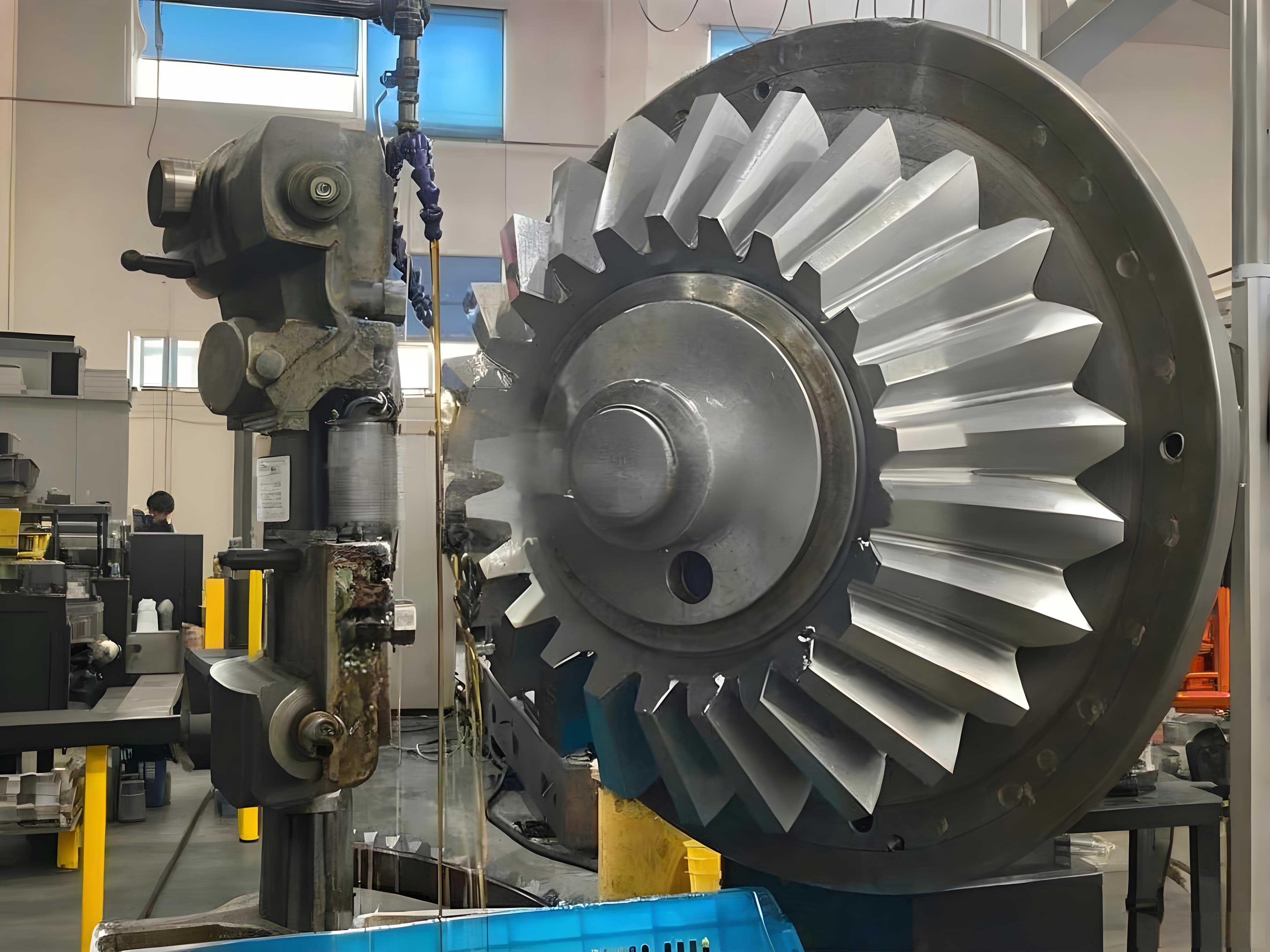
The core objective of this work is to systematically analyze the influence of key modification parameters—profile modification amount, lead crowning amount, and lead modification factors—on critical performance response variables. These responses include the peak-to-peak transmission error, maximum contact stress on the tooth flank, and maximum bending stress at the root of both mating gears in a miter gear pair. By constructing accurate regression equations, we aim to predict gear performance under various modification schemes and subsequently perform a constrained optimization to find the parameter set that minimizes transmission error and contact stress while maintaining bending stress within safe operational limits.
Fundamentals of Gear Modification for Miter Gears
Modification for miter gears involves deliberate, subtle deviations from the ideal theoretical tooth geometry to compensate for deflections and misalignments under load. The two primary strategies are profile modification and lead modification, each addressing distinct meshing imperfections.
Profile Modification
Profile modification is applied along the tooth height direction. Its purpose is to prevent interference caused by teeth deflecting under load and to smooth the transition of load sharing between tooth pairs, thereby reducing meshing impact and dynamic excitation. Among various techniques such as tip relief, pressure angle modification, and involute rotation, the profile crowning method is selected for this study. This method involves removing a small amount of material near the tip and potentially the root of the tooth, creating a slight bulge or “crown” on the profile. The geometry is illustrated schematically, where H represents the length of modification from the start point to the tooth tip.
For bevel gears, the module varies linearly from the toe (inner end) to the heel (outer end). Consequently, the modification length differs at these two points. The calculation must account for this conicity. The base pitch \( P_b \) and the transverse contact ratio \( \epsilon_{\alpha} \) are key parameters. The modification length \( H \) can be expressed in relation to the base pitch. The specific lengths at the toe (\( h_1 \)) and heel (\( h_2 \)) are determined by scaling according to the cone distance:
$$H = P_b (\epsilon_{\alpha} – 1)$$
$$h_2 = h_1 \left( \frac{R}{R – b} \right)$$
where \( R \) is the theoretical cone distance and \( b \) is the face width. Based on preliminary calculations and empirical data, the profile modification amount \( C_a \) for the miter gears in this study is considered within a range of 0 to 60 μm.
Helical (Lead) Modification
Lead modification is applied along the tooth face width direction. For straight bevel miter gears, this involves creating a controlled crown shape along the lengthwise direction of the tooth. This crowning ensures that under load, the contact pattern is centered on the tooth flank, avoiding concentration of stress at the ends (toe and heel) which are prone to higher deflections. The eccentric lead crowning method is adopted for its effectiveness in managing the load distribution of heavily loaded miter gears. This method is defined by three primary parameters:
- Lead Crowning Amount (\( C_1 \)): The maximum amount of material removed at the reference end (typically the toe or small end).
- Lead Modification Factor I (\( f_1 \)): Defines the longitudinal location of the crown peak relative to the face width. It is the ratio of the distance from the toe to the peak (\( b_x \)) over the total active face width for crowning (\( b_F \)).
- Lead Modification Factor II (\( f_2 \)): Defines the asymmetry of the crowning. It is the ratio of the crowning amount at the heel (\( C_2 \)) to that at the toe (\( C_1 \)).
The relationships are defined as:
$$f_1 = \frac{b_x}{b_F}$$
$$f_2 = \frac{C_2}{C_1}$$
For the optimization study, the following ranges are established based on gear geometry and experience: Lead crowning amount \( C_1 \): 0 – 80 μm; Factor \( f_1 \): 0.2 – 0.8; Factor \( f_2 \): 0.4 – 2.0.
Parametric Study: Influence of Modification on Gear Responses
A detailed parametric analysis is conducted using specialized gear design and simulation software (KISSsoft) to model a pair of miter gears. The basic geometrical parameters of the gear pair under investigation are summarized in Table 1.
| Parameter | Pinion | Gear |
|---|---|---|
| Module (mm) | 5.855 | |
| Number of Teeth | 11 | 17 |
| Pressure Angle (°) | 24.6 | |
| Face Width (mm) | 28.5 | |
| Pitch Cone Angle (°) | 36.22 | 52.18 |
A series of simulations were performed, varying one modification parameter at a time while keeping others at a nominal baseline, to isolate its effect on the four key response variables: Peak-to-Peak Transmission Error (TEpp), Maximum Contact Stress (\(\sigma_{Hmax}\)), Maximum Bending Stress at the Pinion root (\(\sigma_{F1}\)), and Maximum Bending Stress at the Gear root (\(\sigma_{F2}\)).
Peak-to-Peak Transmission Error
Transmission error is a primary source of gear noise and vibration. The results indicate a dominant influence of profile modification. As the profile modification amount \( C_a \) increases from 0 to 60 μm, TEpp shows a consistent and significant decreasing trend. In contrast, variations in the lead crowning amount (\( C_1 \)) and the two lead modification factors (\( f_1 \), \( f_2 \)) have a negligible effect on TEpp, with the response curves for these parameters largely overlapping. This suggests that for the studied miter gears, dynamic excitation is primarily controlled through profile optimization, while lead modification parameters can be tuned for other objectives like stress reduction without adversely affecting TE.
Maximum Contact Stress
The contact stress on the tooth flank is critical for surface durability (pitting resistance). The relationship between modification parameters and \(\sigma_{Hmax}\) is more complex:
- Profile Modification (\( C_a \)): \(\sigma_{Hmax}\) exhibits a non-monotonic behavior. It initially decreases, reaches a minimum at a low \( C_a \) value (around 2 μm), then increases slightly before resuming a gradual decreasing trend at higher modification amounts.
- Lead Crowning Amount (\( C_1 \)): Increasing \( C_1 \) generally leads to a reduction in \(\sigma_{Hmax}\), as crowning helps center the contact patch and avoid stress concentrations at the edges.
- Lead Factors (\( f_1 \), \( f_2 \)): Optimal values exist. Minimum \(\sigma_{Hmax}\) is observed for \( f_1 \) around 0.26 and \( f_2 \) around 0.8, indicating a preferred crown peak location and a specific asymmetry for optimal load distribution in this miter gear configuration.
Root Bending Stress
Bending stress at the tooth root is the governing factor for bending fatigue strength. The pinion and gear exhibit similar but distinct trends:
- Pinion Bending Stress (\(\sigma_{F1}\)):
- \( C_a \): Shows a sharp initial increase followed by a more gradual rise.
- \( C_1 \): Displays a clear “U-shaped” curve, with a minimum stress value found at approximately \( C_1 = 11 \mu m \).
- \( f_1 \): Increasing \( f_1 \) (moving crown peak towards heel) continuously reduces \(\sigma_{F1}\).
- \( f_2 \): A minimum exists at \( f_2 \approx 0.43 \).
- Gear Bending Stress (\(\sigma_{F2}\)):
- \( C_a \): Shows an overall decreasing trend, beneficial for the gear’s bending strength.
- \( C_1 \): Also shows a “U-shaped” curve, with a minimum at \( C_1 \approx 14 \mu m \).
- \( f_2 \): A pronounced minimum is found at \( f_2 \approx 0.48 \).
The divergence in optimal \( f_2 \) values for pinion and gear bending stress highlights a key trade-off in the multi-objective optimization of miter gears.
Design of Experiments and Regression Modeling
To quantitatively model the interactions between all four input factors and the four response variables simultaneously, a Design of Experiments (DOE) approach was implemented using statistical software (Minitab). A full factorial design, considering all combinations of factor levels, was deemed appropriate given the computational efficiency of the simulation runs. The factors and their levels for the DOE are summarized in Table 2.
| Factor | Symbol | Levels |
|---|---|---|
| Profile Modification Amount (μm) | \(C_a\) | 0, 20, 40, 60 |
| Lead Crowning Amount (μm) | \(C_1\) | 0, 10, 40, 80 |
| Lead Modification Factor I | \(f_1\) | 0.2, 0.5, 0.8 |
| Lead Modification Factor II | \(f_2\) | 0.4, 1.0, 2.0 |
This design resulted in \(4 \times 4 \times 3 \times 3 = 144\) distinct simulation runs. For each run, the values of TEpp, \(\sigma_{Hmax}\), \(\sigma_{F1}\), and \(\sigma_{F2}\) were recorded. Using the response data, separate regression models (second-order polynomials including main effects and two-way interactions) were fitted for each output. The general form of the regression equation for a response \(Y\) is:
$$Y = \beta_0 + \sum_{i=1}^{4} \beta_i X_i + \sum_{i=1}^{4} \sum_{j \geq i}^{4} \beta_{ij} X_i X_j + \epsilon$$
where \(X_1, X_2, X_3, X_4\) correspond to \(C_a, C_1, f_1, f_2\), \(\beta\) terms are the regression coefficients, and \(\epsilon\) is the error term. The quality of the models was assessed using the coefficient of determination (\(R^2\)) and adjusted \(R^2\) values, all of which exceeded 0.95, indicating excellent predictive capability within the design space.
Multi-Objective Optimization and Results
With the validated regression models acting as fast-running surrogates for the simulation, a numerical optimization was performed. The goal was to find the set of modification parameters that simultaneously satisfy the following objectives and constraints, which are typical for high-performance miter gear design:
- Minimize Peak-to-Peak Transmission Error (TEpp).
- Minimize Maximum Contact Stress (\(\sigma_{Hmax}\)).
- Constrain the Pinion Bending Stress (\(\sigma_{F1}\)) to be ≤ 1100 MPa.
- The Gear Bending Stress (\(\sigma_{F2}\)) was monitored but not directly constrained in this specific optimization run.
Using the response optimizer tool in Minitab, which employs desirability functions to combine multiple objectives, the optimal solution was identified. The recommended modification parameters are presented in Table 3.
| Parameter | Symbol | Optimal Value |
|---|---|---|
| Profile Modification Amount | \(C_a\) | 38.85 μm |
| Lead Crowning Amount | \(C_1\) | 10.08 μm |
| Lead Modification Factor I | \(f_1\) | 0.3526 |
| Lead Modification Factor II | \(f_2\) | 0.5115 |
To verify the accuracy of the regression-based optimization, a final high-fidelity simulation was conducted using the optimal parameters from Table 3. The predicted response values from the regression models were compared against the actual simulation results. This validation is critical to ensure the models have not extrapolated unreliably. The comparison, along with the calculated error percentage, is shown in Table 4.
| Response Variable | Predicted Value | Actual Value | Error |
|---|---|---|---|
| TEpp (μm) | 25.84 | 25.81 | 0.12% |
| \(\sigma_{Hmax}\) (MPa) | 2429.63 | 2482.51 | 2.13% |
| \(\sigma_{F1}\) (MPa) | 1173.15 | 1164.22 | 0.77% |
| \(\sigma_{F2}\) (MPa) | 541.42 | 543.29 | 0.34% |
All error percentages are well below 3%, confirming the high fidelity of the regression models and the reliability of the optimization result. Finally, the performance of the optimized miter gear design was compared against a baseline, unmodified design. The percentage improvements are summarized in Table 5.
| Response Variable | Baseline (Unmodified) | Optimized Design | Improvement |
|---|---|---|---|
| TEpp (μm) | 29.96 | 27.15 | 9.38% Reduction |
| \(\sigma_{Hmax}\) (MPa) | 2546.32 | 2506.62 | 1.56% Reduction |
| \(\sigma_{F1}\) (MPa) | 1106.63 | 1055.72 | 4.60% Reduction |
| \(\sigma_{F2}\) (MPa) | 559.96 | 531.73 | 5.04% Reduction |
Conclusion
This study successfully demonstrates a systematic, model-based approach for the multi-objective optimization of helical modification in miter gears. Through parametric analysis, the distinct influences of profile and lead modification parameters on transmission error, contact stress, and bending stress were elucidated. A key finding is the dominant role of profile modification in controlling transmission error, while lead modification parameters are more effective for managing contact and bending stress distributions.
The construction of accurate regression models via a full factorial Design of Experiments provided a powerful and computationally efficient tool for exploring the design space. The subsequent multi-criteria optimization yielded a balanced set of modification parameters that simultaneously reduce transmission error and contact stress while keeping bending stresses at safe levels. The validation error of less than 3% for all critical responses confirms the robustness of the methodology.
The optimized miter gear design shows measurable improvements across all performance metrics compared to an unmodified baseline, with a nearly 10% reduction in peak-to-peak transmission error being particularly significant for noise and vibration reduction. This integrated approach, combining advanced simulation, statistical design, and numerical optimization, provides a practical and effective framework for enhancing the performance and durability of miter gears in demanding automotive driveline applications.