
In the field of mechanical engineering, the design of gear transmissions has always been a critical area, especially for high-speed and heavy-duty applications. Among various gear types, spiral bevel gears are widely used due to their high重合度, strong load-bearing capacity, and smooth operation. However, for high-speed gears, dynamic performance imposes stricter requirements. Traditional dynamic optimization design involves establishing mathematical models and solving differential equations for dynamic responses, which is often complex and primarily used for gear transmission improvements. Therefore, I propose an innovative approach that incorporates dynamic constraints into static optimization design. Specifically, I introduce critical speed ratio and dynamic load coefficient as dynamic performance constraints, ensuring dynamic performance while maintaining the simplicity of static design. Moreover, considering the fuzziness and randomness of design parameters makes the design more scientific, reasonable, and comprehensive. This article delves into the methodology, principles, and application of fuzzy reliability design for spiral bevel gears with dynamic constraints, aiming to provide a robust framework for engineers.
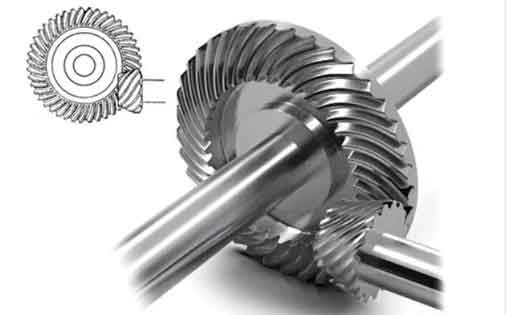
The core of fuzzy reliability design for spiral bevel gear transmission lies in analyzing working stresses and their influencing parameters as random variables following certain distribution patterns, while treating allowable stresses as fuzzy variables with continuous membership functions. This integration of fuzzy theory and reliability analysis enhances design accuracy. For spiral bevel gears, common failure modes include tooth surface pitting and bending fracture. According to literature, contact stress and bending stress typically follow a normal distribution, which serves as the basis for our probabilistic model. The normal distribution probability density function is expressed as:
$$ f(\sigma) = \frac{1}{s \sqrt{2\pi}} \exp\left(-\frac{(\sigma – \bar{\sigma})^2}{2s^2}\right) $$
Here, $s$ represents the standard deviation of the random variable, and $\bar{\sigma}$ denotes its mean value. This formulation allows us to model the variability in stresses effectively for spiral bevel gears.
For allowable stresses, I adopt a membership function to capture fuzziness, reflecting the transition from fully allowable to fully unallowable states. A降半梯形 membership function is chosen, defined as:
$$ v(\sigma) = \begin{cases} 1 & 0 < \sigma \leq \bar{\sigma}_l \\ \frac{\bar{\sigma}_u – \sigma}{\bar{\sigma}_u – \bar{\sigma}_l} & \bar{\sigma}_l < \sigma \leq \bar{\sigma}_u \\ 0 & \bar{\sigma}_u < \sigma \end{cases} $$
In this function, $\bar{\sigma}_u$ and $\bar{\sigma}_l$ are determined using the expansion coefficient method, representing the upper and lower bounds of the fuzzy region. This approach accounts for uncertainties in material properties and operational conditions for spiral bevel gears.
The fuzzy reliability degree is calculated by integrating the product of the membership function and the probability density function:
$$ R = \int v(\sigma) \cdot f(\sigma) \, d\sigma $$
Substituting the expressions for $v(\sigma)$ and $f(\sigma)$, we derive a comprehensive formula for reliability. For spiral bevel gears, this becomes:
$$ R = \frac{1}{\bar{\sigma}_u – \bar{\sigma}_l} \left[ (\bar{\sigma}_u – \bar{\sigma}) \Phi\left(\frac{\bar{\sigma}_u – \bar{\sigma}}{s}\right) – (\bar{\sigma} – \bar{\sigma}_l) \Phi\left(\frac{\bar{\sigma}_l – \bar{\sigma}}{s}\right) – \frac{s}{\sqrt{2\pi}} \left( e^{-\frac{(\bar{\sigma}_l – \bar{\sigma})^2}{2s^2}} – e^{-\frac{(\bar{\sigma}_u – \bar{\sigma})^2}{2s^2}} \right) \right] $$
where $\Phi(\cdot)$ is the standard normal distribution function. The design criterion ensures that the calculated reliability $R$ meets or exceeds the allowable value $[R]$, i.e., $R – [R] \geq 0$. This criterion is fundamental for optimizing spiral bevel gears under fuzzy and dynamic constraints.
Moving to the optimization model, I define the design variables and objective function. For spiral bevel gears, under constant transmitted power, minimizing volume is a common goal to reduce material usage and weight. The volume of spiral bevel gears is approximated as a cylinder with the mean cone distance as the diameter and tooth width as the height. The objective function is formulated as:
$$ F(x) = 0.78539 \left( \frac{R_m}{R_c} \right)^2 (d_{a1}^2 + d_{a2}^2) \frac{b}{\cos(0.5 \beta_m)} $$
where $d_{a1}$ and $d_{a2}$ are the addendum diameters of the pinion and gear, $R_m$ is the mean cone distance, $R_c$ is the outer cone distance, $b$ is the tooth width, and $\beta_m$ is the mean spiral angle. The basic parameters for spiral bevel gear transmission include the number of teeth for pinion and gear ($Z_1$, $Z_2$), mean spiral angle $\beta_m$, tooth width $b$ (or tooth width coefficient $\phi_R$), and outer module $m_e$. Given the transmission ratio, $Z_1$ and $Z_2$ have only one independent variable. Thus, the design variable vector is:
$$ X = [Z_1, m_e, \phi_R, \beta_m]^T = [X_1, X_2, X_3, X_4]^T $$
This compact representation facilitates optimization for spiral bevel gears.
Dynamic performance constraints are crucial for ensuring the operational stability of spiral bevel gears. I introduce two key constraints: critical speed ratio and dynamic load coefficient. For industrial gears, operation in the subcritical region is generally required, meaning the critical speed ratio $N \leq 0.85$. The critical speed ratio is defined as $N = n_1 / N_E$, where $n_1$ is the pinion speed, and $N_E$ is the critical speed derived from:
$$ N_E = \frac{30 \times 10^3}{\pi} \cdot \frac{Z_1}{C_r} \sqrt{m_{\text{red}}} $$
Here, $C_r$ is the meshing stiffness coefficient, and $m_{\text{red}}$ is the reduced mass, as detailed in relevant literature. The constraint is expressed as $g(x) = 0.85 – N \geq 0$. Additionally, the dynamic load coefficient $K_V$ must be less than its allowable value $[K_V]$, typically between 1.8 and 1.9 for spiral bevel gears in subcritical operation. From gear dynamics studies, $K_V$ is calculated as:
$$ K_V = \left( \frac{K_1}{K_A \cdot F_t / (0.85b) + K_2} \right) \frac{Z_1 \cdot V_m}{100} \sqrt{\frac{u^2}{u^2 + 1}} + 1 $$
where $F_t$ is the circumferential force at the gear midpoint, $K_A$ is the application factor, and $K_1$ and $K_2$ are coefficients from literature. The constraint is $g(x) = [K_V] – K_V \geq 0$. These dynamic constraints implicitly ensure that spiral bevel gears perform well under high-speed conditions.
Static constraints encompass reliability-based limits for bending and contact strength, considering fuzziness. For bending strength, the mean bending stress $\bar{\sigma}_{Fi}$ for the pinion ($i=1$) and gear ($i=2$) is given by:
$$ \bar{\sigma}_{Fi} = \bar{K}_A \bar{K}_V \bar{K}_{F\alpha} \bar{K}_{F\beta} \frac{F_t}{0.85 b m_{nm}} \bar{Y}_{FSi} \bar{Y}_{\varepsilon\beta i} $$
Here, $\bar{Y}_{FSi}$ is the mean composite tooth form factor, $\bar{Y}_{\varepsilon\beta i}$ is the mean重合度 and spiral angle coefficient for bending, $\bar{K}_{F\alpha}$ is the mean load distribution factor, $\bar{K}_A$ is the mean application factor, $\bar{K}_V$ is the mean dynamic load factor, $\bar{K}_{F\beta}$ is the load distribution factor, $F_t$ is the circumferential force, and $m_{nm}$ is the mean normal module at the midpoint. The coefficient of variation for bending stress is computed as:
$$ C_{Fi} = \left( C_{Ft}^2 + C_{K_A}^2 + C_{K_r}^2 + C_{K_{F\alpha}}^2 + C_{K_{F\beta}}^2 + C_{Y_{FSi}}^2 + C_{Y_{\varepsilon\beta i}}^2 \right)^{1/2} $$
with standard deviation $S_{Fi} = C_{Fi} \cdot \bar{\sigma}_{Fi}$. The probability density function is then:
$$ f(\sigma_{Fi}) = \frac{1}{S_{Fi} \sqrt{2\pi}} \exp\left(-\frac{(\sigma_{Fi} – \bar{\sigma}_{Fi})^2}{2S_{Fi}^2}\right) $$
and the fuzzy reliability degree for bending is $R_{Fi} = \int v(\sigma_F) \cdot f(\sigma_{Fi}) \, d\sigma$. If the design requires a reliability $[R_F]$, the constraints are $g(x) = [R_{F1}] – R_{F1} \leq 0$ and $g(x) = [R_{F2}] – R_{F2} \leq 0$ for the pinion and gear, respectively. These ensure that spiral bevel gears resist bending failures with high confidence.
For contact strength, the mean contact stress $\bar{\sigma}_H$ is:
$$ \bar{\sigma}_H = \bar{Z}_E \bar{Z}_H \bar{Z}_{\varepsilon\beta} Z_K \sqrt{ \bar{K}_A \bar{K}_V \bar{K}_{H\alpha} \bar{K}_{H\beta} \frac{F_t}{0.85 b d_{m1}} \frac{u+1}{u} } $$
where $\bar{Z}_E$ is the mean material coefficient, $\bar{Z}_H$ is the mean zone factor, $\bar{Z}_{\varepsilon\beta}$ is the mean重合度 and spiral angle coefficient for contact, $Z_K$ is the bevel gear factor, $\bar{K}_{H\alpha}$ is the mean load distribution factor for contact, $\bar{K}_{H\beta}$ is the mean load distribution factor, and $d_{m1}$ is the mean pitch diameter of the pinion. The coefficient of variation for contact stress is:
$$ C_H = \left( C_{Z_E}^2 + C_{Z_H}^2 + C_{Z_{\varepsilon\beta}}^2 + \frac{1}{4} (C_{Ft}^2 + C_{K_A}^2 + C_{K_r}^2 + C_{K_{H\alpha}}^2 + C_{K_{H\beta}}^2) \right)^{1/2} $$
with standard deviation $S_H = C_H \cdot \bar{\sigma}_H$. The probability density function is:
$$ f(\sigma_H) = \frac{1}{S_H \sqrt{2\pi}} \exp\left(-\frac{(\sigma_H – \bar{\sigma}_H)^2}{2S_H^2}\right) $$
and the fuzzy reliability degree for contact is $R_H = \int f(\sigma_H) \cdot v(\sigma_H) \, d\sigma$. With a required reliability $[R_H]$, the constraint is $g(x) = [R_H] – R_H \leq 0$. These contact strength constraints are vital for preventing pitting in spiral bevel gears.
Additional static constraints include limits on gear parameters to ensure manufacturability and performance. For spiral bevel gears, the minimum number of teeth is typically 11: $g(x) = 11/Z_1 – 1 \leq 0$. The tooth width coefficient $\phi_R$ is restricted to a range, e.g., $g(x) = 3\phi_R – 1 \leq 0$ and $g(x) = 1 – 4\phi_R \leq 0$. The outer module $m_t$ has a minimum value, often 1.5: $g(x) = 1.5/m_t – 1 \leq 0$. The mean spiral angle $\beta_m$ for industrial spiral bevel gears usually lies between 25° and 38°: $g(x) = 25^\circ/\beta_m – 1 \leq 0$ and $g(x) = \beta_m/38^\circ – 1 \leq 0$. Lastly, the longitudinal重合度 $\varepsilon_{\beta m}$ should exceed 1.25 for smooth operation: $g(x) = 1.25/\varepsilon_{\beta m} – 1 \leq 0$. These constraints collectively ensure that the optimized spiral bevel gears are practical and efficient.
Summarizing, the fuzzy reliability optimization model for spiral bevel gear transmission is formulated as:
Find $X = [Z_1, m_e, \phi_R, \beta_m]^T = [X_1, X_2, X_3, X_4]^T$ that minimizes $F(x)$ subject to $G_j(x) \leq 0$ for $j = 1, 2, \dots, 12$. This model integrates dynamic and static constraints with fuzzy reliability, providing a comprehensive design framework for spiral bevel gears.
To illustrate the application, I present an optimization example based on a YGW-type scraper conveyor reducer. The spiral bevel gears have parameters: power $P = 38 \, \text{kW}$, pinion speed $n_1 = 1440 \, \text{r/min}$, transmission ratio $u = 2.5$, motor drive with medium shock load, pinion and gear both cantilevered, design life of 5 years with three-shift operation. The material is 40Cr, quenched and tempered with surface hardness HRC 48-55, and required reliability $0.999$. Using the developed mathematical model, I programmed an optimization algorithm with the complex method, approximating coefficient curves from literature via least-squares fitting. The results are shown in the table below, comparing general reliability design with fuzzy reliability optimization design for spiral bevel gears.
| Design Method | Gear Parameters | Main Dimensions | Dynamic Load Coefficient | Objective Function Value |
|---|---|---|---|---|
| $Z_1$, $m_e$, $b$, $\beta_m$ | $d_1$, $d_2$, $R_e$ (mm) | $K_V$ | $F(X)$ (mm³) | |
| General Reliability Design | 12, 7.75, 40, 36° | 93, 232.5, 125.2 | 1.09 | 1.572 × 10⁵ |
| Fuzzy Reliability Optimization Design | 12, 7.5, 36, 36° | 90, 225, 121.2 | 1.07 | 1.360 × 10⁵ |
The results demonstrate that the fuzzy reliability optimization design reduces volume by 13.5%, making the spiral bevel gear transmission more compact. Additionally, the dynamic load coefficient decreases from 1.09 to 1.07, enhancing dynamic performance. By accounting for fuzziness and randomness, this approach ensures higher reliability and practicality. For instance, the reduction in tooth width and module while maintaining reliability shows the efficiency of the optimization. The table highlights how spiral bevel gears can be optimized for both static and dynamic criteria, leading to lightweight and robust designs.
Further analysis reveals that the integration of dynamic constraints like critical speed ratio and dynamic load coefficient directly addresses vibration and noise issues common in high-speed spiral bevel gears. The fuzzy reliability model, with its membership functions, accommodates uncertainties in material properties and loading conditions, which are often overlooked in traditional designs. For example, the use of a降半梯形 membership function for allowable stresses allows for a gradual transition between safe and failure states, reflecting real-world ambiguities. In practice, this means that spiral bevel gears designed with this method are less likely to experience unexpected failures due to stress variations.
To delve deeper into the mathematical aspects, let’s consider the optimization process. The objective function $F(x)$ is non-linear due to the geometric relationships in spiral bevel gears. The constraints involve complex integrals for reliability calculations, which I approximate numerically during optimization. For dynamic constraints, the critical speed $N_E$ depends on meshing stiffness, which varies with gear geometry. I use empirical formulas from literature to estimate $C_r$ and $m_{\text{red}}$ for spiral bevel gears. The dynamic load coefficient $K_V$ is derived from gear dynamics theories, ensuring that the optimized gears operate within safe vibrational limits. These elements collectively form a robust optimization framework tailored for spiral bevel gears.
In terms of reliability computation, the fuzzy approach offers advantages over deterministic methods. For spiral bevel gears, stress distributions are often affected by manufacturing tolerances and assembly errors. By modeling stresses as random variables and allowable stresses as fuzzy sets, I capture these uncertainties effectively. The reliability integral $R = \int v(\sigma) \cdot f(\sigma) \, d\sigma$ is evaluated using numerical integration techniques, such as Gaussian quadrature, to handle the normal distribution and piecewise membership function. This yields more accurate reliability estimates for spiral bevel gears under diverse operating conditions.
The optimization algorithm implemented is the complex method, a direct search technique suitable for non-linear constrained problems. It starts with an initial set of points in the design space and iteratively refines them based on the objective function and constraints. For spiral bevel gears, the design variables have discrete aspects (e.g., integer teeth numbers), so I incorporate rounding strategies post-optimization. The algorithm converges to solutions that minimize volume while satisfying all reliability and dynamic constraints, as shown in the example. This process underscores the practicality of the method for designing spiral bevel gears in industrial applications.
Expanding on the dynamic constraints, the critical speed ratio constraint ensures that spiral bevel gears avoid resonance, which can lead to excessive wear and failure. For high-speed applications, this is paramount. The dynamic load coefficient constraint limits the additional loads due to vibrations, preserving tooth integrity. I derived these constraints from gear dynamics principles, specifically for spiral bevel gears, considering their unique齿形 and meshing characteristics. By embedding these in static optimization, I achieve a balanced design that excels in both stationary and dynamic regimes. This holistic approach is particularly beneficial for spiral bevel gears used in automotive, aerospace, and heavy machinery.
Regarding the fuzzy aspects, the membership function parameters $\bar{\sigma}_u$ and $\bar{\sigma}_l$ are determined based on material data and safety factors. For spiral bevel gears made of 40Cr steel, I use handbook values for yield strength and apply expansion coefficients to account for uncertainties. This fuzzy treatment aligns with modern design philosophies that embrace imperfection and variability. Compared to traditional safety factor methods, fuzzy reliability provides a probabilistic assurance, which is more informative for risk assessment. For spiral bevel gears, this means designs are not only safer but also more economical, as over-design is minimized.
The static constraints on gear parameters ensure that the optimized spiral bevel gears are feasible to manufacture and assemble. For instance, the limits on tooth width coefficient prevent excessive deflection, while spiral angle bounds maintain proper tooth contact. These constraints are derived from industry standards and empirical knowledge on spiral bevel gears. By including them, the optimization output is directly applicable to real-world production. The longitudinal重合度 constraint further guarantees smooth power transmission, reducing noise and improving efficiency for spiral bevel gears.
In the optimization example, the fuzzy reliability design achieved a volume of $1.360 \times 10^5 \, \text{mm}^3$, compared to $1.572 \times 10^5 \, \text{mm}^3$ for general reliability design. This reduction is significant for weight-sensitive applications. The dynamic load coefficient improved from 1.09 to 1.07, indicating better dynamic performance. These gains highlight the effectiveness of integrating fuzzy reliability and dynamic constraints. For spiral bevel gears, such optimizations can lead to cost savings and enhanced durability, especially in high-performance systems.
To further validate the method, sensitivity analysis can be conducted on the design variables. For spiral bevel gears, parameters like spiral angle $\beta_m$ and tooth width $b$ have pronounced effects on volume and reliability. By varying these within constraints, I can assess their impact on the objective function. This analysis helps in understanding trade-offs and guiding design decisions. For instance, increasing $\beta_m$ might improve重合度 but also increase bending stress, requiring careful balancing. The fuzzy reliability model accommodates such interactions through its probabilistic framework.
Another aspect is the computational efficiency of the optimization. For spiral bevel gears, the non-linear constraints require iterative solutions. I employ approximation methods for the reliability integrals to speed up computations. The complex method, while robust, may require multiple runs for convergence. However, for industrial design purposes, the time investment is justified by the superior outcomes. The table of results demonstrates that the optimized spiral bevel gears meet all criteria with reduced material usage, proving the method’s utility.
In conclusion, the fuzzy reliability optimization design with dynamic constraints offers a advanced approach for spiral bevel gear transmission. It combines static and dynamic performance measures, accounts for uncertainties through fuzzy sets, and ensures high reliability. The mathematical model, with its comprehensive constraints, provides a structured way to minimize volume while meeting operational demands. The optimization example confirms that this method yields more compact and dynamic-resistant spiral bevel gears compared to conventional designs. As industries push for lighter and more efficient machinery, such optimization techniques become invaluable. Future work could extend this approach to other gear types or incorporate more detailed dynamic models, but for now, it stands as a robust solution for spiral bevel gear design challenges.
Ultimately, the focus on spiral bevel gears throughout this discussion underscores their importance in mechanical transmissions. By repeatedly emphasizing spiral bevel gears, I aim to reinforce their relevance and the tailored nature of this optimization method. From high-speed reducers to heavy-duty drives, spiral bevel gears benefit from fuzzy reliability designs that enhance performance and durability. This article serves as a comprehensive guide for engineers seeking to implement such advanced designs in practice, ensuring that spiral bevel gears continue to operate reliably under demanding conditions.