
In the field of power transmission, spiral bevel gears are critical components for transferring motion and power between intersecting, typically perpendicular, shafts. Their complex, three-dimensional curved-tooth geometry allows for smoother and quieter operation compared to straight bevel gears, making them indispensable in automotive differentials, aerospace applications, and heavy machinery. However, this very complexity presents significant challenges in manufacturing. Traditional machining methods, while precise, are material-wasteful, time-consuming, and can interrupt the favorable grain flow of the metal, potentially compromising strength.
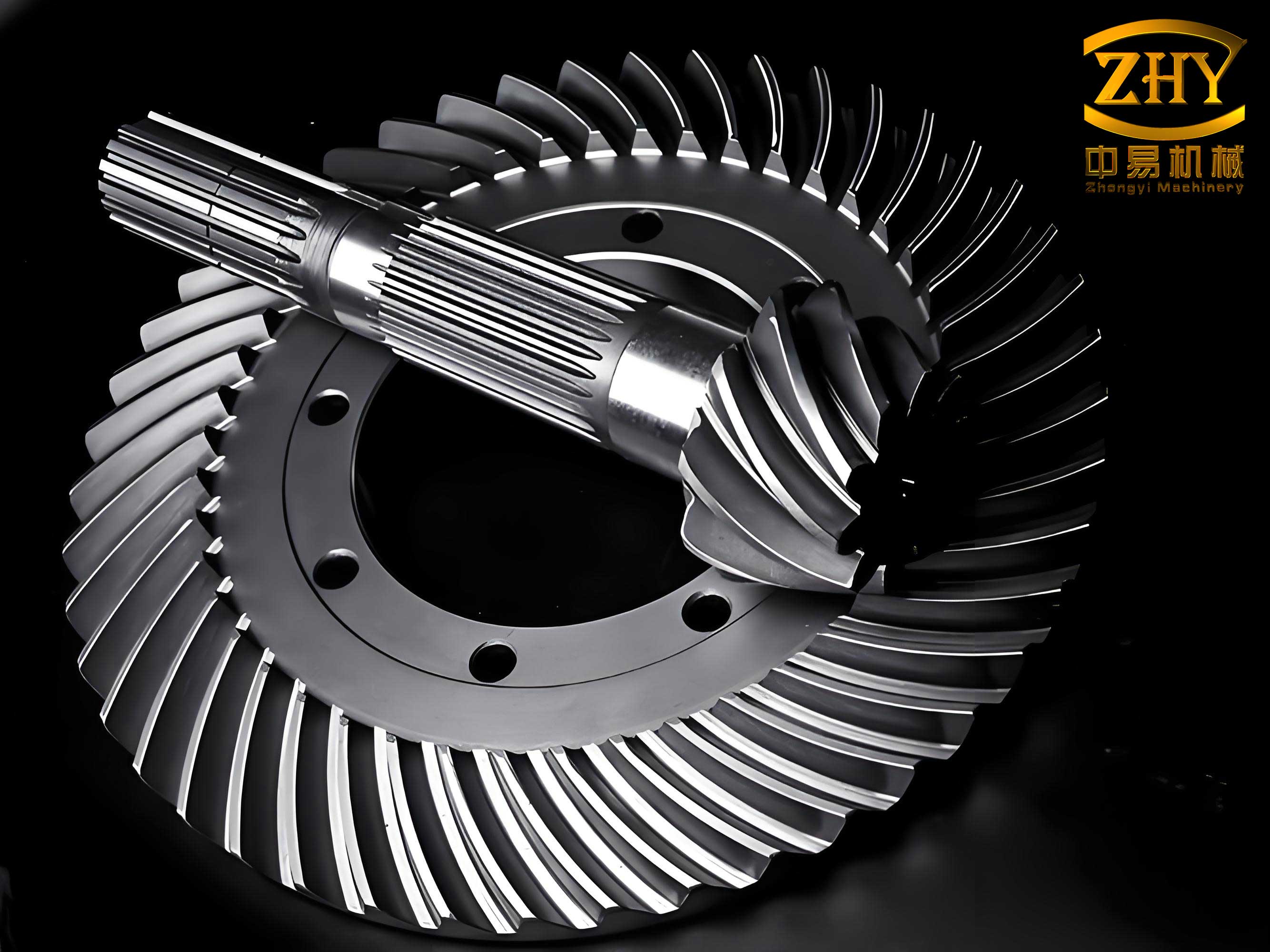
Warm forging emerges as a highly promising net-shape or near-net-shape manufacturing process for producing spiral bevel gears. Conducted at temperatures below the recrystallization point but significantly above room temperature, warm forging strikes an optimal balance. Compared to cold forging, it substantially reduces the deformation load and tooling stress, extending die life. Compared to hot forging, it minimizes scale formation (oxidation) and decarburization, resulting in superior surface finish, tighter dimensional tolerances, and improved mechanical properties that closely approach those of cold-formed parts. The primary objective in the warm forging of spiral bevel gears is to achieve complete die filling of the intricate tooth profile while minimizing the required forming load. Excessive loads can lead to die deflection, reduced geometric accuracy, and premature die failure. Therefore, a comprehensive understanding of how key process parameters influence the forming load is paramount for process design, die engineering, and overall economic viability.
This article employs a coupled thermomechanical finite element analysis (FEA) to systematically investigate the effects of critical warm forging parameters on the forming load for spiral bevel gears. The parameters studied include the friction condition, workpiece (billet) temperature, die preheating temperature, and forging speed. The goal is to elucidate their individual and relative impacts, providing a quantitative foundation for optimizing the warm forging process of spiral bevel gears.
Theoretical Foundation for Numerical Simulation
The numerical analysis of metal forming processes, such as the warm forging of spiral bevel gears, relies on robust computational mechanics principles. For large plastic deformation where elastic strains are negligible compared to plastic strains, the material can be effectively modeled as rigid-plastic or rigid-viscoplastic.
Rigid-Plastic Finite Element Method (FEM)
The core principle is based on the variational approach. The actual velocity field is the one that minimizes a functional, \(\Pi\), derived from the principle of virtual work. For a rigid-viscoplastic material, incorporating the incompressibility condition via the penalty function method, the functional can be expressed as:
$$
\delta \Pi = \int_V \bar{\sigma} \delta \dot{\bar{\epsilon}} \, dV + k \int_V \dot{\epsilon}_{v} \delta \dot{\epsilon}_{v} \, dV – \int_{S_f} \tau_f \delta \Delta v \, dS – \int_{S_p} p \delta v \, dS
$$
where \(\bar{\sigma}\) is the effective stress, \(\dot{\bar{\epsilon}}\) is the effective strain rate, \(k\) is a large penalty constant (typically \(10^6-10^7\)), \(\dot{\epsilon}_v\) is the volumetric strain rate, \(\tau_f\) is the frictional shear stress on the contact surface \(S_f\), \(p\) is the prescribed traction on surface \(S_p\), and \(\Delta v\) is the relative sliding velocity. The solution is obtained iteratively until the variation \(\delta \Pi\) approaches zero, yielding the kinematically admissible velocity field.
Thermomechanical Coupling
Warm forging is inherently a coupled process where mechanical deformation and heat transfer interact. The plastic work done during the forming of spiral bevel gears is converted into heat, raising the temperature of the workpiece and, to a lesser extent, the dies. This temperature change, in turn, affects the material’s flow stress. The governing energy balance equation for this coupled analysis is:
$$
\dot{E} = \sigma_{ij} \dot{\epsilon}_{ij} + q_{i,i} + \dot{w}
$$
Here, \(\dot{E}\) is the rate of internal energy change, \(\sigma_{ij} \dot{\epsilon}_{ij}\) represents the heat generation rate due to plastic work, \(q_{i,i}\) is the heat flux divergence due to conduction, and \(\dot{w}\) accounts for other heat sources. This coupling is solved through staggered analysis, where the mechanical solution provides the heat generation term for the thermal analysis, and the updated temperature field updates the material properties for the next mechanical step.
Numerical Modeling of Spiral Bevel Gear Forging
The analysis focuses on a specific spiral bevel gear with the following key parameters: number of teeth \(z = 25\), module \(m = 4.3 \text{ mm}\), pressure angle \(\alpha = 20^\circ\), spiral angle \(\beta = 35^\circ\), and pitch cone angle \(\delta = 30^\circ\). The gear is right-handed. A commercial finite element software package specializing in volume forming is used for the 3D coupled simulation.
Forging Process and Die Setup
To successfully forge the complex geometry of spiral bevel gears, a closed-die (or obstruction-type) forging process is employed. This process utilizes multiple active punches to control metal flow from several directions within a sealed cavity. The sequence is as follows:
- The upper and lower die cavities are closed and a clamping force \(P_1\) is applied.
- The upper punch then descends, applying the main forming force \(P_2\), causing the billet to flow radially and axially to fill the intricate tooth profiles of both the upper and lower dies simultaneously.
This method ensures high precision and eliminates flash, making it suitable for the net-shape forming of spiral bevel gears.
Model Setup and Material Properties
The billet material is modeled as a rigid-viscoplastic object, while the dies (punch and cavities) are treated as rigid bodies. The billet material is AISI 4120/20CrMo, a chromium-molybdenum steel commonly used for high-strength gears. Its flow stress is highly dependent on temperature, strain, and strain rate, data for which is incorporated into the software’s material library. The die material is H13 hot-work tool steel.
The initial modeling conditions are set as a baseline: Billet temperature = \(800^\circ \text{C}\), Die preheat temperature = \(250^\circ \text{C}\), Forging speed = \(10 \text{ mm/s}\), and Friction factor \(m = 0.2\). The constant shear friction model is used at the die-workpiece interface:
$$
\vec{\tau}_f = -m \bar{k} \left( \frac{2}{\pi} \arctan\left(\frac{|\vec{v}_s|}{a}\right) \right) \frac{\vec{v}_s}{|\vec{v}_s|}
$$
where \(\bar{k}\) is the shear yield stress of the workpiece material, \(\vec{v}_s\) is the relative sliding velocity vector, and \(a\) is a very small positive constant (\(10^{-6}\) to \(10^{-4}\)) to avoid singularity. The thermal boundary conditions account for heat transfer via conduction at the contact interfaces and convection to the environment.
Due to the geometric complexity of the spiral bevel gears, local mesh refinement is applied to both the die tooth profiles and the billet to ensure accuracy without prohibitive computational cost. The simulations are run by varying one parameter at a time, as outlined in Table 1.
| Process Parameter | Values Investigated |
|---|---|
| Friction Factor (m) | 0, 0.1, 0.2, 0.3, 0.4, 0.5 |
| Die Preheating Temperature | \(150^\circ \text{C}, 200^\circ \text{C}, 250^\circ \text{C}, 300^\circ \text{C}, 350^\circ \text{C}, 400^\circ \text{C}\) |
| Forging Speed | \(5, 10, 15, 20, 30, 50 \text{ mm/s}\) |
| Billet Heating Temperature | \(400^\circ \text{C}, 600^\circ \text{C}, 800^\circ \text{C}\) |
Analysis of Process Parameter Effects on Forming Load
The peak forming load required to completely fill the die cavity is the primary response variable analyzed. Understanding these relationships is crucial for designing robust processes for manufacturing spiral bevel gears.
Influence of Friction Conditions
Friction at the die-workpiece interface is a major source of resistance during the forging of spiral bevel gears. As the metal flows into the narrow, curved tooth cavities, the interfacial shear stress directly increases the required load. The simulation results quantitatively demonstrate this effect.
$$
\text{Peak Load} \propto f(m), \quad \frac{d(\text{Load})}{dm} > 0
$$
The relationship is non-linear. The load increases moderately as the friction factor rises from 0 to 0.2. Between \(m=0.2\) and \(m=0.3\), the increase is less pronounced. However, for \(m > 0.3\), the load escalates significantly. For instance, at \(m=0.5\), the forming load was approximately 31.6% higher than under ideal frictionless conditions (\(m=0\)). This underscores the critical importance of effective lubrication in the warm forging of spiral bevel gears to reduce load, improve die life, and enhance metal flow into the tip of the teeth.
Influence of Billet Temperature
Billet temperature is the most dominant parameter affecting the flow stress of the material, and consequently, the forming load for spiral bevel gears. The flow stress \(\bar{\sigma}\) can be empirically described as a function of temperature \(T\), strain \(\epsilon\), and strain rate \(\dot{\epsilon}\):
$$
\bar{\sigma} = f(T, \epsilon, \dot{\epsilon}), \quad \frac{\partial \bar{\sigma}}{\partial T} < 0
$$
The simulation results starkly illustrate this inverse relationship. Increasing the billet temperature from \(400^\circ \text{C}\) to \(800^\circ \text{C}\) resulted in a dramatic reduction of the peak forming load by approximately 81.4%. At higher temperatures, the metallic bonds weaken, dislocation mobility increases, and recrystallization processes can initiate, all of which contribute to a significant drop in resistance to deformation. This confirms the fundamental advantage of warm forging over cold forging for complex components like spiral bevel gears.
Influence of Die Preheating Temperature
While billet temperature has the most pronounced effect, die preheating temperature plays a vital supportive role in the warm forging process for spiral bevel gears. A cold die rapidly extracts heat from the surface layers of the billet, creating a steep thermal gradient. This leads to a localized increase in flow stress (“chill effect”) and higher non-uniform loads. Preheating the dies mitigates this effect.
$$
\Delta T = T_{\text{billet}} – T_{\text{die}}, \quad \text{Load} \propto \Delta T
$$
The simulations show that increasing the die preheat temperature from \(150^\circ \text{C}\) to \(400^\circ \text{C}\) reduced the forming load by about 17.7%. A hotter die reduces the heat transfer rate, helping to maintain a more uniform and higher average workpiece temperature throughout the deformation, thus lowering the overall flow stress. It also reduces thermal shocking of the dies, which is crucial for preventing heat-checking and extending the life of the expensive, intricate die cavities used for spiral bevel gears.
Influence of Forging Speed
The effect of forging speed (or strain rate) on forming load is two-fold and more complex. From a purely mechanical perspective, the flow stress generally increases with strain rate \(\dot{\epsilon}\), often modeled by a power law:
$$
\bar{\sigma} \propto \dot{\epsilon}^m, \quad \text{where } m \text{ is the strain-rate sensitivity exponent (typically 0.05-0.15 for steels in warm forming)}.
$$
Thus, one would expect load to increase with speed. However, in a non-isothermal process like warm forging of spiral bevel gears, thermal effects counter this. A higher forging speed reduces the contact time between the billet and the cooler dies, decreasing the amount of heat lost from the billet. The adiabatic heating effect due to plastic work is also more concentrated. This results in a higher actual billet temperature during deformation at higher speeds, which acts to lower the flow stress.
The simulation results for the investigated speed range (5-50 mm/s) show a slight, gradual decrease in peak load with increasing speed. This indicates that for the warm forging conditions of spiral bevel gears, the thermal softening effect (from reduced heat loss and adiabatic heating) slightly outweighs the intrinsic strain-rate hardening effect, leading to a net reduction in required load. However, the overall impact of speed within this practical range is less significant compared to temperature or friction.
| Parameter | Effect on Forming Load | Primary Physical Reason | Relative Influence |
|---|---|---|---|
| Billet Temperature (↑) | Sharp Decrease | Drastic reduction in material flow stress. | Very High |
| Friction Factor (↑) | Significant Increase | Increased shear resistance at die interface. | High |
| Die Preheating Temp (↑) | Moderate Decrease | Reduced heat loss from billet, mitigating chill effect. | Medium |
| Forging Speed (↑) (in studied range) | Slight Decrease | Thermal softening outweighs strain-rate hardening. | Low |
Discussion and Process Optimization Strategies
The findings from this detailed numerical investigation provide clear pathways for optimizing the warm forging process for spiral bevel gears. The goal is to minimize forming load (to protect dies and reduce press tonnage) while ensuring complete die filling and achieving desired metallurgical properties.
1. Temperature Management: The results unequivocally show that billet temperature is the most powerful lever. Operating at the upper practical limit of the warm forging range (e.g., \(800^\circ \text{C}\)) is highly beneficial for load reduction. However, this upper limit is constrained by the onset of excessive scale formation and potential degradation of surface quality. Therefore, an optimal window must be defined. Simultaneously, die preheating is not optional but essential. Preheating to \(300-400^\circ \text{C}\) is recommended to gain the load-reduction benefit and, more importantly, to ensure die durability when forging spiral bevel gears.
2. Friction and Lubrication Control: Implementing an effective high-temperature lubricant is critical. The aim should be to achieve and maintain the lowest possible friction factor (ideally \(m \leq 0.2\)) throughout the process. This directly translates to lower loads, reduced die wear, and improved ability to fill the complex tooth tips of the spiral bevel gears. Advanced lubricants like glass-based or polymer-based coatings should be evaluated.
3. Forging Speed Selection: While the load reduction from increased speed is modest, a higher speed (e.g., 20-30 mm/s) can be advantageous from a productivity standpoint without penalizing the load. Furthermore, faster forming can help maintain a more uniform temperature in the billet. However, very high speeds may lead to uncontrolled metal flow or inertial effects, requiring careful consideration.
4. Integrated Parameter Optimization: The parameters do not act in isolation. A synergistic approach is needed. For example, a high billet temperature combined with a high die temperature and excellent lubrication creates the most favorable condition for low-stress forming of spiral bevel gears. This integrated setting can be formally pursued using the FEA model as part of a design-of-experiments (DOE) study or an optimization algorithm (e.g., response surface methodology) to find the global optimum for a specific gear geometry and material.
| Parameter | Optimization Direction | Practical Consideration / Trade-off |
|---|---|---|
| Billet Temperature | Maximize within the warm forging range (e.g., 750-850°C). | Balanced against surface oxidation/decarburization and grain growth. |
| Die Temperature | Preheat to 300-400°C uniformly. | Essential for die life and consistent filling; requires controlled heating systems. |
| Friction | Minimize using advanced high-temperature lubricants (target m < 0.2). | Lubricant application consistency and residue removal are key challenges. |
| Forging Speed | Use moderately high speed (e.g., 20-30 mm/s) for productivity. | Must ensure press capability and control; very high speeds may affect accuracy. |
Conclusion and Future Perspectives
This comprehensive analysis, based on coupled thermomechanical finite element simulation, has successfully quantified the influence of key process parameters on the forming load in the warm forging of spiral bevel gears. The hierarchical order of influence is clearly established: Billet temperature exerts the most significant effect, followed by the interfacial friction condition. Die preheating temperature has a measurable, moderate influence, while forging speed, within typical industrial ranges, has a relatively minor impact. These insights provide valuable, actionable guidelines for process engineers and die designers.
To reduce the substantial forming loads associated with forging spiral bevel gears, the priority should be to: 1) operate at the highest feasible billet temperature within the warm forging regime, 2) implement a robust lubrication strategy to minimize friction, and 3) consistently preheat the dies to a temperature of several hundred degrees Celsius. Adopting these measures will directly contribute to extending die life, improving the dimensional accuracy of the forged spiral bevel gears, and enabling the use of smaller, more economical forging presses.
Future work in this domain should focus on several advanced areas. First, the microstructural evolution (dynamic recovery/recrystallization) during warm forging and its impact on the final gear’s mechanical properties, such as fatigue strength and toughness, requires detailed investigation. Second, advanced die design incorporating stress-relieving features or using graded materials could be explored to further manage the high localized stresses. Third, the integration of this process knowledge with in-process monitoring and closed-loop control systems will be a crucial step towards robust, intelligent manufacturing of high-performance spiral bevel gears via warm forging. The continued development of this net-shape technology holds great promise for producing stronger, more efficient, and cost-effective gears for demanding applications across various industries.