
The pursuit of manufacturing excellence within the strategic framework of high-end, intelligent, and green development places stringent demands on the production of critical transmission components. Among these, the spiral bevel gear stands out due to its superior performance characteristics, including smooth transmission, high load-bearing capacity, and low operational noise, making it indispensable in aerospace, marine, and automotive industries. Consequently, achieving high precision and efficiency in the manufacturing of spiral bevel gears is paramount. The final state of the machined surface, particularly the distribution of residual stresses, is a critical determinant of a gear’s operational lifespan, fatigue resistance, and dimensional stability. This investigation focuses on the influence of machining parameters on these residual stresses during the form cutting process of spiral bevel gears, employing advanced finite element simulation techniques to derive optimization strategies.
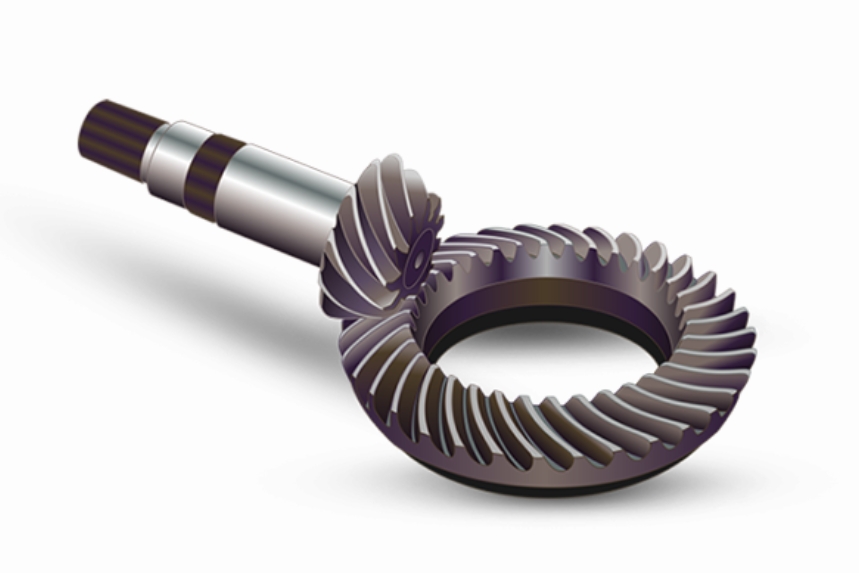
The machining of spiral bevel gears is primarily accomplished through two methodologies: the generating method and the form cutting (or forming) method. The generating method, based on gear meshing principles, is typically used for pinions. In contrast, the form cutting method is predominantly employed for manufacturing the larger gear (the gear wheel). In this process, the gear blank remains stationary while a rotating cutter head, whose axis is positioned at a specific spatial angle and offset relative to the blank axis, feeds along its own axis. The profile of the cutter teeth directly shapes the gear tooth space. After completing one tooth slot, the cutter retracts, the workpiece indexes, and the process repeats. Accurately simulating the entire complex multi-tooth, multi-pass machining process for a spiral bevel gear is computationally prohibitive. Therefore, a simplification strategy is adopted, focusing on a representative micro-segment of the active tooth surface undergoing material removal. Crucially, the interaction between the cutting edge and the workpiece velocity vector introduces an oblique angle, making a traditional two-dimensional or orthogonal cutting model insufficient. A three-dimensional oblique cutting model is thus essential to capture the realistic thermo-mechanical conditions during spiral bevel gear form cutting.
Theoretical Foundation for Thermo-Mechanical Coupling in Cutting
The residual stress state in a machined spiral bevel gear tooth surface is the consequence of a complex interplay between mechanical deformation and thermal loading. During cutting, intense mechanical work occurs due to plastic deformation in the primary and secondary shear zones, coupled with friction at the tool-chip and tool-workpiece interfaces. This mechanical action induces compressive stresses in the subsurface layer. Simultaneously, nearly all of this mechanical energy is converted into heat, leading to a significant temperature rise in the cutting zone. Upon cooling, the surface layer contracts, but this contraction is constrained by the cooler underlying material, inducing tensile thermal stresses on the surface. The final residual stress profile is a superposition of these competing mechanical (compressive) and thermal (tensile) effects. Typically, in hardened materials like gear steels, the profile exhibits tensile stress at the very surface, transitioning rapidly to compressive stress at a shallow depth (the hardened layer), and then gradually decaying to zero deeper within the bulk material. The governing equation for the flow stress during this process, incorporating strain, strain rate, and temperature effects, is effectively described by the Johnson-Cook (J-C) constitutive model:
$$ \bar{\sigma} = \left[ A + B(\bar{\varepsilon}^{pl})^{n} \right] \left(1 + C \ln \frac{\dot{\bar{\varepsilon}}^{pl}}{\dot{\bar{\varepsilon}}_0} \right) \left(1 – \theta^{*m} \right) $$
where $\bar{\sigma}$ is the equivalent flow stress, $\bar{\varepsilon}^{pl}$ is the equivalent plastic strain, $\dot{\bar{\varepsilon}}^{pl}$ is the plastic strain rate, and $\dot{\bar{\varepsilon}}_0$ is the reference strain rate. The dimensionless temperature $\theta^*$ is defined as $\theta^* = (T – T_{room})/(T_{melt} – T_{room})$. The parameters $A$, $B$, $n$, $C$, and $m$ represent the material’s yield strength, hardening modulus, hardening exponent, strain-rate sensitivity, and thermal softening coefficient, respectively. For the spiral bevel gear material studied (AISI 4340 steel), these parameters are well-established.
| Parameter | Symbol | Value | Unit |
|---|---|---|---|
| Yield Stress | A | 792 | MPa |
| Hardening Modulus | B | 510 | MPa |
| Hardening Exponent | n | 0.26 | – |
| Strain-Rate Coefficient | C | 0.014 | – |
| Thermal Softening Coefficient | m | 1.03 | – |
| Failure Constant D1 | D₁ | 0.05 | – |
| Failure Constant D2 | D₂ | 3.44 | – |
| Failure Constant D3 | D₃ | 2.12 | – |
| Failure Constant D4 | D₄ | 0.002 | – |
| Failure Constant D5 | D₅ | 0.61 | – |
Material separation and chip formation are governed by a damage initiation and evolution criterion. The J-C damage model is commonly used, where failure is assumed to occur when a cumulative damage parameter $\omega$ exceeds 1. The damage increment is related to the plastic strain increment $\Delta \bar{\varepsilon}^{pl}$ and the failure strain $\bar{\varepsilon}_f^{pl}$:
$$ \omega = \sum \frac{\Delta \bar{\varepsilon}^{pl}}{\bar{\varepsilon}_f^{pl}} $$
The failure strain itself depends on stress state, strain rate, and temperature:
$$ \bar{\varepsilon}_f^{pl} = \left[ D_1 + D_2 \exp(-D_3 \eta) \right] \left[ 1 + D_4 \ln \frac{\dot{\bar{\varepsilon}}^{pl}}{\dot{\bar{\varepsilon}}_0} \right] \left[ 1 + D_5 \theta^* \right] $$
where $\eta = -p / q$ is the stress triaxiality ratio ($p$ is the hydrostatic pressure, $q$ is the Mises stress), and $D_1$ to $D_5$ are failure parameters specific to the spiral bevel gear material, as listed in Table 1.
Finite Element Simulation Methodology
The three-dimensional oblique cutting model for the spiral bevel gear machining simulation was developed using a commercial finite element analysis (FEA) software, Abaqus/Explicit. The model incorporates a deformable workpiece and a rigid cutting tool. The tool geometry is defined with a rake angle ($\gamma$) of 15°, a clearance angle ($\beta$) of 6°, and an edge radius of 0.02 mm. Most critically, to accurately represent the form cutting process of the spiral bevel gear, a nonzero inclination angle ($\theta_s$), also known as the oblique angle, is set to 5°. This angle is responsible for the three-dimensional flow of chips and the distribution of forces. The workpiece material is modeled using the J-C constitutive and damage laws described above. The interaction between the tool and workpiece employs a contact formulation with a friction model combining sticking and sliding regions, defined by $\tau_c = \min(\mu \sigma_n, \tau_{max})$, where $\mu$ is the Coulomb friction coefficient (set to 0.2) and $\tau_{max}$ is the material’s shear strength. A coupled temperature-displacement analysis is performed to capture the thermo-mechanical effects essential for predicting residual stresses in the spiral bevel gear tooth surface.
Two simulation approaches were undertaken: a single-factor analysis and a Response Surface Methodology (RSM) based design. The single-factor analysis isolates the effect of one parameter at a time, while the RSM explores interactions between parameters and builds a predictive model.
| Factor | Level 1 | Level 2 | Level 3 | Level 4 |
|---|---|---|---|---|
| Cutting Speed, $v_c$ (m/min) | 80 | 100 | 120 | 140 |
| Depth of Cut, $a_p$ (mm) | 1.0 | 1.5 | 2.0 | 2.5 |
| Feed Rate, $f$ (mm/rev) | 0.2 | 0.3 | 0.4 | 0.5 |
For data extraction, the residual stress component parallel to the cutting direction (S11) was evaluated along three distinct paths beneath the machined surface of the spiral bevel gear simulation model. The values were sampled at regular depth intervals and averaged to obtain a representative profile for each simulation condition.
Analysis of Single-Factor Simulation Results
The simulation results consistently showed a characteristic residual stress profile for the machined spiral bevel gear surface: a region of tensile stress at the immediate surface, transitioning sharply to compressive stress within the first few tens of micrometers, reaching a maximum compressive value, and then asymptotically decaying to zero with increasing depth. This profile is the direct result of the thermo-mechanical coupling described earlier.
Influence of Cutting Speed ($v_c$)
Holding the depth of cut and feed rate constant, increasing the cutting speed from 80 to 140 m/min led to a measurable increase in the surface tensile residual stress. Conversely, the magnitude of the maximum subsurface compressive stress showed a slight decreasing trend. This can be attributed to the dominant effect of increased thermal loading at higher speeds. More frictional and deformation heat is generated in a shorter time, leading to greater thermal expansion and subsequent contraction of the surface layer, thereby elevating tensile stress. While the mechanical forces may also change, the thermal softening effect of the increased temperature reduces the material’s yield strength, potentially diminishing the intensity of the mechanically induced compressive plastic deformation deeper in the spiral bevel gear subsurface.
Influence of Feed Rate ($f$)
The feed rate exhibited the most pronounced influence on the residual stress state in the spiral bevel gear. An increase in feed rate from 0.2 to 0.5 mm/rev resulted in a significant increase in both the surface tensile stress and the maximum subsurface compressive stress. Furthermore, the depth of the affected stress layer (the hardened layer) increased substantially. A higher feed rate increases the uncut chip thickness, leading to greater plastic deformation and a larger volume of material being removed per unit time. This translates to higher mechanical forces and more heat generation per cycle. The combined effect is a more severe thermo-mechanical load, plastically deforming a thicker layer of material and generating higher magnitude residual stresses throughout that layer.
Influence of Depth of Cut ($a_p$)
Variations in the depth of cut, within the studied range, showed a relatively minor impact on the residual stress profile compared to cutting speed and feed rate. While increasing the depth of cut engages a longer section of the cutting edge, the fundamental mechanics of chip formation (governed by uncut chip geometry which is more dependent on feed) and the specific energy (closely related to heat generation per unit volume) do not change as dramatically. Therefore, the alterations in thermal and mechanical fields affecting the spiral bevel gear subsurface were less significant.
Response Surface Methodology and Predictive Model
To quantify interactions between parameters and to establish a predictive model for optimization, a Box-Behnken Design (BBD) within the RSM framework was implemented. Three factors—cutting speed ($v_c$), depth of cut ($a_p$), and feed rate ($f$)—were varied across three levels (low, center, high) as defined in Table 3. The responses measured were the maximum surface residual tensile stress ($S_1$) and the maximum subsurface residual compressive stress ($S_2$).
| Factor | Symbol | Low (-1) | Center (0) | High (+1) |
|---|---|---|---|---|
| Cutting Speed (m/min) | $v_c$ | 80 | 110 | 140 |
| Depth of Cut (mm) | $a_p$ | 1.0 | 1.75 | 2.5 |
| Feed Rate (mm/rev) | $f$ | 0.2 | 0.35 | 0.5 |
Based on the simulation results from the BBD design points, second-order polynomial regression models were fitted for both responses. The analysis of variance (ANOVA) confirmed the high significance and adequacy of the models.
| Response | Model F-value | P-value | $R^2$ | Adjusted $R^2$ |
|---|---|---|---|---|
| Max. Tensile Stress $S_1$ | 159.95 | < 0.0001 | 99.03% | 94.46% |
| Max. Compressive Stress $S_2$ | 132.55 | < 0.0001 | 98.83% | 93.32% |
The final empirical equations in terms of coded factors for predicting the residual stresses on the spiral bevel gear tooth surface are as follows:
For maximum tensile stress ($S_1$, in MPa):
$$ S_1 = 282.6 + 19.23 \cdot v_c + 9.95 \cdot a_p + 26.68 \cdot f – 7.06 \cdot a_p^2 – 306.8 \cdot f^2 + 6.57 \cdot v_c a_p – 30.48 \cdot v_c f + 107.5 \cdot a_p f $$
For maximum compressive stress ($S_2$, in MPa):
$$ S_2 = -321.9 + 8.78 \cdot v_c – 5.04 \cdot a_p + 21.95 \cdot f – 6.07 \cdot a_p^2 – 123.0 \cdot f^2 + 17.18 \cdot v_c a_p – 81.74 \cdot v_c f – 197.0 \cdot a_p f $$
In these equations, $v_c$, $a_p$, and $f$ represent the coded values of the factors (e.g., -1, 0, +1 corresponding to low, center, high levels from Table 3). The models clearly show significant quadratic and interaction terms, highlighting the complex, non-linear relationship between cutting parameters and the residual stress state in the spiral bevel gear.
Parameter Optimization and Experimental Validation
From a performance perspective, surface tensile residual stress is generally detrimental as it can promote crack initiation and propagation under cyclic loading. Subsurface compressive stress, however, is beneficial as it inhibits crack growth and increases fatigue strength. Therefore, an optimal machining condition for the spiral bevel gear would minimize $S_1$ while maximizing $|S_2|$. Using the desirability function approach within the RSM framework on the established predictive models, the optimal parameter combination was determined to be: Cutting Speed ($v_c$) = 80 m/min, Depth of Cut ($a_p$) = 2.5 mm, and Feed Rate ($f$) = 0.2037 mm/rev. At this point, the predicted responses were $S_1$ = 207.41 MPa and $S_2$ = -322.23 MPa.
To validate the simulation and optimization framework, a physical cutting test was conducted on a CNC spiral bevel gear milling machine. A spiral bevel gear was machined using the optimized parameters. Subsequently, single teeth were wire-cut from the gear, and the residual stresses on the concave (active) flank at the pitch line position were measured using X-ray diffraction combined with electro-polishing for layer removal. The measured values from multiple samples were averaged and compared with the simulation predictions.
| Response | Predicted Value (MPa) | Average Measured Value (MPa) | Relative Error |
|---|---|---|---|
| Max. Tensile Stress $S_1$ | 207.41 | 197.26 | 5.15% |
| Max. Compressive Stress $S_2$ | -322.23 | -307.74 | 4.70% |
The close agreement between the predicted and measured residual stresses, with a maximum relative error well below 10%, strongly validates the fidelity of the three-dimensional oblique cutting finite element model and the effectiveness of the Response Surface Methodology for predicting and optimizing the machining outcome for spiral bevel gears. The minor discrepancies can be attributed to simplifications in the model (e.g., ideal tool geometry, homogeneous material) and inherent variability in the physical machining and measurement processes.
Conclusion
This comprehensive investigation into the form cutting process of spiral bevel gears has successfully elucidated the influence of key machining parameters on the resultant tooth surface residual stress state through advanced thermo-mechanical finite element simulation. The three-dimensional oblique cutting model proved essential for capturing the realistic mechanics of the process. The residual stress profile is characterized by a shallow tensile layer at the surface, transitioning to a compressive subsurface layer before diminishing to zero, a direct consequence of the coupled mechanical deformation and thermal loading. Single-factor analysis revealed that the feed rate exerts the most significant influence on both the magnitude and depth of residual stresses in the spiral bevel gear, followed by cutting speed, while the depth of cut showed a comparatively minor effect. The application of Response Surface Methodology enabled the development of highly accurate predictive models for surface tensile and subsurface compressive stresses. These models facilitated the multi-objective optimization of cutting parameters to achieve a desirable residual stress profile—minimizing harmful tensile stress while maximizing beneficial compressive stress. The final validation through physical machining tests confirmed the practical reliability of the simulation-based approach, with prediction errors below 6.2%. This work provides a robust numerical framework and actionable insights for optimizing the form cutting process of spiral bevel gears, ultimately contributing to the manufacture of higher-performance, longer-lasting gears for critical transmission applications.