
The machining of internal spiral gears, particularly those with a small number of teeth, large modules, and large pressure angles, presents significant challenges in manufacturing. Conventional methods like gear hobbing, shaping, and even grinding become exceedingly difficult or impractical for such hard-to-reach, hardened geometries. This research explores a novel approach: Spiral Feed Electrical Discharge Machining (EDM) for the precision forming of internal spiral gears. The core innovation lies in replicating the complex helical tooth profile of an internal spiral gear by using a corresponding external gear as a tool electrode, which undergoes a combined vertical feed and precise spiral motion relative to the workpiece.
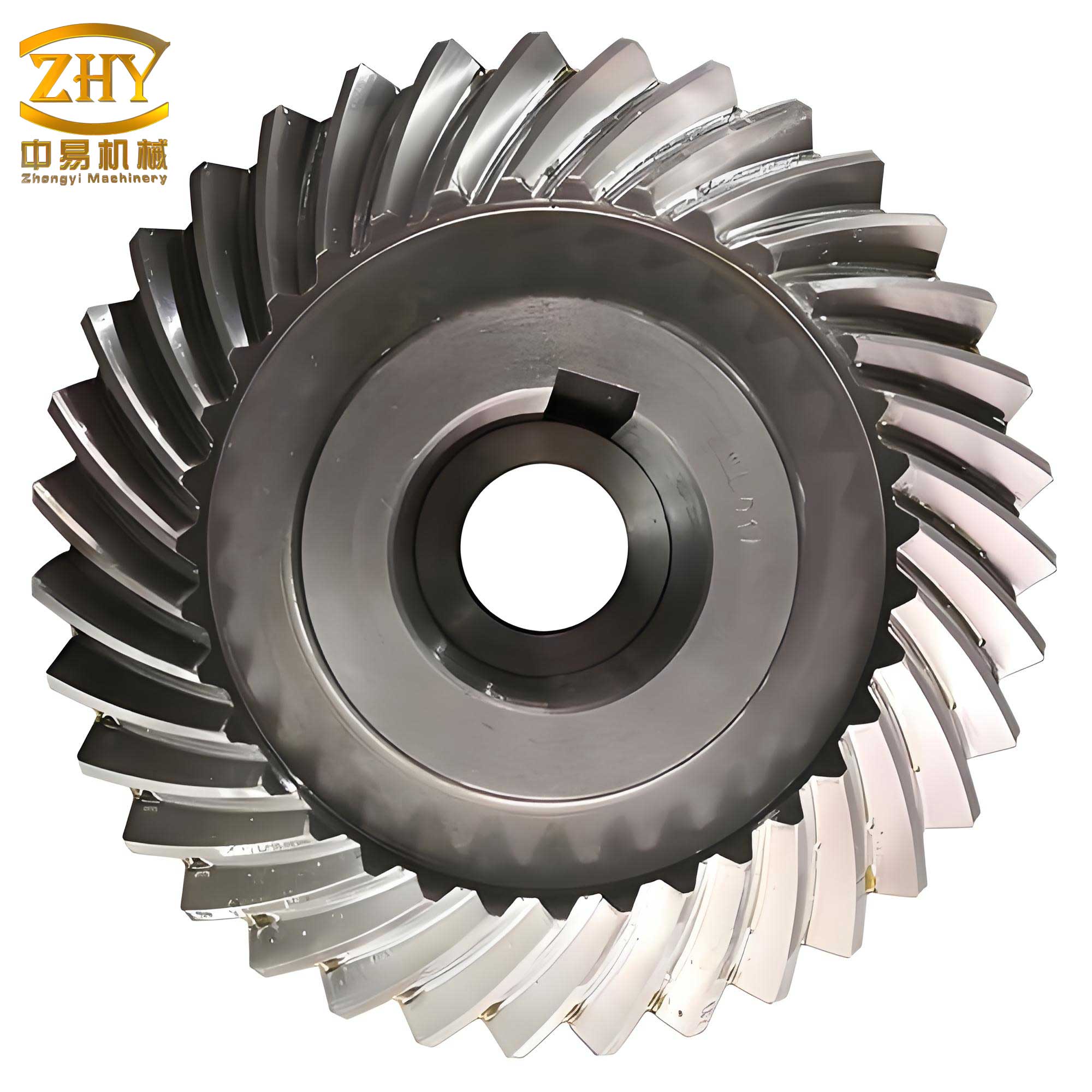
The internal spiral gear, combining the advantages of internal and helical gears, offers compact design, high load capacity, smooth operation, and low noise. Its applications in compact transmissions, planetary gear sets, and gear pumps are crucial for advancing machinery towards miniaturization and high performance. However, post-heat-treatment precision finishing of hard-faced internal spiral gears remains a bottleneck. EDM, a non-contact thermal machining process, is ideally suited for this task as it is independent of workpiece hardness, generates no mechanical cutting forces, and can copy complex shapes from a tool electrode.
1. Principle and Apparatus for Spiral Gear EDM
Electrical Discharge Machining removes material through a series of discrete sparks between two electrodes submerged in a dielectric fluid. For normal EDM to occur, several conditions must be met: a suitable gap must be maintained, a dielectric medium (like oil) must be present, discharge must be pulsed, and erosion products must be evacuated. The Spiral Feed method adapts this principle for generating helical surfaces.
The fundamental principle is shown schematically. The tool electrode (an external spiral gear) and the workpiece (a blank for the internal spiral gear) are coaxially aligned. The tool performs a composite motion: a vertical feed (Z-axis) and a simultaneous rotational motion (C-axis). The relationship between the motions is precisely coupled so that the axial displacement per revolution matches the lead of the desired internal spiral gear helix. If the helix angles of the tool ($\beta_t$) and workpiece ($\beta_w$) are equal and of the same hand, and the leads are identical, the relative motion between the tool’s tooth flank and the workpiece cavity traces out the required internal helical surface. The governing relation for the leads is:
$$ P_t = P_w = \pi d_t \cot \beta_t = \pi d_w \cot \beta_w $$
where $P$ is the lead, $d$ is the pitch diameter, and $\beta$ is the helix angle. Subscripts $t$ and $w$ denote tool and workpiece, respectively.
A dedicated apparatus was developed and mounted on a precision EDM machine. The core component is a precision ball screw assembly attached to the machine’s quill. The tool electrode is mounted on the rotating nut of this assembly. As the machine’s Z-axis servo drives the quill vertically, the ball screw converts this linear motion into a precise rotary motion of the tool, thereby generating the necessary spiral feed motion. A fixture ensures precise coaxial alignment and clamping of the workpiece.
2. Tool Electrode Design and Profile Modification for Spiral Gear
The accuracy of the EDM process heavily depends on the design of the tool electrode. For copying an internal spiral gear, the tool is essentially the conjugate external spiral gear, but its profile must be modified to account for two critical EDM phenomena: the spark gap and non-uniform electrode wear.
The tool electrode profile is an equidistant curve offset from the desired workpiece tooth profile by the spark gap $\delta$. Mathematically, this can be treated as a gear with a addendum modification (profile shift). The required shift coefficient $x_t$ for the tool electrode is derived from the change in base tangent length:
$$ W_{kt}’ = W_{kt} + 2\delta \sin \alpha_n = m_n \cos \alpha_n [\pi (k – 0.5) + z \cdot \text{inv} \alpha_t + 2x_t \tan \alpha_n] $$
where $W_{kt}’$ is the base tangent length of the tool considering gap, $W_{kt}$ is the nominal base tangent length, $\delta$ is the single-sided spark gap, $\alpha_n$ is the normal pressure angle, $m_n$ is the normal module, $z$ is the number of teeth, $k$ is the number of spanned teeth, $\alpha_t$ is the transverse pressure angle, and $\text{inv}$ is the involute function. Solving for $x_t$ gives the necessary modification. A typical process uses a roughing electrode (copper) with a larger gap and a finishing electrode (steel) with a smaller gap.
Furthermore, due to the electric field concentration, wear is more pronounced at regions of high curvature (like the tooth root of the tool). This leads to a pressure angle error on the finished workpiece. To compensate, the tool’s pressure angle is intentionally altered. The pressure angle error $\Delta \alpha_t$ caused by wear relates to the resultant profile form error $\Delta f_f$ over the active profile length ($\rho_a$ to $\rho_f$):
$$ \Delta f_f \approx \Delta r_b (\theta_a – \theta_f) = -r_b \tan \alpha_t \Delta \alpha_t (\theta_a – \theta_f) $$
where $\Delta r_b$ is the effective base circle error, $r_b$ is the base radius, and $\theta$ is the roll angle. Therefore, the tool pressure angle is corrected to $\alpha_t’ = \alpha_t – \Delta \alpha_t$.
Given the non-standard parameters (large module, few teeth), Computer-Aided Design (CAD) and simulation were crucial. A parametric design system was developed to calculate shift coefficients, check for undercut and tip interference, and simulate the gear generation process. The designed tool parameters are summarized below.
| Design Parameter | Roughing Electrode | Finishing Electrode |
|---|---|---|
| Number of Teeth (z) | 19 | 19 |
| Normal Module ($m_n$) | 1.5 mm | 1.5 mm |
| Normal Pressure Angle ($\alpha_n$) | 32° | 31.5° (Compensated) |
| Helix Angle ($\beta$) | 18° | 18° |
| Profile Shift Coefficient ($x_t$) | +0.254 | +0.013 |
| Material | Copper | Alloy Steel |
3. Error Analysis in Spiral Feed EDM of Spiral Gears
The machining accuracy of the internal spiral gear is influenced by a combination of mechanical errors from the system and process errors inherent to EDM. A comprehensive error model was established based on the “line of action increment” method, which projects all deviations onto the gear’s line of action.
The primary gear error elements analyzed include profile error ($\Delta f_f$), helix error ($\Delta F_\beta$), pitch error ($\Delta f_{pt}$), cumulative pitch error ($\Delta F_p$), and radial runout ($\Delta F_r$). Their sources are categorized as follows:
| Error Category | Specific Sources | Mainly Affects |
|---|---|---|
| Workpiece & Setup | Geometric eccentricity ($e$), tilt error of workpiece axis. | $\Delta F_p$, $\Delta F_r$, $\Delta F_\beta$ |
| Tool Electrode | Manufacturing errors in profile, pitch, and helix; non-uniform wear (taper). | $\Delta f_f$, $\Delta f_{pt}$, $\Delta F_\beta$ |
| Spiral Mechanism | Lead error ($\Delta P$), axis straightness error, wobble, backlash. | $\Delta F_\beta$, $\Delta F_p$, process stability |
| EDM Process | Spark gap variation, arcing, secondary discharges, servo response. | $\Delta f_f$, surface finish, $\Delta F_\beta$ |
Mathematical models link specific errors to gear accuracy metrics. For example, geometric eccentricity $e$ causes a sinusoidal variation in the line of action increment $\Delta L$: $\Delta L = e \sin(\varphi \pm \alpha_t)$, where $\varphi$ is the rotation angle. This translates to cumulative pitch error: $\Delta F_p \approx 2e \tan \alpha_t$.
The helix error is critically dependent on the spiral mechanism’s accuracy. The lead error $\Delta P_s$ of the ball screw directly induces a helix angle error $\Delta \beta_w$ on the workpiece spiral gear:
$$ \Delta \beta_w = \arctan\left(\frac{P_s + \Delta P_s}{\pi d_w}\right) – \arctan\left(\frac{P_s}{\pi d_w}\right) $$
This results in a helix error (in linear measure) over face width $b$:
$$ \Delta F_\beta \approx b \cdot \Delta \beta_w $$
Furthermore, axis tilt errors ($\Delta \gamma$) cause a taper error: $\Delta F_\beta \approx D \cdot \Delta \gamma$, where $D$ is the relevant diameter.
4. Influence of Electrode Curvature on Profile Accuracy in Spiral Gear Machining
A significant process-induced error stems from the relationship between electric field strength and local electrode curvature. The electric field intensity $E$ at a point on the cathode (tool) is approximately inversely proportional to the local radius of curvature $r_c$ and the gap $d$:
$$ E \propto \frac{U}{d + r_c} $$
For an involute profile of a spiral gear, the radius of curvature $\rho$ increases linearly from the root to the tip: $\rho = r_b \theta$, where $r_b$ is the base radius and $\theta$ is the roll angle. Consequently, the electric field is strongest at the tooth root (smallest $\rho$), leading to a higher probability of discharge and thus higher wear/erosion in that region. This results in a systematic profile error where the workpiece pressure angle becomes larger than intended.
Theoretical Proof: Finite Element Analysis (FEA) of the electric field between conjugate involute profiles confirms the field concentration in the root region of the tool electrode for the spiral gear pair.
Experimental Proof – Elliptical Electrode Test: To isolate the curvature effect, an experiment was conducted using a simple elliptical copper electrode. The curvature $\kappa$ of an ellipse parameterized by $x=a\cos t, y=b\sin t$ is:
$$ \kappa(t) = \frac{ab}{(a^2 \sin^2 t + b^2 \cos^2 t)^{3/2}} $$
After EDM machining a steel block, the profiles of the tool and the generated cavity were measured using a CMM. The normal distance (approximating spark gap) between the two elliptical profiles was calculated at various points. Results demonstrated a clear correlation: the gap was larger in regions of high curvature (ellipse ends) and smaller in regions of low curvature (ellipse sides).
Gear Machining Verification: A spiral gear was machined using an uncompensated tool electrode. Subsequent measurement of the workpiece profile showed a distinct positive profile form error, with the effective pressure angle being larger than the design value, confirming the predicted non-uniform erosion due to curvature variation along the involute flank of the spiral gear.
5. Experimental Study and Spiral Gear Accuracy Evaluation
Experiments were conducted to characterize the process and to machine a sample internal spiral gear. Key EDM parameters influencing the outcome are pulse-on time ($t_i$), pulse-off time ($t_o$), peak current ($I_p$), and polarity.
Process Characterization: Initial tests compared the performance of the modified machine (with spiral attachment) to the base machine. While stability was slightly affected due to added inertia and backlash in the ball screw, feasible machining conditions were established. A specific study on “steel-on-steel” machining (for the finishing electrode) revealed that stability required lower pulse energies and longer off-times compared to copper electrodes to avoid excessive debris and arcing.
Spiral Gear Machining Experiment: A hardened steel workpiece (pre-bored) was machined using a copper roughing electrode and a steel finishing electrode. The process involved roughing to remove bulk material and finishing to achieve final dimensions and surface quality. Dielectric flushing was critical, switching from top flushing to bottom suction as the cavity deepened.
| Process Stage | Electrode | Key EDM Settings | Result |
|---|---|---|---|
| Roughing | Copper Spiral Gear | High $I_p$, long $t_i$, negative polarity. | ~0.8 mm stock removal, ~30 min. |
| Finishing | Steel Spiral Gear | Low $I_p$, short $t_i$, long $t_o$, negative polarity. | Final sizing, Ra ~3.2 µm, ~90 min. |
Spiral Gear Metrology and Data Processing: Measuring the internal spiral gear presented challenges. A novel method was employed using a Coordinate Measuring Machine (CMM) to capture cloud points of the tooth flanks. The measured points represent the path of the probe sphere center, which is the equidistant curve of the actual tooth surface. For an involute, the equidistant curve is another involute. Therefore, the theoretical point $(x_0, y_0)$ for a given measured point $(x_m, y_m)$ can be calculated based on the involute equations. The profile error $\Delta$ at that point is the normal distance:
$$ \Delta = (x_m – x_0) \cos \theta + (y_m – y_0) \sin \theta $$
where $\theta$ is the pressure angle at the evaluation point. Dedicated algorithms were written to process CMM data, separate the profile error into its systematic (pressure angle error) and random (form error) components, and evaluate pitch errors. The results for the machined spiral gear were as follows:
| Accuracy Item | Left Flank | Right Flank |
|---|---|---|
| Profile Form Error, $\Delta f_f$ | 18 µm | 22 µm |
| Single Pitch Error, $\Delta f_{pt}$ | ±12 µm | ±15 µm |
| Cumulative Pitch Error, $\Delta F_p$ | 45 µm | 48 µm |
| Helix Error, $\Delta F_\beta$ | 25 µm | 25 µm |
6. Conclusion
This research successfully demonstrates the feasibility of the Spiral Feed EDM method for machining hard-faced internal spiral gears. A functional apparatus was developed, integrating a precision spiral motion module into a standard EDM machine. The study established a comprehensive methodology for tool electrode design, incorporating essential compensation for spark gap and curvature-induced wear, which is critical for achieving accurate spiral gear profiles. Theoretical error modeling and analysis provided insights into the major sources of inaccuracy, highlighting the paramount importance of the spiral mechanism’s geometric and dynamic performance. The curvature effect was both theoretically and experimentally validated, confirming its significant role in profile generation for spiral gears. Finally, a complete machining experiment was conducted, resulting in a measurable internal spiral gear. The proposed CMM-based data processing method offers a practical solution for evaluating the complex geometry of internal spiral gears. This work provides a valuable new avenue for manufacturing high-precision, hard-to-machine internal spiral gears and other complex helical components.