
The evolution of modern home appliances, particularly autonomous devices like robotic vacuum cleaners, demands increasingly quiet and efficient operation. A significant contributor to operational noise in these devices is the transmission system, specifically the gears that transfer power from the motor to the drive wheels or brushes. Traditionally, key components such as the micro spiral gear on the drive motor output shaft were manufactured from steel via hobbing. While functional, this method suffers from considerable drawbacks: low material utilization, high energy consumption, and elevated manufacturing costs. In the pursuit of more sustainable and economical manufacturing, powder metallurgy (PM) presents itself as a compelling alternative. This article details a comprehensive project undertaken to develop a robust production process for iron-based micro spiral gears using powder metallurgy, focusing on precision control through innovative die design.
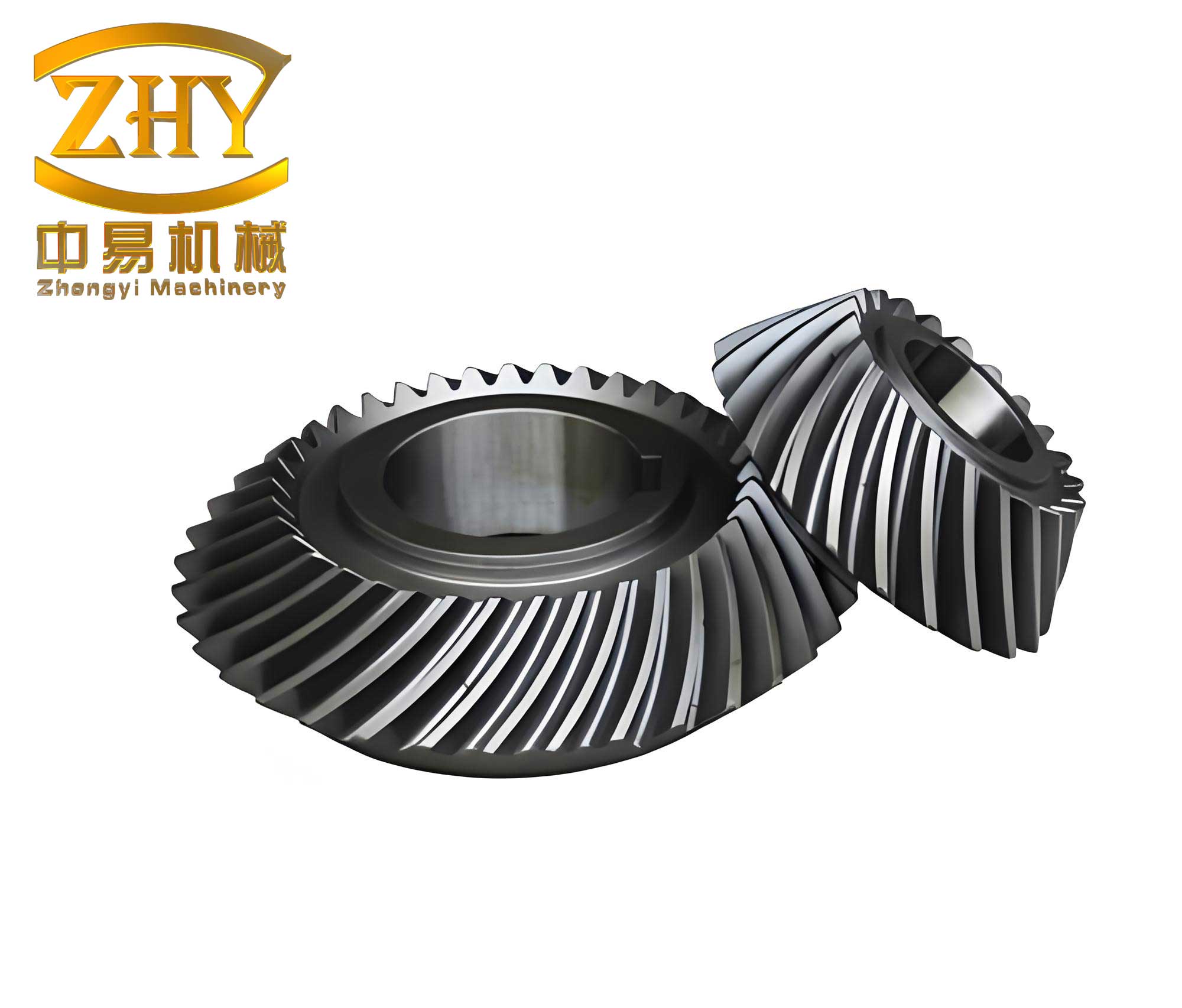
The fundamental advantage of powder metallurgy lies in its near-net-shape capability. The process sequence—mixing, compaction, sintering, and optional secondary operations—drastically reduces material waste compared to subtractive machining. A comparative analysis of manufacturing processes highlights its efficiency, as shown in Table 1. The transition to PM for the micro spiral gear was driven by the need to achieve annual production volumes exceeding one million units while meeting stringent performance and cost targets.
| Process | Material Utilization (%) | Energy Consumption (MJ/kg) | Relative Processing Cost (%) |
|---|---|---|---|
| Powder Metallurgy | 95 | 29 | 42 |
| Casting | 90 | 34 | 53 |
| Extrusion | 85 | 41 | 50 |
| Forging | 77 | 43 | 72 |
| Machining | 45 | 74 | 100 |
Design and Specifications of the Target Spiral Gear
The component in question is a right-hand helical gear of minimal size, intended for a high-volume consumer appliance. Its compact dimensions and helical teeth necessitate precision forming to ensure smooth meshing and low noise generation. The critical specifications for the final sintered part are detailed in Table 2. Achieving a density in the range of 6.8-7.0 g/cm³, a hardness of 50-70 HRB, and a JGMA class 3 level of gear accuracy were the primary mechanical and geometrical goals.
| Parameter | Symbol | Value |
|---|---|---|
| Number of Teeth | $$Z$$ | 11 |
| Normal Module | $$m_n$$ | 0.4 mm |
| Pressure Angle | $$\alpha$$ | 20° |
| Helix Angle (Right Hand) | $$\beta$$ | 21° |
| Pitch Diameter | $$d$$ | $$d = \frac{m_n Z}{\cos\beta} = \frac{0.4 \times 11}{\cos 21°} \approx 4.71 \text{ mm}$$ |
| Outside Diameter | $$d_a$$ | $$\phi 5.90_{-0.09} \text{ mm}$$ |
| Root Diameter | $$d_f$$ | $$\phi 4.07_{-0.09} \text{ mm}$$ |
| Target Density | $$\rho$$ | 6.8 – 7.0 g/cm³ |
| Target Hardness | – | 50 – 70 HRB |
| Gear Accuracy | – | JGMA Class 3 |
Powder Metallurgy Process Development
The successful production of a high-precision spiral gear via PM hinges on a meticulously controlled process chain: material design, mixing, compaction, and sintering.
Material Design and Powder Preparation
An iron-copper-carbon alloy system was selected to achieve the desired sintered strength and hardness. Water-atomized iron powder served as the base, with electrolytic copper powder added as a solid-solution strengthening agent and natural graphite as the carbon source for hardening. To ensure uniform compaction and prevent die wear, 0.75 wt.% ethylene bis-stearamide (EBS) was incorporated as an internal lubricant. A critical challenge in mixing is the segregation of components with vastly different densities (e.g., graphite vs. iron). To mitigate this, approximately 0.1 wt.% of low-viscosity spindle oil was added to the iron powder prior to the main mix, coating the particles and reducing density-driven separation. The final composition and raw material specifications are summarized in Tables 3 and 4.
| Material | Purity (%) | Production Method | Particle Size |
|---|---|---|---|
| Iron Powder | ≥ 99.6 | Water Atomization | < 147 µm |
| Copper Powder | ≥ 99.8 | Electrolytic | < 74 µm |
| Graphite | ≥ 99.8 | Natural | 238 – 477 µm |
| Iron Powder | Copper Powder | Graphite | EBS Lubricant |
|---|---|---|---|
| Balance | 3.5 | 1.2 | 0.75 |
Compaction and Sintering
Compaction was performed using a 20-ton automatic press. The primary objective was to achieve a uniform density distribution in the green compact, with a density gradient target of less than 0.1 g/cm³ across the tooth profile. This uniformity is essential to prevent distortion during sintering. The sintering cycle was carefully engineered in a mesh-belt furnace equipped with a rapid debinding zone. The thermal profile is illustrated in Figure 2. Sintering was conducted at 1150°C for 25 minutes under a protective atmosphere of 90% nitrogen and 10% hydrogen. Precise control of the atmosphere’s carbon potential was critical to prevent decarburization, which would compromise the final hardness and strength of the spiral gear.
The sintering process induces dimensional changes in the compact. The relationship between sintering parameters (temperature, time) and final dimension can be modeled. The radial change at the pitch diameter, $$\Delta d$$, can be expressed as a function of green density ($$\rho_g$$), sintering temperature ($$T_s$$), and time ($$t_s$$):
$$\Delta d = k \cdot f(\rho_g) \cdot g(T_s, t_s)$$
where $$k$$ is a material constant. For this alloy, the trend observed was an initial expansion at lower sintering temperatures transitioning to controlled shrinkage at the optimized 1150°C cycle. This predictable change is the foundation for the precision die design discussed in the next section.
Precision Die Design for Spiral Gear Forming
The most critical aspect of manufacturing a precision powder metallurgy spiral gear is the design of the forming die cavity. The goal is to produce a green compact that, after sintering and its associated dimensional change, yields a gear with the correct final pressure angle and tooth profile.
The Challenge of Dimensional Change
During sintering, the gear tooth does not scale isotropically. Research shows that dimensional change varies along the tooth profile, being more pronounced near the tooth tip compared to the root. This non-uniform change effectively alters the pressure angle of the sintered gear. A simplified model for the pressure angle shift $$\Delta \alpha$$ can be related to the radial change at the pitch circle ($$\Delta d$$) and the base circle diameter ($$d_b = d \cdot \cos\alpha$$):
$$\Delta \alpha \approx \arctan\left(\frac{\Delta d \cdot \sin\alpha}{d_b + \Delta d \cdot \cos\alpha}\right)$$
If the gear shrinks ($$\Delta d$$ negative), the pressure angle increases; if it expands, the pressure angle decreases. A standard die cavity would therefore produce an out-of-tolerance sintered gear.
The Variable Pressure Angle Solution
To compensate for this, the variable pressure angle method was employed for the die cavity design. The principle is to design the tooling with a pressure angle intentionally offset from the target final angle. The calculation flow is a closed-loop, empirical refinement process:
1. Produce initial tooling based on estimated shrinkage.
2. Measure the pressure angle and critical dimensions of the sintered trial gears.
3. Adjust the tooling pressure angle accordingly.
4. Iterate until the sintered gear meets specifications.
For this specific micro spiral gear, the final gear requires $$\alpha_{final} = 20°$$. Through iterative testing, it was determined that designing the die cavity with a pressure angle of $$\alpha_{die} = 20.2°$$ compensated perfectly for the sintering shrinkage, yielding the correct final angle. The key dimensions for the die cavity (applied to the core rod, upper punch, and die liner) are shown in Table 5.
| Parameter | Symbol | Value for Die Cavity |
|---|---|---|
| Number of Teeth | $$Z$$ | 11 |
| Normal Module | $$m_n$$ | 0.4 mm |
| Pressure Angle | $$\alpha_{die}$$ | 20.2° |
| Helix Angle | $$\beta_{die}$$ | 21.04° (Right Hand) |
| Base Circle Diameter | $$d_b$$ | $$d_{die} \cdot \cos\alpha_{die} \approx 4.713 \cdot \cos(20.2°) \text{ mm}$$ |
Die Structure and Function
The die set for this helical gear is inherently more complex than one for a spur gear due to the need to manage rotational motion during compaction and ejection. The main components are:
1. Upper Punch: Forms the top face and the upper portion of the external helical teeth.
2. Lower Punch: Forms the bottom face and lower portion of the teeth. It remains inside the die during filling.
3. Die Liner (Cavity): Contains the negative helical tooth profile.
4. Core Rod: Forms the central bore of the gear.
5. Die Table: Holds the die liner and facilitates its floating motion.
The key design features are:
Rotational Freedom: The upper punch, lower punch, and core rod are mounted in their respective holders via thrust bearings. This allows them to rotate freely but not move axially relative to their mounts.
Helical Engagement: The helical teeth on the punches must mesh perfectly with the helical teeth in the die liner. To achieve this, the upper punch features a straight guide slot. During the initial downward stroke, the punch moves only axially. Once it fully engages the die cavity, the slot disengages, and the helical interface forces the punch to rotate as it continues its pressing stroke, perfectly following the helix of the cavity.
Ejection: After compaction, the upper punch retracts. During ejection, the die table is lowered. As the die liner moves down past the stationary lower punch, the helical engagement causes the lower punch to rotate, smoothly pushing the green helical compact out of the cavity without shearing the delicate teeth.
The selection of wear-resistant materials for these components is crucial for achieving a production life capable of one million cycles. The materials chosen are listed in Table 6.
| Component | Material | Hardness (HRC) | Key Feature |
|---|---|---|---|
| Upper/Lower Punch | Cold Work Tool Steel (DC53) | 57-59 | High wear resistance, good toughness |
| Die Liner (Cavity) | Powder High-Speed Steel (ASP60) | 60-63 | Exceptional wear resistance for helical profile |
| Core Rod | Molybdenum HSS (SKH-9) with AlCrN coating | 60-63 (Coated) | High hardness and anti-galling coating |
| Die Table | Alloy Steel (40Cr) | 45-48 | High strength for structural support |
Results and Production Validation
The developed process and die design were validated through full-scale production. Sintered gears were subjected to comprehensive testing. Density was measured using an automated densitometer, yielding consistent results between 6.95 and 7.0 g/cm³. Hardness values fell within the 65-70 HRB range, exceeding the minimum target. Critical gear dimensions, including the outside diameter and lead, were held within the JGMA Class 3 tolerance bands.
The performance of the powder metallurgy spiral gear was validated in the final application—the transmission system of the robotic vacuum cleaner. The gears demonstrated excellent wear characteristics and contributed to a transmission noise level that met all national and international standards for consumer appliances. Most significantly, the production system achieved and sustained an output of over one million gears per year, fulfilling the high-volume demand reliably and cost-effectively.
In conclusion, the successful implementation of powder metallurgy for the micro spiral gear demonstrates a significant advancement over traditional machining. By developing a tailored iron-based alloy, optimizing the sintering cycle, and, most critically, implementing a variable pressure angle die design to compensate for sintering shrinkage, a high-precision, high-performance component was manufactured. This approach offers a sustainable manufacturing solution characterized by superior material utilization, reduced energy consumption, and lower total cost, proving ideal for high-volume applications in the consumer electronics and appliance industries.