
For decades, the automotive industry has proven that Powder Metallurgy (P/M) is a viable and cost-effective technology for producing high-strength, net-shape components. Its success in applications like connecting rods, bearing caps, and various brackets stems from its ability to deliver required mechanical properties while significantly reducing production costs compared to traditional machining. The P/M landscape has traditionally been divided into two performance domains. The first encompasses parts with densities below approximately 7.1 g/cm³, suitable for low to medium-strength applications. The second domain involves fully dense parts produced via powder forging, where a sintered preform is hot-forged to near pore-free density to maximize mechanical performance.
However, a significant gap existed between these conventional sintered parts and their fully dense forged counterparts. There was a pressing need for a manufacturing process capable of producing parts with sintered densities greater than 95% of pore-free density (often exceeding 7.4 g/cm³) using a single press-and-sinter cycle. This higher core density is crucial as it directly translates to superior mechanical properties, including enhanced tensile strength, fatigue resistance, impact toughness, and a higher elastic modulus. While a high core density provides a robust foundation, even minor residual porosity can severely degrade performance under certain loading conditions. This is particularly critical for high-performance spiral gear applications, where the key stress zones, subjected to high Hertzian contact stresses, demand near-full density. Subsequent processes, such as surface densification, have emerged as key solutions. These techniques allow the critical stress areas of a gear—like the tooth flanks and root—to be densified to near theoretical density, while the core retains the advantageous properties of a high-density sintered material, typically around 7.4 g/cm³. Expanding the potential applications for P/M parts, especially complex geometries like spiral gears, hinges on successfully combining high core density with effective surface densification.
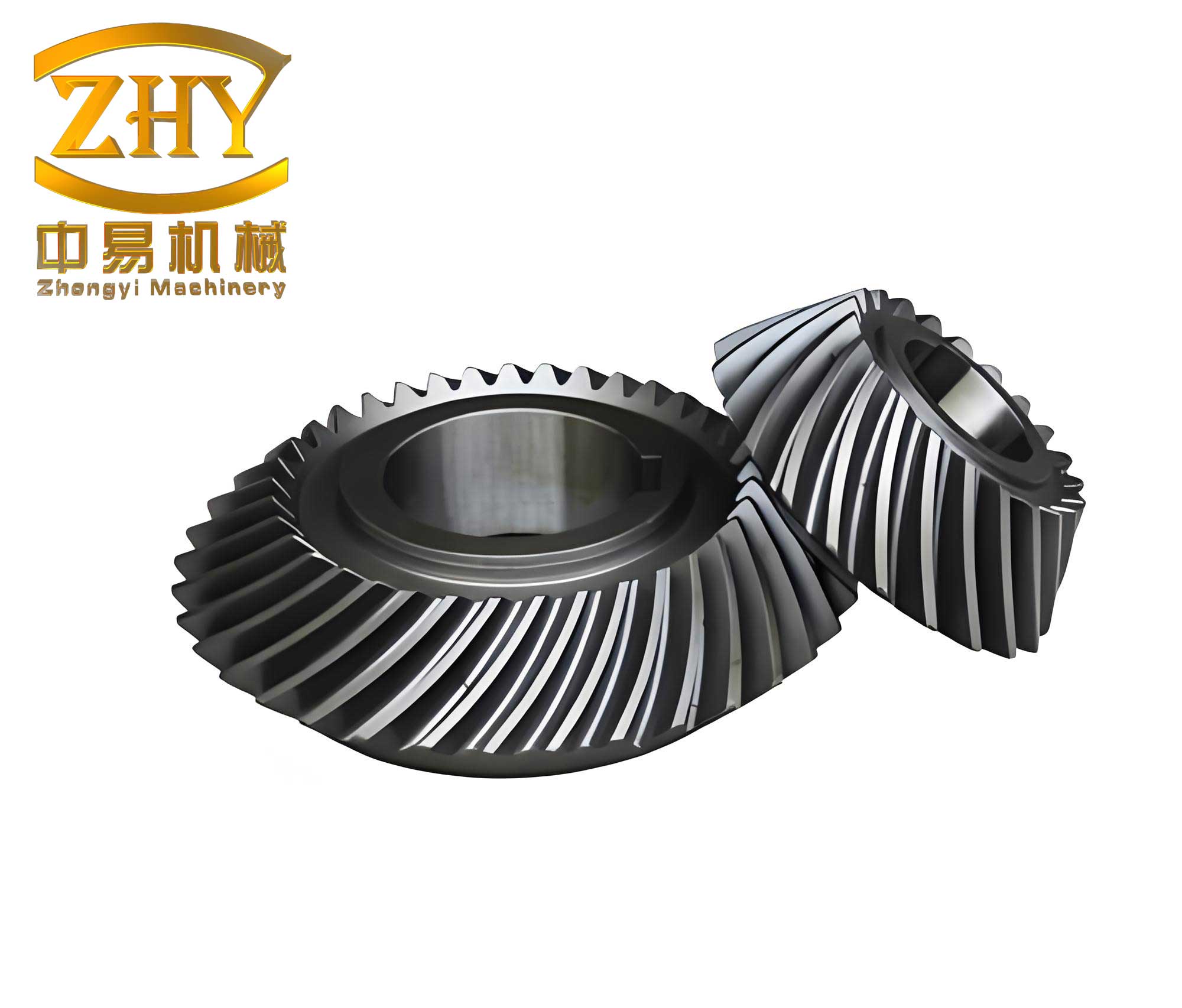
A prime example of a part family offering immense opportunity for the P/M industry is the helical or spiral gear used in automotive transmission planetary sets. To withstand pitting and sub-surface spalling in service, these gears require a demanding combination of properties: high surface hardness, good core toughness, high bending and rolling contact fatigue strength, and, fundamentally, high density. Currently, such spiral gears are typically machined from AISI 8620 steel or carburized and machined from AISI 5120 steel to meet stringent dimensional specifications. While conventional press-and-sinter P/M offers a low-cost production route, the associated mechanical properties have historically been insufficient. Powder forging followed by machining can achieve the necessary performance but at a prohibitively high cost. Therefore, a hybrid process yielding a part with a core density of 7.4 g/cm³ and a fully densified surface layer presents a compelling solution, promising to meet the mechanical demands of this application while remaining economically competitive.
To address the multifaceted performance requirements of these small spiral gears, a collaborative effort has led to the development of an advanced compaction process. This innovative technique, a form of warm-die compaction with a specialized binder-lubricant system, enables the achievement of high core densities without the need for pre-heating the powder. The primary advantage of this system lies in its greater flexibility for manufacturing high-density P/M parts. Research has shown that spiral gears produced via this method can achieve sintered densities approaching 7.4 g/cm³. By subsequently applying surface densification technology—such as precision gear rolling—to the high-stress regions of the as-sintered gear, a composite structure is created. Coupling this processed geometry with an appropriate heat-treated microstructure results in a spiral gear whose performance rivals that of machined steel gears.
The Advanced Warm Compaction Process
The core enabling technology is an advanced pre-mix system that optimizes the type and amount of binder and lubricant. This formulation increases both green and sintered density by approximately 0.05 to 0.15 g/cm³ compared to conventional pre-mixes. Alongside this density increase, the system reduces alloy segregation, minimizes dusting, improves powder flow, and enhances die fill uniformity—all factors contributing to greater part consistency and quality.
For years, a key goal in the P/M parts industry has been to achieve high density through a single press/single sinter process. Earlier warm compaction techniques required heating the die, punches, and powder to temperatures between 120–150°C, making temperature stability during production a significant challenge. The advanced process discussed here only requires maintaining the die at a moderate temperature of 60–70°C; the powder is fed at room temperature. This simplifies equipment needs and reduces powder handling issues. The density gain is conditional on using compaction pressures above 550 MPa. Due to heat transfer limitations within the powder mass, part height is generally restricted to less than 25 mm for optimal results.
The following table summarizes a comparison of green density achieved under different compaction pressures for a FLN2-4405 material (2% Ni, 0.6% Graphite) using a standard mix, a legacy warm compaction mix, and the advanced binder-lubricant system.
| Compaction Pressure (MPa) | Standard Mix Density (g/cm³) | Legacy Warm Compaction Density (g/cm³) | Advanced System Density (g/cm³) |
|---|---|---|---|
| 415 | 7.05 | 7.18 | 7.12 |
| 550 | 7.15 | 7.28 | 7.24 |
| 690 | 7.25 | 7.35 | 7.34 |
| 830 | 7.30 | 7.38 | 7.41 |
The relationship between compaction pressure and green density can be modeled, showing the diminishing returns at very high pressures. A simplified form of this relationship is often expressed as:
$$ \rho_g = \rho_{\text{max}} – A e^{-kP} $$
where $\rho_g$ is the green density, $\rho_{\text{max}}$ is the maximum achievable green density (approx. 98% of pore-free density for these systems), $P$ is the compaction pressure, and $A$ and $k$ are material-dependent constants.
Performance of High-Density FLN2-4405
The potential of the high-density process is clearly demonstrated by the mechanical properties of sintered FLN2-4405. As density increases, the ultimate tensile strength (UTS), yield strength (YS), and fatigue strength show significant improvement. The following data, derived from standard MPIF tensile and rotating bending fatigue (RBF) specimens, highlights these gains. Specimens were compacted at 690 MPa and 830 MPa using the advanced system in a die maintained at 63°C and sintered at 1120°C and 1230°C in a 75% H2 – 25% N2 atmosphere.
| Sinter Temp. (°C) | Compaction Pressure (MPa) | Sintered Density (g/cm³) | UTS (MPa) | YS (MPa) | RBF 90% Survival Limit (MPa) |
|---|---|---|---|---|---|
| 1120 | 690 | 7.34 | 759 | 520 | 266 |
| 1120 | 830 | 7.41 | 845 | 595 | 292 |
| 1230 | 690 | 7.38 | 810 | 560 | 252 |
| 1230 | 830 | 7.44 | 880 | 620 | 273 |
The data shows that increasing density by ~0.07 g/cm³ (comparing 690 MPa vs. 830 MPa at 1120°C) improves UTS by ~11% and the RBF limit by ~10%. The superior RBF performance at the lower 1120°C sinter temperature is attributed to a multiphase microstructure where nickel-rich regions remain partially undiffused, acting as barriers to crack propagation. The higher 1230°C sinter promotes more complete diffusion, creating a more homogeneous but less crack-resistant structure, thus slightly lowering fatigue performance despite higher strength. The increase in yield strength with density is critical for spiral gear applications, as it relates to resistance to plastic deformation under load. This relationship can be approximated by:
$$ \text{YS} \approx \text{YS}_0 + B(\rho – \rho_0)^n $$
where $\text{YS}_0$ is the yield strength at a reference density $\rho_0$, $B$ is a strengthening coefficient, and $n$ is an exponent often near 2 for sintered steels.
Spiral Gear Prototype Production Run
To demonstrate the production capability of the advanced process, a prototype run was conducted to produce a specific spiral gear with a 22.5° helix angle, 22.5 mm overall height, 42.5 mm outer diameter, and 23.5 mm inner diameter. Gears were pressed from both standard FLN2-4405 mix and the advanced system mix at pressures ranging from 550 to 830 MPa. For the advanced mix, the die was maintained at 65°C. The results confirmed the lab-scale findings.
| Mix Type | Gear Height (mm) | Green Density @ 550 MPa (g/cm³) | Green Density @ 690 MPa (g/cm³) | Green Density @ 830 MPa (g/cm³) |
|---|---|---|---|---|
| Standard | 12 | 7.12 | 7.26 | 7.26 |
| Standard | 19 | 7.13 | 7.25 | 7.28 |
| Advanced | 12 | 7.24 | 7.34 | 7.38 |
| Advanced | 19 | 7.25 | 7.32 | 7.34 |
| Advanced | 22.5 | 7.05 | 7.28 | 7.34 |
Beyond the consistent 0.05–0.10 g/cm³ density advantage, the advanced mix also showed significantly reduced part-to-part weight variability, a key factor for dimensional consistency in mass production. At 830 MPa, the weight variability (1σ) was 0.20 grams for the advanced mix compared to 0.48 grams for the standard mix.
After compaction, over 3000 gears were sintered at 1120°C for 30 minutes in a 90% N2 – 10% H2 atmosphere. The sintered densities closely matched the green densities, with minimal loss. Crucially, density evaluation across different segments of the gear (divided into quadrants radially and thirds along the height) revealed exceptional uniformity. The density gradient from top to bottom and around the circumference was within ±0.02 g/cm³. This homogeneity is vital for minimizing distortion during sintering and ensuring consistent performance in the final spiral gear.
Enhancing Performance: Surface Densification of Spiral Gears
While a high core density is foundational, the ultimate performance of a powder metallurgy spiral gear, particularly its rolling contact fatigue (RCF) life, is often dictated by the surface condition. Porosity, even at low levels, acts as a stress concentrator and crack initiation site under the high Hertzian contact stresses experienced by meshing gear teeth. To bridge this performance gap, surface densification via precision rolling is employed.
Surface densification creates a composite structure: a pore-free, fully dense surface layer over a high-density, porous core. The principle is that the highest Hertzian and bending stresses in a gear tooth are located near the surface and decay with depth. Therefore, a sufficiently deep densified layer can provide RCF performance equivalent to wrought steel. The benefits are multifaceted:
- Creates a pore-free surface layer (0.3 mm to >0.7 mm deep) with induced compressive residual stresses.
- Dramatically improves surface finish to a “mirror-like” quality, reducing noise, vibration, and harshness (NVH).
- Allows for precise correction and enhancement of gear geometry (lead, involute profile, crowning).
- Enables the creation of tooth flank crowning, which is difficult to achieve directly in the compaction process.
The density profile after rolling can be characterized. Let $x$ be the depth from the surface, $\rho_s$ be the surface density (approaching theoretical density, e.g., 7.85 g/cm³ for steel), $\rho_c$ be the core density, and $d$ be the effective densification depth. The profile can be approximated by:
$$ \rho(x) = \rho_c + (\rho_s – \rho_c) e^{-\lambda x} $$
where $\lambda$ is a decay constant inversely related to the densification depth $d$. A typical target is a depth $d$ (where $\rho(d) \approx \rho_c + 0.95(\rho_s-\rho_c)$) of 0.5 to 0.7 mm for a high-performance spiral gear.
Production Sequence for a High-Performance Spiral Gear
The recommended processing route for a high-performance powder metallurgy spiral gear integrates high-density compaction with surface engineering:
- Compaction: Use the advanced warm compaction process (e.g., AncorMax D) to press the spiral gear preform to a green density of approximately 7.3 g/cm³ or higher.
- Sintering: Sinter at an appropriate temperature (e.g., 1120°C for FLN2-4405) to achieve a core density of ~7.4 g/cm³ with a homogeneous microstructure.
- Machining (Optional but Recommended): Machine the bore (ID) to achieve tight concentricity tolerances. This ensures the gear teeth are perfectly centered on the axis for subsequent rolling. A sintered gear blank can be machined from an AGMA Class 7 to a Class 9 state, with pitch circle runout to the bore often held below 0.02 mm.
- Surface Densification (Gear Rolling): Subject the gear to precision rolling using a dedicated tool. This process simultaneously:
- Densifies the tooth flanks and root to a specified depth (>0.5 mm).
- Induces beneficial compressive surface stresses.
- Improves the surface finish to Ra < 0.2 µm.
- Corrects lead errors and applies a precise crown or helix modification.
- Can improve the AGMA quality level by correcting form errors.
- Heat Treatment: Apply case carburizing or carbonitriding. This step further hardens the already dense surface layer (to >58 HRC), creates a tough, ductile core, and adds additional compressive surface stresses, boosting bending fatigue strength by 15-20%.
- Final Machining (If Required): Perform any final hard turning or grinding operations, typically only on functional surfaces like the bore or faces, as the gear teeth are already at final geometry from rolling.
This hybrid manufacturing strategy yields a spiral gear with the high core density and net-shape cost benefits of P/M, combined with the surface integrity, fatigue performance, and precision of high-end machined and ground steel gears.
Gear Quality and Geometry Improvement via Rolling
The impact of rolling on gear quality is profound. Lead error charts and involute profile traces from rolled high-density spiral gears demonstrate this capability. A key challenge in powder metallurgy gears is the “density dip” effect—a slight reduction in density at the center of the tooth face width due to friction during compaction. High-density preforms with uniform density distribution minimize this issue. The rolling process can then not only correct any residual lead error but also impart a designed crown. For instance, lead traces can show a controlled positive crown of 0.01 mm across the face width, with the start and end points of the trace at the same level, indicating excellent alignment.
Similarly, the involute profile is precisely defined during rolling. The process can generate a slight modification at the tip and root to prevent edge loading, optimizing the contact pattern under load. The surface roughness of the rolled tooth flanks is typically superior to that achieved by grinding, directly contributing to quieter gear operation—a critical NVH requirement.
The following table contrasts key characteristics of a conventional sintered gear, a high-density sintered gear, and a high-density sintered + surface rolled gear.
| Characteristic | Conventional Sintered Gear | High-Density Sintered Gear | High-Density + Rolled Gear |
|---|---|---|---|
| Core Density (g/cm³) | 6.9 – 7.1 | 7.3 – 7.4 | 7.3 – 7.4 |
| Tooth Flank Density (g/cm³) | 6.9 – 7.1 | 7.3 – 7.4 | >7.8 (Near Pore-Free) |
| Surface Roughness, Ra (µm) | 1.5 – 3.0 | 1.0 – 2.0 | 0.1 – 0.4 |
| Tooth Bending Fatigue | Base | ~20% Higher | ~50-100% Higher |
| Rolling Contact Fatigue | Poor | Moderate | Equivalent to Wrought Steel |
| AGMA Quality Level | 5-7 | 6-8 | 8-10 |
| Ability to Add Crown/Modification | Very Limited | Limited | Excellent, Precise Control |
Conclusion and Future Outlook
The pursuit of high-density powder metallurgy, particularly for complex components like the spiral gear, has reached a significant milestone. The development and implementation of advanced warm compaction binder-lubricant systems enable the routine production of parts with sintered densities of 7.4 g/cm³ via a single press-and-sinter cycle. This high and uniform core density provides a substantial improvement in basic mechanical properties such as tensile strength, yield strength, and impact resistance, forming a robust foundation for demanding applications.
However, the true breakthrough for high-performance dynamic components lies in the synergistic combination of this high core density with post-sintering surface engineering. Precision rolling for surface densification transforms the high-density sintered spiral gear preform. It creates a composite architecture that eliminates porosity in the critical stress zones, induces beneficial compressive stresses, and achieves exceptional geometric accuracy and surface finish. When followed by case hardening heat treatments, the resulting component offers a compelling performance package: the bending and rolling contact fatigue strength of a wrought steel gear, the noise and vibration characteristics of a ground gear, and the dimensional complexity, material efficiency, and cost-effectiveness inherent to powder metallurgy.
The successful prototyping of high-density spiral gears and their subsequent enhancement via rolling validates this integrated manufacturing route. Future work will focus on optimizing rolling parameters to consistently achieve deeper densification layers (e.g., 0.7 mm) on complex helical geometries, studying distortion control during subsequent carburizing, and conducting full-scale gear durability testing under simulated and real operating conditions. The path is now clear for powder metallurgy to expand its reach into the most demanding power transmission applications, offering a high-performance, cost-competitive alternative for producing critical spiral gear components.