
During field operation of a three-axle special vehicle, a recurring and significant failure was observed in the central, or tandem, drive axle. The scenario was consistent: the vehicle, navigating difficult, muddy terrain, had its inter-wheel differential lock engaged per operational procedure. While operating at low speed with high engine throttle to maintain traction, a sudden, loud noise emanated from the chassis. This was accompanied by the free-spinning of the propeller shaft and a complete loss of drive. Subsequent disassembly and inspection pinpointed the failure to the main drive unit of the tandem axle, specifically the primary spiral gear pair housed within the differential carrier.
Examination of the failed axle revealed that the planetary wheel hub reducers were intact. The damage was concentrated in the main spiral gear set. The primary (pinion) spiral gear exhibited severe wear across most of its teeth, with catastrophic brittle fracture and tooth shearing occurring at the larger-diameter end of the gear. The secondary (ring) spiral gear also showed damage, including severe wear on the tooth tips, especially at the smaller end, and spalling on several teeth. Critically, two teeth on the secondary gear had suffered complete brittle fracture originating from the concave (non-drive) flank. Furthermore, the bearing lock rings at both ends of the differential carrier were found loose and displaced, with one lock ring and its tab washer completely disengaged. Evidence of overheating and scoring was present on the left-side bearing cap and the corresponding bore in the differential housing. The recurrence of this identical failure mode on multiple units indicated a systemic issue rather than a random event, prompting a comprehensive, multi-faceted investigation to determine the fundamental root cause.
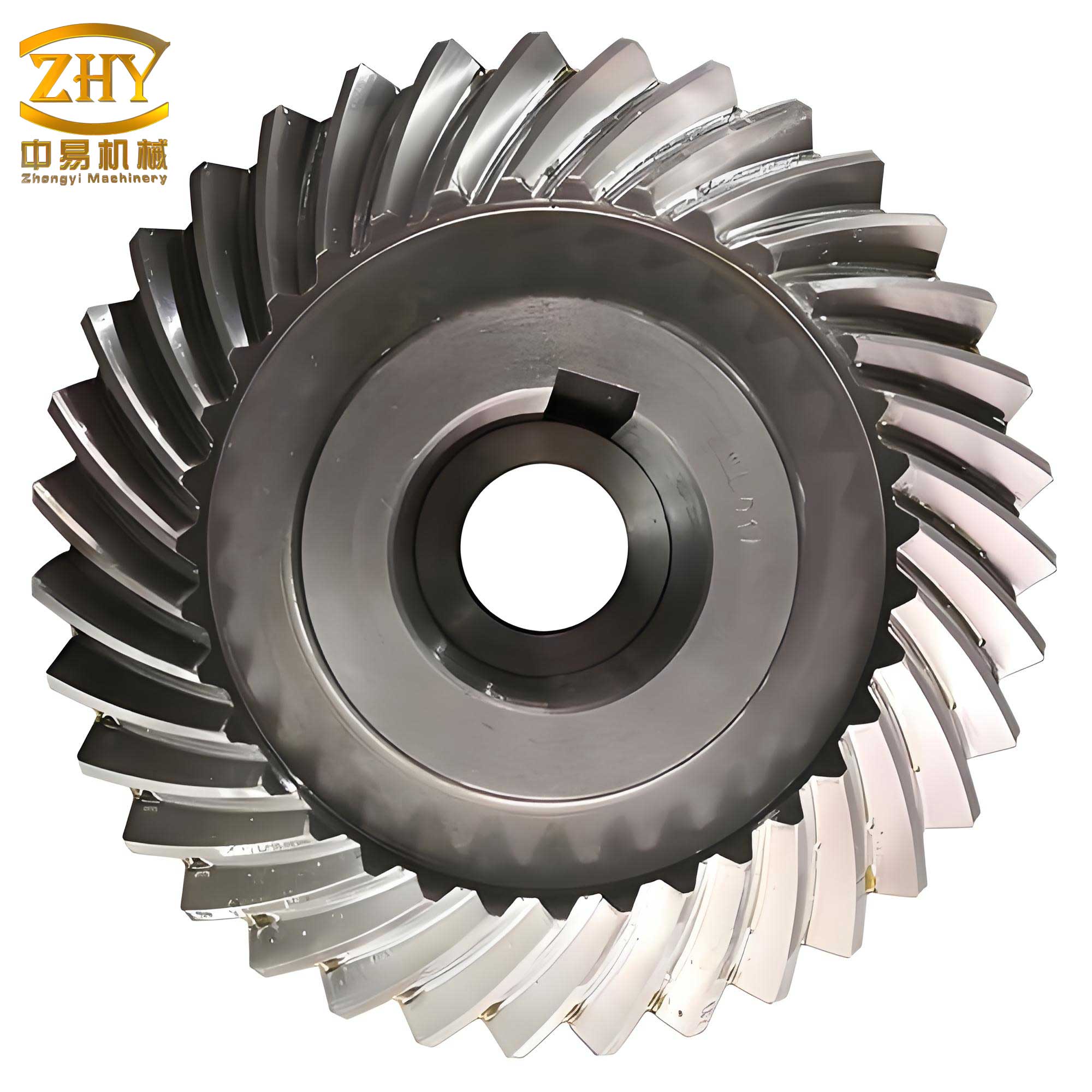
The initial phase of the investigation involved verifying the theoretical design integrity of the powertrain matching. Inadequate specification leading to overload was a potential contributor. A re-calculation of the maximum torque load on the axle’s spiral gears was performed based on the vehicle’s key parameters. The relevant specifications are summarized in the table below:
| Parameter | Value / Specification |
|---|---|
| Gross Vehicle Weight (GVW) | 32,000 kg |
| Front Axle Load | 6,800 kg |
| Central & Rear Axle Load | 25,200 kg |
| Engine Max. Output Torque (Temax) | 1,050 N·m @ 1200-1600 rpm |
| Transmission 1st Gear Ratio (ig) | 11.4 |
| Drivetrain Efficiency (ηg1) | 0.95 (Estimated) |
| Axle (Spiral Gear Set) Max. Allowable Input Torque | 12,000 N·m |
| Final Drive Ratio (Including Hub Reduction) | 5.728 |
The maximum theoretical torque input to the spiral gears of the drive axle is calculated from the engine’s output, factoring in the transmission’s gear reduction and drivetrain losses. The governing formula is:
$$ T_{1max} = T_{emax} \times i_{g} \times \eta_{g1} $$
Where \( T_{1max} \) is the maximum input torque to the spiral gear set. Substituting the values:
$$ T_{1max} = 1050 \, \text{N·m} \times 11.4 \times 0.95 = 11371.5 \, \text{N·m} $$
At this stage, the calculated input torque (11,371.5 N·m) appears to be within the specified maximum allowable capacity of the spiral gear set (12,000 N·m). This suggested that, under ideal theoretical conditions, the spiral gears should not have been overloaded. However, this calculation does not account for dynamic shock loads or potential deficiencies in the actual strength of the manufactured spiral gears, which became the focus of subsequent physical analysis.
A detailed macroscopic inspection of the failed components was conducted. The severe, brittle nature of the fractures on the primary spiral gear was immediately notable. The secondary spiral gear’s fracture origin on the concave flank indicated failure initiated during a moment of high reverse load, consistent with the operator’s account of the vehicle’s motion in mud. A critical clue was found on the mounting bolts securing the secondary spiral gear to the differential carrier: the bolt heads showed significant compressive deformation and wear, with impressions up to 3mm deep. This pointed towards axial movement of the secondary spiral gear assembly, causing interference. To rule out a batch-wide assembly error, two additional axles from the same production batch were inspected. The backlash and preload adjustment of the spiral gear set, as well as the installation of the lock rings, were found to be within the supplier’s specifications. Thread gauges confirmed the lock rings and housing threads were manufactured to correct tolerances. This initial inspection eliminated gross assembly or machining error as the primary root cause, shifting focus to the material and metallurgical integrity of the spiral gears themselves.
The spiral gears were specified by the supplier to be manufactured from 20CrMnTi alloy steel, carburized, hardened, and tempered. A full physical and chemical analysis was undertaken to verify compliance and identify any anomalies. Spectrochemical analysis confirmed the material chemistry was within the standard range for 20CrMnTi.
| Element | C | Si | Mn | Cr | Ti | S | P |
|---|---|---|---|---|---|---|---|
| Standard (20CrMnTi) | 0.17-0.23 | 0.17-0.37 | 0.80-1.10 | 1.00-1.30 | 0.04-0.10 | ≤0.035 | ≤0.035 |
| Primary Spiral Gear | 0.22 | 0.28 | 0.86 | 1.11 | 0.071 | 0.003 | 0.017 |
| Secondary Spiral Gear | 0.21 | 0.29 | 0.84 | 1.06 | 0.069 | 0.006 | 0.017 |
Metallurgical examination, however, revealed severe deviations in the heat treatment of the primary spiral gear, which was identified as the initial failure point. The key findings for the primary spiral gear are summarized below:
| Inspection Item | Standard Requirement | Primary Spiral Gear Result | Analysis & Implication |
|---|---|---|---|
| Case Depth (Effective) | 1.10 – 1.50 mm | 0.57 mm | Critically insufficient. Drastically reduces load-bearing capacity and bending fatigue strength of the gear teeth. |
| Surface Hardness | 58 – 64 HRC | Unmeasurable due to wear. | – |
| Core Hardness | 29 – 46 HRC | 26 HRC | Below specification. Indicates inadequate淬火冷却速率, leading to a soft, weak core unable to support the hardened case. |
| Case Hardness Gradient | ≤ 45 HV / 0.1 mm | 86 HV / 0.1 mm (Max) | Excessively steep gradient. Creates a sharp, weak transition zone prone to case crushing and spalling under high contact stress. |
| Carbides (Tooth Tip) | Level 1-4 (Fine, dispersed) | Level 7 (Continuous network) | Severe carbide networking. Dramatically reduces fracture toughness and fatigue strength at the tooth tip, promoting brittle crack initiation. |
| Non-Martensitic Surface Layer | ≤ 0.02 mm | 0.04 mm (Flank), 0.06 mm (Root) | Excessive. A layer of softer, transformed products (bainite, troostite) formed due to oxidation or slow cooling during淬火, reducing surface hardness and wear resistance. |
The hardness gradient data further illustrates the problem. The effective case depth is defined as the depth where hardness falls to 550 HV. The measured values show a rapid decline.
| Distance from Surface (mm) | 0.10 | 0.20 | 0.40 | 0.50 | 0.60 |
|---|---|---|---|---|---|
| Hardness (HV1) | 738 | 702 | 627 | 612 | 526 |
The secondary spiral gear exhibited somewhat better, but still sub-optimal, heat treatment. Its effective case depth was 1.2 mm (within spec), and its surface non-martensitic layer was acceptable at 0.02 mm. However, its core hardness was at the absolute lower limit (29 HRC), and the microstructure contained a high level of free ferrite (Level 6), again pointing to insufficient cooling during the quenching process. The wear and deformation on its teeth were determined to be secondary damage following the failure of the primary spiral gear.
Additional component checks provided supporting evidence for the failure sequence. The differential housing, made of ductile iron or similar, had a hardness of 207 HB (approx. 95 HRB). The mounting holes for the secondary gear bolts showed significant compressive deformation and diameter reduction, averaging 0.21 mm. This indicated the relatively soft housing material yielded under clamp load, potentially allowing micro-movement. Conversely, the mounting bolts (property class 10.9) had a hardness of 37 HRC (approx. 341 HB). The excessive hardness difference (134 HB) between the bolt and the housing, combined with an insufficient thread engagement length of only ~10 mm, created a condition prone to localized yielding of the housing threads and loss of preload. This could initiate misalignment and uneven loading on the already compromised spiral gears.
Synthesizing all analytical evidence, the root cause of the spiral gear pair failure is conclusively identified as a critical deficiency in the material’s mechanical properties due to improper heat treatment, rendering it incapable of withstanding the operational loads, even those within the theoretical design envelope. The primary spiral gear, with its shallow case, soft core, steep hardness gradient, and networked carbides, had a drastically reduced actual load capacity. The maximum torque it could sustain in this condition was far below its design rating of 12,000 N·m and likely even below the calculated input torque of ~11,372 N·m, especially when dynamic shock loads from muddy terrain are considered. The failure initiated via brittle fracture at the roots or tips of the primary spiral gear teeth. The sudden release of energy and fragmented debris then caused catastrophic secondary damage to the secondary spiral gear and induced forces that loosened the differential assembly.
Based on this root cause analysis, comprehensive corrective actions were implemented in collaboration with the axle supplier. The core action was to upgrade the material for the spiral gears from 20CrMnTi to 20CrMnMoH. The molybdenum (Mo) addition in 20CrMnMoH improves hardenability, reduces the risk of excessive carbide formation, and enhances tempering resistance and core strength, making it more suitable for high-stress, impact-prone applications like heavy-duty vehicle spiral gears. Revised, stricter technical specifications were enforced, including a higher minimum core hardness (e.g., ≥ 37 HRC) and stringent controls on case depth, microstructure, and surface integrity. All heat-treated spiral gear lots were subjected to third-party laboratory certification. Furthermore, design improvements were made: the mounting bolt length was increased to ensure adequate thread engagement, and a more compatible bolt grade was selected to reduce the hardness mismatch with the housing. Incoming inspection protocols were enhanced to include checks for bearing preload and gear mesh alignment. Finally, a critical review of powertrain matching philosophy was undertaken, incorporating a safety factor to ensure the spiral gear set’s rated torque capacity has a sufficient margin over the maximum calculated engine-derived input torque, accounting for real-world dynamic factors.
This systematic failure analysis, moving from system-level calculation to component-level macro and micro-examination, successfully isolated the metallurgical defect as the fundamental cause. The implemented corrective actions, focused on material upgrade and rigorous process control for the spiral gears, proved effective, as no recurrence of this specific failure mode was reported in the field following their implementation. The case underscores that the performance and reliability of critical powertrain components like spiral gears are not solely defined by design calculations but are fundamentally dependent on precise and controlled manufacturing and heat treatment processes to achieve the intended material properties.