
In my extensive experience analyzing mechanical failures, the integrity of bevel gears is paramount for the reliable operation of forklifts and other heavy machinery. These bevel gears are critical torque-transmitting components within the axle differential, responsible for redirecting power and managing wheel speed. A sudden fracture of a bevel gear during service not only halts operations but also poses significant safety risks. This detailed analysis delves into a specific case where a driving bevel gear fractured catastrophically during an unloading process. Through a first-person investigative lens, I will dissect the root cause, employing a multi-faceted analytical approach and expanding on the underlying metallurgical principles. The focal point is the pervasive issue of hydrogen embrittlement in carburized bevel gears manufactured from 20CrMnTi steel.
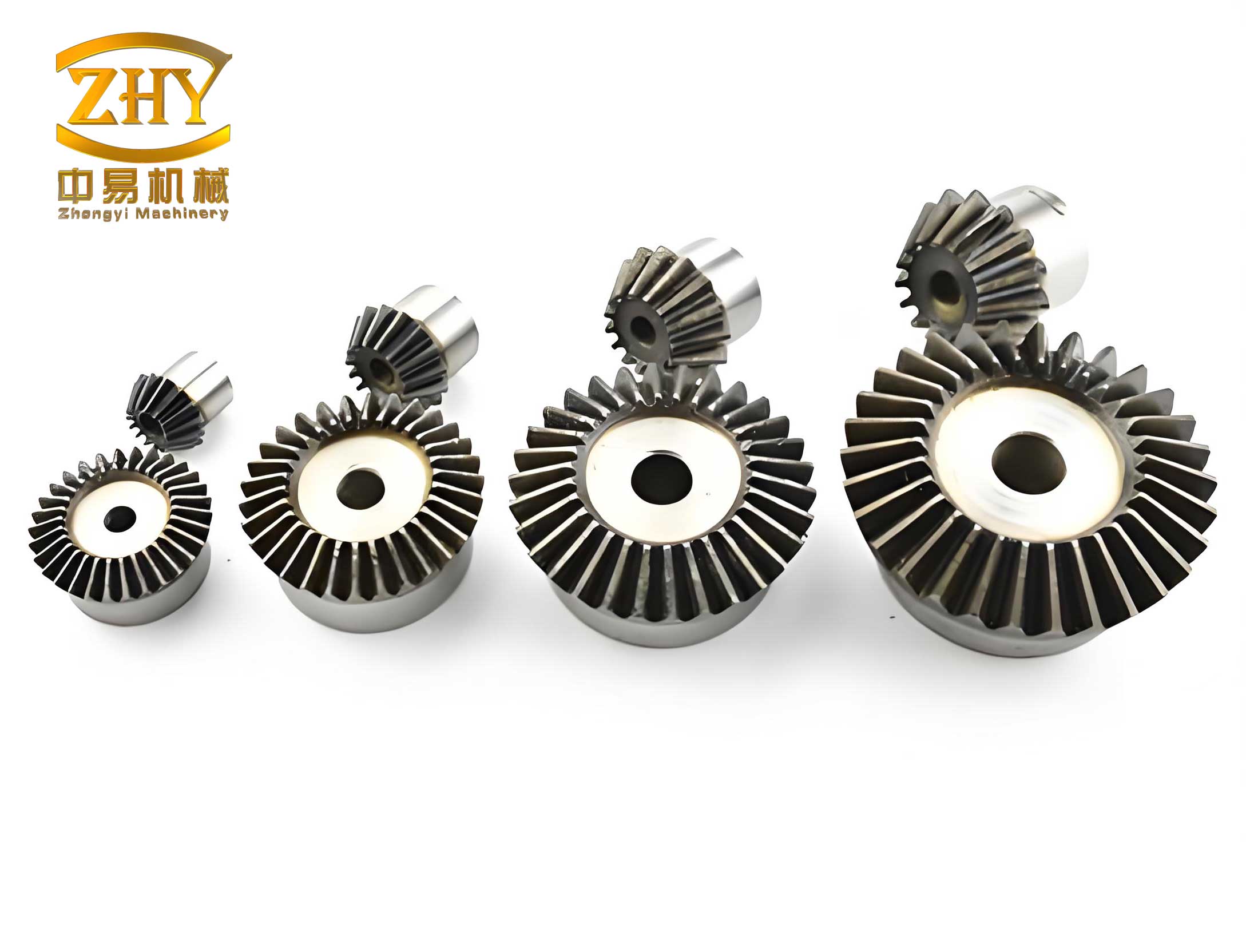
The fractured bevel gear was sourced from a forklift that exhibited a loud abnormal noise while reversing with a load. Initial visual inspection revealed a clean, brittle fracture at the transition step between two shaft diameters, specifically at the junction of Ø45 mm and Ø40 mm. This geometric feature is a classic stress concentration site. The bevel gear’s manufacturing process followed a standard protocol for such components: forging, isothermal normalizing, machining, gear cutting (specifically arc teeth generation), carburizing and quenching, tempering, finish grinding, pairing, and final assembly. The heat treatment cycle involved carburizing at (910 ± 10)°C for 4.5 hours in an endothermic atmosphere generated from methanol and kerosene, followed by direct quenching in N32 oil and tempering at 180°C for 2 hours. The susceptibility of this material and process to hydrogen ingress is a central theme of this failure analysis of the bevel gear.
My investigation protocol was systematic, beginning with macroscopic examination and progressing to sophisticated laboratory techniques. The primary goal was to correlate the observed fracture morphology with material properties and processing history to explain why this specific bevel gear failed. The methodologies included macro-fractography, chemical spectrographic analysis, metallographic preparation and examination using optical and scanning electron microscopy (SEM), macro and microhardness testing, and detailed fractography via SEM. Each step provided a piece of the puzzle, ultimately pointing to a hydrogen-assisted failure mechanism.
Macroscopic and Initial Material Assessment
The fracture surface of the failed bevel gear was strikingly flat and exhibited a crystalline, bright grey appearance. No significant plastic deformation or necking was visible, indicating a low-energy, brittle fracture mode. The fracture origin was unequivocally located at the sharp transition step on the shaft. The surface region near this step appeared relatively flat (the crack initiation zone), leading to a region with faint radial marks (the propagation zone), and finally a slightly rougher area (the final overload zone). This macroscopic morphology immediately suggested the possibility of environmentally assisted cracking, such as hydrogen embrittlement or stress corrosion cracking, rather than pure mechanical overload or classical fatigue.
To rule out material substitution or gross compositional errors, I conducted a chemical analysis on a sample extracted from the fractured bevel gear. The results, compared against the GB/T 3077-2015 standard for 20CrMnTi alloy structural steel, are presented below. The composition of the failed bevel gear was within specification, eliminating improper material as a direct cause.
| Element | C | Si | Mn | P | S | Cr | Ti |
|---|---|---|---|---|---|---|---|
| Measured Value | 0.20 | 0.26 | 1.10 | 0.017 | 0.010 | 1.28 | 0.07 |
| Standard Range (20CrMnTi) | 0.17-0.23 | 0.17-0.37 | 0.80-1.10 | ≤0.035 | ≤0.035 | 1.00-1.30 | 0.04-0.10 |
Microstructural and Hardness Characterization
Metallographic examination provides profound insights into the material’s condition. I prepared cross-sectional samples from the fracture region, examining them both unetched and etched with 4% nital. In the unetched condition, the non-metallic inclusion content was assessed and found to be very low, conforming to acceptable levels per GB/T 10561-2005. This ruled out failure initiation at large, deleterious inclusions within the bevel gear.
Upon etching, the microstructure was revealed. The surface carburized layer of the bevel gear consisted of tempered martensite and retained austenite. Using the QC/T 262-1999 standard for automotive carburized gears, I rated the carbides as level 2 and the martensite & retained austenite as level 5. More critically, numerous secondary cracks were observed emanating from the main fracture path and also present independently in the subsurface region. These cracks exhibited a distinctive intermittent, zig-zag morphology. At higher magnification, the cracking was primarily intergranular, with some areas showing transgranular quasi-cleavage. Crucially, the crack faces showed no evidence of decarburization, indicating they formed during or after the final heat treatment cycle, not during prior processing.
The core microstructure of the bevel gear consisted of low-carbon martensite, tempered bainite, and a small amount of ferrite. Micro-cracks were also detectable in the core region, which is highly unusual under normal service loads and suggests a pervasive embrittling effect throughout the bevel gear’s cross-section.
Hardness is a direct indicator of heat treatment efficacy and strength. I measured the surface and core hardness, as well as the effective case depth. The results were concerning and are summarized in Table 2. Both surface and core hardness values were significantly below the technical drawing requirements for this bevel gear. The low surface hardness suggests either insufficient carbon potential during carburizing or inadequate quenching, leading to a softer, lower-strength martensite. The shallow case depth further indicates a suboptimal carburizing cycle. The relationship between hardness (H) and yield strength (σ_y) can be approximated for steels by empirical relations such as:
$$ \sigma_y (\text{MPa}) \approx 3.45 \times H_V $$
or for martensitic steels more specifically:
$$ \sigma_y \approx C_0 + C_1 (\%C) + K_H H $$
where $C_0$, $C_1$, and $K_H$ are constants. The lower-than-specified hardness directly translates to lower load-bearing capacity and increased susceptibility to failure mechanisms like hydrogen embrittlement, as the threshold stress for crack initiation decreases.
| Property | Surface Hardness (HRC) | Core Hardness (HRC) | Effective Case Depth (mm) |
|---|---|---|---|
| Measured Value | 53.5, 55.0, 54.5 | 34.5, 34.5, 34.0 | 1.45 |
| Product Drawing Requirement | 58 – 63 | 35 – 45 | 1.50 – 1.80 |
Fractographic Analysis via Scanning Electron Microscopy
Scanning electron microscopy of the bevel gear’s fracture surface provided the most definitive evidence for the failure mode. In the crack initiation region at the transition step, the morphology was characterized by multiple tiny ledges, micro-voids, and intergranular facets. At higher magnification, these facets exhibited delicate, vein-like patterns often described as “tear ridges” or “chisel marks,” and in some areas, a fine “rivering” or “feathery” pattern characteristic of quasi-cleavage. This combination of intergranular and quasi-cleavage fracture is a hallmark of hydrogen embrittlement (HE). The hydrogen atoms, trapped in the lattice, reduce the cohesive strength of the grain boundaries and the matrix, promoting brittle separation.
The crack propagation and final overload zones of the bevel gear retained these features, with clear grain boundary outlining, secondary cracking, and tear ridges. The persistence of these brittle features throughout the fracture surface, even in the final rupture area, indicates that the entire fracture process occurred under the influence of hydrogen before final mechanical separation. This is distinct from a ductile overload failure, which would show dimpled rupture, or a fatigue failure, which would show striations.
In-Depth Discussion: The Mechanisms of Hydrogen Embrittlement in Bevel Gears
The convergence of evidence—brittle intergranular/quasi-cleavage fracture, secondary cracking, low hardness, and the specific location at a stress concentrator—points unequivocally to hydrogen embrittlement as the root cause of this bevel gear fracture. Let’s dissect the contributing factors.
1. Hydrogen Introduction during Processing
The primary source of hydrogen in this bevel gear was almost certainly the carburizing heat treatment. Atmospheres generated from hydrocarbon sources like kerosene and methanol contain significant amounts of molecular hydrogen ($H_2$). At the high temperatures of carburizing (around 910°C), hydrogen molecules dissociate into atomic hydrogen ($H$) at the steel surface, which is highly soluble and rapidly diffuses into the austenitic lattice. The solubility of hydrogen in iron follows Sieverts’ law:
$$ C_H = S \sqrt{p_{H_2}} $$
where $C_H$ is the dissolved hydrogen concentration, $S$ is the temperature-dependent solubility constant, and $p_{H_2}$ is the partial pressure of hydrogen in the atmosphere. During the subsequent quenching, the solubility drops dramatically as the microstructure transforms to martensite. The hydrogen becomes supersaturated and trapped at microstructural defects like dislocations, grain boundaries, and carbide interfaces within the bevel gear.
2. The Role of Microstructure and Hardness
The microstructure resulting from the carburizing and quenching of the 20CrMnTi bevel gear plays a crucial role in its susceptibility to HE. The surface layer, comprising high-carbon martensite and retained austenite, is particularly vulnerable. Martensite, especially plate or lath martensite with high carbon content, has a high density of lattice defects and internal stress, providing abundant trapping sites for hydrogen. The susceptibility of different microstructures to HE generally increases in this order: ferrite/pearlite < bainite < low-carbon martensite < mixed martensite/bainite < twinned martensite. The bevel gear’s case and core microstructures fall into the highly susceptible categories.
The sub-standard hardness is a critical performance factor. A lower hardness often correlates with a lower yield strength, but it also implies a different microstructure (e.g., less martensite, more softer phases). However, in the context of HE, the risk is significantly elevated when surface hardness exceeds approximately 38 HRC, as the material becomes more brittle and less able to plastically relax stress concentrations. The measured surface hardness of ~54 HRC, though below specification, is still far into the high-risk zone for hydrogen-assisted cracking of the bevel gear.
3. Stress Concentration and Hydrogen Redistribution
The geometric design of the bevel gear shaft, with a sharp transition between diameters, acted as a potent stress concentrator. Under applied torque from the forklift’s drivetrain, this region experiences a localized stress ($\sigma_{local}$) much higher than the nominal stress ($\sigma_{nom}$). The theoretical stress concentration factor $K_t$ for a stepped shaft can be estimated using formulas such as:
$$ K_t \approx 1 + \frac{1}{2}\sqrt{\frac{D}{r}} $$
for bending, where $D$ is the larger diameter and $r$ is the fillet radius (which was essentially zero in this sharp step). For torsion, similar principles apply. This triaxial stress state not only promotes crack initiation but also drives the diffusion and segregation of hydrogen. Atomic hydrogen in the steel lattice migrates towards regions of high hydrostatic tension, a process described by:
$$ J_H = -D_H \nabla C_H + \frac{D_H C_H V_H}{RT} \nabla \sigma_h $$
where $J_H$ is the hydrogen flux, $D_H$ is the diffusion coefficient, $C_H$ is the hydrogen concentration, $V_H$ is the partial molar volume of hydrogen in iron, $R$ is the gas constant, $T$ is the absolute temperature, and $\sigma_h$ is the hydrostatic stress. At the root of the transition step in the bevel gear, hydrogen accumulates to a critical concentration ($C_{crit}$).
4. Hydrogen Embrittlement Fracture Mechanics
The actual fracture occurs when the local stress intensity, aided by the reduced cohesive energy due to hydrogen, reaches a critical value. The threshold stress intensity factor for hydrogen-induced cracking ($K_{IH}$) is often lower than the plain strain fracture toughness ($K_{IC}$) of the material. A simplified model for the hydrogen-assisted crack growth rate ($da/dt$) in Stage II can be expressed as:
$$ \frac{da}{dt} = A (K_I)^n $$
where $A$ and $n$ are material/environment constants, and $K_I$ is the mode I stress intensity factor. For this bevel gear, once a micro-crack initiated at the hydrogen-enriched stress concentrator, it likely propagated in a sub-critical manner until reaching a critical size for unstable fracture, which happened rapidly during the forklift’s operation. The delayed fracture nature of HE explains why the bevel gear did not fail immediately after manufacture but under a steady-state service load.
The presence of hydrogen lowers the effective surface energy ($\gamma$) required for crack propagation. The Griffith criterion for brittle fracture modifies to:
$$ \sigma_f \propto \sqrt{\frac{E (2\gamma – \Delta \gamma_H)}{a}} $$
where $\sigma_f$ is the fracture stress, $E$ is Young’s modulus, $a$ is the crack length, and $\Delta \gamma_H$ is the reduction in surface energy due to adsorbed hydrogen. This quantitatively illustrates how hydrogen embrittles the bevel gear material.
Synthesis and Failure Sequence for the Bevel Gear
Based on my analysis, the chronological sequence leading to the fracture of this specific bevel gear is reconstructed as follows:
- Hydrogen Ingestion: During the gas carburizing process at ~910°C, atomic hydrogen from the kerosene/methanol atmosphere dissolved into the austenitic matrix of the 20CrMnTi bevel gear blank.
- Trapping upon Quenching: The subsequent rapid oil quenching transformed the surface to high-carbon martensite and the core to low-carbon martensite/bainite. The drastically reduced hydrogen solubility at lower temperatures caused supersaturation, trapping hydrogen at defects throughout the bevel gear’s volume.
- Incomplete Hydrogen Removal: The low-temperature tempering at 180°C was insufficient in duration or temperature to allow for significant hydrogen effusion (diffusion out of the steel). Hydrogen remained entrapped.
- Service Loading and Hydrogen Migration: When the forklift was operated, torque was transmitted through the bevel gear. The sharp transition step between Ø45 mm and Ø40 mm became a zone of high stress concentration. This stress field drove the diffusion and accumulation of atomic hydrogen to this specific region in the bevel gear.
- Crack Initiation and Sub-critical Growth: The combined action of high local tensile stress and a critical concentration of hydrogen degraded the cohesive strength of the grain boundaries. A brittle intergranular micro-crack initiated at the surface of the transition step. This crack then propagated in a stable, hydrogen-assisted manner through the case-hardened layer of the bevel gear.
- Catastrophic Fracture: Once the growing crack reached a critical size where the stress intensity factor exceeded the remaining fracture toughness of the embrittled material, instantaneous, unstable fracture occurred. This final rupture propagated through the core, completing the separation of the bevel gear. The entire event likely manifested as the sudden loud noise reported during operation.
Preventive Measures and Recommendations for Bevel Gear Manufacturing
To prevent future occurrences of such hydrogen embrittlement failures in bevel gears, a multi-pronged strategy targeting hydrogen sources, microstructure, and stress states is essential. My recommendations are as follows:
1. Modify Heat Treatment Atmosphere and Process:
Consider switching to or incorporating nitrogen-methanol based atmospheres which can offer better control and potentially lower hydrogen partial pressures. If using hydrocarbon gases, ensure they are of high purity and the furnace atmosphere is properly controlled to minimize excess hydrogen generation. Implementing a post-carburizing diffusion cycle could help homogenize carbon and may slightly reduce surface hydrogen concentration before quenching.
2. Mandatory Post-Heat Treatment Baking (Dehydrogenation):
This is the most critical corrective action. Immediately after quenching and before or after tempering, the bevel gears should undergo a prolonged baking treatment. The purpose is to provide thermal activation for trapped hydrogen to diffuse out of the steel. The diffusion is governed by Fick’s second law:
$$ \frac{\partial C_H}{\partial t} = D_H \nabla^2 C_H $$
For a simple plate geometry, the time ($t$) required to reduce the average hydrogen concentration to a safe level is proportional to the square of the section thickness ($L^2$) and inversely proportional to the diffusion coefficient:
$$ t \propto \frac{L^2}{D_H} $$
Since $D_H$ increases exponentially with temperature ($D_H = D_0 \exp(-Q/RT)$), baking should be done at the highest possible temperature that does not compromise the hardness and microstructure of the bevel gear. For tempered martensite, baking at 190-220°C for 8 to 24 hours is a common industrial practice. The exact time must be determined based on the bevel gear’s section size and initial hydrogen content.
3. Optimize Geometry to Reduce Stress Concentration:
Redesign the shaft transition on the bevel gear to incorporate a generous fillet radius. Increasing the fillet radius ($r$) dramatically reduces the theoretical stress concentration factor ($K_t$). As a guideline:
$$ K_t \text{ (with fillet) } \approx 1 + \frac{1}{2}\sqrt{\frac{D}{r}} \ll K_t \text{ (sharp corner) } $$
Even a small radius can reduce peak stresses by a factor of two or more, significantly lowering the driving force for hydrogen segregation and crack initiation in the bevel gear.
4. Tighten Control over Heat Treatment Parameters:
Ensure the carburizing process achieves the specified case depth and surface carbon content to obtain the correct surface hardness. Optimize quenching media agitation and temperature to achieve full martensitic transformation without excessive distortion. Verify that tempering is performed adequately to achieve the desired core hardness and toughness. Implementing statistical process control (SPC) charts for critical parameters like case depth and surface hardness for every batch of bevel gears is advisable.
5. Implement Non-Destructive Testing (NDT) Screening:
For safety-critical components like these bevel gears, consider implementing 100% non-destructive inspection for surface cracks after heat treatment and before assembly. Methods like fluorescent magnetic particle inspection (FMPI) are highly effective at detecting surface-breaking defects that could serve as initiation sites for hydrogen-assisted failure.
Concluding Summary
In this comprehensive first-person analysis, I have systematically demonstrated that the catastrophic fracture of the forklift bevel gear was a direct consequence of hydrogen embrittlement. The hydrogen was introduced during the gas carburizing heat treatment and subsequently trapped in the martensitic microstructure. The sub-standard hardness and shallow case depth further compromised the gear’s intrinsic resistance to failure. Under service loads, hydrogen migrated to and concentrated at the severe stress concentrator formed by the sharp diameter transition on the shaft. This combination of a susceptible microstructure, an embrittling agent (hydrogen), and a high local stress state fulfilled the classic triumvirate required for hydrogen-induced cracking. The fracture propagated in a brittle, intergranular and quasi-cleavage mode, leading to sudden failure. The solution lies not only in eliminating hydrogen through post-heat treatment baking but also in a holistic review of the design and manufacturing process controls for these essential bevel gears to ensure their long-term reliability and safety in demanding applications.