
In the field of automotive engineering, the drive axle serves as a critical terminal component of the powertrain system. Its primary functions include amplifying torque from the transmission, distributing it to the driving wheels, and enabling differential action for proper vehicle steering. Among its core components, the bevel gear pair within the main reducer is paramount for torque transmission. Accurately determining the operational loads acting on these bevel gears is fundamental to achieving a reliable, high-power-density design that avoids both under-design and over-design. This article, based on extensive research and testing, delves into the methodologies for establishing these design loads, with a particular focus on deriving a load spectrum through real-world data analysis. The central thesis is that a probabilistic approach, specifically using a Weibull distribution model for the load spectrum, provides a more accurate and feasible basis for bevel gear design compared to traditional equivalent load methods.
The conventional approach to defining design loads for bevel gears involves calculating equivalent static and fatigue loads. The peak torque, used for static strength verification, is determined by considering either the engine’s maximum output or the traction limit imposed by road adhesion. The governing equations are:
$$ T_{je} = \frac{T_{emax} \cdot i_{TL} \cdot K_0 \cdot \eta_T}{n} $$
$$ T_{j\phi} = \frac{G_2 \cdot \phi \cdot r_r}{\eta_{LB} \cdot i_{LB}} $$
where \( T_{je} \) is the torque at the driven bevel gear calculated from the engine, \( T_{emax} \) is the engine’s maximum torque, \( i_{TL} \) is the lowest gear ratio from the engine to the bevel gear, \( \eta_T \) is the driveline efficiency (often taken as 0.9), \( K_0 \) is an overload factor, \( n \) is the number of drive axles, \( T_{j\phi} \) is the torque limited by adhesion, \( G_2 \) is the maximum load on a drive axle, \( \phi \) is the tire-road adhesion coefficient, \( r_r \) is the wheel rolling radius, \( \eta_{LB} \) is the efficiency from the bevel gear to the wheel, and \( i_{LB} \) is the corresponding gear ratio. The smaller of \( T_{je} \) and \( T_{j\phi} \) is typically selected as the design peak load for the bevel gear.
For fatigue life assessment, an average equivalent torque is employed, calculated as:
$$ T_{jm} = \frac{(G_a + G_T) \cdot r_r}{i_{LB} \cdot \eta_{LB} \cdot n} (f_R + f_H + f_P) $$
Here, \( T_{jm} \) is the average calculation torque for the driven bevel gear, \( G_a \) is the gross vehicle weight, \( G_T \) is the trailer weight, \( f_R \) is the rolling resistance coefficient, \( f_H \) is the average gradeability coefficient, and \( f_P \) is a vehicle performance coefficient. The significant challenge with this method lies in the appropriate selection of these numerous coefficients, which vary greatly with vehicle type, usage, and terrain. An imprecise selection can lead to premature bevel gear failure or unnecessarily bulky and heavy gear designs.
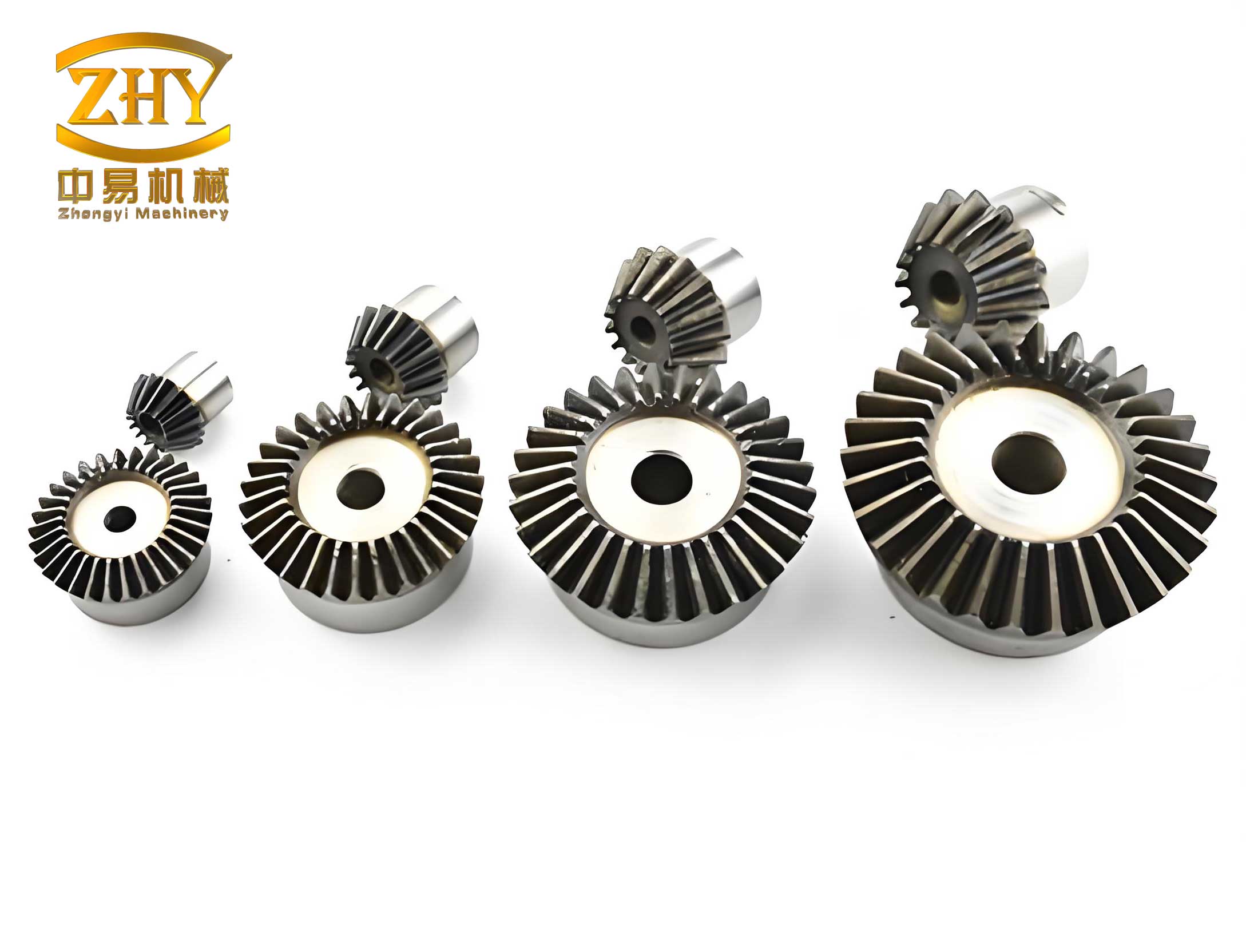
To overcome the limitations of the equivalent load method, we pursued a data-driven approach by acquiring a real-world load spectrum. This process begins with instrumenting a prototype vehicle to measure torque directly at the rotating components, such as the wheel-side output shaft, using wireless telemetry systems to handle data transmission from rotating parts. The measured stress-time and rotational speed-time histories are then converted into a torque-time history for the bevel gears in the drive axle, considering the entire driveline’s kinematic and dynamic relationships. Subsequent statistical analysis of this data yields the load spectrum—a relationship between torque magnitude and the number of occurrence cycles.
Analysis of the acquired load spectrum for the main reducer bevel gear revealed a distinct statistical pattern. The distribution of torque loads was found to closely follow a three-parameter Weibull distribution. This probability distribution is exceptionally suited for modeling life data, failure rates, and, in this context, the variability of operational loads on mechanical components like bevel gears. The probability density function (PDF) for the Wevel gear load \( t \) is given by:
$$ f(t) = \frac{\beta}{\eta} \left( \frac{t – \gamma}{\eta} \right)^{\beta – 1} \exp\left( -\left( \frac{t – \gamma}{\eta} \right)^\beta \right) $$
where \( \beta \) is the shape parameter, \( \eta \) is the scale parameter, and \( \gamma \) is the location parameter. These parameters fundamentally define the characteristics of the load spectrum for the bevel gear. The shape parameter \( \beta \) influences the skewness and kurtosis of the distribution; it dictates how rapidly the probability density changes. A higher \( \beta \) indicates a more rapid change in probability density and often a more concentrated load distribution. The scale parameter \( \eta \) characterizes the spread or width of the distribution; a larger \( \eta \) value corresponds to a wider range of load values and a flatter PDF curve. The location parameter \( \gamma \) defines the minimum possible load value, effectively shifting the entire distribution along the torque axis.
Through iterative curve fitting and comparison with the measured and converted bevel gear load data, the specific parameters for our drive axle application were determined. The analysis yielded the following values for the bevel gear load spectrum: shape parameter \( \beta = 1.26 \), scale parameter \( \eta = 1180 \) N·m, and location parameter \( \gamma = 0 \) N·m. This confirmed that the loads on the bevel gear start from zero and follow a Weibull distribution with the specified parameters. The graphical representation of the Weibull PDF with these parameters shows a characteristic shape that accurately represents the statistical behavior of the bevel gear’s operational loads, where lower torque values have a certain probability density, and the density decreases for extremely high torques.
To utilize this load spectrum for design, the continuous probability density function is discretized into a series of load blocks or intervals. This is essential for conducting cumulative damage calculations using methods like Miner’s rule in fatigue analysis. The torque range is divided into intervals, and the area under the PDF curve within each interval represents the probability of occurrence for that load range. By multiplying this probability by the total required design life cycles, we obtain the number of cycles each torque level is applied to the bevel gear. For instance, dividing the spectrum into 200 N·m intervals from 0 to 5000 N·m produces a detailed load profile. The table below summarizes a segment of such a derived load spectrum for a bevel gear in a 5-ton vehicle drive axle, targeting a specific total life.
| Torque Range (N·m) | Midpoint Torque (N·m) | Probability Density | Probability Integral | Cycle Ratio (%) | Cycle Count (Millions) | Equivalent Operating Time (hours) |
|---|---|---|---|---|---|---|
| 0-200 | 100 | 6.05e-4 | 0.0605 | 6.33 | 1.27 | 43.3 |
| 200-400 | 300 | 6.24e-4 | 0.1229 | 12.86 | 2.57 | 87.6 |
| 400-600 | 500 | 5.85e-4 | 0.1209 | 12.65 | 2.53 | 86.2 |
| 600-800 | 700 | 5.23e-4 | 0.1108 | 11.59 | 2.32 | 79.1 |
| 800-1000 | 900 | 4.54e-4 | 0.0977 | 10.22 | 2.05 | 69.9 |
| 1000-1200 | 1100 | 3.86e-4 | 0.0840 | 8.79 | 1.76 | 59.9 |
| 1200-1400 | 1300 | 3.23e-4 | 0.0709 | 7.42 | 1.48 | 50.4 |
| … (additional rows for higher torques) … | … | … | … | … | … | … |
| 4800-5000 | 4900 | 4.39e-6 | 0.00103 | 0.11 | 0.022 | 2.4 |
This tabulated load spectrum provides a highly granular input for calculating the cumulative fatigue damage on the bevel gear teeth and their supporting bearings. Each load block’s torque amplitude and cycle count contribute to the overall stress history. This method stands in stark contrast to the single-value average torque \( T_{jm} \) used in the traditional approach. The advantage is clear: it accounts for the full range of operational conditions the bevel gear will encounter, including low-torque high-cycle events and rare high-torque events, leading to a more realistic life prediction.
To quantitatively compare the two methodologies, we performed detailed design calculations for a specific disconnect-type drive axle bevel gear set using advanced gear analysis software (e.g., MASTA). The bevel gear pair and its main supporting bearings were analyzed under both loading conditions. The following tables present the calculated safety factors for bending strength, contact (pitting) strength of the bevel gears, and the fatigue life safety factors for the bearings. The first table shows results using the equivalent average torque method (\( T_{jm} = 2465 \) N·m), while the second table shows results using the full Weibull-based load spectrum from the discretized table above.
| Component | Description | Safety Factor |
|---|---|---|
| Drive Bevel Gear (Active) | Bending Strength | 0.9038 |
| Contact Strength | 1.2545 | |
| Driven Bevel Gear (Passive) | Bending Strength | 0.9721 |
| Contact Strength | 1.2701 | |
| Bearing (Active Gear, Nearside) | Type 32312 | 1.7909 |
| Bearing (Active Gear, Farside) | Type 32310 | 4.1554 |
| Bearing (Driven Gear, Nearside) | Type 32016 | 2.3687 |
| Bearing (Driven Gear, Farside) | Type 32015 | 2.9065 |
| Component | Description | Safety Factor |
|---|---|---|
| Drive Bevel Gear (Active) | Bending Strength | 1.2202 |
| Contact Strength | 1.5118 | |
| Driven Bevel Gear (Passive) | Bending Strength | 1.2866 |
| Contact Strength | 1.5268 | |
| Bearing (Active Gear, Nearside) | Type 32312 | 2.7933 |
| Bearing (Active Gear, Farside) | Type 32310 | 5.6824 |
| Bearing (Driven Gear, Nearside) | Type 32016 | 3.7171 |
| Bearing (Driven Gear, Farside) | Type 32015 | 3.3725 |
The results are revealing. Under the equivalent load method, the bending safety factor for the active bevel gear falls below 1.0 (0.9038), which traditionally indicates a potential risk of bending fatigue failure under that simplified constant-amplitude loading assumption. In contrast, the load spectrum method yields safety factors all above 1.2 for the bevel gears. Similarly, the bearing safety factors are significantly higher when calculated with the spectrum. This demonstrates that the traditional method, while conservative in some aspects (e.g., bearing life), can be non-conservative for the bevel gear’s bending strength because it does not account for the fact that the gear does not constantly operate at the average torque; it experiences a spectrum where many cycles are at lower, less damaging stress levels.
To validate these analytical findings, we conducted rigorous bench tests on two identical drive axle assemblies. The test rig was configured to apply torque inputs to the drive axle’s input flange while the output flanges were connected to loading units or inertia simulators to replicate road load conditions. The first axle was subjected to a constant-amplitude fatigue test based on the equivalent average torque \( T_{jm} = 2465 \) N·m for a total of \( 2 \times 10^7 \) cycles. The second axle was tested using a programmed load sequence that precisely replicated the Weibull-derived load spectrum from the table, also for a total of \( 2 \times 10^7 \) cumulative cycles. Both tests were completed without any operational failures or abnormalities. Post-test teardown and inspection of both axle assemblies showed no signs of failure, pitting, spalling, or abnormal wear on the bevel gear teeth or the bearing raceways. The bevel gears remained in excellent condition, confirming their structural integrity under both loading regimes.
This experimental validation is crucial. It confirms that the bevel gear designed using the load spectrum method—which showed higher analytical safety factors—is indeed capable of meeting the required service life. More importantly, it suggests that the equivalent load method, which predicted a bending safety factor below 1.0, might be overly pessimistic for this specific load case because it simplifies a complex variable-amplitude loading history into a single damaging level. The real load spectrum, with its high proportion of low-torque cycles, results in less cumulative damage than implied by the constant average torque. Therefore, adopting the load spectrum approach enables a more optimized and weight-efficient design for the bevel gear and the entire drive axle without compromising reliability.
The mathematical foundation of the Weibull distribution offers further insights for bevel gear load analysis. The cumulative distribution function (CDF), which gives the probability that the load \( t \) is less than or equal to a certain value, is:
$$ F(t) = 1 – \exp\left( -\left( \frac{t – \gamma}{\eta} \right)^\beta \right) $$
This can be used to directly determine exceedance probabilities, useful for defining extreme load events for the bevel gear. Furthermore, the \( k \)-th moment of the Weibull distribution can be expressed in terms of the Gamma function \( \Gamma \):
$$ E[t^k] = \eta^k \Gamma\left(1 + \frac{k}{\beta}\right) + \gamma $$ for \( \gamma = 0 \), it simplifies to \( E[t^k] = \eta^k \Gamma(1 + k/\beta) \).
The mean load \( \mu \) and variance \( \sigma^2 \) of the bevel gear torque are therefore:
$$ \mu = \eta \, \Gamma\left(1 + \frac{1}{\beta}\right) $$
$$ \sigma^2 = \eta^2 \left[ \Gamma\left(1 + \frac{2}{\beta}\right) – \left( \Gamma\left(1 + \frac{1}{\beta}\right) \right)^2 \right] $$
For our determined parameters (\( \beta=1.26, \eta=1180, \gamma=0 \)), the mean torque calculates to approximately:
$$ \mu = 1180 \times \Gamma(1 + 1/1.26) = 1180 \times \Gamma(1.79365) \approx 1180 \times 0.940 \approx 1109 \text{ N·m} $$
This theoretical mean is consistent with the data and is lower than the \( T_{jm} \) value of 2465 N·m used in the equivalent method, partly explaining the difference in calculated safety factors for the bevel gear.
In conclusion, the determination of accurate operational loads is the cornerstone of reliable bevel gear design in automotive drive axles. While traditional equivalent load methods provide a straightforward calculation, they rely heavily on the judicious selection of coefficients and can lead to either over-design or under-design of the critical bevel gear components. The alternative approach, detailed in this article, involves deriving a load spectrum from real-world vehicle testing. Our analysis conclusively shows that such a load spectrum for the main reducer bevel gear follows a three-parameter Weibull distribution. By fitting the measured data, we obtained the specific parameters (\( \beta, \eta, \gamma \)) that define the probability density function of the load. Using this PDF to create a discretized load spectrum for fatigue analysis yields more realistic and generally higher safety factors for both the bevel gears and their supporting bearings compared to the single-value average torque method. Bench testing validated that bevel gears designed with this spectrum-based approach successfully endure the required lifecycle. Therefore, adopting a Weibull-distribution-based load spectrum for the design calculation of bevel gears is not only feasible but also recommended for achieving optimal, reliable, and efficient drive axle designs. This methodology provides a robust framework for sizing bevel gears accurately, potentially reducing material usage and weight while ensuring durability across the vehicle’s expected operating envelope. For new vehicle programs lacking prototype data, historical databases or simulations calibrated with Weibull parameters from similar vehicles and duty cycles can be employed to estimate a representative load spectrum for the bevel gears during the initial design phase.