
In modern aerospace engineering, the transmission systems of aero-engines are critical for ensuring operational safety and efficiency. Among these components, bevel gears play a pivotal role due to their ability to transmit power between intersecting shafts with stability, low noise, and compact design. However, bevel gears are susceptible to various failure modes, such as bending fracture, contact wear, and pitting, which can lead to system shutdowns or catastrophic accidents. Traditional deterministic design approaches often fall short in addressing uncertainties inherent in manufacturing tolerances, material properties, and operational conditions. Therefore, there is a pressing need to integrate failure analysis with reliability-based design optimization (RBDO) for bevel gears to enhance their performance and safety under uncertain environments.
In this article, we present a comprehensive study on the failure analysis and RBDO of aero-engine bevel gears. We begin by developing a parametric geometric model of the bevel gear system, which allows for flexible adjustments in design variables. Subsequently, we analyze typical failure modes, including bending strength, contact strength, and wear, using finite element analysis (FEA) to understand stress distributions and wear patterns. To address computational challenges in RBDO, we propose a hybrid method called CIK-RBDO, which combines cross-entropy important sampling (CE-IS) with adaptive Kriging (AK) models. This method aims to improve efficiency and accuracy in reliability assessments. We validate our approach through numerical examples and apply it to optimize the bevel gear design, minimizing meshing loss efficiency while ensuring high reliability. Our findings demonstrate significant improvements in performance, providing insights for designing robust bevel gear transmission systems.
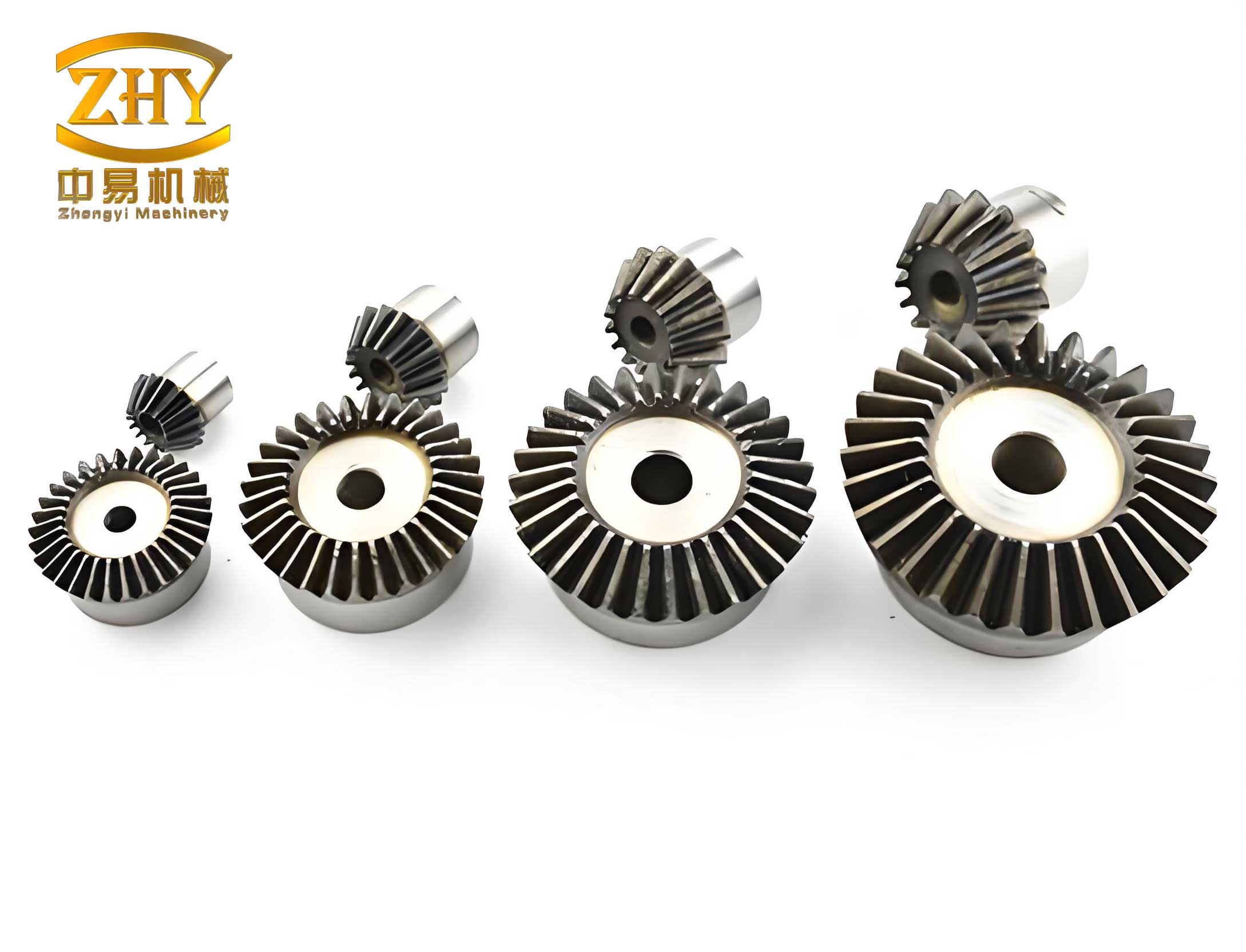
The parametric modeling of bevel gears is essential for enabling design optimization. We derive geometric equations based on spherical involute profiles to generate tooth surfaces, including addendum, dedendum, and fillet curves. The assembly of driving and driven bevel gears is configured for orthogonal intersection to ensure proper meshing and transmission stability. Key parameters, such as module, number of teeth, pressure angle, and helical angle, are defined to facilitate model adjustments. For instance, the basic parameters used in our model are summarized in Table 1. This parametric approach allows us to dynamically modify design variables during optimization, ensuring model validity and reducing manual intervention.
| Parameter | Value |
|---|---|
| Module (mm) | 3.2 |
| Number of Teeth (Driving/Driven) | 37 / 42 |
| Pressure Angle (°) | 20 |
| Helical Angle (°) | 35 |
| Addendum Coefficient | 0.85 |
| Headspace Coefficient | 0.188 |
| Modification Coefficient (Driving/Driven) | 0.04 / -0.04 |
| Tooth Width (mm) | 24.0 |
| Kinematic Viscosity of Lubricating Oil (cSt) | 50.0 |
Failure analysis of bevel gears is crucial for identifying critical stress regions and wear mechanisms. We focus on three primary failure modes: bending strength, contact strength, and wear. For bending strength analysis, we construct a finite element model of the driving bevel gear under extreme load conditions. Constraints are applied at the gear shaft, and meshing is refined at the tooth root region where stress concentration typically occurs. The applied load is derived from measured torque data, and stress results indicate that maximum bending stress occurs at the tooth root. For example, under extreme loads, the stress can be calculated using the bending stress formula:
$$ \sigma_b = \frac{F_t \cdot K_a \cdot K_v \cdot K_m}{b \cdot m \cdot Y} $$
where $\sigma_b$ is the bending stress, $F_t$ is the tangential force, $K_a$, $K_v$, and $K_m$ are application, velocity, and mounting factors, $b$ is the face width, $m$ is the module, and $Y$ is the geometry factor. Our FEA results show that the maximum stress is below the allowable bending stress, but uncertainties may lead to potential failures.
Contact strength analysis involves simulating the dynamic meshing of bevel gear pairs. We create a contact model based on Hertz theory, with the driving gear rotating at an angular velocity of 1880 rad/s and a resisting torque of 200 N·m applied to the driven gear. The contact stress distribution varies during meshing, with maximum stress occurring at the instant of tooth engagement. The contact stress $\sigma_c$ can be estimated as:
$$ \sigma_c = \sqrt{\frac{F_t \cdot E^*}{\pi \cdot b \cdot \rho}} $$
where $E^*$ is the equivalent elastic modulus and $\rho$ is the relative curvature radius. Our simulations reveal that contact stress peaks at specific points, but remains within safe limits under deterministic conditions. However, when uncertainties are considered, reliability constraints become necessary.
Wear analysis is conducted using the Archard wear model, which relates wear volume to sliding distance, contact load, and material hardness. For a given contact point on the tooth surface, the wear depth $h$ after $N$ cycles is expressed as:
$$ h = \frac{k \cdot P \cdot s}{A} $$
where $k$ is the dimensionless wear coefficient, $P$ is the contact load, $s$ is the sliding distance, and $A$ is the contact area. We compute wear depths at different positions, such as the tooth root, pitch circle, and tooth top, based on contact stress results from FEA. Table 2 summarizes wear amounts after 10^5 cycles, showing non-uniform distribution along the tooth width. This analysis highlights the importance of controlling wear to prevent premature failure of bevel gears.
| Position | Tooth Root Wear (µm) | Tooth Surface Wear (µm) | Pitch Circle Wear (µm) | Tooth Top Wear (µm) |
|---|---|---|---|---|
| Front Face | 2.509 | 1.265 | 0.005 | 1.256 |
| Median Face | 2.616 | 1.608 | 0.003 | 1.349 |
| Back Face | 3.775 | 2.332 | 0.012 | 1.868 |
To address uncertainties in bevel gear design, we formulate a reliability optimization model. The objective is to minimize the meshing loss efficiency $P_M$, which depends on geometric parameters and operational conditions. The design variables are denoted as $\mathbf{D}_s = (d_1, d_2, d_3)$, representing the modification coefficient, headspace coefficient, and addendum coefficient, respectively. Random variables $\mathbf{X} = (x_1, x_2, \dots, x_7)$ account for uncertainties in pressure angle, helical angle, tooth width, elastic modulus, Poisson’s ratio, input speed, and driven torque. These variables are assumed to follow normal distributions, as detailed in Table 3.
| Random Variable | Symbol | Mean Value | Coefficient of Variation |
|---|---|---|---|
| Pressure Angle (°) | $x_1$ | 20 | 0.02 |
| Helical Angle (°) | $x_2$ | 35 | 0.01 |
| Tooth Width (mm) | $x_3$ | 24 | 0.03 |
| Elastic Modulus (GPa) | $x_4$ | 200 | 0.002 |
| Poisson’s Ratio | $x_5$ | 0.3 | 0.02 |
| Input Speed (rad/s) | $x_6$ | 1880 | 0.01 |
| Driven Torque (N·m) | $x_7$ | 200 | 0.02 |
The reliability constraints are defined for three failure modes: bending strength, contact strength, and wear. The failure probabilities are given by:
$$ P_{f1} = \text{Prob}(g_1(\mathbf{D}_s, \mathbf{X}) < 0) $$
$$ P_{f2} = \text{Prob}(g_2(\mathbf{D}_s, \mathbf{X}) < 0) $$
$$ P_{f3} = \text{Prob}(g_3(\mathbf{D}_s, \mathbf{X}) < 0) $$
where $g_1$, $g_2$, and $g_3$ are limit state functions for bending, contact, and wear, respectively. The target failure probability for each constraint is set to $1.35 \times 10^{-3}$, corresponding to a reliability of 99.87%. Thus, the RBDO model is:
$$
\begin{aligned}
\min_{\mathbf{D}_s} \quad & P_M = \Psi(\mathbf{D}_d, \mathbf{D}_s, \mathbf{X}) \\
\text{s.t.} \quad & P_{f1} \leq 1.35 \times 10^{-3} \\
& P_{f2} \leq 1.35 \times 10^{-3} \\
& P_{f3} \leq 1.35 \times 10^{-3} \\
& -0.2 \leq d_1 \leq 0 \\
& 0.05 \leq d_2 \leq 0.2 \\
& 0.8 \leq d_3 \leq 0.9
\end{aligned}
$$
Solving this model directly is computationally expensive due to the need for repeated FEA evaluations. To enhance efficiency, we propose the CIK-RBDO method, which integrates cross-entropy important sampling (CE-IS) with adaptive Kriging (AK) models. CE-IS is used to estimate failure probabilities by shifting the sampling density toward the failure region. The optimal importance sampling density $h_{\text{opt}}(\mathbf{x})$ is approximated iteratively using cross-entropy minimization. For a Gaussian model with parameters $\theta = (\mu, \Sigma)$, the update rules are:
$$ \mu^{(k+1)} = \frac{\sum_{i=1}^N I_F(\mathbf{x}_i^{(k)}) W(\mathbf{x}_i^{(k)}) \mathbf{x}_i^{(k)}}{\sum_{i=1}^N I_F(\mathbf{x}_i^{(k)}) W(\mathbf{x}_i^{(k)})} $$
$$ \Sigma^{(k+1)} = \frac{\sum_{i=1}^N I_F(\mathbf{x}_i^{(k)}) W(\mathbf{x}_i^{(k)}) (\mathbf{x}_i^{(k)} – \mu^{(k+1)}) (\mathbf{x}_i^{(k)} – \mu^{(k+1)})^T}{\sum_{i=1}^N I_F(\mathbf{x}_i^{(k)}) W(\mathbf{x}_i^{(k)})} $$
where $I_F$ is an indicator function for failure, $W$ is the likelihood ratio, and $N$ is the sample size. Meanwhile, AK models are employed to surrogate the expensive limit state functions. The Kriging model provides a Gaussian process approximation with mean and variance, enabling adaptive sampling based on the U-learning function to refine the model near the failure boundary. The CIK-RBDO algorithm proceeds as follows: initialize design variables and Kriging model; generate important samples using CE-IS; evaluate samples via AK; update Kriging model adaptively; estimate failure probabilities; and optimize using sequential quadratic programming (SQP) until convergence.
We validate the CIK-RBDO method through a numerical example involving multiple constraint functions. The results, compared with nested double-loop method (NDLM) and AK-MC-RBDO, are shown in Table 4. CIK-RBDO achieves high accuracy with low computational cost, demonstrating its efficacy for reliability optimization of complex systems like bevel gears.
| Method | Design Variables | Objective Value | Failure Probability Errors (%) | Function Calls |
|---|---|---|---|---|
| NDLM | (3.4515, 3.2776) | 6.7291 | Reference | ~1.2×10^9 |
| AK-MC-RBDO | (3.4530, 3.2747) | 6.7277 | 0.1479, 52.348 | 15/15/10 |
| CIK-RBDO | (3.4498, 3.2831) | 6.7329 | 0.1479, 3.002 | 15/16/10 |
Applying CIK-RBDO to the bevel gear optimization, we obtain the optimal design variables. The iteration history shows a reduction in meshing loss efficiency while satisfying reliability constraints. The optimal values are $\mathbf{D}_s = (-0.085, 0.1618, 0.8303)$, leading to an 8.17% decrease in meshing loss efficiency compared to the initial design. Table 5 summarizes the optimization results, confirming that all failure probabilities are below the target threshold.
| Design Variable | Initial Value | Optimal Value |
|---|---|---|
| Modification Coefficient | -0.120 | -0.085 |
| Headspace Coefficient | 0.120 | 0.1618 |
| Addendum Coefficient | 0.850 | 0.8303 |
| Meshing Loss Efficiency (W) | 477.3253 | 438.3320 |
| Bending Failure Probability | – | 3.6865×10^{-4} |
| Contact Failure Probability | – | 4.254×10^{-4} |
| Wear Failure Probability | – | 1.052×10^{-4} |
To verify the optimized bevel gear design, we conduct finite element analysis and reliability assessments. The maximum bending stress is 424 MPa, below the allowable 643 MPa; the maximum contact stress is 459.720 MPa, below the allowable 982.375 MPa; and the wear depth is 9.09 µm, within acceptable limits. Reliability analysis yields failure probabilities of $3.6865 \times 10^{-4}$, $4.254 \times 10^{-4}$, and $1.052 \times 10^{-4}$ for bending, contact, and wear, respectively, all satisfying the $1.35 \times 10^{-3}$ target. These results validate the effectiveness of our RBDO approach for enhancing bevel gear performance under uncertainties.
In conclusion, our study demonstrates the integration of failure analysis and reliability optimization for aero-engine bevel gears. We developed a parametric model to facilitate design adjustments and analyzed key failure modes through FEA. The proposed CIK-RBDO method, combining CE-IS and AK, proved efficient and accurate for handling multiple reliability constraints. Application to bevel gear design resulted in an 8.17% reduction in meshing loss efficiency while ensuring 99.87% reliability. This work provides a framework for designing high-performance bevel gear transmission systems that are robust to uncertainties, contributing to safer and more efficient aerospace applications. Future research could extend this approach to other gear types or incorporate more complex failure mechanisms, such as fatigue and thermal effects.
The reliability optimization of bevel gears is a multifaceted challenge that requires balancing performance, safety, and computational feasibility. Our methodology addresses these aspects by leveraging advanced sampling techniques and surrogate models. For instance, the cross-entropy method iteratively refines the sampling distribution to focus on critical failure regions, reducing the number of simulations needed for accurate probability estimates. Meanwhile, the Kriging model approximates the response surfaces of limit state functions, allowing for rapid evaluations during optimization loops. This synergy enables practical implementation of RBDO for complex engineering systems like bevel gears, where traditional methods would be prohibitively expensive.
Furthermore, the parametric modeling of bevel gears allows for exploration of design trade-offs. By varying coefficients such as modification, headspace, and addendum, we can influence stress distributions and wear patterns. For example, increasing the headspace coefficient might reduce contact stress but affect meshing efficiency. Our optimization framework systematically navigates these trade-offs to find Pareto-optimal solutions. The mathematical formulation ensures that design variables remain within feasible ranges, preventing unrealistic geometries that could compromise manufacturing or assembly.
Uncertainty quantification is integral to our approach. The random variables considered cover key sources of variability in bevel gear operation, from geometric tolerances to load fluctuations. Assuming normal distributions simplifies analysis, but future work could incorporate more complex distributions or epistemic uncertainties. The reliability constraints are formulated as probabilistic limits, aligning with industry standards for safety-critical components. By setting a target failure probability of 0.135%, we aim for a reliability level commensurate with aerospace requirements, where failures can have severe consequences.
The numerical validation of CIK-RBDO highlights its advantages over conventional methods. The nested double-loop method, while accurate, involves excessive computational cost due to repeated reliability analyses within each optimization iteration. In contrast, CIK-RBDO decouples these loops through surrogate modeling and efficient sampling, cutting down function calls by orders of magnitude. The error metrics in Table 4 show that our method maintains precision, with failure probability errors under 3.002% for the tested example. This balance of speed and accuracy is crucial for practical engineering design, where time and resources are limited.
Applying CIK-RBDO to the bevel gear case study yielded tangible improvements. The optimized design reduces meshing loss efficiency, which translates to higher transmission efficiency and lower energy consumption. This is particularly important for aero-engines, where every watt saved can enhance overall performance. The reliability assessment confirms that the optimized bevel gear meets safety margins, with failure probabilities well below thresholds. Additionally, the wear analysis indicates controlled degradation, extending service life and reducing maintenance needs. These outcomes underscore the value of integrating reliability considerations into the early design stages of bevel gears.
In summary, our work advances the field of gear design by presenting a comprehensive, computationally efficient framework for reliability optimization. The focus on bevel gears addresses a critical component in aerospace transmissions, but the methodology is generalizable to other mechanical systems. By emphasizing failure analysis and uncertainty management, we contribute to the development of robust, high-performance engineering solutions. As technology evolves, approaches like CIK-RBDO will become increasingly vital for meeting the demands of modern aerospace and industrial applications.