
The transmission system is the lifeline of a helicopter, and the tail gear reducer stands as one of its most critical components. Its primary function is to redirect power from the intermediate gearbox, reducing speed and increasing torque to achieve the correct rotational speed for the tail rotor. Within these compact and high-power-density reducers, spiral bevel gears are almost universally employed due to their significant advantages: high load-carrying capacity, smooth and quiet operation, and the ability to transmit power efficiently between intersecting shafts. The performance, reliability, and acoustic signature of the entire helicopter are profoundly influenced by the meshing quality of this final bevel gear pair in the driveline. A key, yet highly sensitive, factor governing this meshing quality is the preload applied to the supporting bearings during assembly.
Bearing preload is not merely a standard assembly step; it is a precise adjustment process that directly defines the internal stiffness and positional accuracy of the rotating shafts. In a helicopter tail reducer, which must withstand complex flight loads and vibrations, optimal bearing preload ensures minimal shaft deflection, maintains precise gear alignment, and ultimately dictates the contact pattern (or “footprint”) on the gear teeth and the operational backlash. An incorrectly preloaded bearing can lead to a suboptimal contact pattern—potentially concentrated at the tooth edges—which causes elevated contact stresses, premature pitting, and noise. Conversely, excessive preload increases bearing friction and operating temperature, reducing service life. Therefore, understanding and controlling the influence of bearing preload on bevel gear meshing is paramount for achieving performance, durability, and reliability targets.
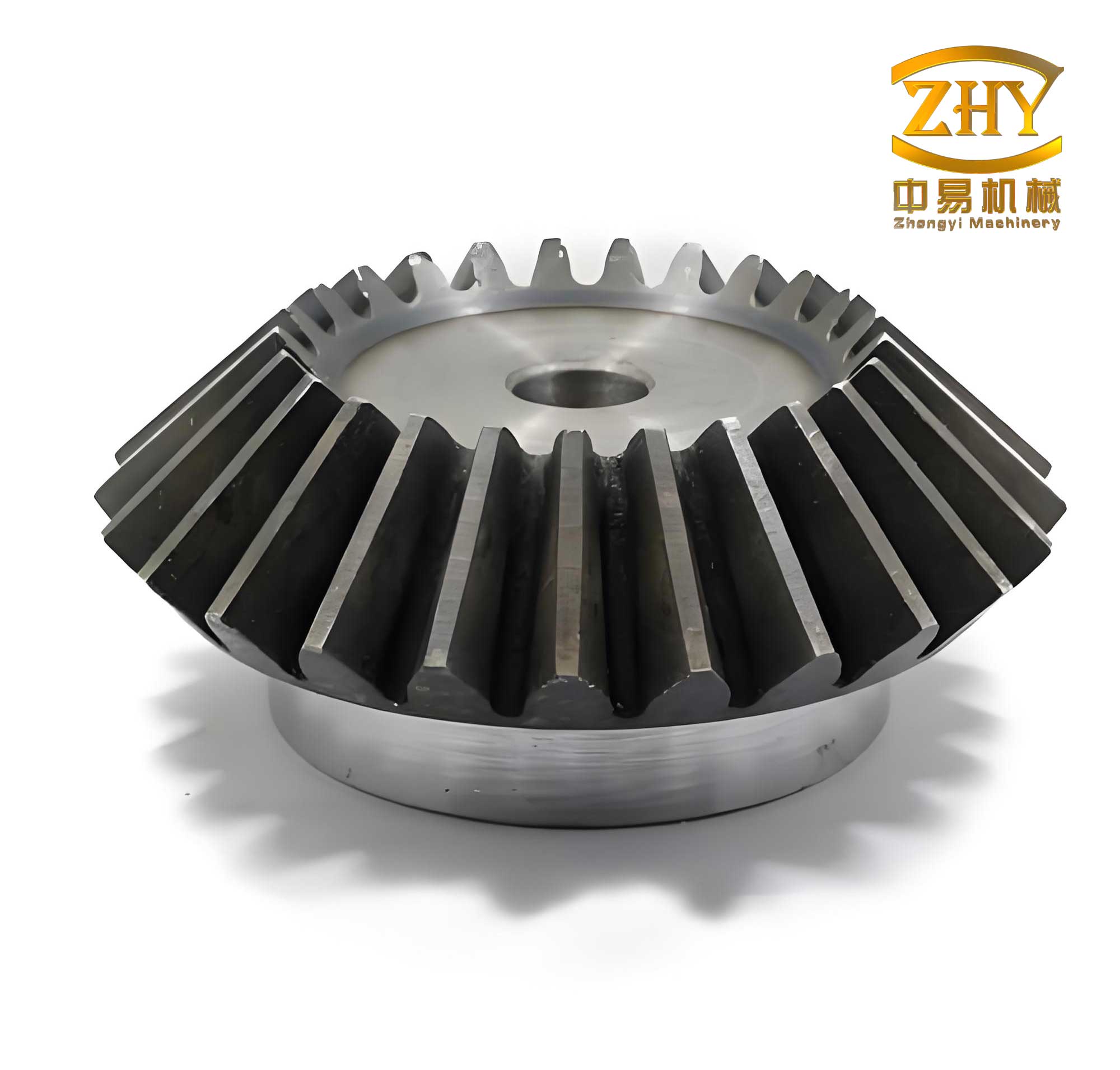
This article delves into a systematic investigation of this critical relationship. We establish a comprehensive methodology, from theoretical force modeling to system-level finite element analysis (FEA) and experimental validation, to quantify how variations in bearing preload torque affect the installation errors of the bevel gear pair and, consequently, their contact pattern and backlash.
Theoretical Foundation: Calculating Preload Force from Applied Torque
The first step in our analysis is to bridge the gap between the assembly parameter (the wrench torque applied to the preload nut) and the resulting axial clamping force transmitted to the bearing. This requires a detailed analysis of the threaded connection. The tightening process must overcome friction in two primary areas: the threads themselves and the bearing surface (or washer face) of the nut.
We model the thread interaction as a force analysis on an inclined plane (the screw thread) wrapped around a cylinder (the bolt). The forces acting on a nut can be resolved at the pitch diameter. Let us define \(F\) as the desired axial preload force, \(d\) as the nominal bolt diameter, and \(\phi\) as the helix angle of the thread. The force normal to the thread surface, \(F_n\), is influenced by the thread profile angle. For a metric thread with a profile angle of \(2\beta\) in the axial plane, the equivalent angle in the normal plane, \(\beta’\), is given by:
$$ \tan \beta’ = \frac{\tan \beta}{\cos \phi} $$
The normal force can be expressed in terms of the axial force \(F\) and a tangential force \(F_t\) required to induce tightening:
$$ F_n = \frac{F_t \sin \phi + F \cos \phi}{\cos \beta’} $$
The equilibrium condition in the direction of the helix leads to:
$$ F_t \cos \phi – F \sin \phi – \mu F_n = 0 $$
where \(\mu\) is the coefficient of friction at the thread interface. Solving these equations yields the tangential force needed to overcome thread friction:
$$ F_t = F \tan(\phi + \rho) $$
Here, \(\rho\) is the thread friction angle (or equivalent angle), defined as:
$$ \rho = \arctan\left(\frac{\mu}{\cos \beta’}\right) $$
The torque required to overcome this thread friction, \(M_1\), is calculated at the pitch radius:
$$ M_1 = F_t \cdot \frac{d}{2} = F \frac{d}{2} \tan(\phi + \rho) $$
Simultaneously, friction at the nut’s bearing surface must be overcome. Assuming a uniform pressure distribution under the nut on an annular contact area with outer diameter \(d_w\) and inner (hole) diameter \(d_i\), the required torque \(M_2\) is:
$$ M_2 = \frac{1}{3} F \mu_n \left( \frac{d_w^3 – d_i^3}{d_w^2 – d_i^2} \right) $$
where \(\mu_n\) is the coefficient of friction at the nut bearing surface. The total tightening torque \(M_p\) is the sum:
$$ M_p = M_1 + M_2 = K F d $$
This defines the torque-coefficient \(K\), a dimensionless factor that encapsulates all friction and geometric parameters:
$$ K = \left[ \frac{\tan(\phi + \rho)}{2} + \frac{\mu_n (d_w^3 – d_i^3)}{3d(d_w^2 – d_i^2)} \right] $$
For practical engineering applications, especially for standard fasteners in a non-lubricated state, \(K\) is often taken from empirical ranges. In our study, a value of \(K=0.2\) was adopted. Using this model, we calculated the axial preload force corresponding to specified torque ranges for the input and output shaft bearing nuts of a representative tail reducer. These calculated forces and the resulting contact pressures on adjacent components form the critical input loads for our subsequent finite element analysis.
| Parameter Group | Group 1 (Low) | Group 2 (Medium) | Group 3 (High) |
|---|---|---|---|
| Input Nut Torque (N·mm) | 830,000 | 865,000 | 900,000 |
| Output Nut Torque (N·mm) | 1,700,000 | 1,800,000 | 1,900,000 |
| Calculated Axial Force on Input Bearing (N) | 55,704.7 | 58,053.7 | 60,402.7 |
| Calculated Axial Force on Output Bearing (N) | 86,734.7 | 91,836.8 | 96,938.8 |
System-Level Finite Element Modeling of the Preloaded Assembly
To capture the complex interactions within the fully assembled reducer, a system-level finite element model was constructed. The model encompasses all major components: the gearbox housing (typically a magnesium-aluminum alloy), input and output covers, the input and output shaft assemblies with their integrated bevel gears (made from high-strength alloy steel like 9310), and the bearing assemblies (bearing steel).
A hybrid meshing strategy was employed to balance accuracy and computational efficiency. Complex geometries like the housing and covers were discretized using tetrahedral elements via a free-mesh technique. Components with more regular geometries, such as the shafts, gears, and bearing rings, were meshed with structured hexahedral elements, which generally provide better accuracy for stress analysis. Appropriate material properties (Young’s modulus, Poisson’s ratio, density) were assigned to each component.
Defining the interactions between components is crucial. Frictional contact was defined between mating surfaces like bearing outer rings and housings, and bearing inner rings and shafts. The rolling elements (rollers) were modeled in contact with their raceways using a “no friction” option to allow free rolling. For the purpose of isolating the preload effect, bolted connections for the housing covers and bearing outer rings were simplified using “tie” constraints, assuming they were correctly fastened. The core of the study was implemented by applying the calculated axial pressure loads, derived from the preload torques in Table 1, to the contact surfaces behind the preload nuts on both the input and output shafts. Three distinct FE models were created, corresponding to the three preload parameter groups.
The boundary conditions simulated the actual mounting of the reducer. A static structural analysis was performed for each model. The solution provided detailed data on the displacement and stress fields throughout the assembly. Of particular interest were the deformations of the housing and the resultant shifts in the positions of the input and output shaft axes from their nominal theoretical alignments. These shifts represent the installation errors induced by the combined effect of assembly stiffness and the specific bearing preload.
Extracting Gear Installation Errors from FEA Results
The direct output of the FEA is a deformation field, not explicit gear misalignment. Therefore, we developed a robust post-processing method to extract the four classic installation errors for a bevel gear pair from the FEA displacement results. These errors are defined relative to the theoretical crossing point of the gear axes:
- Pinion Axial Error (\(\Delta P\)): Displacement of the pinion along its axis from its nominal position.
- Gear Axial Error (\(\Delta G\)): Displacement of the gear (wheel) along its axis from its nominal position.
- Offset Error (\(\Delta E\)): The shortest distance between the two actual gear axes (the perpendicular offset).
- Shaft Angle Error (\(\Delta \alpha\)): Deviation of the actual angle between the two axes from the nominal shaft angle.
The extraction procedure is algorithmic. First, the coordinates of three non-collinear points on the circumference of each shaft are obtained from the FEA results at two different axial locations. These points are used to fit circles in 3D space, the centers of which define points on the actual displaced shaft axes. By constructing vectors along these axes from the two circle centers on each shaft, the actual 3D lines representing the pinion and gear axes are determined. Vector geometry is then used to calculate the common perpendicular between these two lines, from which \(\Delta E\) is derived. The intersections of the axes with planes defined by this common perpendicular yield the values for \(\Delta P\) and \(\Delta G\). Finally, the angle between the projected axes is computed to find \(\Delta \alpha\). These four error parameters, specific to each preload case, completely describe the misalignment of the bevel gear pair due to the assembly’s loaded state.
Predicting Contact Pattern and Backlash from Installation Errors
With the installation errors quantified, the final step is to predict their effect on the gear mesh. Instead of running a computationally expensive dynamic contact analysis within the full reducer FEA model, we employ a more efficient and specialized approach. The nominal, perfectly aligned tooth surfaces of the spiral bevel gears are imported into CAD software. Using the extracted error set \([\Delta P, \Delta G, \Delta E, \Delta \alpha]\), the gear and pinion are virtually assembled in their misaligned positions.
A precise numerical contact analysis is then performed on this misaligned pair. The pinion is incrementally rotated through its mesh cycle. For each pinion increment, the gear is rotated correspondingly based on the gear ratio. A collision detection algorithm checks for interference between the tooth surfaces. The gear rotation angle is finely adjusted until a state of initial contact (zero clearance at one point) is found. This process identifies the boundaries of the contact zone across the tooth face for that meshing position. The entire rotation is simulated to map the contact pattern through the full path of contact. Furthermore, the minimum angular displacement required to move the gear from initial contact on one flank to initial contact on the opposite flank, with the pinion fixed, provides a direct measure of the operational backlash induced by the misalignment.
Applying this methodology to the three sets of FEA-derived installation errors yields clear trends. The table below summarizes the extracted errors and the resulting contact pattern metrics and backlash for the three preload levels. The contact pattern location is described by its boundaries: distance from the toe (A), heel (C), and top (B) of the tooth, along with its width (D), for both the gear and pinion.
| Preload Group | Installation Error [ΔP(mm), ΔG(mm), ΔE(mm), Δα(deg)] | Calculated Backlash (mm) | Gear Contact Pattern [A1, B1, C1, D1] (mm) |
|---|---|---|---|
| 1 (Low) | [0.0192, 0.3681, 0, -0.0003] | 0.93 | [17.62, 2.21, 22.89, 1.92] |
| 2 (Medium) | [0.0196, 0.3686, 0.0001, -0.0004] | 0.90 | [17.37, 2.43, 23.15, 1.61] |
| 3 (High) | [0.0191, 0.3691, 0.0001, -0.0002] | 0.88 | [17.23, 1.38, 23.26, 2.23] |
The analysis reveals a consistent and significant trend: as the bearing preload torque increases, the operational backlash of the bevel gear pair decreases. This is logically explained by the increased stiffness of the system under higher preload, which reduces deflections that otherwise open up clearance between the teeth. Concurrently, the contact pattern shows a systematic shift. With increasing preload, the center of the contact patch moves progressively towards the heel (the larger end) of the bevel gear tooth. This shift in load distribution is a direct consequence of the minute changes in the relative axial positions of the gears (\(\Delta G\) and \(\Delta P\)) and the axis orientation (\(\Delta \alpha\)) caused by the varying structural deformation under different preload forces.
Experimental Validation and Correlation
To validate the predictive capability of our integrated FEA and contact analysis method, a physical test was conducted on a tail reducer assembly using the preload parameters corresponding to Group 1 (Low). The input and output bearing nuts were torqued to specifications, and standard shims were used for initial gear positioning. The actual contact pattern on the gear teeth was obtained using traditional Prussian blue marking compound, and the gear backlash was measured precisely with a dial indicator.
The experimental results showed excellent agreement with the theoretical predictions. The measured backlash fell within the range of 0.89-0.93 mm, perfectly matching the predicted value of 0.93 mm from our model. The characteristics of the contact pattern—its location relative to the toe, heel, and top of the tooth—also showed strong correlation, with deviations between predicted and observed dimensions being less than 10%. This close correlation confirms the accuracy and reliability of the proposed methodology in capturing the complex chain of effects from applied wrench torque to final bevel gear meshing performance.
Conclusion
This study has successfully established and validated a comprehensive workflow for analyzing the critical influence of bearing preload on the meshing quality of spiral bevel gears in helicopter tail reducers. By integrating a theoretical torque-force model, a system-level nonlinear finite element analysis, a novel method for extracting installation errors from FEA results, and a precise numerical contact analysis, we have moved beyond qualitative assessments to quantitative prediction.
The key findings demonstrate that bearing preload is a powerful control parameter. Increasing preload torque systematically reduces gear backlash by stiffening the shaft support system. However, it also induces a predictable shift in the gear contact pattern towards the heel of the tooth. This understanding allows engineers to strategically select preload values that achieve an optimal compromise: sufficient preload to minimize backlash and control vibration, but not so high as to cause edge-loading at the heel or excessive bearing drag. The strong correlation with physical tests confirms that this method is not only theoretically sound but also practically applicable.
This methodology provides a powerful tool for the design and assembly of high-performance gearboxes. It enables the virtual optimization of assembly parameters before physical prototypes are built, reducing development time and cost. Furthermore, the principles and techniques are generalizable and can be effectively extended to other types of reducers and transmission systems where precise gear alignment is critical, offering a significant advancement in the predictive engineering of geared systems.