
In my extensive experience with mechanical components, I have encountered numerous cases of premature failure in bevel gears, which are critical for transmitting power between intersecting shafts, especially in automotive drivetrains. The sudden appearance of longitudinal cracks in a batch of 320 active bevel gears, specifically 15 units, during post-processing handling prompted a detailed failure analysis. This investigation aims to elucidate the root causes of cracking through a multi-faceted approach, integrating advanced analytical techniques. My primary focus is on understanding how material imperfections and processing-induced stresses conspire to compromise the integrity of these bevel gears. The methodology I employed involves a systematic examination of fracture morphology, chemical composition, and microstructural features, with the goal of providing actionable insights to prevent future occurrences in such high-stress components.
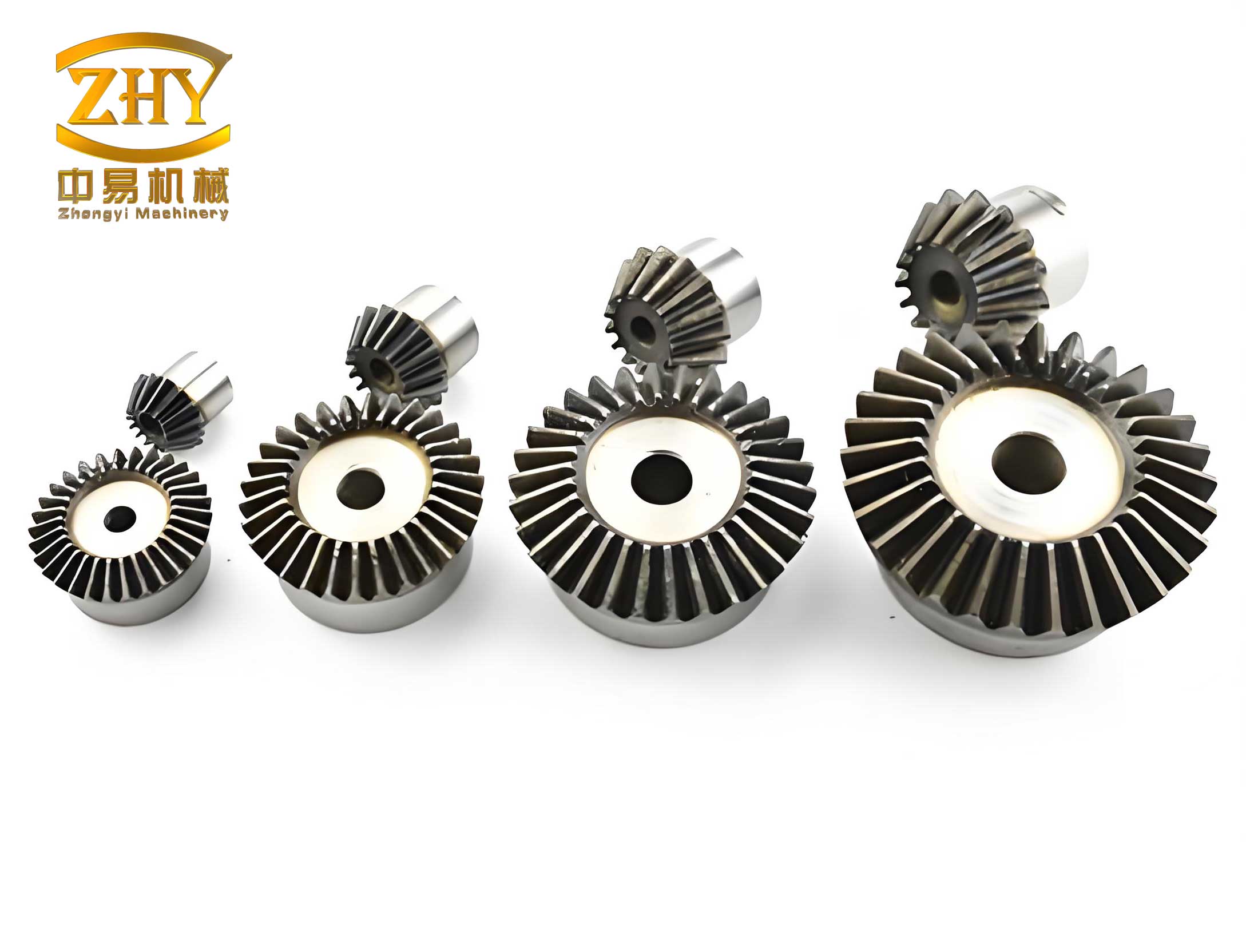
The manufacturing sequence for these bevel gears, as provided, involved several steps: cutting, forging, normalizing, rough and finish turning, gear hobbing, carburizing, quenching, finish grinding, inspection, and storage. The material specified was 20CrMoH, a case-hardening steel known for its good hardenability and core toughness, making it a common choice for heavily loaded bevel gears. The failure manifested as straight, unbranched surface cracks originating near the spline area and propagating axially into the tooth region, with an average length of approximately 161 mm and a depth of about 17 mm in the tooth section. The macroscopic appearance of the fracture surface was silvery-gray, exhibiting classic brittle fracture characteristics with chevron patterns converging to a specific origin point. This preliminary observation immediately suggested that the failure was not due to in-service fatigue but rather a latent defect or processing issue exacerbated during final handling or quenching. Understanding the failure mechanisms in these bevel gears is paramount for ensuring the reliability of transmission systems.
To begin my analysis, I first conducted a thorough visual and low-magnification examination of the cracked bevel gears. The fracture surface was carefully extracted for detailed scrutiny. The presence of well-defined chevron markings, or “herringbone patterns,” is a key macroscopic feature in fracture analysis. These markings always point back to the crack initiation site. In this instance, they unequivocally converged to a region located approximately 5 mm beneath the outer contour surface of the gear. This subsurface origin is significant, as it rules out surface machining defects or contact fatigue as primary causes and points towards an internal material discontinuity or a region of high residual stress. The location coincided with a diametral transition zone on the gear profile, a geometric feature known to be a potent stress concentrator. The stress concentration factor (Kt) for such a shoulder fillet can be estimated using empirical relations. For a sharp transition, Kt can be significantly high, amplifying any applied or residual stresses. A simplified formula for stress concentration in a shaft with a step is given by:
$$ K_t \approx 1 + \frac{a}{b} \sqrt{\frac{t}{r}} $$
where `a` and `b` are empirical constants, `t` is the step height, and `r` is the fillet radius. In the absence of a generous fillet, `r` is small, leading to a large Kt value. This geometric stress raiser likely played a crucial role in the final failure of the bevel gears.
| Element | Measured Value (%) | GB/T 5216-2004 Requirement for 20CrMoH (%) |
|---|---|---|
| C | 0.22 | 0.17-0.23 |
| Cr | 0.99 | 0.80-1.10 |
| Mn | 0.83 | 0.60-0.95 |
| Si | 0.34 | 0.17-0.37 |
| Mo | 0.22 | 0.15-0.25 |
| P | 0.013 | ≤ 0.035 |
| S | 0.009 | ≤ 0.035 |
Following the macroscopic examination, I proceeded to determine the material’s conformance to specifications. Using direct reading spectrometry, I analyzed the chemical composition of the bevel gear material. The results, summarized in Table 1, confirm that all element concentrations fall within the stipulated ranges for 20CrMoH steel according to the relevant Chinese standard (GB/T 5216-2004). This rules out gross material substitution or major compositional error as a direct cause of failure for these bevel gears. However, chemistry alone does not guarantee performance; microstructural integrity is equally critical.
My next step involved metallographic preparation and examination. Samples were sectioned from the tooth region of the failed bevel gears, mounted, polished, and etched with a 4% nital solution. Microscopic observation of the carburized case revealed a microstructure consisting of acicular martensite and retained austenite, as expected for a carburized and quenched steel. Using the standard GB/T 25744-2010 for reference, I rated this structure as level 3, which is generally acceptable for such components. The core microstructure, observed away from the carburized layer, consisted of lath martensite and free ferrite in a granular form, also rated as level 3 per the same standard. While these ratings are within typical acceptance criteria, a deeper look was necessary. I decided to investigate the potential presence of banding, a common imperfection in forged alloy steels. To reveal the banded structure, I subjected a sample from the gear core (along the axial direction) to an isothermal annealing treatment: holding at 930°C for 60 minutes followed by 660°C for 120 minutes. This treatment promotes the formation of ferrite and pearlite, making compositional banding clearly visible.
| Region | Microstructure | Standard Reference | Rating | Remarks |
|---|---|---|---|---|
| Case (Tooth Surface) | Acicular Martensite + Retained Austenite | GB/T 25744-2010 | 3 | Acceptable |
| Core | Lath Martensite + Free Ferrite | GB/T 25744-2010 | 3 | Acceptable |
| Core (After Annealing) | Ferrite-Pearlite Banding | GB/T 13299-1991 | 4 | Severe, Exceeds Standard (1-3 acceptable) |
The annealed microstructure, as shown in the description, exhibited severe banded segregation, with alternating layers of ferrite (light) and pearlite (dark). According to GB/T 13299-1991, this banding was rated as level 4, which is outside the acceptable range (levels 1-3). This finding is crucial. Banded structures arise from microsegregation of alloying elements, particularly manganese and chromium, during solidification of the ingot. This segregation persists through forging and subsequent heat treatments unless a prolonged diffusion homogenization is performed. The presence of severe banding has several detrimental effects on the mechanical properties of bevel gears. Firstly, it creates anisotropic properties, with strength and ductility varying between the band directions. Secondly, it can locally alter transformation characteristics. The ferrite-rich bands are lower in carbon and alloy content, leading to a higher local Ac3 temperature and a higher martensite start (Ms) temperature. Conversely, the pearlite-rich bands are higher in carbon, resulting in a lower Ms temperature. The Ms temperature can be estimated using empirical formulas, such as:
$$ M_s (^{\circ}C) = 539 – 423C – 30.4Mn – 12.1Cr – 17.7Ni – 7.5Mo $$
where the element symbols represent their weight percent. In a banded structure, the local carbon content (C) varies, leading to a spread in Ms temperatures across the microstructure. This inhomogeneity in transformation kinetics is a key point in my analysis of these bevel gears.
Having established the bulk material’s composition and general microstructure, I turned my attention to the crack initiation site itself. The region identified as the crack origin was carefully extracted, cleaned via ultrasonic agitation in acetone, and examined using scanning electron microscopy (SEM) coupled with energy dispersive spectroscopy (EDS). The SEM micrograph of the origin area revealed a distinct, bright, elongated zone measuring approximately 1.4 mm in length and 0.35 mm in width. Fracture propagation markings radiated outward from this zone. EDS point analysis conducted directly on this bright zone yielded a surprising composition, rich in oxygen (O), aluminum (Al), calcium (Ca), and magnesium (Mg). The quantitative results are summarized in Table 3. To confirm the distribution of these elements, I performed elemental mapping (area scan) for aluminum and oxygen. The maps clearly showed a concentrated, band-like segregation of these elements coinciding precisely with the crack origin feature. This is definitive evidence of the presence of non-metallic inclusions, specifically oxidic slag-type inclusions composed of alumina (Al2O3), calcium oxides, and magnesium oxides. These inclusions are exogenous in nature, likely introduced during the steelmaking process.
| Element | Mass % | Possible Compound Form |
|---|---|---|
| C | 3.67 | Carbides / Contamination |
| O | 13.21 | Oxides (Al2O3, CaO, MgO) |
| Fe | 54.48 | Matrix (Ferrite/Martensite) |
| Al | 19.55 | Al2O3 |
| Ca | 4.78 | CaO, CaS |
| Mg | 2.40 | MgO |
| Cr | 0.66 | Alloying Element |
| Mn | 0.56 | Alloying Element |
| S | 0.39 | CaS, MnS |
| F | 0.30 | Possible Contaminant |
The discovery of a concentrated cluster of hard, brittle oxide inclusions at the crack origin is a pivotal finding in my failure analysis of these bevel gears. Inclusions act as stress raisers within the metallic matrix. Their thermal expansion coefficient and elastic modulus differ significantly from those of the steel matrix. During cooling from high temperatures, such as after forging or quenching, these differences generate localized stresses. More critically, under an applied tensile stress, the stress field around an inclusion can be magnified. For a spherical pore or inclusion, the theoretical stress concentration factor is about 2. For elongated or angular inclusions, like the alumina stringers observed here, the factor can be much higher. The presence of such inclusions drastically reduces the effective load-bearing cross-section and can initiate micro-voids or micro-cracks under relatively low stress levels. The fracture toughness of the material is locally compromised. The stress intensity factor (K) at the tip of a crack emanating from an inclusion can be described by relations such as:
$$ K_I = \sigma \sqrt{\pi a} \cdot f(g) $$
where `σ` is the applied stress, `a` is the crack length, and `f(g)` is a geometric factor. An inclusion effectively provides a pre-existing flaw of size `a`, making the component susceptible to brittle fracture at lower-than-expected stresses. This mechanism is central to understanding the failure of the examined bevel gears.
Integrating all findings, I can now construct a comprehensive failure scenario for these bevel gears. The failure was not due to a single cause but a synergistic combination of material defects and process-induced stresses. The primary initiating factor was the cluster of oxidic inclusions located in the subsurface region, approximately 5 mm beneath the surface. This region corresponds to the boundary between the high-carbon case and the lower-carbon core in the carburized bevel gears. The carburizing process typically produces a case depth of around 1.5-2.0 mm. Therefore, the crack origin was situated in the “sub-case” or “transition zone,” where the carbon gradient is steep. This location has several implications. During the quenching operation after carburizing, different regions of the bevel gear transform from austenite to martensite at different times and temperatures due to varying carbon content. The martensitic transformation is accompanied by a volumetric expansion of about 1-4%. The sub-surface region, with its intermediate carbon content, has an Ms temperature higher than that of the high-carbon surface layer. Consequently, martensite formation likely begins first in this sub-surface zone. When the surface layer later transforms at a lower temperature, its expansion is constrained by the already transformed and hardened sub-surface material. This sequence generates significant tensile stresses in the sub-surface region. The magnitude of these transformation stresses (σ_tr) can be conceptually related to the volume change (ΔV/V) and the constraint:
$$ \sigma_{tr} \propto E \cdot \alpha \cdot \Delta T \cdot \phi $$
where E is Young’s modulus, α is the thermal expansion coefficient, ΔT is the temperature difference, and φ is a constraint factor. In the complex geometry of a bevel gear, these stresses are not uniform.
Compounding this transformation stress is the severe banded segregation in the core material of the bevel gears. Banding creates microscopic planes of weakness and anisotropy. The alternating soft ferrite and harder pearlite/martensite bands have different yield strengths and can lead to strain incompatibility under stress. Furthermore, as mentioned, the local variation in Ms temperature due to banding means that martensite transformation does not occur simultaneously even within the core region. This “non-simultaneity” of transformation increases the internal stresses generated during quenching. The banded structure effectively reduces the overall fracture toughness and ductility of the material, making it more susceptible to crack propagation once initiated.
The final piece of the puzzle is the geometric stress concentration. The crack origin was not randomly located in the sub-surface; it was positioned directly beneath a diametral transition on the gear shaft—a step or shoulder. Such geometric discontinuities are classic stress concentrators. During quenching, the cooling rate varies across the section, and thermal stresses are highest at these shape changes. The residual stress state after quenching often shows tensile stresses in the subsurface regions near sharp corners or steps. The combination of high residual tensile stress from quenching (due to both thermal gradients and transformation sequences) and the stress concentration factor (Kt>1) from the geometry creates a localized stress field that can easily exceed the local strength of the material, especially when that strength is already compromised by the presence of inclusions.
Therefore, my proposed failure mechanism for these bevel gears is as follows: During the final quenching operation, high tensile stresses developed in the sub-surface region adjacent to the gear’s diameter change. These stresses arose from the combined effects of thermal contraction gradients and the sequential, inhomogeneous martensitic transformation influenced by the carbon gradient and the underlying banded structure. At the precise location where these stresses peaked, a pre-existing cluster of brittle oxide inclusions acted as a potent stress concentrator and a pre-crack. The local stress intensity at the inclusion/matrix interface exceeded the fracture strength of the material, initiating a micro-crack. Given the reduced toughness from the banded structure and the sustained residual stress field, this micro-crack propagated rapidly in a brittle, unstable manner along the axial direction of the shaft, following the path of least resistance, which may have been influenced by the elongated morphology of the inclusions or the banded structure itself. The crack likely remained stable until final handling or a slight impact provided the minimal additional energy needed for complete fracture, resulting in the observed long, straight crack.
| Factor Category | Specific Issue | Effect on Bevel Gear Integrity | Mitigation Strategy |
|---|---|---|---|
| Material Quality | Oxidic Inclusions (Al2O3, CaO, MgO) | Acts as stress concentrators and crack initiation sites; reduces effective cross-section and fracture toughness. | Improve steelmaking practices (ladle refining, filtration); enforce stricter inclusion rating standards (e.g., ASTM E45). |
| Severe Banded Segregation (Level 4) | Creates anisotropic properties; causes non-uniform transformation and increased internal stresses; lowers overall ductility and toughness. | Implement high-temperature diffusion annealing after forging; use cogging/reforging to break up segregation; specify steel with better inherent homogeneity. | |
| Heat Treatment & Processing | Sub-surface Stress State from Quenching | Generates high residual tensile stresses in the transition zone due to differential transformation timing (Ms point variation). | Optimize quenching medium and agitation; consider marquenching or austempering to reduce thermal gradients; apply stress-relief tempering immediately after quenching. |
| Design & Geometry | Stress Concentration at Diametral Transition | Amplifies both applied and residual stresses, creating a localized peak stress region. | Increase fillet radius at shoulders; use gradual transitions in diameter; perform finite element analysis (FEA) to identify and mitigate high-stress zones in bevel gear designs. |
To prevent similar failures in future production batches of bevel gears, a multi-pronged approach is necessary, as outlined in Table 4. Firstly, steel quality must be enhanced by demanding cleaner steel with lower oxygen content and stricter controls on inclusion size, shape, and distribution. Standards like ASTM E45 or ISO 4967 should be used for rating. Secondly, the forging and pre-heat treatment process should be optimized to reduce banding. A prolonged high-temperature homogenization treatment (e.g., 1200°C for several hours) prior to forging, or a post-forging diffusion annealing, can help alleviate microsegregation. Thirdly, the carburizing and quenching process for bevel gears should be carefully reviewed. The cooling rate should be controlled to minimize thermal gradients. The use of a quenching oil with a higher hot-stage cooling rate or interrupted quenching techniques might help achieve a more uniform transformation. Finally, the design of the bevel gear, especially the shaft profile, should be reviewed to eliminate sharp transitions. Implementing generous fillet radii at all step changes can dramatically reduce the stress concentration factor. A simple calculation shows the benefit: if the fillet radius `r` is increased, the stress concentration factor Kt decreases approximately as:
$$ K_t \approx A + B \left(\frac{t}{r}\right)^c $$
where A, B, and c are constants for a given geometry. Increasing `r` is a highly effective way to improve the fatigue and fracture resistance of bevel gears.
In conclusion, my detailed failure analysis of the cracked bevel gears reveals a classic case of failure initiated by material imperfections and exacerbated by processing conditions. The root causes are tripartite: (1) the presence of hard, brittle oxide inclusions at a critical subsurface location acting as crack initiators; (2) a severe banded microstructure in the core that degraded the homogeneous mechanical properties and promoted inhomogeneous transformation during quenching; and (3) a geometric stress concentrator coinciding with the crack origin, which amplified residual stresses from the quenching process. The longitudinal cracking was a direct consequence of the synergy between these factors. While the chemical composition and the immediate case/core microstructures of the bevel gears met specification requirements, the underlying material quality issues (inclusions and banding) were the latent defects that ultimately led to failure under the influence of process-induced stresses. This investigation underscores the importance of a holistic quality control strategy for critical components like bevel gears, encompassing not just final chemistry and hardness, but also stringent assessment of inclusion content, microstructural homogeneity, and residual stresses. By addressing these upstream factors, the reliability and service life of bevel gears in demanding applications such as automotive drivetrains can be significantly enhanced.