
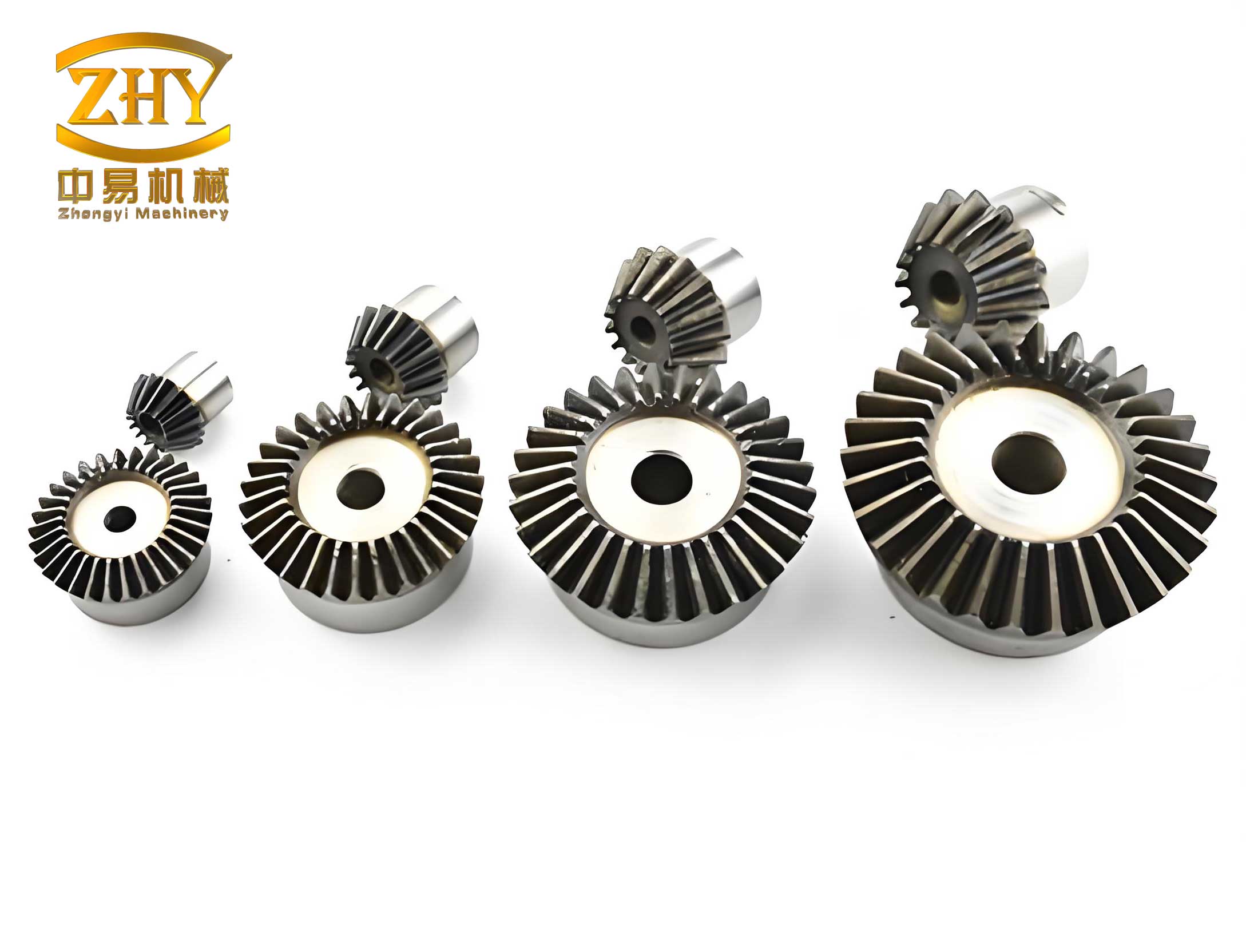
In the field of power transmission, bevel gears are indispensable components for transmitting motion and torque between intersecting shafts. Their high contact ratio and smooth operation make them critical in automotive, aerospace, machine tool, and energy applications. However, the pursuit of higher performance, such as increased speed and load capacity, has revealed limitations in traditional quality assessment methods for bevel gears. Beyond geometric inspections, factors like transmission error, vibration noise, and surface integrity—particularly grinding burn—have become paramount. Grinding burn, a thermal damage induced during the finishing of case-hardened bevel gears, alters surface hardness and residual stress, severely compromising fatigue life and reliability. Existing detection techniques, like acid etching or hardness testing, are destructive, offline, and unsuitable for comprehensive inspection. This paper presents my development of an automatic, non-destructive detection system for grinding burn on bevel gear tooth surfaces, integrated directly into bevel gear testing machines. The system leverages the Barkhausen noise (MBN) effect, coupled with a novel mechanical design, to enable efficient, high-repeatability in-line inspection. By exploiting the existing mechanical and electrical frameworks of standard bevel gear testers, this solution offers a cost-effective and space-efficient alternative to robotic inspection cells, significantly enhancing quality control in bevel gear production.
The core detection principle is based on the Magnetic Barkhausen Noise (MBN) phenomenon. When a time-varying magnetic field is applied to a ferromagnetic material like gear steel, the discontinuous movement of magnetic domain walls generates a pulse-like noise signal. The characteristics of this MBN signal are highly sensitive to microstructural changes, such as variations in surface hardness and residual stress caused by grinding burn. In my system, an MBN sensor, containing a U-shaped yoke and pick-up coil, is used to generate the excitation field and capture the resulting noise from the gear tooth surface. The signal’s features, like root mean square (RMS) value, peak amplitude, and statistical distribution, are then correlated with the material’s state. To adapt this principle for the complex geometry of bevel gears, precise motion control is essential. A standard bevel gear tester typically provides five axes: two rotational axes (A and C) for rolling the gear pair and three linear axes (X, Y, Z) for adjusting mounting distance and offset. My key insight was to reduce the required degrees of freedom for scanning from six to four axes by intelligently planning the sensor path relative to the gear’s geometry.
I established a detection coordinate system with its origin at the pitch cone apex of the gear under test. The Z-axis aligns with the gear’s rotational axis, and the X-axis is parallel to the mounting axis of the detection device. For any point on the tooth flank, there exists an orientation during the gear’s rotation where the tooth line’s tangent at that point lies parallel to the XZ-plane. At this specific orientation, if the MBN sensor is advanced perpendicular to the pitch cone into the tooth space, and its measuring face is oriented perpendicular to the surface normal at the contact point, continuous and stable sensor-tooth contact can be maintained using only four axes (X, Y, Z, and the gear’s rotation axis C or A). The mathematical foundation involves calculating the tooth flank and tooth line equations for the specific bevel gear type, such as spiral bevel gears or hypoid gears.
For a spiral bevel gear, the tooth line can be modeled as a curved path. A parametric representation of a point on the tooth line, considering the cutter radius \(r_c\), mean spiral angle \(\beta\), mean cone distance \(R_m\), and other geometric parameters, can be derived. Let \(t\) be a parameter along the tooth profile. First, intermediate coordinates \((x, y)\) on the cutter plane are given by:
$$
x = \frac{S^2 + R_m^2 – r_c^2}{2R_m} + r_c \cos t
$$
$$
y = r_c \cos(90^\circ – \beta) – r_c \sin t
$$
where \(S = \sqrt{R_m^2 + r_c^2 – 2 R_m r_c \cos(90^\circ – \beta)}\). The tooth line coordinates \(L = [X, Y, Z]\) in the gear coordinate system are then expressed as:
$$
X = \frac{\theta}{2\pi} \sqrt{x^2 + y^2} \times \cos\left( \frac{\theta}{2\pi} \tan^{-1}\left(\frac{y}{x}\right) \right)
$$
$$
Y = \frac{\theta}{2\pi} \sqrt{x^2 + y^2} \times \sin\left( \frac{\theta}{2\pi} \tan^{-1}\left(\frac{y}{x}\right) \right)
$$
$$
Z = \sqrt{x^2 + y^2} \times \sqrt{1 – \left(\frac{\theta}{2\pi}\right)^2}
$$
Here, \(\theta = \pi d / R\), with \(d\) being the pitch diameter and \(R\) the outer cone distance. The tooth surface \(S = [X_s, Y_s, Z_s]\) is modeled based on spherical involute theory:
$$
X_s = r_s \sin\theta_s \cos\phi_s, \quad Y_s = r_s \sin\theta_s \sin\phi_s, \quad Z_s = r_s \cos\theta_s
$$
where \(r_s = R_p\) (cone distance at the point), \(\theta_s = \delta_f + t \cdot (\delta_a – \delta_f)\) (varying from root to face angle), and \(\phi_s = \frac{\cos^{-1}(\cos\theta_s / \cos\delta_b)}{\sin\delta_b} – \cos\left(\frac{\cos\delta_b}{\cos\theta_s}\right)\).
The path planning algorithm calculates, for a desired contact point \((x, y, z)\) on the tooth line, the necessary machine axes positions. A projection plane (Plane 1) is defined containing the origin and coincident with the gear’s pitch cone element. The projection \((x_t, y_t, z_t)\) of the point onto this plane is found. The required rotation angle \(\alpha_q\) of the gear about its axis to make the tooth line tangent horizontal at that point is:
$$
\alpha_q = \tan^{-1}\left( \frac{y_t}{\sqrt{x_t^2 + z_t^2}} \right)
$$
After this rotation, the new coordinates \(L_1 = L \times M_1\) and \(S_1 = S \times M_1\) are obtained using the rotation matrix \(M_1\). For the rotated point \((x_1, y_1, z_1)\) with surface normal \((a, b, c)\), the necessary tilt angle \(\alpha_r\) for a flexible shaft in the detection head (to align the sensor face perpendicular to the normal) is:
$$
\alpha_r = \frac{b}{\sqrt{a^2 + b^2}} \cos\delta – \tan^{-1}\left(\frac{c}{a}\right)
$$
Finally, the commanded positions for the linear axes (X, Y, Z) and the rotational axis (C for the driven gear or A for the drive gear) are:
$$
S_x = x_1 + A_1 \sin\alpha_s \cos\alpha_r + L_2 \cos\alpha_s + L_1
$$
$$
S_y = y_1 – A_1 \sin\alpha_s – A_2
$$
$$
S_z = -z_1 + A_1 \cos\alpha_s \cos\alpha_r – L_2 \sin\alpha_s + \Delta z
$$
$$
S_c = \alpha_q
$$
where \(A_1, A_2, L_1, L_2\) are mechanical design constants, \(\alpha_s\) is a fixed base rotation, and \(\Delta z\) is the distance from the pitch cone apex to the mounting surface. This formulation allows for the complete scanning of a bevel gear tooth flank using coordinated four-axis motion.
The automatic detection device I designed consists of three main subsystems: the mechanical structure, the MBN signal acquisition module, and the control/analysis software. The mechanical structure is designed to be mounted directly onto the spindle fixture of the bevel gear tester, sharing the same clamping interface as the gear itself. This eliminates the need for a separate, bulky positioning system. The core components include a mounting base, a rotation module (a manual rotary stage for initial angular adjustment), a flexible shaft module incorporating a cross-spring pivot, and the MBN sensor holder. The flexible shaft is crucial; it provides a passive degree of freedom that compensates for minor misalignments and ensures consistent contact pressure between the sensor and the complex curved surface of the bevel gears during scanning. A proximity switch is integrated for automatic tooth space finding, and a bubble level aids in initial alignment.
| Mechanical Design Parameter | Symbol | Typical Value / Purpose |
|---|---|---|
| Distance from pivot to sensor face | \(A_1\) | 74 mm |
| Horizontal offset | \(L_1, L_2\) | Design constants |
| Vertical offset | \(A_2\) | Design constant |
| Cross-spring torsional stiffness | \(K\) | 0.045 N·m/deg |
| Maximum flexible shaft rotation | \(\alpha_{max}\) | 20° |
The MBN signal detection module is built around a commercial magneto-elastic instrument, the RollScan 350. This device was selected for its robustness in industrial environments. It generates an alternating magnetic field via the sensor’s U-core and acquires the resulting Barkhausen noise. Key parameters of the instrument are summarized below:
| Parameter | Specification |
|---|---|
| Excitation Waveforms | Triangular wave, Sine wave |
| Excitation Voltage Range | 0 – 16 V |
| Excitation Frequency Range | 10 – 1000 Hz |
| Signal Filter Bands | 10-70 kHz, 70-200 kHz, 200-450 kHz |
Different sensor heads with flat or curved measuring faces are used for straight bevel gears and spiral/hypoid bevel gears, respectively. The MBN signal, typically in the frequency range of 1-500 kHz (with energy often centered around 15-40 kHz for gear steels), is digitized by a high-resolution data acquisition card (e.g., 24-bit, 102.4 kS/s) and sent to the host computer. The detection software, developed in a suitable environment like LabVIEW or C++, performs multiple functions: it communicates with the bevel gear tester’s motion controller to execute the calculated scan paths, records the synchronously acquired MBN signal, and implements signal processing and evaluation algorithms. The software extracts features like the mean value, RMS value, peak count, and power spectrum from the MBN signal. These features are fed into a pre-calibrated model—such as a regression model or an artificial neural network—to quantify the level of grinding burn, often expressed as an equivalent hardness change or a burn severity index.
To ensure the mechanical integrity and reliability of the detection device, I conducted a finite element analysis (FEA) under worst-case loading conditions. The structure primarily uses 2A11 duralumin to reduce weight, with only the mounting base made from steel 45. The critical load occurs when the flexible shaft is at its maximum deflection of 20°. The contact force \(F_b\) on the MBN sensor face can be estimated from the spring torque:
$$
F_b = \frac{K \alpha_{max}}{A_1} = \frac{0.045 \times 20}{0.074} \approx 12.2 \text{ N}
$$
The FEA simulation, performed using ANSYS, assessed total deformation and equivalent stress. The results confirmed the design’s suitability. The maximum deformation was found to be a negligible 6 μm, located at the tip of the sensor holder. The maximum stress on the manual rotary stage’s table was approximately 5.6 kPa, corresponding to a far smaller load than its 3 kg capacity. This validates the stiffness and strength of the duralumin-based structure for inspecting bevel gears.
| Analysis Type | Maximum Value | Location | Comment |
|---|---|---|---|
| Total Deformation | 6 μm | MBN sensor holder tip | Well within acceptable limits for precise measurement. |
| Equivalent (von Mises) Stress | ~5.6 kPa | Surface of manual rotary table | Load is significantly below the table’s rated capacity. |
The practical performance of the system was evaluated on a gear geometry and performance tester available in the laboratory. The test specimen was a spiral bevel gear pair from an automotive application. The key parameters of the tester and the driven gear (the one inspected) are listed below:
| Tester Axis | Travel Range |
|---|---|
| X-axis | 200 mm |
| Y-axis | 160 mm |
| Z-axis | 200 mm |
| Drive side fixture | Ø30 mm |
| Driven side fixture | Ø105 mm |
| Parameter | Value |
|---|---|
| Number of Teeth | 41 |
| Normal Module | 4.161 mm |
| Offset Distance | 30 mm |
| Mean Pressure Angle | 19° |
| Pitch Diameter | 170.6 mm |
| Mean Spiral Angle | 22° 39′ |
| Hand of Spiral | Right-hand |
The detection device was mounted on the drive side spindle, and the driven gear was installed on its corresponding spindle. The system performed an automatic scan along a single tooth flank of the driven bevel gear. To assess repeatability, the identical automatic detection cycle was executed 18 consecutive times on the same tooth. For each scan, the raw MBN signal was processed to calculate three fundamental features: the mean voltage (DC offset), the RMS value (representing signal energy), and the peak voltage. The results are compiled in the following table.
| Run # | Mean Value (mV) | RMS Value (mV) | Peak Value (mV) | Run # | Mean Value (mV) | RMS Value (mV) | Peak Value (mV) |
|---|---|---|---|---|---|---|---|
| 1 | 1.229 | 0.554 | 4.829 | 10 | 1.247 | 0.566 | 4.821 |
| 2 | 1.249 | 0.551 | 4.835 | 11 | 1.292 | 0.557 | 4.800 |
| 3 | 1.255 | 0.570 | 4.668 | 12 | 1.287 | 0.576 | 4.694 |
| 4 | 1.283 | 0.550 | 4.665 | 13 | 1.263 | 0.577 | 4.780 |
| 5 | 1.259 | 0.550 | 4.698 | 14 | 1.237 | 0.556 | 4.818 |
| 6 | 1.264 | 0.574 | 4.676 | 15 | 1.262 | 0.564 | 4.728 |
| 7 | 1.226 | 0.555 | 4.727 | 16 | 1.240 | 0.557 | 4.800 |
| 8 | 1.233 | 0.577 | 4.673 | 17 | 1.247 | 0.558 | 4.822 |
| 9 | 1.240 | 0.558 | 4.710 | 18 | 1.271 | 0.558 | 4.669 |
The statistical analysis of this data demonstrates excellent repeatability. The maximum relative errors for the mean, RMS, and peak values are 2.94%, 2.53%, and 1.91% respectively. This high level of consistency confirms the effectiveness of the mechanical design in maintaining stable sensor contact and the robustness of the motion control and data acquisition process. It proves that the system is capable of reliable, automated inspection of bevel gears for grinding burn detection. Further development would involve building a comprehensive calibration database by correlating MBN features with quantitatively measured hardness and residual stress profiles on bevel gears with intentionally induced burn levels of varying severity. This would transform the system from a comparative tool into an absolute quantitative measuring instrument.
The successful integration of this automatic detection system addresses a significant gap in the quality assurance pipeline for high-performance bevel gears. By utilizing the existing infrastructure of bevel gear testing machines, the solution is both economical and practical for manufacturing environments. The four-axis motion strategy, enabled by the mathematical model of bevel gear geometry and the flexible mechanical design, simplifies the control complexity compared to general six-axis robotic systems. The non-destructive nature of the MBN technique allows for 100% inspection without damaging precious components. Looking forward, the system can be further enhanced. The integration of the burn detection cycle into the standard test sequence of a bevel gear tester—measuring transmission error, noise, and now surface integrity—creates a powerful comprehensive testing station. Additionally, the principles can be extended to other gear types, though the specific kinematics for bevel gears presented here are unique. The ongoing trend towards smart manufacturing and digital twins for critical components like bevel gears will only increase the value of such in-line, data-rich inspection systems. The ability to automatically detect and log grinding burn on every gear tooth provides invaluable feedback for optimizing grinding processes, reducing scrap, and ensuring the long-term reliability of power transmission systems that depend on precisely manufactured bevel gears.