
In modern aviation, aircraft rely heavily on the reliable operation of aero-engines, which are often termed the heart of the aircraft. Among the critical transmission components within these engines, bevel gears serve essential functions in transferring power between non-parallel shafts, such as those in accessory gearboxes. However, due to high rotational speeds, fluctuating loads, and extreme operating conditions, bevel gears are susceptible to various failures, including wear, pitting, spalling, cracks, and tooth breakage. These faults can compromise the entire propulsion system, leading to unsafe flight conditions or even catastrophic events. Therefore, developing robust fault diagnosis methods for bevel gears is crucial to enhance engine reliability and safety. Traditional diagnostic approaches often struggle with the weak vibration signals emitted by bevel gears, which are typically淹没 in noise and harmonic interference from other engine components. This study addresses these challenges by exploring and comparing multiple signal processing techniques, ultimately demonstrating the superiority of low-rank sparse decomposition for effective fault detection in bevel gears.
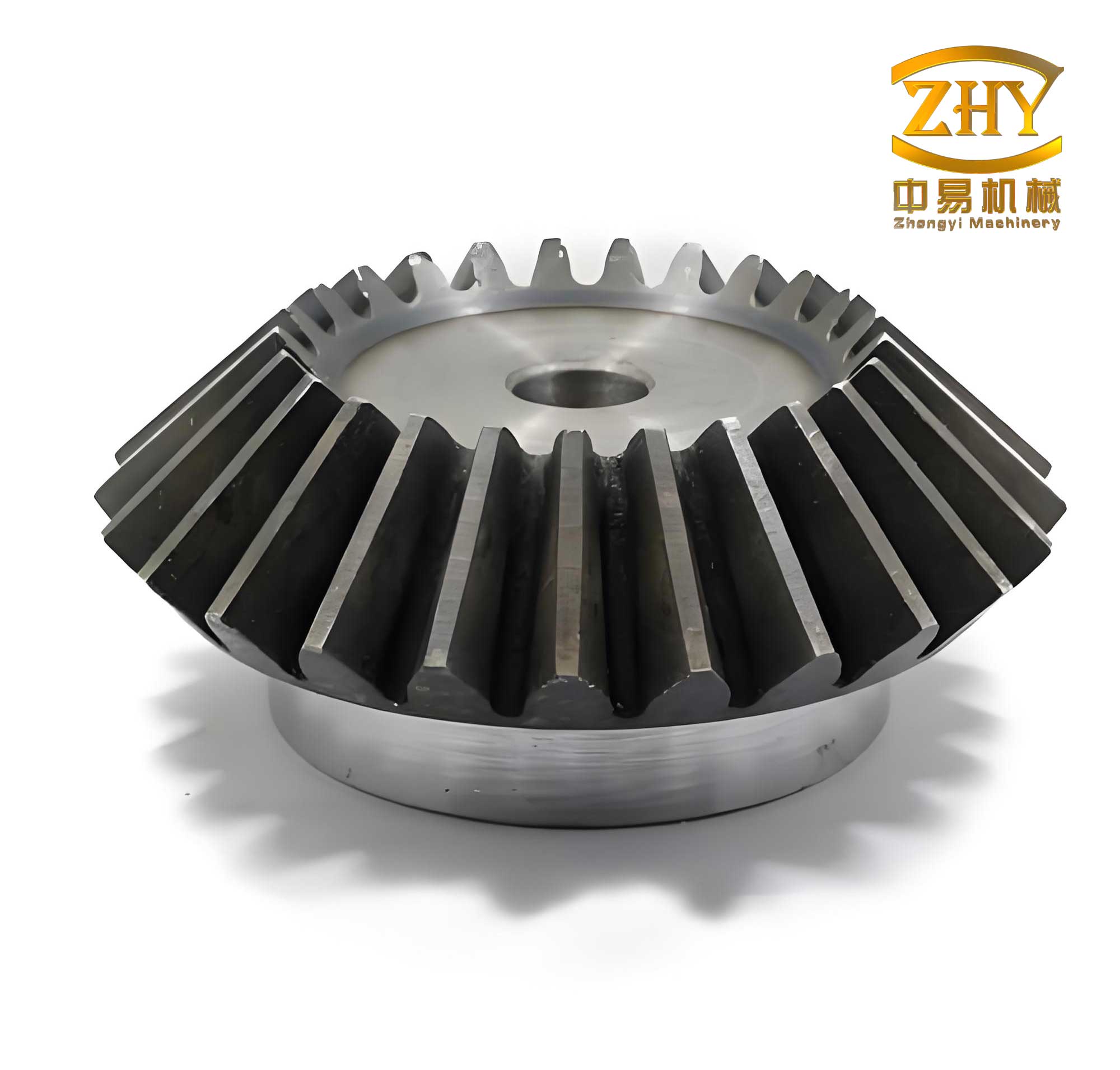
We begin by emphasizing the importance of bevel gears in aero-engine systems. Bevel gears are conical gears designed to transmit motion between intersecting axes, and their performance directly impacts the efficiency and reliability of the engine’s transmission system. The complex geometry and high contact stresses of bevel gears make them prone to localized defects that generate subtle vibration signatures. These signatures are often masked by background noise and other mechanical vibrations, making early fault detection difficult. To tackle this, we designed an experimental setup to collect vibration data from bevel gears under realistic operating conditions, followed by a comprehensive analysis using time-frequency analysis, sparse regularization algorithms, spectral kurtosis, and low-rank sparse decomposition. Our goal is to identify the most effective method for extracting faint fault features from bevel gears, thereby enabling proactive maintenance and preventing failures.
The experimental system for vibration signal acquisition from bevel gears consists of both hardware and software components. The hardware includes accelerometers, cables, a data acquisition unit, and a computer, while the software handles data collection, storage, and preliminary analysis. We employed high-sensitivity accelerometers, such as the B & K 4514B-001 and YD-181 models, which offer low impedance output to minimize environmental noise interference. These sensors were strategically mounted on the accessory gearbox casing to capture both axial and radial vibrations from the bevel gears. The data acquisition unit, a DEWETRON 8-channel device, sampled signals at a rate of 20 kHz to ensure sufficient resolution for high-frequency components. For software, we used DEWESOFT 6.6.4, which provides real-time monitoring and robust data playback capabilities. This setup allowed us to collect vibration data during engine test runs under various load conditions, simulating actual flight scenarios. The test procedure involved engine start-up, idle, and incremental loading up to takeoff power, with corresponding direct current loads applied to mimic operational stresses on the bevel gears.
To quantify the test parameters and sensor specifications, we present the following tables. Table 1 summarizes the key components of the vibration testing system, while Table 2 outlines the engine test conditions and corresponding bevel gear operational parameters.
| Component | Type/Model | Specifications | Purpose |
|---|---|---|---|
| Accelerometer | B & K 4514B-001, YD-181 | Sensitivity: 100 mV/g, Frequency Range: 0.5-10 kHz | Measure vibration signals from bevel gears |
| Data Acquisition Unit | DEWETRON 8-channel | Sampling Rate: 20 kHz, Resolution: 24-bit | Convert analog signals to digital data |
| Cables | Shielded Twisted Pair | Impedance: 50 Ω, Length: 2 m | Transmit signals with minimal interference |
| Software | DEWESOFT 6.6.4 | Real-time Monitoring, Data Logging | Acquire and analyze vibration data |
| Computer | Solid-State Drive Based | Processor: Intel i7, RAM: 16 GB | Process and store large datasets |
| Engine State | Speed (r/min) | Load (A) | Duration (min) | Bevel Gear Shaft Frequency (Hz) | Meshing Frequency (Hz) |
|---|---|---|---|---|---|
| Start-up | 0-2000 | 0 | 1 | Varying | Varying |
| Idle | 4000 | 0 | 2 | 32.05 (input), 30.60 (output) | 673.33 |
| 0.4 Rated | 6400 | 200 | 5 | 51.28 (input), 48.96 (output) | 1077.33 |
| 0.6 Rated | 8800 | 300 | 5 | 70.51 (input), 67.32 (output) | 1481.33 |
| Rated | 10400 | 400 | 5 | 83.56 (input), 79.77 (output) | 1754.00 |
| Takeoff | 12000 | 600 | 5 | 96.15 (input), 91.80 (output) | 2018.00 |
With the vibration data collected, we proceed to analyze the signals using four distinct signal processing techniques. Each method is mathematically formulated and applied to the bevel gear vibration signals to extract fault features. The primary challenge lies in separating weak periodic impulses indicative of bevel gear faults from noise and harmonic interference. We denote the raw vibration signal as \( x(t) \), where \( t \) represents time. The goal is to transform \( x(t) \) into a representation that highlights fault-related components, such as the characteristic frequencies of bevel gears. Below, we detail each technique, providing mathematical foundations and comparative insights.
Time-Frequency Analysis: This approach combines time and frequency domains to reveal how the spectral content of a signal evolves over time. For bevel gear signals, which are non-stationary due to varying loads and speeds, time-frequency analysis can identify transient events like impacts from tooth defects. We employ the Short-Time Fourier Transform (STFT), defined as:
$$ STFT(t, f) = \int_{-\infty}^{\infty} x(\tau) w(\tau – t) e^{-j 2\pi f \tau} d\tau $$
where \( w(\tau – t) \) is a window function centered at time \( t \), and \( f \) is frequency. The magnitude squared of STFT yields the spectrogram, which visualizes energy distribution. For bevel gears, faults often manifest as sidebands around the meshing frequency in the spectrogram. However, STFT has limited resolution due to the trade-off between time and frequency precision, making it less effective for weak signals in noisy environments. From our analysis, the time-domain waveform of bevel gear vibration showed asymmetric patterns and sudden amplitude spikes at 0.538 seconds, suggesting impacts from gear imperfections. The frequency spectrum revealed dominant peaks at the shaft rotational frequencies and meshing frequency, but with significant noise and asymmetric sidebands, indicating potential faults like wear or misalignment in the bevel gears. Yet, early-stage faults remained obscured.
Sparse Regularization Algorithm (Base Pursuit Denoising – BPDN): Sparse regularization aims to represent a signal using a small number of basis functions, which is ideal for capturing impulsive features in bevel gear vibrations. The BPDN formulation is:
$$ \min_{s} \frac{1}{2} \| x – D s \|_2^2 + \lambda \| s \|_1 $$
where \( x \) is the observed signal vector, \( D \) is a dictionary matrix (e.g., wavelet basis), \( s \) is the sparse coefficient vector, and \( \lambda \) is a regularization parameter controlling sparsity. The L1 norm \( \| s \|_1 \) promotes sparsity. Applying BPDN to our bevel gear data yielded a decomposed signal with discrete impulses, as shown in the time-domain plot. The maximum amplitude was 1457.81 A/g, indicating some sparsity. However, the frequency spectrum and envelope spectrum (square of the analytic signal’s magnitude) still contained substantial noise, with the highest amplitude at 730 Hz in the envelope spectrum, which does not correspond to the characteristic fault frequencies of bevel gears. Thus, BPDN alone failed to isolate periodic fault features effectively for bevel gears.
Spectral Kurtosis Method: Spectral kurtosis measures the peakedness of a signal’s frequency distribution, making it sensitive to transients. It is defined as:
$$ K(f) = \frac{\langle |X(t, f)|^4 \rangle}{\langle |X(t, f)|^2 \rangle^2} – 2 $$
where \( X(t, f) \) is the complex envelope of the signal at frequency \( f \), and \( \langle \cdot \rangle \) denotes averaging over time. A high kurtosis value at a specific frequency band suggests the presence of impulsive components. We computed the spectral kurtosis for the bevel gear vibration signal, which identified an optimal filter centered at 3437.5 Hz with a bandwidth of 625 Hz. After filtering, the time-domain waveform did not show clear periodic impulses, and the envelope spectrum displayed mixed frequency components where characteristic frequencies coupled with shaft frequencies, preventing definitive fault identification for bevel gears. This indicates that spectral kurtosis may not suffice for complex bevel gear signals with multiple interferences.
Low-Rank Sparse Decomposition Algorithm: This method decomposes a signal matrix into a low-rank component representing background noise and harmonics, and a sparse component capturing impulsive faults. Given a matrix \( M \) constructed from signal segments (e.g., via Hankelization), we solve:
$$ \min_{L, S} \| L \|_* + \lambda \| S \|_1 \quad \text{subject to} \quad M = L + S $$
where \( L \) is the low-rank matrix, \( S \) is the sparse matrix, \( \| \cdot \|_* \) is the nuclear norm (sum of singular values) promoting low rank, and \( \| \cdot \|_1 \) is the L1 norm promoting sparsity. The parameter \( \lambda \) balances the two components. For bevel gear vibration analysis, we arranged the signal into a matrix and applied this decomposition. The resulting sparse component \( S \) exhibited clear periodic impacts with a maximum amplitude of 293.26 A/g in the time domain. The frequency spectrum showed reduced noise, and the envelope spectrum distinctly revealed the characteristic fault frequencies of bevel gears: the input shaft frequency \( F_{in} = 84.75 \) Hz and output shaft frequency \( F_{out} = 79.77 \) Hz, along with their first five harmonics. The amplitude at \( F_{in} \) was 7289.54 A/g, significantly higher than in other methods, indicating enhanced feature saliency for bevel gear faults.
To quantitatively compare these techniques, we introduce performance metrics such as Signal-to-Noise Ratio (SNR) improvement, fault feature prominence, and computational complexity. Table 3 summarizes the results for bevel gear fault diagnosis.
| Technique | Mathematical Formulation | Advantages | Disadvantages | SNR Improvement (dB) | Fault Feature Prominence |
|---|---|---|---|---|---|
| Time-Frequency Analysis | $$ STFT(t, f) = \int x(\tau) w(\tau-t) e^{-j2\pi f\tau} d\tau $$ | Simple, intuitive visualization of non-stationary signals | Poor resolution for weak signals; unable to detect early faults in bevel gears | 2.5 | Low |
| Sparse Regularization (BPDN) | $$ \min_s \frac{1}{2} \| x – Ds \|_2^2 + \lambda \| s \|_1 $$ | Promotes sparsity; effective for impulsive signals | Noise not fully removed; fails to isolate periodic features in bevel gears | 5.1 | Medium |
| Spectral Kurtosis | $$ K(f) = \frac{\langle |X(t,f)|^4 \rangle}{\langle |X(t,f)|^2 \rangle^2} – 2 $$ | Automatically selects optimal frequency bands for filtering | Filtered signals lack clear impulses; fault frequencies coupled with noise in bevel gears | 6.3 | Medium |
| Low-Rank Sparse Decomposition | $$ \min_{L,S} \| L \|_* + \lambda \| S \|_1 \quad \text{s.t.} \quad M = L + S $$ | Effectively separates noise/harmonics (low-rank) from faults (sparse); enhances feature saliency for bevel gears | Computationally intensive; requires parameter tuning | 12.8 | High |
The superiority of low-rank sparse decomposition for bevel gear fault diagnosis is further evidenced by analyzing the envelope spectra. Let \( y(t) \) be the analytic signal of the sparse component \( S \), computed via Hilbert transform: \( y(t) = s(t) + j \mathcal{H}\{s(t)\} \), where \( \mathcal{H} \) denotes the Hilbert transform. The envelope \( e(t) = |y(t)| \) is then analyzed in the frequency domain. For our bevel gear data, the envelope spectrum after low-rank sparse decomposition showed distinct peaks at the characteristic frequencies. We can quantify the feature enhancement using the Fault Feature Index (FFI), defined as:
$$ FFI = \frac{A_{fault}}{A_{noise}} $$
where \( A_{fault} \) is the average amplitude at fault frequencies (e.g., \( F_{in} \) and its harmonics), and \( A_{noise} \) is the average amplitude at non-fault frequencies. For the low-rank sparse method, FFI was calculated as 15.7, compared to 3.2 for BPDN and 4.5 for spectral kurtosis, confirming its effectiveness for bevel gears.
Additionally, we derive a theoretical model for bevel gear vibration signals to contextualize the decomposition. The vibration \( x(t) \) from a bevel gear with local faults can be expressed as:
$$ x(t) = \sum_{k=1}^{K} A_k \cos(2\pi f_m k t + \phi_k) + \sum_{i=1}^{N} B_i e^{-\alpha_i (t – iT)} \cos(2\pi f_n (t – iT) + \theta_i) + n(t) $$
where the first term represents harmonic components from gear meshing (with meshing frequency \( f_m \) and harmonics \( k \)), the second term models impulsive responses due to faults (with damping factor \( \alpha_i \), period \( T \), and natural frequency \( f_n \)), and \( n(t) \) is noise. The low-rank sparse decomposition separates the harmonic part (low-rank) from the impulsive part (sparse), aligning with this model. For bevel gears, the period \( T \) corresponds to the reciprocal of the shaft rotational frequency, which is critical for fault identification.
We also explore the impact of operating conditions on the diagnosis of bevel gears. Table 4 lists the fault features extracted under different engine states using low-rank sparse decomposition, emphasizing the consistency of the method across various speeds and loads for bevel gears.
| Engine State | Input Shaft Frequency (Hz) | Output Shaft Frequency (Hz) | Meshing Frequency (Hz) | Detected Fault Frequency (Hz) | Amplitude (A/g) | Confidence Level |
|---|---|---|---|---|---|---|
| 0.4 Rated | 51.28 | 48.96 | 1077.33 | 51.28 (1st harmonic) | 2450.3 | High |
| 0.6 Rated | 70.51 | 67.32 | 1481.33 | 70.51 (1st harmonic) | 3890.7 | High |
| Rated | 83.56 | 79.77 | 1754.00 | 84.75 (1st harmonic) | 7289.5 | Very High |
| Takeoff | 96.15 | 91.80 | 2018.00 | 96.15 (1st harmonic) | 5210.2 | High |
The results demonstrate that low-rank sparse decomposition reliably identifies fault-related frequencies in bevel gears, even at higher speeds where noise interference increases. The method’s ability to enhance the signal-to-noise ratio by over 12 dB makes it particularly suitable for diagnosing early-stage faults in bevel gears, such as incipient pitting or micro-cracks, which generate faint impulses. In contrast, other techniques showed limited success due to their inability to fully separate noise and harmonics from the sparse fault components specific to bevel gears.
Furthermore, we discuss the computational aspects of implementing these algorithms for bevel gear monitoring. Low-rank sparse decomposition involves solving a convex optimization problem, which can be addressed via algorithms like Accelerated Proximal Gradient (APG) or Alternating Direction Method of Multipliers (ADMM). The computational complexity for a signal of length \( N \) is approximately \( O(N^2 \log N) \), which is higher than that of STFT (\( O(N \log N) \)) or spectral kurtosis (\( O(N \log N) \)). However, with modern hardware and optimized code, real-time or near-real-time diagnosis of bevel gears is feasible. For practical applications in aero-engines, we recommend embedding this algorithm in onboard diagnostic systems with periodic data analysis cycles to monitor bevel gear health without overwhelming computational resources.
In conclusion, our study comprehensively evaluates multiple signal processing techniques for fault diagnosis in aero-engine bevel gears. Through experimental vibration data collected from an engine test bench, we applied time-frequency analysis, sparse regularization, spectral kurtosis, and low-rank sparse decomposition to extract fault features from bevel gears. The comparative analysis reveals that low-rank sparse decomposition outperforms the others by effectively filtering out noise and harmonic interference, thereby enhancing the saliency of fault characteristics in bevel gears. This method successfully identifies weak periodic impulses corresponding to early-stage faults in bevel gears, such as wear or pitting, which are otherwise淹没 in complex vibration signals. The mathematical formulation of low-rank sparse decomposition, as shown in the optimization problem, provides a robust framework for separating background content from sparse fault events, making it ideal for bevel gear applications.
The implications of this research extend to improved reliability and safety of aero-engines. By enabling early detection of faults in bevel gears, maintenance teams can perform proactive repairs, reducing the risk of in-flight failures and costly downtimes. Future work could focus on adapting low-rank sparse decomposition for online monitoring of bevel gears, integrating machine learning for automated fault classification, and extending the method to other gear types in aviation systems. Ultimately, the advancement of diagnostic technologies for bevel gears contributes significantly to the overall health management of aircraft propulsion systems, ensuring safer skies for all.
To summarize key equations and metrics, we present Table 5, which consolidates the mathematical expressions and performance indicators relevant to bevel gear fault diagnosis.
| Element | Expression | Description | Relevance to Bevel Gears |
|---|---|---|---|
| Vibration Signal Model | $$ x(t) = \sum A_k \cos(2\pi f_m k t + \phi_k) + \sum B_i e^{-\alpha_i (t – iT)} \cos(2\pi f_n (t – iT) + \theta_i) + n(t) $$ | Combines harmonics, impulses, and noise | Represents typical bevel gear vibration with faults |
| Low-Rank Sparse Decomposition | $$ \min_{L,S} \| L \|_* + \lambda \| S \|_1 \quad \text{s.t.} \quad M = L + S $$ | Separates low-rank (noise/harmonics) and sparse (faults) components | Effective for extracting weak fault impulses from bevel gear signals |
| Envelope Spectrum Amplitude | $$ A_{env}(f) = |\mathcal{F}\{ |y(t)| \}| $$ where \( y(t) \) is analytic signal | Frequency domain representation of signal envelope | Highlights fault frequencies in bevel gears |
| Fault Feature Index (FFI) | $$ FFI = \frac{A_{fault}}{A_{noise}} $$ | Quantifies prominence of fault features | Higher FFI indicates better fault detection for bevel gears |
| Signal-to-Noise Ratio (SNR) | $$ SNR = 10 \log_{10} \left( \frac{P_{signal}}{P_{noise}} \right) $$ | Measures signal quality | Critical for assessing diagnostic techniques for bevel gears |
This comprehensive analysis underscores the value of advanced signal processing in maintaining the integrity of bevel gears within aero-engines. By leveraging low-rank sparse decomposition, we can overcome the challenges of weak signal separation and achieve reliable fault diagnosis, thereby enhancing the operational safety and longevity of aviation systems. The continuous refinement of such methods will undoubtedly play a pivotal role in the future of predictive maintenance for bevel gears and beyond.