
Spiral bevel gears are foundational components in modern power transmission systems, distinguished by their high load-carrying capacity, smooth operation, and significant overlap ratio. They are indispensable in applications demanding robust and precise torque transfer between intersecting, non-parallel axes. Their operational domains span from the drivetrains of automobiles and heavy-duty construction machinery to specialized industrial equipment and critical aerospace systems such as helicopter main rotor transmissions. The performance, efficiency, reliability, and service life of these entire systems are directly contingent upon the surface integrity and geometric accuracy of the spiral bevel gear teeth.
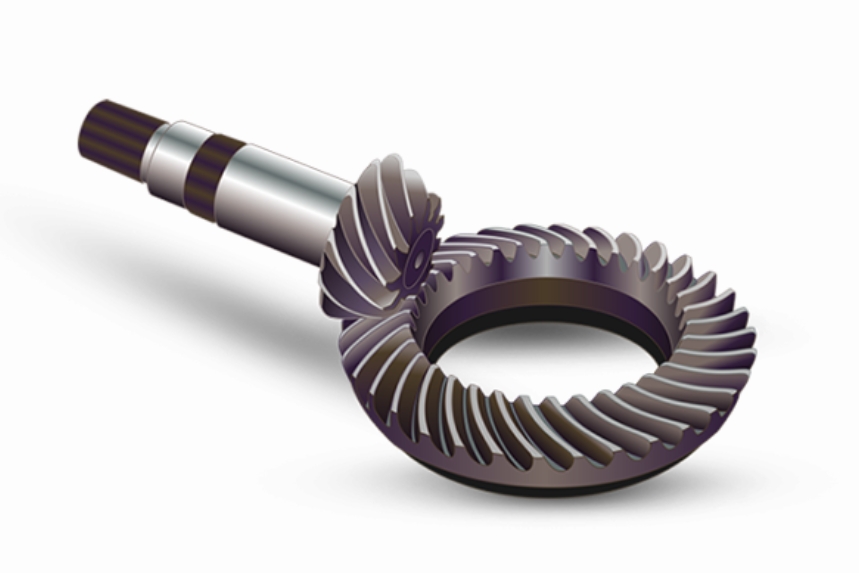
The pursuit of superior surface finish, precise tooth profile geometry, and high dimensional accuracy makes grinding the final and most critical machining operation for high-performance spiral bevel gears. However, this very process is a double-edged sword. The intense thermo-mechanical interaction inherent to grinding can induce severe surface and subsurface damage, with grinding cracks representing one of the most detrimental and costly failure modes. These cracks act as potent stress concentrators, initiating premature failures like micro-pitting, spalling, and catastrophic tooth fracture under cyclic loading. Therefore, a profound understanding of the genesis of grinding cracks in spiral bevel gears and the implementation of effective preventive strategies are paramount for manufacturing reliability. This review synthesizes the fundamental causes—categorized into metallurgical (heat treatment) predispositions and grinding process-induced factors—and outlines comprehensive, practical mitigation measures.
1. Fundamental Causes of Grinding Cracks in Spiral Bevel Gears
Grinding cracks manifest on the surface of spiral bevel gears when the tensile stress generated during the grinding process exceeds the fracture strength of the near-surface material. It is critical to recognize that the phenomenon is rarely attributable to a single factor. Instead, it is the consequence of a detrimental synergy between the gear’s metallurgical condition after heat treatment (the internal, predisposing cause) and the abusive grinding parameters (the external, triggering cause). The cracks typically become visible only after the final grinding of carburized, hardened, and tempered gears, highlighting the intrinsic link between the two stages. The primary morphologies of grinding cracks observed on spiral bevel gears are summarized in Table 1.
| Crack Morphology | Typical Characteristics | Primary Associated Cause | Common Location on Spiral Bevel Gears |
|---|---|---|---|
| Parallel/Transverse Cracks | Long, straight cracks oriented perpendicular to the grinding direction. | Excessive grinding heat leading to thermal stress; high tensile residual stress. | Across the tooth flank, often on the concave side. |
| Network/Crazing Cracks | Interconnected, fine cracks forming a网状 pattern. | Severe grinding burn; high surface carbon content leading to brittleness. | Localized areas of intense heating, often at the tooth root or pitch line. |
| Spot/Pitting Cracks | Clusters of micro-cracks appearing as dark spots. | Localized overheating due to wheel loading or coolant breakdown. | Random locations, often following grinding marks. |
1.1 Metallurgical Predispositions: The Internal Cause (Heat Treatment Factors)
The heat treatment cycle—typically involving carburizing, quenching, and tempering—is designed to impart a hard, wear-resistant case with a tough, ductile core to spiral bevel gears. However, deviations in this process can create a metallurgical structure highly susceptible to cracking under subsequent grinding stresses.
1.1.1 Excessive Retained Austenite (RA): This is a predominant internal factor. During quenching, the volumetric expansion associated with martensite transformation can mechanically stabilize surrounding austenite, preventing its transformation. A high volume fraction of retained austenite (often >20%) is metastable. During grinding, the combined effect of frictional heating and mechanical deformation (work hardening) can induce its transformation to martensite. This phase change is accompanied by a volume increase, generating significant localized transformation stresses. When superposed with grinding stresses, it can easily exceed the material’s tensile strength, leading to cracking. The transformation-induced stress can be conceptually related to the strain energy density:
$$ \rho_d = \frac{E \cdot (\Delta \varepsilon)^2}{2(1-\nu^2)} $$
where \( \rho_d \) is the distortion strain energy density, \( E \) is Young’s modulus, \( \Delta \varepsilon \) is the transformational strain (volume change), and \( \nu \) is Poisson’s ratio. High RA content elevates \( \Delta \varepsilon \) potential, increasing \( \rho_d \) and crack risk.
1.1.2 High Surface Carbon Content and Carbide Networks: Over-carburization or improper atmosphere control can lead to a surface carbon content exceeding the optimal range (often >0.9 wt%). This promotes the formation of coarse, globular, or even continuous network carbides at grain boundaries. These carbides are extremely hard and brittle, with low fracture toughness and thermal conductivity. Their presence drastically reduces the cohesive strength of the grain boundaries and impedes heat dissipation during grinding. Consequently, the material’s resistance to crack initiation and propagation is severely compromised, and localized thermal stresses can readily cause intergranular cracking.
1.1.3 Coarse Acicular (Needle-like) Martensite: An excessively high quenching temperature or inadequate prior microstructure can result in a coarse-grained austenite, which transforms into coarse acicular martensite upon quenching. This microstructure is inherently more brittle than fine, lath martensite. The large martensite plates can create micro-cracks at their boundaries due to transformation stresses. If not adequately tempered, these micro-cracks can serve as nuclei for macroscopic grinding crack propagation under the applied grinding load.
1.1.4 Heat Treatment Distortion: Non-uniform heating, cooling, or part fixturing during heat treatment can cause geometric distortion of the spiral bevel gear. This distortion leads to non-uniform and often excessive grinding stock allowance. To correct this geometry, the grinding process must remove more material in certain areas, resulting in higher grinding forces, greater heat generation, and an increased probability of localized burning and cracking.
1.2 Grinding Process-Induced Factors: The External Cause
The grinding of spiral bevel gears involves the complex interaction of numerous hard, abrasive grains on the wheel with the gear tooth surface at high speeds. This process generates intense heat within the grinding zone. The unique geometry of spiral bevel gears, especially the concave tooth flank, exacerbates coolant access challenges and heat dissipation problems, making them particularly prone to thermal damage.
1.2.1 Excessive Grinding Stock and Infeed: The most direct cause of excessive grinding heat is removing too much material per pass or in total. Large depths of cut (\(a_p\)) or excessive total stock removal require higher grinding forces and prolong the wheel-workpiece contact time, leading to a massive influx of thermal energy into the gear surface. This can cause localized temperatures to surpass the austenitization temperature, followed by rapid quenching by the bulk material or coolant, forming untempered (“secondary”) martensite. This brittle layer, under high tensile stress, is highly prone to cracking.
1.2.2 Inappropriate Grinding Parameters: The selection of wheel speed (\(v_s\)), workpiece feed rate (\(v_w\)), and depth of cut (\(a_p\)) is critical. A low \(v_s\) combined with high \(v_w\) and \(a_p\) maximizes the undeformed chip thickness, increasing grinding forces and specific energy, most of which converts to heat. The heat flux into the workpiece, \(q_w\), can be approximated by:
$$ q_w = \eta \cdot \frac{F_t \cdot v_s}{A_c} $$
where \( \eta \) is the energy partition coefficient (fraction of heat entering the workpiece), \( F_t \) is the tangential grinding force, and \( A_c \) is the real contact area. Abusive parameters increase \( F_t \) and thus \( q_w \), elevating surface temperature.
1.2.3 Improper Grinding Wheel Selection: The wheel’s characteristics—abrasive type, grain size, grade (hardness), bond, and structure—must be compatible with the high-alloy steel of spiral bevel gears.
- Abrasive: Using a hard, friable abrasive like white aluminum oxide (WA) or ceramic alumina (SG) is common, but an incorrect choice can lead to dulling and excessive rubbing.
- Grade/Hardness: A wheel that is too hard will not self-sharpen, causing glazing, high friction, and heat generation. A wheel that is too soft will wear rapidly, losing form accuracy.
- Structure: A too-dense structure lacks porosity to accommodate chips and coolant, promoting wheel loading and heat buildup.
1.2.4 Ineffective Coolant Application: In grinding, only a small fraction of heat is carried away by chips; the majority enters the workpiece and wheel. Coolant’s primary roles are reducing friction, carrying away heat, and flushing away chips. For spiral bevel gears, especially in the concave region, achieving effective coolant penetration into the grinding zone is notoriously difficult. Inadequate coolant flow rate, improper nozzle design (failing to match the gear curvature), or the use of an unsuitable coolant type (e.g., poor lubricity or cooling capacity) can lead to coolant starvation, resulting in catastrophic thermal damage.
| Category | Specific Factor | Underlying Mechanism | Resultant Effect on Gear Surface |
|---|---|---|---|
| Metallurgical (Internal) | High Retained Austenite | Stress-induced transformation to martensite during grinding. | High transformation stresses, surface embrittlement. |
| High Carbon Content & Carbides | Increased brittleness, low thermal conductivity, stress concentrators. | Lower fracture strength, promotes intergranular crack initiation. | |
| Coarse Martensite | Inherent micro-cracking at plate boundaries. | Pre-existing crack nuclei for propagation. | |
| Heat Treatment Distortion | Causes uneven grinding stock. | Leads to local over-grinding and overheating. | |
| Grinding Process (External) | Excessive Stock/Infeed | High specific energy and prolonged contact. | Extreme localized heating, phase transformations. |
| Abusive Parameters (low \(v_s\), high \(v_w\), \(a_p\)) | Increased grinding forces and heat flux into workpiece. | Elevated grinding zone temperature. | |
| Incorrect Grinding Wheel | Glazing, loading, poor chip evacuation. | Increased friction and heat generation. | |
| Ineffective Coolant | Failed heat removal and lubrication. | Coolant starvation, thermal shock, burning. |
2. Comprehensive Prevention and Mitigation Strategies
Preventing grinding cracks in spiral bevel gears requires a holistic approach that addresses both the metallurgical preparation of the gear and the optimization of the grinding process. The goal is to minimize the material’s susceptibility and avoid the thermo-mechanical conditions that trigger crack formation.
2.1 Metallurgical Process Optimization
The objective is to deliver a consistent, fine-grained microstructure with optimal hardness, adequate toughness, and minimal internal stress to the grinding operation.
2.1.1 Control of Carburizing Process: Implement precise atmosphere control (e.g., via oxygen probes and carbon potential controllers) to maintain surface carbon content within the optimal range (typically 0.75-0.85% for many alloy steels). This prevents the formation of excessive and networked carbides. Boost diffusion stages can help create a smooth carbon gradient.
2.1.2 Optimization of Quenching and Tempering:
- Use the lowest possible quenching temperature that ensures full hardness to refine austenite grain size and subsequent martensite structure.
- Implement deep cryogenic treatment after quenching to promote the transformation of retained austenite to martensite before tempering.
- Conduct sufficient tempering immediately after quenching (e.g., at 160-200°C for 2-4 hours) to relieve quenching stresses and temper the martensite.
- Implement a double (or multiple) tempering cycle. A second temper, often at a slightly higher temperature, is crucial for further reducing retained austenite (via its transformation during heating/cooling cycles) and for tempering any martensite formed from retained austenite during the first temper or in service/grinding. This significantly enhances dimensional stability and grindability.
2.1.3 Distortion Control: Use sophisticated fixturing and support during carburizing and quenching to ensure uniform heating and cooling. Simulation software can predict distortion patterns, allowing for pre-emptive stock allowance adjustments in the soft machining stage before heat treatment.
| Process Step | Control Parameter | Target / Recommended Practice | Benefit for Grindability |
|---|---|---|---|
| Carburizing | Surface Carbon Potential | 0.75% – 0.85% C (material dependent) | Avoids brittle carbides, ensures good core-case transition. |
| Quenching | Temperature | Use lower end of austenitizing range. | Promotes fine martensite, reduces distortion. |
| Agitation / Medium | Uniform, high-velocity agitation. | Ensures uniform cooling, minimizes stress gradients. | |
| Tempering | First Temper Temperature/Time | 180-200°C / 2-4 hours minimum. | Relieves quenching stresses, tempers martensite. |
| Second (Double) Temper | 200-220°C / 3-6 hours (post grind optional). | Transforms retained austenite, tempers new martensite, relieves grinding stresses. | |
| Cryogenic Treatment | -80°C to -196°C soak after quench, before temper. | Dramatically reduces retained austenite content. |
2.2 Grinding Process Optimization
This focuses on minimizing heat generation and maximizing heat dissipation during the finish machining of spiral bevel gears.
2.2.1 Stock Allowance Management: Implement a two-stage process: rough grinding and finish grinding. The total stock left for grinding after heat treatment must be tightly controlled and minimized (often aiming for 0.15-0.25 mm per flank). Use precision gear measuring centers to map distortion and allow for adaptive stock removal strategies, ensuring uniform material removal.
2.2.2 Selection of Optimal Grinding Parameters: Adopt a “gentle grinding” strategy.
- Increase Wheel Speed (\(v_s\)): Higher \(v_s\) (35-45 m/s using CBN wheels) can reduce the undeformed chip thickness, lowering specific grinding energy and force, thus generating less heat per unit volume removed.
- Reduce Depth of Cut (\(a_p\)): For finish grinding, \(a_p\) should be very small (2-10 μm). Use multiple light passes instead of a single heavy cut.
- Optimize Feed Rate (\(v_w\)): A moderate, consistent feed rate ensures efficient material removal without overloading the wheel.
2.2.3 Scientific Grinding Wheel Selection: The choice is critical for grinding spiral bevel gears successfully.
- Abrasive: Cubic Boron Nitride (CBN) wheels are increasingly favored for their high hardness, thermal stability, and chemical inertness with steel. They allow for high-speed grinding with drastically reduced heat generation compared to conventional alumina. For ceramic alumina (SG) wheels, select a grade designed for hard steels.
- Grain Size: A medium to fine grain size (e.g., 80-120 grit) provides a good balance between material removal rate and surface finish.
- Grade** (Hardness):** Select a softer grade (e.g., H-J scale) to promote self-sharpening and prevent glazing and burning, especially when using CBN.
- Bond: Vitrified bonds are common for precision grinding. Metal-bond or electroplated CBN wheels offer high durability for specific profiles.
- Structure: Choose an open structure (e.g., number 8-10) to provide space for coolant penetration and chip clearance.
2.2.4 Advanced Coolant Strategy: This is arguably the most critical aspect for spiral bevel gear grinding.
- Type: Use high-performance, synthetic or semi-synthetic grinding fluids with excellent extreme pressure (EP) additives, lubricity, cooling capacity, and rust inhibition. For CBN grinding, specific fluids compatible with the wheel bond are essential.
- Application:
- High-Pressure, High-Flow Coolant Delivery: Use nozzle systems specifically designed to match the curvature of the spiral bevel gear tooth space. Pressures of 20-40 bar and high flow rates are necessary to penetrate the air barrier around the fast-rotating wheel and flood the grinding zone.
- Directed Nozzles: Employ multiple nozzles targeting the wheel-workpiece engagement point from both the entering and exiting sides.
- Cleaning Jets: Incorporate separate high-pressure jets to keep the wheel surface clean and prevent loading.
- Filtration & Maintenance: Maintain the coolant in pristine condition with fine filtration (<10 μm) to remove abrasive particles and metallic fines, which can cause three-body abrasion and reduce cooling efficiency.
2.2.5 Post-Grinding Stress Relief: Implementing a low-temperature stress relief operation (e.g., at 150-180°C for 1-2 hours) immediately after final grinding can help alleviate any residual tensile stresses induced by the process, further safeguarding against delayed cracking or in-service failure initiation.
| Process Aspect | Parameter / Element | Recommended Specification / Practice |
|---|---|---|
| Stock & Strategy | Total Stock per Flank | 0.15 – 0.25 mm (minimized) |
| Grinding Stages | Rough Grind + Finish Grind | |
| Depth of Cut (Finish) | 2 – 10 μm | |
| Wheel Selection | Abrasive (Preferred) | Cubic Boron Nitride (CBN) |
| Grade (Hardness) | Softer Grade (e.g., H, I, J) | |
| Structure | Open Structure (Number 8-10) | |
| Coolant Strategy | Fluid Type | High-Performance Synthetic, CBN-compatible |
| Delivery Pressure | 20 – 40 bar | |
| Nozzle Design | Curvature-matched, multiple targeted nozzles | |
| Filtration | < 10 μm | |
| Post-Process | Stress Relief | 150-180°C for 1-2 hours |
3. Conclusion and Future Perspectives
The prevention of grinding cracks in high-precision spiral bevel gears is a multifaceted challenge requiring integrated control over both material science and machining dynamics. The internal metallurgical state, dictated by precise heat treatment, sets the fundamental resistance of the gear material to cracking. Suboptimal processes leading to high retained austenite, brittle carbides, or coarse microstructures create a latent susceptibility. The external grinding process then acts as the trigger, where excessive thermal and mechanical loads—from inappropriate parameters, wheel selection, or coolant application—overwhelm the material’s strength.
The path to reliable, crack-free production of spiral bevel gears lies in a disciplined, holistic approach:
- Metallurgical Excellence: Achieve a consistent, fine-grained microstructure with controlled carbon content, minimized retained austenite (through double tempering and/or cryogenics), and relieved internal stresses.
- Grinding Process Mastery: Adopt a gentle grinding philosophy using advanced abrasives like CBN, very light cuts, high wheel speeds, and most critically, a robust, high-pressure coolant delivery system engineered for the complex geometry of spiral bevel gears.
- Process Monitoring & Feedback: Implement in-process monitoring of grinding power, acoustic emission, or temperature to detect the onset of burn or chatter, allowing for real-time correction.
Future research directions are likely to focus on the modeling and real-time control of the grinding zone thermal field for spiral bevel gears. Advanced simulation combining finite element analysis (FEA) for thermo-mechanical stress and computational fluid dynamics (CFD) for coolant flow can optimize nozzle design and process windows. Furthermore, the development of even more stable super-abrasives and high-temperature alloy bonds will push the boundaries of dry or near-dry grinding, potentially eliminating coolant-related issues altogether. The integration of these advanced technologies will further solidify the manufacturing of reliable, high-performance spiral bevel gears for the most demanding applications. The stress intensity at a crack tip, which governs its propagation, underscores the importance of these preventive measures:
$$ K_I = \sigma \sqrt{\pi a} \cdot f\left(\frac{a}{t}\right) $$
where \( K_I \) is the Mode I stress intensity factor, \( \sigma \) is the applied stress, \( a \) is the crack length, \( t \) is the thickness, and \( f(a/t) \) is a geometric factor. By minimizing the applied grinding stress (\( \sigma \)) and preventing the initiation of cracks (keeping \( a = 0 \)), the risk of fatigue failure driven by \( K_I \) exceeding the material’s fracture toughness is effectively eliminated. Therefore, the systematic application of the metallurgical and grinding controls outlined herein is essential for ensuring the structural integrity and longevity of spiral bevel gears in service.