
The manufacturing of high-precision spiral bevel gears represents a pinnacle of mechanical engineering, critical for power transmission in aerospace, automotive, and heavy machinery applications. The complex geometry of spiral bevel gears, characterized by curved teeth and varying cross-sections, demands extremely precise and controlled machining processes. Traditional manufacturing flows often involve sequential, isolated steps—design, CNC programming, machining, and inspection—leading to potential error accumulation, lengthy feedback cycles, and inefficiencies. The paradigm of closed-loop digital manufacturing seeks to integrate these disparate stages into a cohesive, data-driven ecosystem. At the heart of this integration lies a robust, reliable, and intelligent network communication and control system, enabling the seamless flow of information from design to measurement and back to the machine tool for corrective action.
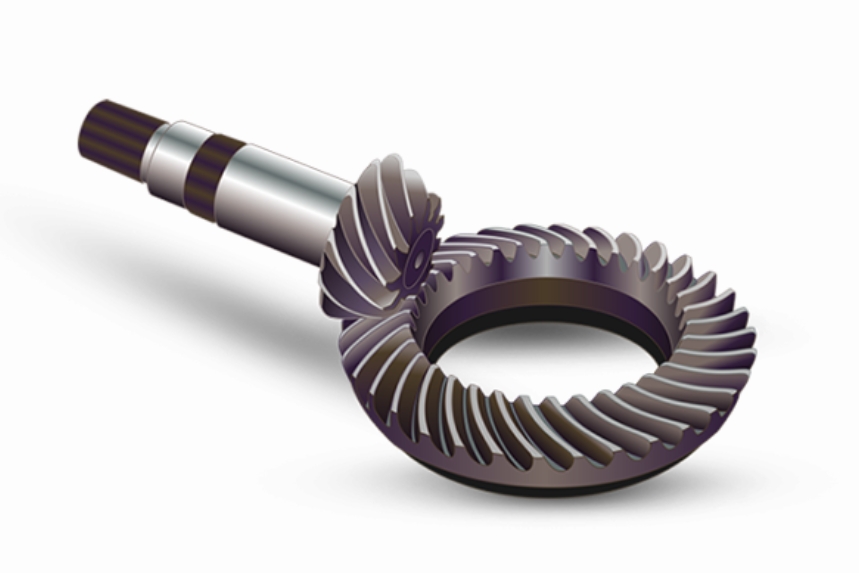
This article delves into the architecture, development, and implementation of such a network communication control system specifically tailored for the networked closed-loop manufacturing of spiral bevel gears. The core challenge addressed is the heterogeneous nature of shop-floor equipment. A typical manufacturing cell for spiral bevel gears may contain multi-axis CNC milling or grinding machines (like hypoid generators), gear lapping machines, coordinate measuring machines (CMM), and noise/vibration testers, each from different manufacturers and eras, equipped with proprietary numerical controls (CNCs) that use diverse communication protocols and physical interfaces. The proposed system bridges these technological islands, creating a unified digital thread that is essential for adaptive manufacturing and quality assurance of complex components like spiral bevel gears.
1. Integrated Control Model Based on Industrial Ethernet
The foundation of a networked manufacturing system is its communication infrastructure. Legacy approaches often relied on point-to-point serial connections (e.g., RS-232), which are limited in distance (typically under 15 meters), speed, and network flexibility. For the dynamic and data-intensive environment of closed-loop manufacturing of spiral bevel gears, a more robust solution is required. The model proposed here is built upon Industrial Ethernet, leveraging standard TCP/IP protocols to ensure reliability, high bandwidth, and long-distance capability.
The integrated control model functions as a hierarchical communication bridge, as illustrated in the following conceptual architecture. Its primary objective is to normalize communication with disparate CNC devices and integrate them into a local area network (LAN) for centralized management and data exchange.
Core Architectural Principles:
- Protocol-Agnostic Host Layer: At the top resides a central server or host computer, often termed the DNC (Distributed Numerical Control) host or Manufacturing Execution System (MES) server. This layer runs the supervisory software responsible for NC program management, tool data management, machine monitoring, and orchestrating the flow of data between design/CAM systems, the measurement loop, and the machine tools.
- Industrial Ethernet Backbone: The physical and data link layer is formed by a switched Industrial Ethernet network. This uses shielded, twisted-pair cabling to provide high noise immunity essential for the electrically noisy environment of a machine shop. Standard network switches allow for scalable and flexible connectivity.
- Intelligent Gateway Layer: This is the critical translation layer. It consists of hardware and software components designed to communicate with legacy machine tools.
- For modern CNC systems with native Ethernet ports (e.g., Siemens 840D, Fanuc 30i/31i/32i series), they can connect directly to the network switch. These controllers often support standard TCP/IP socket communication or higher-level manufacturing protocols.
- For the vast majority of older but still prevalent CNC systems equipped only with serial ports (e.g., Fanuc 0M/18M, Siemens 802D, or specialized gear machine controls), a hardware device called a Serial Device Server is employed. This device connects to the CNC’s RS-232/422/485 port and provides an RJ-45 Ethernet port. It essentially creates a virtual COM port on the network, allowing the host computer to communicate with the serial-based CNC as if it were locally connected.
- Machine Tool Layer: The physical spiral bevel gear machining and inspection equipment—the CNC gear generators, lappers, and CMMs.
The data flow in this model for manufacturing spiral bevel gears is bidirectional. For example, a post-processed NC program (often containing proprietary machine commands and variable R-parameters for wheel positioning and machine kinematics) is sent from the host to a specific CNC gear grinder. After machining, the gear is measured on a CMM. The resulting deviation data is analyzed, and correction parameters (modified R-parameters) are calculated. These new parameters are then sent back through the network to the same machine tool’s CNC to execute a corrective machining cycle, thereby closing the loop. The reliability of this data transfer is paramount, as corruption or loss can lead to scrap parts.
The choice of Industrial Ethernet over other fieldbuses (like PROFIBUS, DeviceNet) is strategic. It offers:
1. High Bandwidth: Essential for transferring large NC files for complex 5-axis machining of spiral bevel gears.
2. Standardization: Leverages ubiquitous IT knowledge and hardware, reducing cost and complexity.
3. Long Distance: Can easily cover an entire workshop or factory.
4. Integration Ease: Seamlessly connects the shop floor to the wider factory IT network for ERP/MES integration.
2. Development of the Communication Control System (SBGDNC)
Implementing the theoretical model requires robust software—a dedicated communication control system. We developed a system named the Spiral Bevel Gear Distributed Numerical Control (SBGDNC) system. Its development followed object-oriented principles on the Windows platform using the .NET framework, ensuring modularity, scalability, and maintainability.
Key Functional Modules:
- Machine Management & Configuration: This module allows the system administrator to register each piece of equipment in the spiral bevel gear cell. For each machine, details such as a unique ID, model, IP address (or virtual COM port mapped by the serial server), and most importantly, the specific communication protocol are stored. A configuration interface lets users set communication parameters like baud rate, data bits, stop bits, parity, and flow control (XON/XOFF or RTS/CTS).
- Protocol Library & Soft-Plugins: This is the core intelligence of the SBGDNC system. Heterogeneity is addressed by creating a library of communication protocol drivers, each encapsulated as a independent “soft-plugin.” During development, protocol analyzers and serial port monitoring tools (like PComm Pro or custom sniffers) are used to decipher the unique command/response sequences, handshaking, and file transfer procedures of each CNC model (e.g., “Fanuc 18i Serial DNC Protocol,” “Siemens 840D Ethernet Socket Protocol”). Each protocol plugin manages the low-level dialogue with the machine. At runtime, the SBGDNC host loads the appropriate plugin for the target machine from its library, enabling a uniform interface to manage vastly different devices.
- NC Program Management: Provides a centralized repository for all NC programs related to spiral bevel gears. Features include version control, association of programs with part numbers and machine tools, and secure check-in/check-out. It allows for browsing, editing (with syntax awareness for different CNC dialects), and archiving.
- Bi-directional Communication Engine: Manages the actual file transfers. It supports:
- Upload/Download: Sending NC programs from host to CNC and fetching programs from CNC memory to the host.
- Remote Call (DNC): This is a vital feature for machining complex spiral bevel gears. Instead of loading the entire, potentially very large, NC program into the often-limited memory of the CNC, the SBGDNC system allows the machine to run the program directly from the host’s memory. The CNC requests blocks of data in real-time as it needs them. This enables machining of parts with virtually unlimited program length.
- Status Monitoring: The system can poll machines for basic status information (idle, running, alarm) by sending protocol-specific inquiry commands and parsing the responses.
- User Interface: Provides operators and engineers with intuitive screens for selecting parts, choosing machines, initiating transfers, and monitoring job status. The interface abstracts the underlying protocol complexity.
The communication reliability is enhanced by configuring buffers within the serial device servers. These buffers can compensate for momentary differences in data flow rates between the fast Ethernet network and the slower serial port, preventing data loss during the critical transfer of machining code for spiral bevel gears.
3. Mathematical Foundations for Data Integrity and Loop Closure
The networked closed-loop manufacturing of spiral bevel gears relies not just on moving data, but on ensuring its integrity and using it for precise mathematical corrections. We can formalize some key aspects.
3.1 Data Transfer Reliability Model
For a serial connection mediated by a device server, the effective error probability must be minimized. The integrity of an NC program block sent to machine a spiral bevel gear tooth flank can be modeled. Let $P_e$ be the probability of a bit error on the physical serial link. For a block of data containing $n$ bits, the probability that the block is received without error using only simple transmission is:
$$P_{block\_correct} = (1 – P_e)^n$$
Given that $n$ can be large for complex surface machining programs, even a small $P_e$ can cause frequent errors. The system employs hardware flow control and software protocols with checksums (like CRC). If the protocol includes an error-detecting code that can detect any error pattern within $k$ bits, the probability of an undetected
3.2 The Closed-Loop Correction Formulation
The essence of “closed-loop” is the feedback correction. After a spiral bevel gear is machined based on a nominal set of machine settings $\mathbf{M_{nom}}$ (a vector containing parameters like cutter offset $E$, swivel angle $J$, tilt angle $I$, etc., often encapsulated as R-parameters in the NC code), it is measured on a CMM. The measurement yields a set of deviations $\Delta \mathbf{S}$ from the theoretical tooth surface $S_{theory}(u, v)$ at defined grid points.
$$\Delta \mathbf{S} = S_{measured}(u_i, v_j) – S_{theory}(u_i, v_j)$$
The control system’s role is to compute a set of machine setting corrections $\Delta \mathbf{M}$ such that when the machine is run with adjusted settings $\mathbf{M_{adj}} = \mathbf{M_{nom}} + \Delta \mathbf{M}$, the resulting gear surface error is minimized. This is typically solved as a least-squares optimization problem, minimizing an error norm $E$:
$$\min_{\Delta \mathbf{M}} E = \| \mathbf{J} \Delta \mathbf{M} – \Delta \mathbf{S} \|^2$$
where $\mathbf{J}$ is the Jacobian matrix or sensitivity matrix, representing the linearized relationship between changes in machine settings and changes in the tooth surface coordinates. The elements of $\mathbf{J}$ are partial derivatives:
$$J_{kl} = \frac{\partial S_k}{\partial M_l}$$
The SBGDNC system facilitates the transfer of the calculated $\Delta \mathbf{M}$ (often just the modified R-parameter values) back to the CNC, completing the mathematical and physical loop for manufacturing accurate spiral bevel gears.
4. System Implementation and Case Study
The SBGDNC system was deployed in a gear research laboratory setting. The network integration scheme connected key equipment for spiral bevel gear manufacturing.
| Equipment | Function | CNC System Type | Connection Method |
|---|---|---|---|
| CNC Hypoid Generator (YK2260T) | Rough/Finish Cutting of Spiral Bevel Gears | Specialized Serial Control | Serial Device Server (P300M) |
| CNC Gear Grinder | Precision Grinding of Spiral Bevel Gears | Siemens 840D | Direct Ethernet |
| Gear Lapping Machine | Contact Pattern Refinement | Fanuc 18i-M | Serial Device Server |
| Precision CMM | Tooth Flank Measurement | PC-DMIS Controller | Direct Ethernet |
The serial device servers were configured with unique IP addresses on the lab’s subnet. The SBGDNC server communicated with these IPs, and the internal firmware of the server handled the serial protocol translation transparently.
Application Trial: Closed-Loop Manufacturing of a Hypoid Pinion
A practical trial involved the manufacturing of a hypoid pinion (small spiral bevel gear). The process demonstrated the full network integration.
- Nominal Machining: The initial NC program, containing the R-parameters for the theoretical machine settings $\mathbf{M_{nom}}$, was selected from the SBGDNC database and sent to the YK2260T hypoid generator via its assigned serial server. The transfer was initiated from the SBGDNC interface, and the machine operator could then call and execute the program remotely (DNC mode).
- Measurement & Analysis: The machined pinion was transferred to the CMM. Measurement results were automatically analyzed by specialized gear software, generating the surface deviation map $\Delta \mathbf{S}$.
- Correction Calculation: The analysis software calculated the required machine setting adjustments $\Delta \mathbf{M}$ to compensate for the observed errors.
- Corrective Machining (Loop Closure): The SBGDNC system played its crucial role. The new set of R-parameters ($\mathbf{M_{adj}}$) was packaged and sent back through the network to the YK2260T’s control. A corrective (re-cut) cycle was performed using the adjusted data.
The effectiveness was quantified by comparing the tooth flank topography before and after the correction. Key performance metrics for the communication system itself were also validated:
| Metric | Observation / Result | Implication for Spiral Bevel Gear Manufacturing |
|---|---|---|
| Data Transfer Speed | Sustained rates > 115.2 kbps per serial link, limited by CNC serial port. | Adequate for rapid transfer of even large hypoid machining programs. |
| Transmission Reliability | Zero instances of corrupted NC program blocks during extended testing. | Essential for preventing scrap parts due to faulty code. |
| Protocol Compatibility | Successful communication with 4 different CNC types via soft-plugins. | Enables integration of heterogeneous, multi-vendor gear production equipment. |
| Network Latency | Sub-10ms round-trip for command/response in DNC mode. | Sufficiently low to support real-time block feeding without machine stutter. |
The final measurement of the corrected pinion showed a significant reduction in tooth flank form error, typically achieving over 70% error reduction compared to the first-cut part. This tangible improvement validated the entire chain: accurate data transfer, precise measurement, correct mathematical analysis, and reliable feedback of corrections—all orchestrated by the network communication control system.
5. Advanced Considerations and Future Directions
While the described system provides a solid foundation, the evolution towards smart manufacturing and Industry 4.0 for spiral bevel gear production introduces new requirements.
5.1 Security: Connecting machine tools to networks exposes them to cybersecurity risks. Future iterations must incorporate industrial firewalls, network segmentation, encrypted communication (e.g., TLS/SSL for Ethernet, secure protocols for serial tunnels), and strict access control to the SBGDNC system to protect proprietary gear manufacturing data and prevent malicious interference.
5.2 Real-Time Data and IoT Integration: Beyond file transfer, there is value in streaming real-time operational data (spindle load, axis positions, vibration, temperature) from the gear machining centers. This requires extending the protocol plugins to support MTConnect or OPC UA standards, which provide semantic, standardized data models. This data can be used for predictive maintenance, adaptive process control, and deeper analysis of the spiral bevel gear manufacturing process.
5.3 Cloud Integration and AI-Driven Optimization: The closed-loop correction process can be enhanced with cloud computing and artificial intelligence. Measurement data from hundreds of spiral bevel gears can be aggregated in the cloud. Machine learning algorithms can analyze this big data to identify patterns, predict optimal starting parameters for new gear designs, and suggest non-linear correction strategies that go beyond the linear sensitivity matrix ($\mathbf{J}$) approach, potentially leading to “first-part-correct” manufacturing.
5.4 Standardized Gear Data Models: The development of a standardized, digital data model for spiral bevel gears (encompassing design intent, manufacturing instructions, inspection plans, and measurement results) would greatly enhance interoperability. The network system would then handle packets of standardized data instead of proprietary file formats, further streamlining the digital thread.
6. Conclusion
The implementation of a networked closed-loop manufacturing system for spiral bevel gears is a transformative step towards higher quality, efficiency, and adaptability. The core enabler of this transformation is a robust, flexible, and intelligent network communication and control system. The model based on Industrial Ethernet, coupled with a software architecture employing protocol soft-plugins—as realized in the SBGDNC system—effectively solves the critical problem of equipment heterogeneity. By ensuring reliable, bidirectional data flow between design systems, CNC machine tools, and metrology equipment, it closes the manufacturing loop in a practical and effective manner.
The case study demonstrates that such a system is not merely a theoretical concept but a practical tool that yields measurable improvements in the accuracy of manufactured spiral bevel gears. As the industry moves towards greater digitalization, the role of this communication backbone will only expand, evolving to incorporate real-time monitoring, advanced analytics, and cloud-based intelligence, ultimately driving the production of spiral bevel gears to new levels of precision and performance.