
Carburizing is a pivotal thermochemical treatment extensively employed in the manufacturing of high-performance mechanical components. For critical parts like gear shafts, this process serves the dual purpose of enhancing surface properties while preserving a tough core. By enriching the surface layer with carbon, carburizing significantly improves wear resistance, contact fatigue strength, and overall load-bearing capacity, thereby extending the service life of the gear shaft. Traditional gas carburizing processes, however, are often characterized by prolonged cycle times and high operating temperatures, typically around 920°C to 950°C. These conditions lead to substantial energy consumption, increased distortion of the workpiece, accelerated degradation of furnace equipment, and potential grain coarsening which can detrimentally affect the mechanical properties of the final gear shaft.
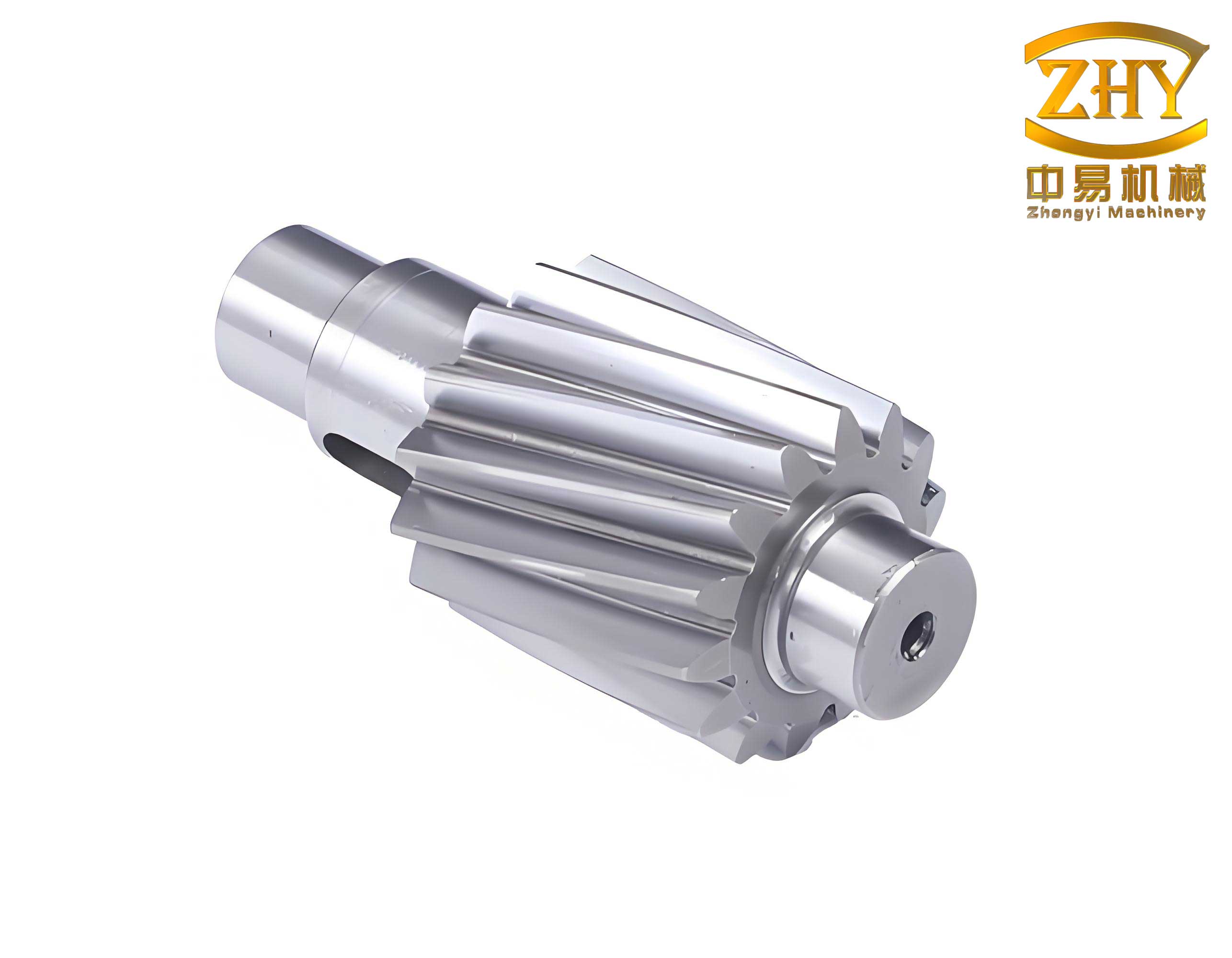
To mitigate these drawbacks, accelerating technologies have been developed. Among them, BH energizing (or catalytic carburizing) has emerged as a prominent and effective solution. Unlike some traditional rare-earth-based accelerants which can be corrosive to furnace internals, BH energizers are known for their high efficiency and minimal corrosive impact. The fundamental premise of applying a BH energizer is to increase the carburizing rate, allowing for either a reduction in process temperature or a shortening of the process time for a given case depth requirement. This study focuses on the latter approach: maintaining the standard carburizing temperature but significantly reducing the cycle time for a gear shaft component. We investigate the effects of this BH-accelerated process on key quality metrics including case depth, microstructure, hardness profile, and distortion, and provide a comparative analysis against the conventional carburizing method.
Fundamental Principles of BH Energizing Technology
The enhanced kinetics observed with BH energizing agents can be attributed to a combination of physical and chemical mechanisms that alter the gas-solid interaction and carbon transfer dynamics at the surface of the gear shaft.
- Disruption of Surface Boundary Layer: The BH agent contains trace compounds that undergo intermittent, explosive decomposition within the furnace atmosphere. This micro-scale activity generates shockwaves that effectively disrupt the stagnant gas boundary layer adhering to the gear shaft surface. This phenomenon is analogous to the pressure-pulsing techniques used in advanced furnaces. By breaking this layer, the transport of active carbonaceous species from the bulk atmosphere to the metal surface is significantly enhanced. Furthermore, this mechanical agitation is believed to mildly activate the steel surface, potentially creating more favorable sites for carbon absorption.
- Generation of Highly Active Carbon Species: A key proposed mechanism is the catalysis of atmosphere decomposition leading to the formation of positively charged carbon ions (e.g., C⁴⁺). The kinetic theory of gases states that the average velocity of a molecule is inversely proportional to the square root of its mass: $$v_{avg} \propto \sqrt{\frac{kT}{m}}$$ where \(k\) is Boltzmann’s constant, \(T\) is temperature, and \(m\) is molecular mass. While simplified for ideal gases, this relationship suggests that smaller, lighter species diffuse more rapidly. The postulated C⁴⁺ ions, being smaller and potentially more energetic than neutral carbon atoms or large hydrocarbon molecules, encounter less diffusion resistance within the gas phase and exhibit higher reactivity upon reaching the gear shaft surface, thereby accelerating the initial carburizing step.
- Enhanced Atmosphere Stability and Utilization: The formulation includes decomposition moderators that promote a more controlled and complete breakdown of the hydrocarbon carrier gas (e.g., acetone or natural gas). This action suppresses the formation of soot (carbon black), a common issue in carburizing that wastes carbon potential and can foul furnace components. The improved gas utilization increases the available carbon potential for absorption by the gear shaft.
- Extended Effective Temperature Range: The combined effects allow for effective carburizing to commence at lower temperatures (reportedly as low as 880°C) compared to conventional processes. For a standard process run at a fixed temperature, however, the primary benefit is the increased flux of carbon into the gear shaft at that temperature, directly leading to faster case depth development.
Experimental Methodology and Material
The subject of this investigation was a production-grade gear shaft. The material specified was low-alloy carburizing steel 20CrMnTi, a chromium-manganese-titanium steel renowned for its good hardenability and core toughness after carburizing and quenching. The nominal chemical composition of this steel grade is provided in Table 1.
| C | Cr | Mn | Ti | Si | P, S (max) |
|---|---|---|---|---|---|
| 0.17-0.23 | 1.00-1.30 | 0.80-1.10 | 0.04-0.10 | 0.17-0.37 | 0.035 |
The target effective case depth (ECD) for the gear shaft was defined as the depth from the surface to the point where the hardness measures 515 HV, and was specified to be between 1.8 mm and 2.4 mm. All heat treatments were conducted in an industrial IPSEN TQF-27-ERM sealed quench (multichamber) furnace. The furnace atmosphere was generated using a carrier gas and enriched with a hydrocarbon for carbon control. For the BH trial, a proprietary BH energizing agent was introduced into the furnace atmosphere alongside the standard carbon-carrying fluid.
The core of the experimental design was a direct comparison between two processes:
- Conventional Process (CP): The established production carburizing cycle for this gear shaft.
- BH Energized Process (BHEP): A modified cycle using the BH agent, with the goal of achieving the same or superior case depth in a shorter total time, while maintaining an identical austenitizing temperature of 920 ± 10°C.
The key modification was the reduction of time in the boost (high carbon potential) and diffusion (lower carbon potential) stages. A schematic comparison of the two thermal cycles is presented in Table 2.
| Process Stage | Conventional Process (CP) | BH-Energized Process (BHEP) | Time Reduction in BHEP |
|---|---|---|---|
| Heating | ~1.75 h | ~1.75 h | 0 h |
| Boost (High Cp) | 14.0 h | 11.5 h | 2.5 h |
| Diffusion (Low Cp) | 3.0 h | 2.0 h | 1.0 h |
| Temperature Homogenization & Quench | ~3.0 h | ~3.0 h | 0 h |
| Total Furnace Cycle Time | ~21.75 h | ~18.25 h | ~3.5 h (≈16%) |
Analysis of Results: Case Depth and Process Kinetics
Post-treatment evaluation began with the measurement of effective case depth. Transverse sections were taken from sample gear shafts from both batches. Micro-hardness traverses (HV0.5 or HV1) were performed from the tooth flank surface towards the core. The depth where hardness dropped to 515 HV was recorded as the ECD. The results, summarized in Table 3, clearly demonstrate the efficacy of the BH process.
| Process | Surface Carbon Content (approx.) | Effective Case Depth (mm to 515 HV) | Percent Increase in ECD for BHEP* |
|---|---|---|---|
| Conventional (CP) | 0.75% | 2.09 | – |
| BH-Energized (BHEP) | 0.78% | 2.19 | ~4.8% |
*Despite a 16% shorter cycle time.
Notably, the BH-energized process achieved a greater case depth (2.19 mm) in approximately 16% less time compared to the conventional process (2.09 mm). This confirms a significant increase in carburizing rate. The surface carbon content was slightly higher for the BHEP sample, indicating a potentially higher carbon flux during the boost stage.
The kinetics of case depth development in gas carburizing can be empirically described by a parabolic growth law, where case depth \(d\) is related to time \(t\) and a temperature-dependent rate constant \(k\):
$$d = \sqrt{k \cdot t}$$
For a constant temperature, the rate constant \(k\) is a function of the carbon transfer coefficient (\(\beta\)) and the diffusion coefficient of carbon in austenite (\(D\)). The BH energizer primarily acts to increase the effective carbon transfer coefficient \(\beta\) by enhancing atmosphere reactivity and surface kinetics. We can model the comparative rate constants. Let \(d_{CP}\) and \(t_{CP}\) be the depth and time for the conventional process, and \(d_{BHEP}\) and \(t_{BHEP}\) for the energized process. Assuming parabolic growth:
$$d_{CP} = \sqrt{k_{CP} \cdot t_{CP}} \quad \text{and} \quad d_{BHEP} = \sqrt{k_{BHEP} \cdot t_{BHEP}}$$
The ratio of the rate constants illustrates the acceleration factor:
$$\frac{k_{BHEP}}{k_{CP}} = \left( \frac{d_{BHEP}}{d_{CP}} \right)^2 \cdot \frac{t_{CP}}{t_{BHEP}}$$
Substituting the approximate values from our experiment:
$$\frac{k_{BHEP}}{k_{CP}} \approx \left( \frac{2.19}{2.09} \right)^2 \cdot \left( \frac{21.75}{18.25} \right) \approx (1.048)^2 \cdot (1.192) \approx 1.098 \cdot 1.192 \approx 1.31$$
This calculation suggests that the BH energizing process increased the effective kinetic rate constant for this specific gear shaft treatment by approximately 31% at the same temperature.
Microstructural and Hardness Profile Evaluation
Beyond case depth, the quality of the carburized case is paramount for the performance and durability of the gear shaft. Metallographic examination was conducted on polished and etched (typically with nital) samples from the tooth section of both gear shafts.
Microstructure: The case microstructure of both samples consisted of fine martensite and retained austenite, as expected for a low-pressure quench following carburizing. Carbides were present in a fine, dispersed form in both instances, rated at level 1 according to relevant standards. The most striking difference was in prior austenite grain size. The conventional process sample exhibited a grain size of ASTM 8, while the BH-energized sample showed a finer grain size of ASTM 9. This refinement is a direct consequence of the reduced time at high temperature. Grain growth in austenite is a diffusion-controlled, time-dependent process. The Bh process, achieving the required result in a shorter time, simply provides less time for grain boundary migration to occur. This is a significant advantage, as a finer prior austenite grain size generally translates to a finer martensitic structure, improving toughness and fatigue properties of the gear shaft surface.
Hardness Gradient: The hardness profile from the surface to the core is critical for resistance to spalling and contact fatigue. A steep gradient indicates a sharp transition from a hard case to a soft core, which can act as a stress concentrator. A smoother, more gradual gradient is typically desired. The micro-hardness traverse data was plotted to compare the gradients, as conceptually shown in Figure 1. The profile for the BH-energized gear shaft demonstrated a more gradual decline in hardness compared to the conventionally processed part. This can be attributed to the modified carbon concentration profile resulting from the different boost/diffusion timing. The shorter diffusion time in the BHEP, while sufficient to avoid excessive surface carbides, may result in a slightly steeper carbon gradient near the surface but, in combination with the overall kinetics, led to a more favorable hardness penetration profile for this specific gear shaft geometry and target depth.
The hardness \(HV\) as a function of distance \(x\) from the surface can be correlated to the carbon profile \(C(x)\). A smoother carbon profile, often resulting from an optimized diffusion stage, yields a smoother hardness gradient. The improved gradient in the BHEP sample indicates better control over the carbon diffusion process, likely due to the altered surface boundary conditions and carbon activity provided by the energizer.
Dimensional Stability and Distortion
Minimizing distortion is a constant challenge in the heat treatment of precision components like a gear shaft. Distortion arises from thermal stresses during heating/cooling and transformation stresses due to phase changes. Holding a gear shaft at a high temperature for an extended period increases the risk of distortion due to creep and stress relaxation. The reduction in total process time from ~21.75 hours to ~18.25 hours represents a meaningful decrease in the time the component is subjected to elevated temperature. In our production monitoring for this and similar components, the implementation of the BH-energized process consistently resulted in a measurable reduction in distortion. For this specific gear shaft, the typical reduction in dimensional deviation (e.g., runout, tooth profile error) was in the range of 0.02 mm to 0.03 mm. This improvement enhances the geometric quality of the finished gear shaft, potentially reducing the need for subsequent straightening operations or improving final assembly performance.
Conclusion and Industrial Implications
This investigation into the application of BH energizing technology for the carburizing of 20CrMnTi gear shafts confirms its significant benefits within an industrial multi-chamber furnace setting. By maintaining the standard carburizing temperature but integrating the energizing agent, we achieved the following key outcomes compared to the conventional process:
- Enhanced Process Efficiency: A reduction in total process cycle time by approximately 16% (3.5 hours) was realized, directly translating to increased furnace throughput and reduced energy consumption per batch of gear shafts.
- Superior Case Depth and Kinetics: Despite the shorter time, the effective case depth increased by about 5%. Kinetic analysis indicated an approximate 31% increase in the effective rate constant for carbon penetration into the gear shaft.
- Improved Microstructural Quality: The prior austenite grain size in the case was refined from ASTM 8 to ASTM 9, a direct result of the reduced high-temperature exposure time. This grain refinement is expected to confer better mechanical properties to the gear shaft surface.
- Optimized Hardness Profile: The hardness gradient from the surface to the core was more gradual for the BH-processed gear shaft, indicating a potentially more favorable stress state for resisting contact fatigue and spalling failures.
- Reduced Distortion: The shorter thermal cycle led to a measurable decrease in workpiece distortion, on the order of 0.02-0.03 mm, enhancing the dimensional precision of the final gear shaft component.
The successful implementation of this BH energizing craft demonstrates that it is a viable and advantageous technology for improving both the economics and the metallurgical quality of carburized gear shafts. The principles observed here—faster carbon transfer, refined microstructure, and reduced distortion—are broadly applicable to a wide range of carburized components, offering a path towards more sustainable and higher-performance manufacturing in the power transmission and heavy machinery sectors. Future work could involve detailed fatigue testing to quantitatively link the microstructural improvements to enhanced gear shaft performance under cyclic loading conditions.