
In my experience working with tobacco processing equipment, particularly the SQ37A series tobacco cutters, I have observed that the proper functioning of the gear shaft in the cutter’s feed system is critical for ensuring consistent cut quality and operational efficiency. The gear shaft, which transmits power to drive the upper and lower feed chains, is a pivotal component. However, over time, I identified significant issues with the sealing and lubrication of the gear shaft bearings that led to frequent failures, impacting production. This article details the improvements I implemented to address these problems, focusing on enhancing the gear shaft bearing durability through better sealing, lubrication systems, and lubricant selection. The goal was to extend the gear shaft bearing life, reduce maintenance downtime, and lower costs, all while maintaining high cut quality.
The gear shaft in the SQ37A cutter is part of the chain drive system that moves the feed chains to transport and compress tobacco leaves. It consists of multiple sprockets and gears mounted on a shaft supported by bearings. Initially, the gear shaft bearings were protected only by dustproof gaskets, which proved inadequate. During routine cleaning of the feed chains—necessary to remove tobacco debris and residue—water ingress into the bearings was common. This water contamination caused the lubricating grease to deteriorate, leading to bearing corrosion, increased vibration, and eventual failure. Such failures disrupted the synchronization between the feed chains and the cutting drum, resulting in uneven cut widths, production of fines, and overall quality degradation. The bearings typically lasted only about six months, necessitating frequent replacements that involved substantial labor and parts costs, and often compromised the precision of the gear shaft assembly due to on-site installation limitations.
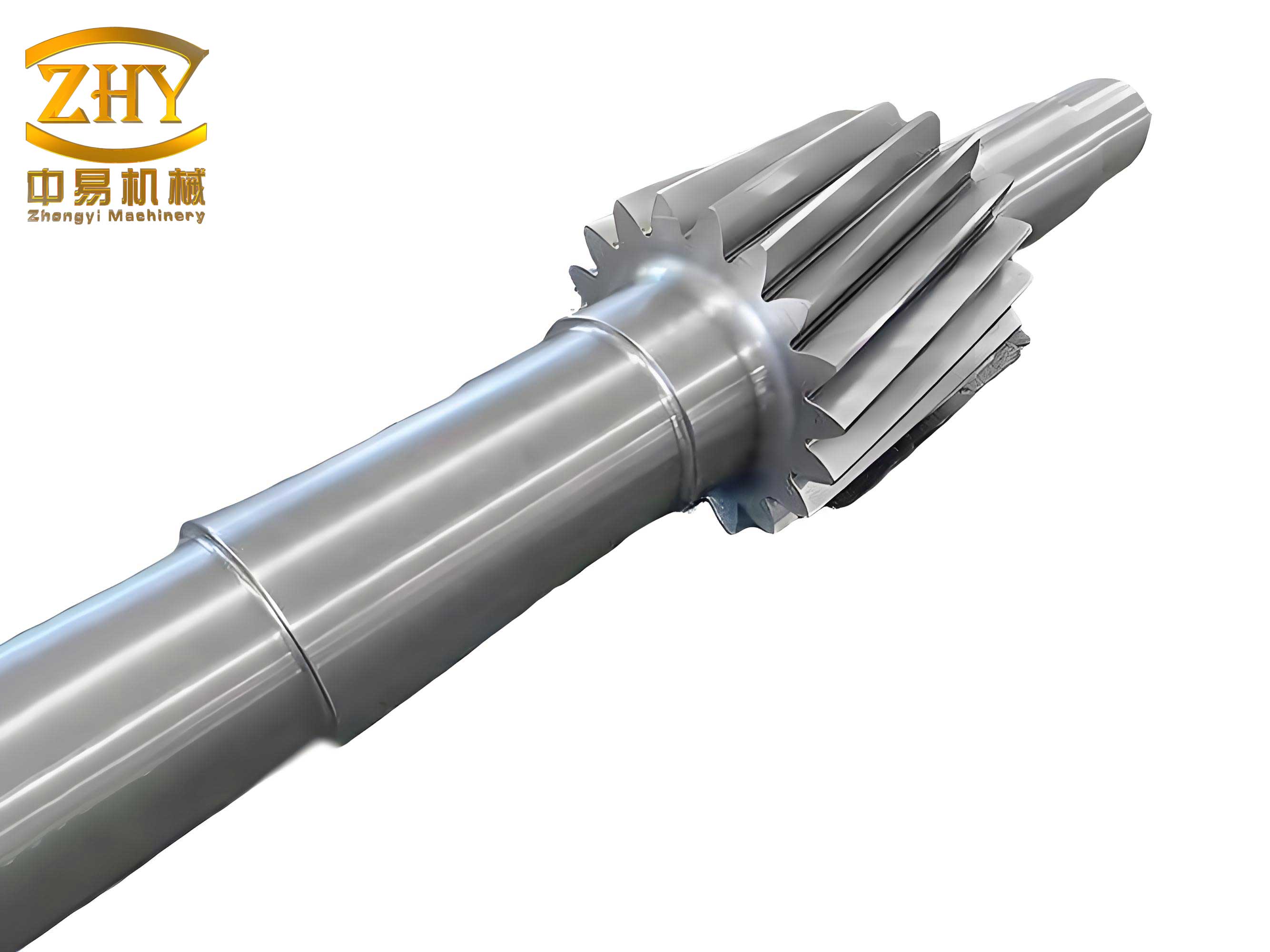
To understand the root cause, I analyzed the gear shaft bearing design. The original setup featured two bearings: a 32018 bearing on the left side and a 32916 bearing on the right side, housed in bearing seats within the machine frame. On the left side, near the feed chain, two polytetrafluoroethylene (PTFE) dustproof gaskets were used between the bearings, but no oil seal was present. These fixed gaskets wore against the rotating gear shaft, creating gaps that allowed water and contaminants to enter. On the right side, the bearing had no proper seal or end cover, making it even more vulnerable to water ingress from cleaning operations. Additionally, neither bearing had a dedicated lubrication point; the left bearing’s end cover was obstructed by external sprockets, and the right bearing lacked any means for grease replenishment. The lubricant used was aluminum-based grease, which has poor water resistance, emulsifies easily, and offers limited rust protection. Over time, water accumulation degraded the grease, leading to bearing failure. This design flaw not only affected the gear shaft but also had ripple effects on the entire feed system, as summarized in the table below:
| Component | Original Design Issue | Impact on Gear Shaft |
|---|---|---|
| Left Bearing Seal | PTFE dustproof gaskets only, no oil seal | Water ingress, grease wash-out, increased friction |
| Right Bearing Seal | No seal or end cover, exposed design | Direct water exposure, rapid corrosion |
| Lubrication System | No grease fittings, inaccessible for maintenance | Inability to replenish grease, accelerated wear |
| Lubricant Type | Aluminum-based grease, not water-resistant | Emulsification, loss of lubricity, rust formation |
| Bearing Life | Approximately 6 months | Frequent replacements, high downtime and cost |
The failure mechanism can be modeled using bearing life equations. The basic rating life for rolling bearings, according to the ISO 281 standard, is given by:
$$ L_{10} = \left( \frac{C}{P} \right)^p $$
where \( L_{10} \) is the rated life in millions of revolutions, \( C \) is the dynamic load rating, \( P \) is the equivalent dynamic load, and \( p \) is an exponent (3 for ball bearings, 10/3 for roller bearings). For the gear shaft bearings, which are roller bearings, \( p = 10/3 \). However, this equation assumes proper lubrication and sealing. When water contamination occurs, the effective life is reduced due to factors like corrosion and grease breakdown. I introduced a contamination factor \( f_c \) to account for this:
$$ L_{10, contaminated} = f_c \times L_{10} $$
where \( f_c < 1 \) depends on the level of contamination. In the original design, \( f_c \) was low due to water ingress, drastically shortening the gear shaft bearing life. By improving sealing and lubrication, \( f_c \) can be increased, thereby extending the life. Additionally, the lubricant’s performance can be quantified by its water washout resistance, which measures the percentage of grease lost under water spray. For aluminum grease, this value is high (e.g., over 50%), whereas for improved greases, it can be below 10%. The relationship between grease washout and bearing life can be expressed as:
$$ L \propto \frac{1}{W} $$
where \( L \) is bearing life and \( W \) is water washout percentage. Thus, reducing washout directly enhances the gear shaft durability.
To address these issues, I implemented a comprehensive improvement plan focusing on three areas: sealing, lubrication accessibility, and lubricant type. First, for sealing, I modified the bearing seats. On the left side, the bearing seat was shortened by machining to create space for an oil seal. This modification did not alter other critical dimensions, such as the bearing定位精度 or load-bearing capacity, ensuring the gear shaft alignment remained intact. I replaced the PTFE dustproof gaskets with an oil seal measuring 85 mm × 100 mm × 8 mm. This oil seal has a spring-loaded inner lip that maintains constant contact with the gear shaft, eliminating gaps and providing superior waterproofing compared to the static gaskets. On the right side, the bearing seat was thickened by 9 mm to accommodate a larger oil seal (85 mm × 110 mm × 12 mm). Since the right-side machine frame is hollow, this change did not affect structural integrity or the gear shaft’s受力情况. The oil seals were selected for their high resilience and compatibility with the gear shaft’s rotational speed, which typically operates at speeds derived from the chain drive system. The gear shaft speed \( n \) can be calculated from the motor speed and transmission ratios:
$$ n = \frac{N_m \times D_1}{D_2} $$
where \( N_m \) is the motor speed, \( D_1 \) is the driving sprocket diameter, and \( D_2 \) is the driven sprocket diameter on the gear shaft. For the SQ37A cutter, \( n \) ranges from 50 to 100 rpm, depending on the feed rate. The oil seals are rated for such speeds, ensuring effective sealing without excessive wear.
Second, I redesigned the lubrication system to enable periodic grease replenishment. For the left bearing, I drilled an oil hole through the bearing seat side and installed a grease nipple that connects directly to the bearing cavity. This allows for easy injection of fresh grease without disassembling the gear shaft components. For the right bearing, which lacked an end cover, I designed a custom压盖 (pressure cover) with an oil hole and a PTFE gasket. This压盖 is临时 installed during lubrication: the lock nut and washer are removed, the压盖 is attached, grease is injected via a nipple, and then the压盖 is replaced with the original lock nut. This design ensures that the right bearing can be lubricated every 2–3 months, as recommended. The grease volume required per bearing \( V_g \) can be estimated based on bearing dimensions:
$$ V_g = k \times (B \times D) $$
where \( B \) is the bearing width, \( D \) is the bore diameter, and \( k \) is a fill factor (typically 0.005 to 0.01 for grease lubrication). For the 32018 bearing (bore 90 mm, width 30 mm) and 32916 bearing (bore 80 mm, width 35 mm), \( V_g \) is approximately 15–20 cm³ per bearing. The lubrication interval \( T \) is determined by the grease’s service life, which depends on operating conditions:
$$ T = \frac{L_g}{n \times f_{op}} $$
where \( L_g \) is the grease life in hours, \( n \) is the speed in rpm, and \( f_{op} \) is an operational factor accounting for load and temperature. With the improvements, \( T \) was set to 500–1000 hours, aligning with typical maintenance schedules.
Third, I replaced the aluminum-based grease with a calcium sulfonate complex grease. This advanced lubricant offers excellent water resistance, with a density greater than water, preventing it from being washed away. Its adhesion properties and anti-emulsion characteristics make it ideal for the humid environment of tobacco cutters. The performance comparison between the old and new greases is summarized in the table below:
| Property | Aluminum-Based Grease (Original) | Calcium Sulfonate Grease (Improved) | Impact on Gear Shaft Bearing |
|---|---|---|---|
| Water Washout Resistance (ASTM D1264) | >50% loss | <10% loss | Reduced grease depletion, longer lubrication intervals |
| Rust Protection (ASTM D1743) | Moderate, prone to corrosion | Excellent, high anti-corrosion | Prevents bearing rust from water ingress |
| Dropping Point (°C) | ~150 | >300 | Better stability at operating temperatures |
| Mechanical Stability | Poor, breaks down under shear | High, maintains consistency | Reduces wear on gear shaft surfaces |
| Compatibility with Seals | Compatible but degrades | Fully compatible, prolongs seal life | Enhances overall sealing effectiveness |
The improvement in grease performance directly benefits the gear shaft by reducing friction and wear. The coefficient of friction \( \mu \) in the bearing can be expressed as a function of grease properties:
$$ \mu = f(\eta, \text{additives}) $$
where \( \eta \) is the base oil viscosity. Calcium sulfonate grease maintains a stable \( \eta \) even in wet conditions, leading to lower \( \mu \) and reduced heat generation. This minimizes thermal expansion of the gear shaft, which could otherwise cause misalignment. The heat generation \( Q \) in a bearing is given by:
$$ Q = \mu \times F \times v $$
where \( F \) is the load on the gear shaft bearing and \( v \) is the surface velocity. By lowering \( \mu \), \( Q \) decreases, enhancing bearing longevity.
Implementing these improvements required careful planning. I started by machining the existing bearing seats on several SQ37A cutters in our facility. The modifications were done using CNC milling to ensure precision, as any deviation could affect the gear shaft’s alignment and the feed chain tension. The oil seals were pressed into place with proper tools to avoid damage. For lubrication, I standardized the grease nipples and developed a maintenance protocol for technicians to follow. The calcium sulfonate grease was introduced across all machines, with initial greasing done during the retrofit. The entire process was completed during scheduled downtime to minimize production impact. To validate the changes, I monitored key parameters such as bearing temperature, vibration levels, and grease condition over time. Vibration analysis, in particular, was crucial for assessing the gear shaft health. The vibration amplitude \( A \) can be correlated with bearing wear:
$$ A = k_w \times \sqrt{ \frac{W}{t} } $$
where \( k_w \) is a wear constant, \( W \) is the wear volume, and \( t \) is time. Post-improvement, \( A \) showed a significant reduction, indicating less wear on the gear shaft bearings.
The results of these improvements were substantial. After implementing the enhanced sealing and lubrication, the gear shaft bearing life increased from an average of 6 months to over 18 months—a threefold extension. This was confirmed through long-term tracking of multiple cutters over two years. The reduction in water ingress prevented grease degradation, and the periodic lubrication ensured optimal bearing performance. The table below compares key metrics before and after the improvements:
| Metric | Before Improvement | After Improvement | Improvement Percentage |
|---|---|---|---|
| Bearing Life (months) | 6 | 18 | 200% increase |
| Maintenance Frequency (replacements/year) | 2 | 0.67 | 66.5% reduction |
| Downtime per Incident (hours) | 8–12 | 4–6 (only for lubrication) | ~50% reduction |
| Gear Shaft Replacement Frequency (years) | 2 | 4+ (projected) | 100%+ increase |
| Cut Quality Issues (e.g., uneven cuts) | Frequent | Rare | Significant reduction |
| Lubricant Consumption (kg/year per machine) | 1.5 | 0.5 | 66.7% reduction |
The extended bearing life translated into lower spare parts costs and reduced labor for repairs. Previously, replacing the gear shaft bearings involved disassembling the entire drive chain, which took 8–12 hours and required skilled technicians. Now, with longer intervals, maintenance is mostly limited to grease replenishment, which takes under an hour. Additionally, the improved gear shaft stability enhanced the cut quality by ensuring consistent feed chain speed. The cut width variation \( \Delta w \) is inversely related to the gear shaft vibration:
$$ \Delta w \propto \frac{1}{\text{stability}} $$
With less vibration, \( \Delta w \) decreased, reducing the occurrence of fine strands and improving the overall tobacco cut uniformity. This has positive implications for downstream processes like drying and blending.
Furthermore, the use of calcium sulfonate grease proved cost-effective in the long run. Although it is more expensive per unit than aluminum grease, its longevity and performance reduce the total cost of ownership. The cost savings \( S \) over a period \( T \) can be estimated as:
$$ S = (C_o \times F_o) – (C_n \times F_n) + (L_o \times R_o) – (L_n \times R_n) $$
where \( C_o \) and \( C_n \) are the costs of old and new grease, \( F_o \) and \( F_n \) are the annual consumption frequencies, \( L_o \) and \( L_n \) are the labor costs for bearing replacements, and \( R_o \) and \( R_n \) are the replacement rates. For our facility, \( S \) was calculated to be over $500 per machine per year, considering reduced downtime and parts.
In conclusion, the improvements to the gear shaft bearing sealing and lubrication in the SQ37A tobacco cutter have been highly successful. By replacing inadequate dustproof gaskets with robust oil seals, adding accessible lubrication points, and switching to a water-resistant calcium sulfonate grease, I significantly enhanced the reliability of the gear shaft. This not only extended bearing life from 6 to 18 months but also improved cut quality, reduced maintenance workload, and lowered operational costs. The gear shaft, as a critical component, now operates with greater efficiency and durability, contributing to the overall productivity of the tobacco cutting process. These modifications serve as a model for similar upgrades in other tobacco machinery, emphasizing the importance of tailored sealing and lubrication solutions for gear shafts in humid industrial environments.
Looking ahead, I plan to explore further optimizations, such as integrating sensors for real-time monitoring of gear shaft bearing conditions or experimenting with advanced composite seals. The principles applied here—enhancing sealing effectiveness, ensuring maintenance accessibility, and selecting appropriate lubricants—are universally applicable to gear shafts across various industries. This experience underscores how targeted engineering interventions can resolve persistent equipment issues, leading to sustainable improvements in manufacturing operations.