
In the current era of rapid advancement in military aviation, the demand for unparalleled safety and reliability of aero-engines has escalated significantly. To ensure their secure operation and prevent catastrophic failures, rigorous ground maintenance and periodic testing of engine components are imperative. This testing necessitates specialized high-speed, high-precision gearbox equipment to simulate the extreme rotational speeds and pressures encountered during flight. A critical point of failure in such gearboxes is the wear of the output gear shaft‘s spline section. This wear is typically induced by long-term exposure to alternating loads, inadequate lubrication, and suboptimal heat dissipation. The conventional solution—complete replacement of the gear shaft—is economically and logistically burdensome. A new shaft costs approximately 1.4 million units of currency with a procurement lead time of about three months. Notably, the helical gear portion of the shaft constitutes over 70% of its total manufacturing cost, while the spline section accounts for less than 10%. Discarding the entire gear shaft due to spline wear is therefore a significant waste of resources, contradicting principles of sustainable manufacturing. This scenario presents a compelling case for the application of remanufacturing technologies.
Laser cladding, a prominent surface engineering technique within the remanufacturing domain, offers an effective solution. It is a process for depositing alloy coatings with low dilution and excellent metallurgical bonding to the substrate. Compared to traditional welding methods like overlay welding, laser cladding features lower heat input, which minimizes thermal distortion and the heat-affected zone (HAZ). It produces exceptionally fine microstructures and facilitates precise control and automation. These advantages make it highly suitable for the repair and restoration of high-value mechanical components like gear shafts. The technology has seen successful applications in various engineering fields, including the repair of nickel-based superalloy valves, camshaft lobes, and cracks in diesel engine crankshafts, demonstrating its capability to restore or even enhance component performance.
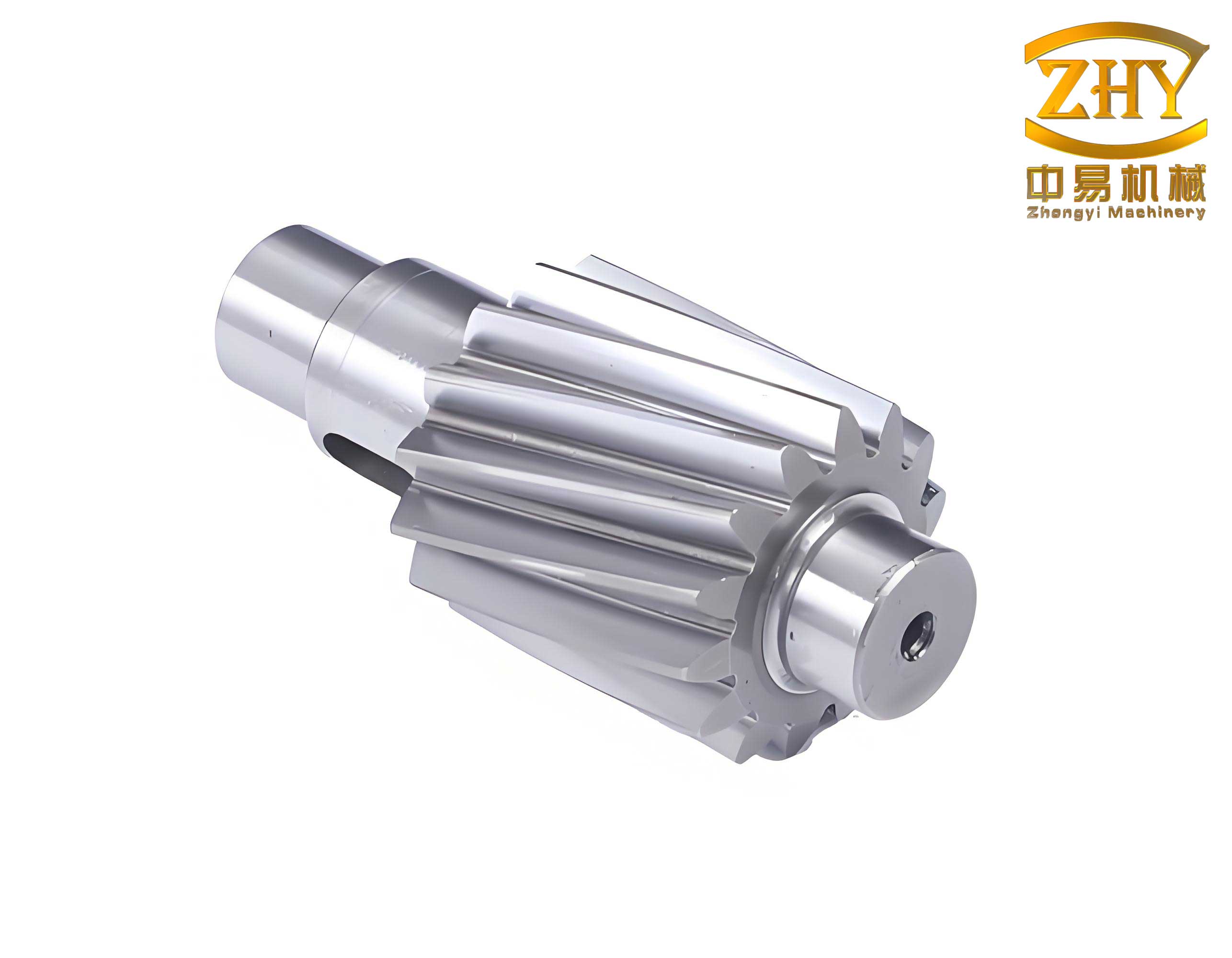
This study focuses on evaluating the feasibility of using laser cladding technology to repair worn spline sections on high-speed gear shafts. The assessment encompasses technical performance, including mechanical properties and service life, as well as a comprehensive cost-benefit analysis comparing the repair strategy to the conventional replacement method.
1. Substrate Material and Initial Condition
The subject component for repair is a high-speed gear shaft fabricated from the alloy structural steel 20CrNi2MoA. This material is chosen for its high strength, good toughness, and hardenability, making it suitable for heavily loaded components. The chemical composition and key mechanical properties of 20CrNi2MoA are detailed in Table 1. The manufacturing specification for the shaft involves carburizing and quenching the gear teeth section. The resulting case has an effective hardened depth ranging from 0.60 to 0.90 mm, a surface hardness between 57 and 62 HRC, and a core hardness between 27 and 33 HRC. The primary failure mode observed is severe wear on the external spline section, which engages with a mating coupling. The helical gear section typically remains intact under normal service conditions. For this investigation, a batch of four failed gear shafts was selected to provide sufficient data for statistical comparison and to optimize the repair process economics.
| Element/Property | Specification / Value |
|---|---|
| Carbon (C) | 0.17 – 0.23 % |
| Silicon (Si) | 0.17 – 0.37 % |
| Manganese (Mn) | 0.60 – 0.95 % |
| Chromium (Cr) | 0.40 – 0.70 % |
| Nickel (Ni) | 0.35 – 0.75 % |
| Molybdenum (Mo) | 0.20 – 0.30 % |
| Tensile Strength | ≥ 1080 MPa |
| Yield Strength | ≥ 835 MPa |
| Elongation | ≥ 12 % |
| Impact Energy | ≥ 55 J |
2. Laser Cladding Repair Process Flow
The repair of the worn gear shaft follows a meticulously defined sequence of operations to ensure the final component meets the original equipment specifications. The process flow is: Disassembly & Cleaning → Pre-repair Inspection → Machining & Preparation → Laser Cladding → Spline Machining → Dynamic Balancing → Post-repair Inspection.
2.1 Disassembly, Cleaning, and Pre-Repair Inspection
The gear shaft is first disassembled from the gearbox housing, and its bearings are removed using specialized tools. It undergoes ultrasonic cleaning in an alkaline solution for two hours to remove residual lubricants and wear debris, followed by drying with compressed air. A critical non-destructive testing (NDT) step is then performed using the solvent-removable dye penetrant method. This inspection, conducted according to relevant standards (e.g., NB/T47013-2015), aims to detect any surface cracks or defects, particularly on the critical helical gear teeth. If the gear teeth are damaged, repair is deemed uneconomical. As spline wear is the predominant failure mode, the gear shafts usually pass this inspection.
2.2 Substrate Preparation and Laser Cladding Parameters
The worn spline section is completely removed by turning on a lathe, eliminating the damaged material and any surface oxidation layer to expose a clean substrate. The prepared surface is then roughened via grinding to enhance adhesion for the subsequent cladding layer. The core of the repair is the laser cladding process. Given the substantial wear, a multi-layer cladding strategy with a total thickness of approximately 2.2 mm (including a 0.2 mm machining allowance) is employed. To tailor the properties of the repaired gear shaft, a dual-powder strategy is adopted. A softer, more ductile iron-based alloy powder (e.g., Fe35-type) is used for the buffer layer adjacent to the substrate to ensure good bonding and stress relief. A harder, wear-resistant iron-based powder is used for the top functional layers. The composition of the top powder is shown in Table 2. Additives like MoS2 and La2O3 are mixed in a 95:5 ratio with the base iron powder to enhance strength and reduce cracking susceptibility.
| Element | Content (wt. %) |
|---|---|
| C | 0.15 |
| Cr | 13.5 |
| Si | 1.3 |
| Ni | 0.8 |
| B | 1.6 |
| Fe | Balance |
The optimized laser cladding parameters are summarized in Table 3. To minimize thermal stress and cracking, both the gear shaft substrate and the powder are preheated. The buffer layer is applied in a single pass (~0.3-0.4 mm), while the top layers are applied in 2-3 passes (~0.5-0.6 mm per pass). Interpass cooling time is strictly controlled to manage interlayer temperature and prevent excessive heat buildup. After cladding, the component is placed in an insulation box for slow, controlled cooling.
| Parameter | Value / Range |
|---|---|
| Laser Power | 3.0 kW |
| Shielding Gas (Argon) Flow | 10 – 30 L/min |
| Cladding Speed | 400 – 500 mm/min |
| Powder Feed Rate | 3.0 – 8.0 g/min |
| Substrate Preheating Temperature | 120 – 130 °C |
| Powder Preheating Temperature | 100 – 110 °C |
2.3 Post-Cladding Machining and Validation
The cladded gear shaft is then machined to its final dimensions. A new spline is precisely cut into the cladded material according to the original design drawings. Given the high operational speed (up to 28,000 rpm), dynamic balancing is a critical requirement. The repaired gear shaft undergoes balancing at 3,000 rpm, with a maximum permissible residual unbalance (Umax) specified. Imbalance is corrected by removing material from designated non-functional areas. Finally, a comprehensive post-repair magnetic particle inspection is conducted over the entire gear shaft to verify the absence of cracks induced during the cladding or machining processes.
3. Technical and Economic Feasibility Assessment
The viability of repairing the gear shaft via laser cladding is evaluated from both a technical performance and a cost perspective.
3.1 Microstructural and Mechanical Property Analysis
A primary concern is the thermal influence of the cladding process on the base material of the gear shaft. Microhardness profiling across the cladded cross-section reveals the integrity of the repair. The profile, from the core to the surface, typically shows four distinct zones:
- Core Substrate: Hardness remains unchanged from the original 20CrNi2MoA specification, confirming minimal thermal impact on the bulk material.
- Heat-Affected Zone (HAZ): A narrow region (approximately 0.3 mm wide) where hardness may be slightly lower than the core due to tempering effects from the cladding heat cycle.
- Buffer Layer: The Fe35-type clad layer shows hardness comparable to or slightly lower than the substrate, providing the desired toughness for load-bearing.
- Top Functional Layer: This layer exhibits a significantly higher hardness, often 25-35% greater than the original spline material, due to the fine microstructure and alloying elements.
The hardness gradient can be conceptually modeled. The hardness (H) as a function of distance (x) from the interface often follows a trend where the top layer hardness is highest, decreasing through the buffer layer and HAZ before stabilizing at the core hardness. The relationship between layer number (n) and average layer hardness (Havg,n) in multi-layer cladding with interpass cooling often shows a decreasing trend from the top layer downwards. This can be approximated for planning purposes as:
$$ H_{avg,n} = H_{max} – k \cdot (n_{total} – n) $$
where \( H_{max} \) is the hardness of the topmost layer, \( n_{total} \) is the total number of layers, \( n \) is the layer index from the substrate (n=1), and \( k \) is a material-dependent decay constant. Despite this gradient, the overall surface hardness of the repaired gear shaft exceeds that of a new component.
3.2 Service Life Performance
The ultimate test is the operational lifespan of the repaired gear shaft under simulated service conditions. A comparative test was conducted with four new gear shafts and four laser-clad repaired gear shafts installed in identical gearbox test rigs. The time to spline failure (or significant wear) was recorded. The results are summarized in Table 4.
| Cohort | Sample Size | Average Service Life (Months) | Standard Deviation (Months) | Performance vs. New |
|---|---|---|---|---|
| New Gear Shafts | 4 | Lnew | σnew | 100% (Baseline) |
| Repaired Gear Shafts | 4 | Lrep = 1.15 * Lnew | σrep > σnew | 115% |
The repaired gear shafts demonstrated an approximately 15% longer average service life compared to the new ones. This enhancement is directly attributed to the superior surface hardness and wear resistance of the laser-clad layer. The higher standard deviation observed in the repaired cohort was linked to an external variable in one test unit (degraded lubricant), not an inherent process flaw.
3.3 Comprehensive Cost-Benefit Analysis
The economic argument for repair is compelling. A detailed breakdown comparing the traditional replacement method with the laser cladding repair strategy is presented in Table 5.
| Metric | New Gear Shaft (Replacement) | Repaired Gear Shaft (Laser Cladding) | Ratio (Repaired / New) |
|---|---|---|---|
| Unit Cost (Currency) | Cnew = 1,400,000 | Crep = 500,000 | ~ 0.36 |
| Lead Time / Turnaround (Days) | Tnew = 90 | Trep = 12 | ~ 0.13 |
| Relative Service Life | Lnew = 1.0 (Baseline) | Lrep = 1.15 * Lnew | 1.15 |
| Cost per Unit Life (C/L) | $$ \frac{C_{new}}{L_{new}} $$ | $$ \frac{C_{rep}}{L_{rep}} = \frac{C_{rep}}{1.15 \cdot L_{new}} $$ | ~ 0.31 |
The analysis reveals decisive advantages for the laser cladding repair approach:
- Direct Cost Saving: The repair cost is only about 36% of the price of a new gear shaft.
- Time Saving: The turnaround time is reduced to approximately 13% of the new part procurement cycle, drastically minimizing equipment downtime.
- Enhanced Value: When factoring in the extended service life, the effective “cost per unit of service life” for the repaired gear shaft drops to about 31% of that for a new shaft. This can be expressed as a Return on Investment (ROI) for the repair operation:
$$ ROI_{repair} = \frac{(C_{new} – C_{rep}) + V \cdot (L_{rep} – L_{new})}{C_{rep}} $$
where \( V \) represents the value generated per unit time of gear shaft operation (avoided downtime, production output, etc.). This ROI is typically highly positive.
4. Conclusion
This investigation comprehensively demonstrates the high feasibility of using laser cladding technology for the repair of worn spline sections on high-speed gear shafts. The process protocol, involving careful preparation, multi-layer cladding with functionally graded materials, and stringent post-process machining and validation, successfully restores the component to its original dimensional specifications. Crucially, the technical performance of the repaired gear shaft is not merely restored but enhanced, with the laser-clad spline exhibiting superior surface hardness and wear resistance, leading to a longer operational lifespan compared to a new gear shaft. From an economic standpoint, the benefits are unequivocal: the repair strategy offers substantial savings in both direct cost (approximately 64% reduction) and lead time (approximately 87% reduction), while delivering better life-cycle value. Therefore, laser cladding stands out as a technically robust and economically superior alternative to the wasteful practice of replacing entire gear shafts due to localized spline wear, aligning perfectly with the goals of advanced, sustainable remanufacturing.