
In modern industrial production, the execution of large-scale and precise manufacturing tasks predominantly relies on mechanized power. Within this framework, the advent of gear-driven machinery has infused modern mechanical assemblies with transformative capabilities. A critical component in these systems, the gear shafts, are subjected to complex loading conditions during operation. Traditional transmission gear shafts experience centrifugal forces due to rotation, combined with periodic forces stemming from gas and reciprocating inertial loads. This article primarily investigates a fracture failure incident involving the gear shafts of a specific model’s transmission gearbox, which occurred after a period of service. To definitively identify the root cause of the fracture, expose systemic vulnerabilities, and subsequently optimize the gear structural design while enhancing future design, inspection, and maintenance protocols, a comprehensive experimental analysis was conducted on the failed transmission gear. This study aims to provide scientific data and a theoretical foundation for product failure analysis.
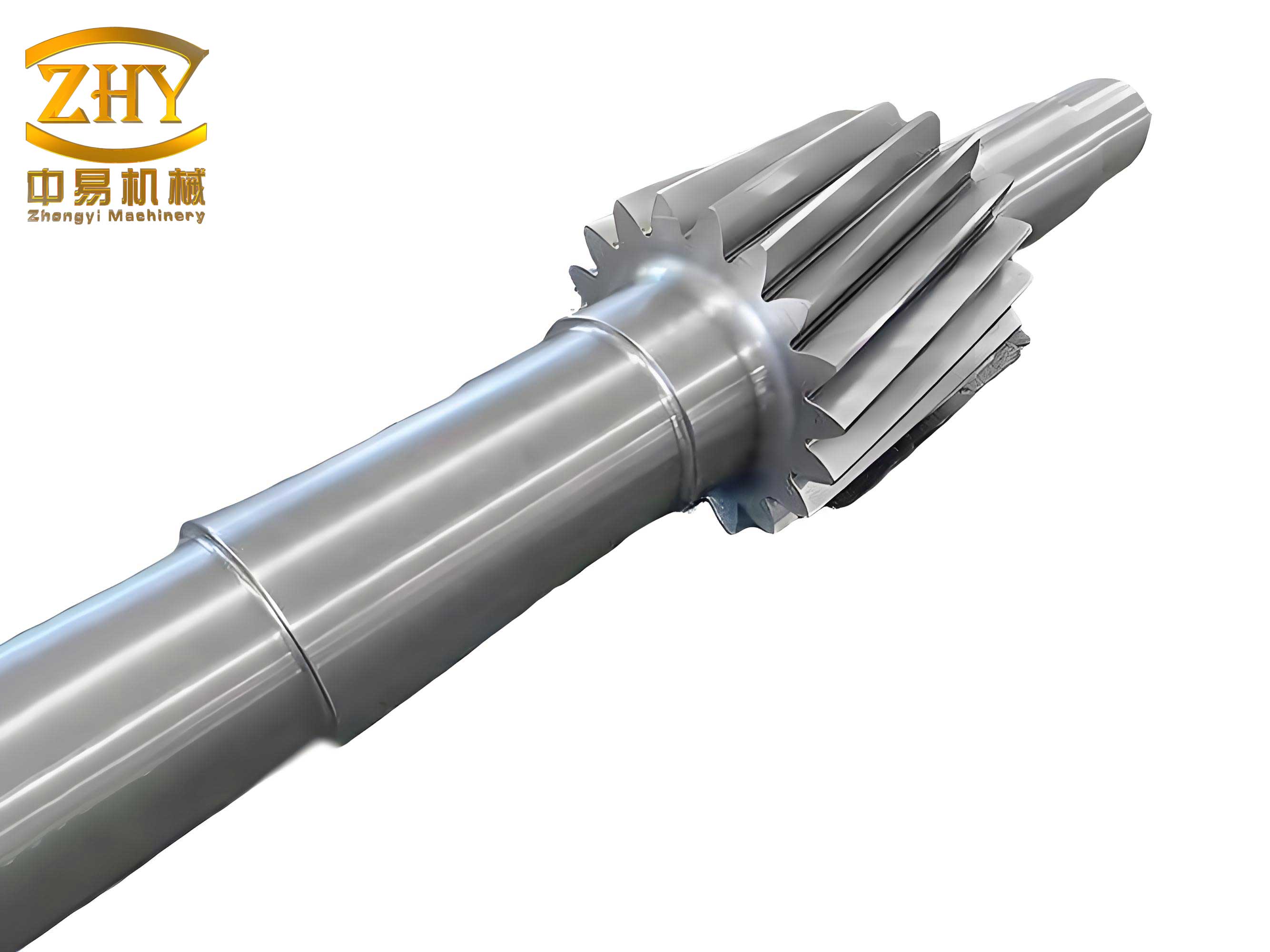
Detection and Analysis Methodology for Transmission Gear Shaft Fracture
The material used for the transmission’s mechanical gear shafts was grade 35 steel. The analytical procedure encompassed multiple levels of investigation, summarized in the table below:
| Analysis Phase | Methods and Objectives | Key Equipment/Standards |
|---|---|---|
| 1. Macroscopic Examination | Visual inspection of the fracture surface to determine crack initiation point, propagation path, and failure mode (e.g., fatigue, overload). | Macro lens, Stereomicroscope |
| 2. Chemical Composition | Verify material conformity to specified grade (35 steel). | Inductively Coupled Plasma Optical Emission Spectrometry (ICP-OES) |
| 3. Microstructural Analysis | Examine metallurgical structure near fracture origin and in the base material for defects or anomalies. | Optical Microscope, Scanning Electron Microscope (SEM: FEI Quanta 200) |
| 4. Mechanical Properties | Assess tensile strength, yield strength, and impact toughness to ensure they meet specifications. | Universal Testing Machine, Impact Tester (Charpy V-notch: 10x10x55 mm specimen) |
| 5. Fractography | Detailed study of fracture surface morphology using high-resolution imaging to identify failure mechanisms. | Scanning Electron Microscope (SEM) |
Samples for microstructural and mechanical analysis were carefully extracted via wire-cutting, followed by manual grinding, mechanical polishing, and etching. The SEM and metallographic microscopes were employed to observe the phase constitution, such as tempered sorbitte, and to detect imperfections like pores or inclusions.
Experimental Results and Fracture Mechanism Analysis
Macroscopic Fractography
Macro-examination located the fracture at the threaded connection between the shaft body and its nut. The fracture characteristics were unequivocally indicative of fatigue failure. The fatigue crack initiated at the root of a thread on one side of the shaft surface—a classic stress concentration site. The crack then propagated under cyclic loading, primarily extending transversely across the shaft section. The final rupture occurred rapidly from the opposite side, creating a longitudinal cleavage. The fatigue zone occupied approximately one-third of the total fracture area, signifying that the gear shafts were subjected to high-magnitude cyclic stresses. No gross plastic deformation or material defects were apparent at the macroscopic level.
Material Conformance: Chemistry and Mechanical Properties
Chemical analysis confirmed the material composition was within the limits for grade 35 steel, ruling out non-conformity as a primary cause. Tensile testing yielded results compliant with the relevant national standards for the material’s strength grade. The basic mechanical property parameters can be represented by:
$$ \sigma_y = 350 \text{ MPa (min)}, \quad \sigma_u = 500 – 650 \text{ MPa} $$
where $\sigma_y$ is the yield strength and $\sigma_u$ is the ultimate tensile strength. These results indicated the gear shafts‘ base material properties were nominally adequate.
Microscopic Analysis and Root Cause Determination
SEM fractography revealed distinct fatigue striations and beach marks radiating from the initiation site at the thread root. A thumbnail-shaped fatigue zone extended about 2 mm in depth before transitioning to a final fast fracture zone exhibiting dimpled rupture morphology (micro-void coalescence). Critically, the examination of the microstructure adjacent to the crack initiation site showed a normal tempered sorbitic structure without evidence of decarburization, gross segregation, or significant non-metallic inclusions. The thread root itself showed no pre-existing cracks or machining defects severe enough to single-handedly cause failure.
The convergence of evidence pointed to fatigue failure originating at a stress concentration feature (the thread root). The fundamental failure mechanism can be modeled by relating the applied cyclic stress ($\Delta \sigma$), the material’s fatigue strength ($\sigma_f’$), and the stress concentration factor ($K_t$):
$$ \Delta \sigma_{\text{local}} = K_t \cdot \Delta \sigma_{\text{nominal}} $$
When the local stress range $\Delta \sigma_{\text{local}}$ exceeds the endurance limit of the material, fatigue crack initiation occurs. For finite life, the relationship is often described by Basquin’s equation:
$$ \Delta \sigma = \sigma_f’ (2N_f)^b $$
where $N_f$ is the number of cycles to failure and $b$ is the fatigue strength exponent. The stress concentration factor $K_t$ for a threaded feature is significantly greater than 1, dramatically elevating the local stress. The absence of material defects suggests failure was driven by a combination of:
- High cyclic operational loads (bending/torsion).
- An inherent geometric stress concentrator (thread root).
- Potential under-estimation of service loads or the stress concentration factor during design.
Conclusion on Gear Shaft Failure
In summary, the fracture of the transmission gear shafts was caused by high-cycle fatigue initiating at the stress-concentrating thread root. The material’s chemical and baseline mechanical properties met specifications. The primary corrective action lies in design optimization to mitigate stress concentration at critical locations on the gear shafts. This can be achieved through:
- Increasing the root radius of threads.
- Implementing surface treatments like shot peening to induce beneficial compressive residual stresses.
- Using materials with higher fatigue strength for such critical dynamic components.
- Re-evaluating service load spectra for a more conservative design margin.
This failure analysis underscores the importance of a holistic approach encompassing design, material selection, manufacturing quality control, and realistic load assessment for durability.
Technical Appraisal Methods for Automotive Brake Systems in Accident Investigation
Following the analysis of a specific component failure, we broaden the perspective to the systemic technical appraisal of vehicle safety systems, particularly after a traffic incident. The braking system is paramount for vehicle safety. Road traffic accidents often involve complex interactions between human, vehicular, and environmental factors. Among vehicular factors, brake system malfunctions contribute significantly. Therefore, conducting a precise technical appraisal of a肇事 vehicle’s brake system is a crucial forensic tool for determining the cause of an accident, providing essential evidence for liability assessment and subsequent actions.
Function and Appraisal Basis of Brake Systems
An automotive brake system, comprising service, parking, emergency, and sometimes auxiliary brakes, is designed to decelerate or stop the vehicle controllably. The technical appraisal of a brake system post-accident relies on established national standards, primarily:
- GB 7258-2017: “Safety Specifications for Power-driven Vehicles Operating on Roads” – The mandatory benchmark.
- GB 21861-2016: “Items and Methods of Safety Technology Inspection for Motor Vehicles” – Inspection procedures.
- GA/T 642-2006: “Technical Inspection and Assessment of Vehicles in Traffic Accidents” – Specific guidance for accident vehicle appraisal.
Appraisal Methodology Classification
The methodology depends heavily on the post-accident condition of the vehicle. The appraisal approach is categorized as follows:
| Vehicle Condition | Primary Appraisal Method | Key Measurable Parameters |
|---|---|---|
| Operational (Can be driven) | Dynamic Testing: Bench Test or Road Test | Braking force per wheel, deceleration, stopping distance, balance, coordination time. |
| Non-Operational (Severely damaged) | Static Inspection & Component Disassembly | Mechanical integrity, linkage condition, fluid leaks, pad/shoe wear, component defects. |
| Component-Specific Suspicions | Laboratory Performance Testing | Material properties of failed parts (similar to gear shafts analysis), hydraulic pressure tests. |
Dynamic Appraisal Analysis: Bench Test vs. Road Test
For operational vehicles, two main dynamic methods exist, each with distinct advantages and limitations.
| Method | Advantages | Limitations & Challenges |
|---|---|---|
| Bench Test (Roller or Plate Dynamometer) |
|
|
| Road Test (Instrumented Deceleration Run) |
|
|
The deceleration ($a$) and stopping distance ($s$) from an initial speed ($v$) are fundamentally linked on a uniform surface:
$$ s = \frac{v^2}{2a} \quad \text{and} \quad a = \mu g $$
where $g$ is acceleration due to gravity and $\mu$ is the tire-road adhesion coefficient. The braking force $F_b$ at a wheel is:
$$ F_b = \mu \cdot N $$
where $N$ is the normal load on that wheel, which shifts dynamically during braking. A key assessment criterion is the braking force imbalance between wheels on the same axle, which should not exceed a specified percentage (e.g., 24% for the first axle in many standards), as it can lead to dangerous pulling:
$$ \text{Imbalance} = \frac{|F_{b,\text{left}} – F_{b,\text{right}}|}{\max(F_{b,\text{left}}, F_{b,\text{right}})} \times 100\% $$
Static and Component-Based Appraisal
For non-operational vehicles, a detailed component-level inspection is performed. This involves checking the entire hydraulic or pneumatic circuit for leaks, inspecting brake linings and discs/drums for wear and contamination, verifying the functionality of the master cylinder, boosters, and ABS modulators, and examining all mechanical linkages for damage or disconnection. Any failed component, much like the fractured gear shafts, may undergo its own metallurgical or forensic analysis to determine if failure was a cause or a consequence of the accident.
Challenges in Causation Determination
A central challenge in the technical appraisal is distinguishing between conditions that existed prior to the accident and damage resulting from the accident. For instance, a severed brake hose could be the cause of pre-crash failure, or it could have been torn during a collision. The appraiser must correlate the mechanical evidence with the accident dynamics and injury patterns. The appraisal conclusion must carefully state whether any identified brake system deficiency was likely a contributory factor to the loss of control or inability to stop, based on the principles of physics and engineering.
Synthesized Perspective on System Reliability and Forensic Engineering
The investigation of the transmission gear shafts fracture and the methodology for brake system appraisal, though addressing different systems, share a common philosophical foundation in forensic engineering. Both require:
- A Systematic, Multi-scale Approach: From macroscopic survey to microscopic analysis, from system performance to component material science.
- Adherence to Standards and Scientific Principles: Using standardized tests and fundamental engineering equations to quantify performance and failure.
- Root Cause Analysis: Moving beyond the immediate failure mode (e.g., fracture, loss of brake pressure) to identify the underlying design, manufacturing, or maintenance trigger.
- Objective Data Interpretation: Letting empirical data from spectroscopy, microscopy, mechanical testing, and performance measurements guide conclusions, rather than presumption.
The failure of critical components like gear shafts highlights the relentless impact of cyclic stresses and stress concentrators, governed by the laws of fatigue. The appraisal of safety-critical systems like brakes underscores the need for rigorous, condition-adapted testing protocols to reconstruct performance post-event. Together, they emphasize that ensuring mechanical integrity and functional safety in automotive systems is an ongoing endeavor spanning design validation, quality control in production (for both gear shafts and brake components), proactive maintenance, and precise post-failure analysis to feed back into the engineering lifecycle. This continuous improvement loop, powered by detailed technical analysis as demonstrated in these cases, is essential for advancing the reliability and safety of modern transportation systems.