
In modern automotive engineering, the Electric Power Steering (EPS) system has become a critical component for enhancing vehicle maneuverability and driver comfort. At the heart of the EPS reduction mechanism lies the screw gear assembly, commonly referred to as worm and gear, which transmits torque from the electric motor to the steering rack. The performance and durability of these screw gears are heavily influenced by geometric parameters, particularly the center distance between the worm and the gear. Variations in center distance, often arising from manufacturing tolerances, assembly errors, or operational wear, can lead to changes in tooth flank clearance, affecting meshing dynamics, noise generation, and contact stresses. This study focuses on investigating the relationship between the center distance and the maximum contact stress experienced by the screw gear in an EPS system. By combining analytical methods based on Hertzian contact theory with advanced finite element analysis (FEA), we aim to develop a predictive model for contact strength under varying center distances. The findings are expected to provide valuable insights for design optimization, durability assessment, and noise reduction in EPS screw gear assemblies.
The screw gear mechanism in EPS systems typically consists of a steel worm and a polymer-based gear, offering advantages such as high reduction ratios, compact design, and smooth operation. However, the polymer gear’s lower strength compared to steel makes it susceptible to contact fatigue and wear, especially under cyclic loading. Contact stress at the tooth interface is a primary factor governing failure modes like pitting and spalling. Therefore, understanding how installation parameters like center distance influence contact stress is crucial for reliable design. This research employs both theoretical and computational approaches to analyze the contact behavior, with an emphasis on the instant of tooth disengagement, where stress concentrations often peak. The outcomes will help establish tolerance limits for center distance to minimize damage and extend service life.
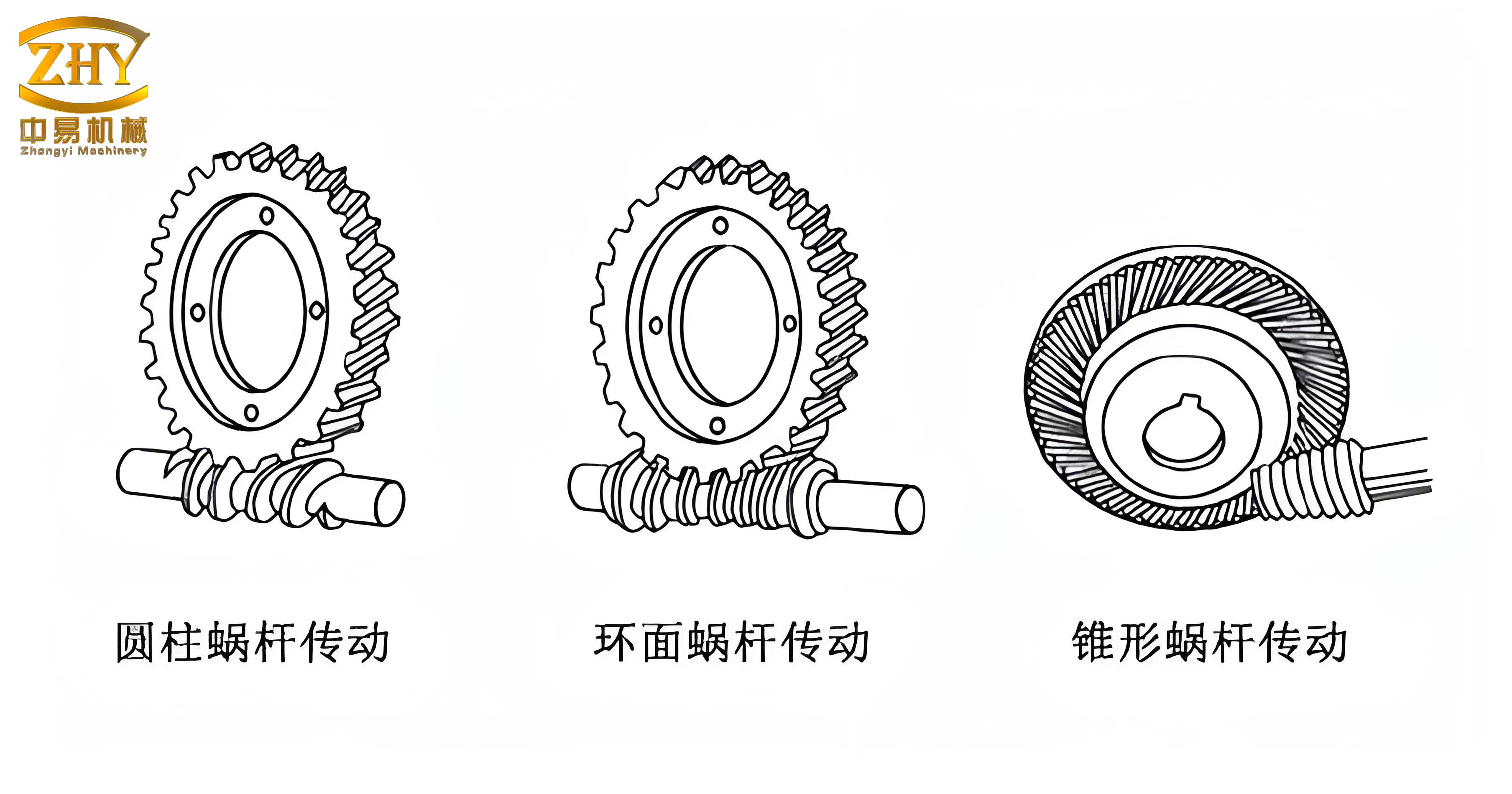
To derive an analytical expression for the contact stress in screw gears, we start with fundamental Hertzian contact theory. The classic Hertz formula for two elastic bodies in contact is given by:
$$ \sigma_{H0} = Z_E \sqrt{\frac{F_n}{L \rho_n}} $$
where $\sigma_{H0}$ is the nominal contact stress (in MPa), $Z_E$ is the material elasticity coefficient (in $\text{MPa}^{1/2}$), $F_n$ is the normal force (in N), $L$ is the length of the contact line (in mm), and $\rho_n$ is the composite radius of curvature (in mm). For a screw gear pair, we adapt this formula by considering the specific geometry of worm and gear engagement. Assumptions include negligible tooth deformation, uniform pressure distribution along the contact line, and a simplified model where the worm resembles a rack and the gear tooth is treated as an involute profile. These assumptions allow for a tractable analytical solution while capturing key trends.
The normal force $F_n$ acting on the screw gear tooth is related to the transmitted torque. For a gear driven by a worm, the normal force can be expressed as:
$$ F_n = \frac{2000 \eta T_2}{d_2 \cos \alpha \cos \gamma} $$
Here, $\eta$ is the transmission efficiency (taken as 0.7 in this study), $T_2$ is the torque on the gear (in N·m), $d_2$ is the gear pitch diameter (in mm), $\alpha$ is the lead angle at the pitch circle (in degrees), and $\gamma$ is the normal pressure angle (in degrees). The contact line length $L$ for the screw gear is derived from geometric considerations. Given that the gear tooth wraps around the worm, the minimum contact line length $L_{\text{min}}$ is:
$$ L_{\text{min}} = \frac{2\pi d_1 \theta}{360^\circ \cos \gamma} $$
where $d_1$ is the worm pitch diameter (in mm), and $\theta$ is half the gear face angle (with $2\theta = 150^\circ$). The composite radius of curvature $\rho_n$ for the screw gear pair, assuming the worm surface has a large curvature radius, simplifies to:
$$ \rho_n = \frac{d_2 \sin \alpha}{2 \cos \gamma} $$
Substituting these expressions into the Hertz formula yields the contact stress for the screw gear at the instant of disengagement:
$$ \sigma_{H0} = Z_E \sqrt{ \frac{2000 \eta T_2}{ \frac{\pi \theta d_1 d_2^2 \sin \alpha \cos \alpha}{360^\circ \cos \gamma} } } $$
This equation highlights the influence of geometric parameters, including center distance, which affects $d_1$ and $d_2$ since they are related by the center distance $a$ via $a = (d_1 + d_2)/2$. For the EPS screw gear studied, key parameters are listed in Table 1. The screw gear materials are polyamide (PA46) for the gear and steel for the worm, with properties summarized in Table 2. The analytical model will be used to compute contact stress for varying center distances, focusing on the disengagement moment where stress is maximal.
| Component | Number of Teeth | Face Width (mm) | Profile Shift Coefficient | Lead Angle at Pitch (°) | Center Distance (mm) | Normal Pressure Angle (°) | Module (mm) |
|---|---|---|---|---|---|---|---|
| Screw Gear | 36 | 15 | 0.3036 | 17.73 | 45 | 14.5 | 2.0997 |
| Worm | 2 | 36 | 0 | 17.73 |
| Material | Density (kg/m³) | Yield Strength (MPa) | Tensile Strength (MPa) |
|---|---|---|---|
| PA46 (Gear) | 1100 | 84 | 140 |
| Steel (Worm) | 7850 | 780 | 1080 |
To complement the analytical approach, a detailed finite element analysis (FEA) was conducted using transient dynamic simulation. This method accounts for nonlinearities such as contact, friction, and material behavior, providing a more realistic stress distribution. The FEA model was built based on the actual screw gear geometry, but to reduce computational cost, a simplified model was used where only one gear tooth engages with the worm. This simplification is justified since the contact stress peak occurs during single-tooth engagement at disengagement. The model was meshed with hexahedral elements to improve accuracy and convergence, resulting in 479,578 nodes and 13,783 elements. Boundary conditions included fixing the worm ends while allowing rotation about its axis, constraining the gear against translation but permitting rotation, and applying a torque of 60 N·m to the worm with a corresponding resistive torque on the gear. The worm rotational speed was set to 147.03 rad/s over a simulation time of 0.013 seconds, divided into 200 time steps. Friction between the screw gear surfaces was modeled with a coefficient of 0.05, based on experimental measurements for such polymer-steel pairs. The augmented Lagrangian algorithm was employed for contact resolution due to its robustness in handling nonlinear dynamics.
The center distance was varied from 44.97 mm to 45.03 mm in increments of 0.01 mm, covering a typical tolerance range of ±0.15 mm. For each center distance, the tooth flank clearance (backlash) was determined geometrically, and the maximum contact stress on the screw gear at the instant of disengagement was extracted from FEA results. The relationship between center distance, backlash, and maximum contact stress is summarized in Table 3. As observed, backlash increases linearly with center distance, while the contact stress exhibits a non-linear trend, decreasing initially and then increasing. The minimum stress occurs at the nominal center distance of 45 mm, corresponding to a backlash of 0.2342 mm. This behavior can be attributed to changes in mesh stiffness and impact forces: at smaller center distances, reduced backlash may cause interference and higher stresses; at larger distances, increased backlash leads to greater impact during engagement, raising stress levels.
| Center Distance (mm) | Backlash (mm) | Maximum Contact Stress (MPa) |
|---|---|---|
| 44.97 | 0.2128 | 96.218 |
| 44.98 | 0.2199 | 92.179 |
| 44.99 | 0.2270 | 90.131 |
| 45.00 | 0.2342 | 89.709 |
| 45.01 | 0.2413 | 90.958 |
| 45.02 | 0.2485 | 92.486 |
| 45.03 | 0.2556 | 92.979 |
The data from Table 3 was fitted to a polynomial function to describe the relationship between backlash and maximum contact stress. A sixth-order polynomial provided an excellent fit with a coefficient of determination $R^2 = 1$, indicating high accuracy. The fitted equation is:
$$ y = 35070405632.00 x^6 – 49349698222.72 x^5 + 28902644000.61 x^4 – 9018296753.98 x^3 + 1581201136.29 x^2 – 147714439.57 x + 5744519.12 $$
where $y$ is the maximum contact stress in MPa and $x$ is the backlash in mm. This polynomial allows engineers to predict contact stress for any given backlash within the studied range, aiding in design and tolerance specification for screw gears. The non-monotonic trend underscores the importance of optimizing center distance to minimize stress and enhance durability.
Comparisons between analytical and FEA results are presented in Table 4. The analytical model consistently predicts higher contact stresses than FEA, with differences ranging from 8.57% to 14.57%. This discrepancy arises from the simplifying assumptions in the analytical derivation: it neglects tooth flexibility, assumes uniform load distribution, and does not account for dynamic effects like vibration and damping. In contrast, FEA captures these nuances, offering a more realistic stress field. However, both methods agree on the overall trend—contact stress decreases to a minimum at the nominal center distance before increasing. This validates the analytical model as a useful tool for preliminary design, while FEA serves for detailed verification. The screw gear’s contact strength is critical for EPS reliability, and these findings highlight how minor deviations in center distance can significantly impact stress levels.
| Center Distance (mm) | Backlash (mm) | FEA Stress (MPa) | Analytical Stress (MPa) | Difference (MPa) | Percentage Difference (%) |
|---|---|---|---|---|---|
| 44.97 | 0.2128 | 96.218 | 112.624 | 16.406 | 14.57 |
| 44.98 | 0.2199 | 92.179 | 106.714 | 14.535 | 13.62 |
| 44.99 | 0.2270 | 90.131 | 101.841 | 11.710 | 11.50 |
| 45.00 | 0.2342 | 89.709 | 99.155 | 9.446 | 9.53 |
| 45.01 | 0.2413 | 90.958 | 99.497 | 8.529 | 8.57 |
| 45.02 | 0.2485 | 92.486 | 102.663 | 10.177 | 9.91 |
| 45.03 | 0.2556 | 92.979 | 104.359 | 11.380 | 10.90 |
Further discussion on the implications for screw gear design is warranted. The non-linear relationship between center distance and contact stress suggests that there is an optimal center distance that minimizes stress, which in this case aligns with the nominal design value. Deviations from this optimum, whether due to manufacturing errors or wear, can increase stress by up to 7-8%, potentially accelerating fatigue failure. For polymer screw gears used in EPS systems, where material strength is lower, such increases are significant. Engineers should therefore prioritize tight control over center distance tolerances during production and assembly. Additionally, the fitted polynomial can be integrated into digital twin models for real-time health monitoring of screw gears, predicting stress based on measured backlash. This proactive approach could extend component life and reduce warranty costs.
From a dynamics perspective, changes in center distance affect not only contact stress but also system vibration and noise. Increased backlash leads to greater tooth impact at engagement, generating noise and harshness—a common complaint in EPS systems. By optimizing center distance to minimize contact stress, we indirectly reduce impact forces, contributing to quieter operation. Future work could explore the coupled effects of center distance, lubrication, and temperature on screw gear performance. Experimental validation using strain gauges or telemetry would further confirm the FEA predictions. Moreover, the methodology developed here can be applied to other types of screw gears in automotive or industrial applications, underscoring its versatility.
In conclusion, this study systematically investigates the effect of center distance on the contact strength of screw gears in EPS systems. Through analytical modeling and finite element analysis, we demonstrate that the maximum contact stress on the screw gear during disengagement follows a non-linear pattern with respect to center distance, initially decreasing and then increasing. The minimum stress occurs at the nominal center distance of 45 mm, with a corresponding backlash of 0.2342 mm. A sixth-order polynomial accurately fits the relationship between backlash and stress, providing a practical tool for prediction. While analytical methods offer a quick estimate, FEA delivers more accurate results by incorporating dynamic and non-linear effects. These insights emphasize the importance of precise center distance control in screw gear design to enhance durability, reduce noise, and ensure reliable EPS performance. The screw gear, as a critical component, benefits from such optimization, ultimately contributing to safer and more comfortable vehicles.