
Since the groundbreaking isolation of graphene in 2004 by scientists at the University of Manchester, this two-dimensional carbon allotrope has revolutionized materials science. Its exceptional mechanical strength, thermal conductivity, and layered structure make it an ideal candidate for advanced tribological applications. In my research, I focused on harnessing these properties to address a critical industrial challenge: the lubrication of screw gear systems. Screw gears, often referred to in specific contexts as worm gears, are pivotal in machinery for their compact design, high reduction ratios, and smooth operation. However, their predominant sliding friction, especially within steel-copper friction pairs, generates significant frictional heat and stress, leading to adhesive wear, scoring, and potential seizure. Conventional lubricants often fail under these severe conditions, and the copper components are particularly sensitive to active sulfur-based extreme pressure additives commonly used in gear oils. This necessitated the development of a dedicated, high-performance screw gear oil. The primary objective of this work was to formulate a lubricant that not only meets stringent industry standards but also leverages the unique anti-wear and friction-reducing capabilities of graphene. Graphene’s ability to adsorb onto metal surfaces, forming a protective, easily shearable film, presents a promising avenue for enhancing lubricant performance under extreme pressure and high-sliding conditions typical of screw gear operation.
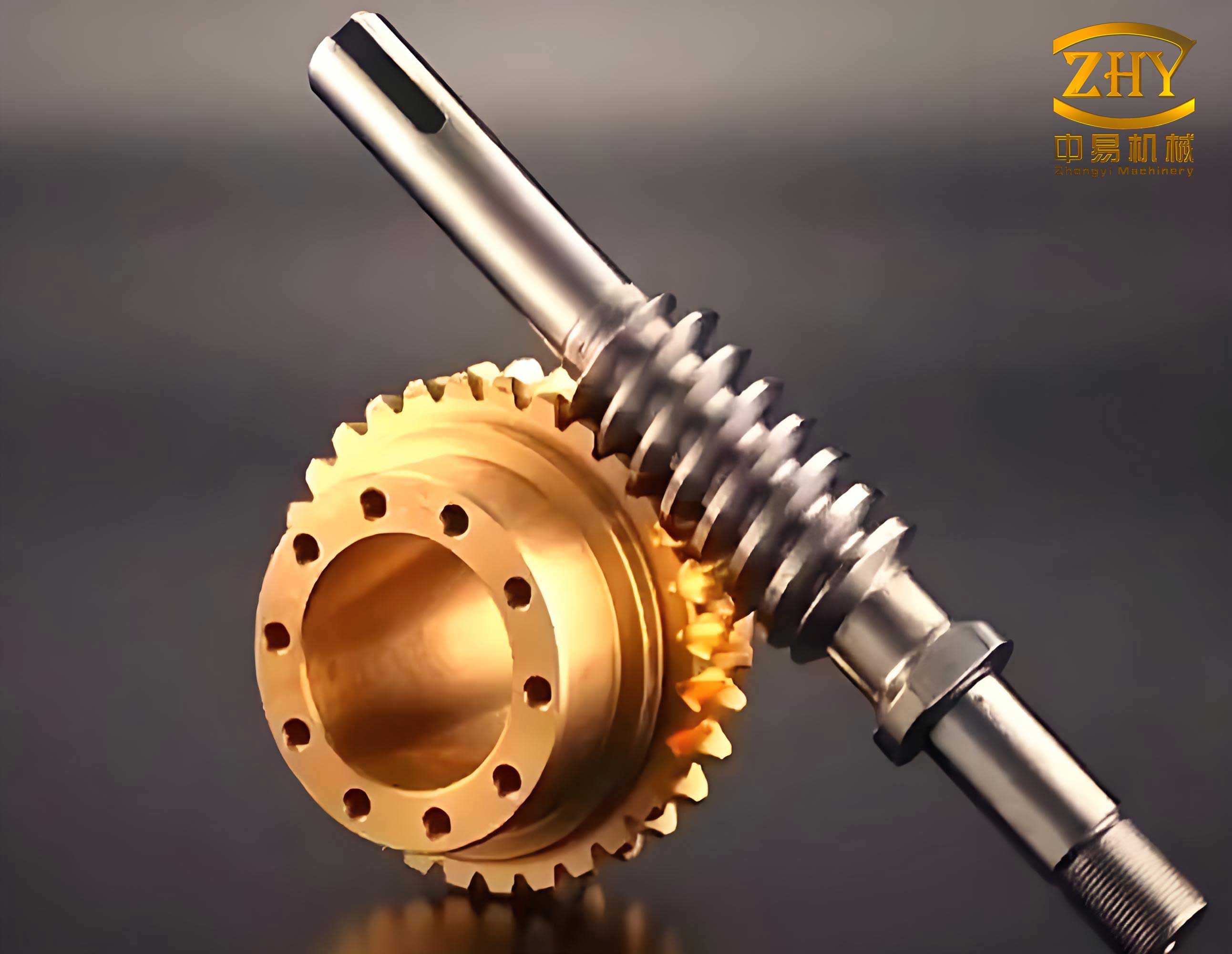
The tribological demands of a screw gear system are distinct. The contact mechanics involve a combination of rolling and sliding, but sliding is dominant at the gear mesh. This results in a high coefficient of friction and substantial heat generation. The film thickness in such an elastohydrodynamic lubrication regime can be estimated by the Dowson-Higginson equation: $$ h_{min} = 2.65 \frac{R^{0.43} (\eta_0 u)^{0.7} \alpha^{0.54}}{E’^{0.03} W^{0.13}} $$ where \( h_{min} \) is the minimum film thickness, \( R \) is the reduced radius of curvature, \( \eta_0 \) is the dynamic viscosity at atmospheric pressure, \( u \) is the entraining velocity, \( \alpha \) is the pressure-viscosity coefficient, \( E’ \) is the reduced Young’s modulus, and \( W \) is the load per unit width. For a screw gear, maintaining an adequate film thickness is challenging due to high sliding speeds and loads. Therefore, the lubricant must possess excellent load-carrying capacity, anti-wear properties, and thermal-oxidative stability. Furthermore, to prevent corrosion of the copper alloy components, the lubricant formulation must carefully select additives that are non-corrosive to yellow metals. The goal was to develop an L-CKE/P 320 grade screw gear oil incorporating graphene.
The formulation process began with the selection of a suitable base oil blend. The base oil constitutes the majority of the lubricant and fundamentally influences its viscosity-temperature behavior, volatility, and compatibility with additives. For the target viscosity grade of ISO VG 320, I evaluated two high-viscosity index mineral base oils: 500SN and 150BS. Their key physicochemical properties are summarized in the table below.
| Property | 500SN | 150BS |
|---|---|---|
| Kinematic Viscosity at 40°C (mm²/s) | 95.1 | 483.1 |
| Kinematic Viscosity at 100°C (mm²/s) | 10.85 | 31.79 |
| Viscosity Index | 98 | 97 |
| Flash Point (Open Cup, °C) | 262 | 322 |
| Pour Point (°C) | -15 | -12.5 |
| Acid Number (mg KOH/g) | 0.01 | 0.01 |
Both oils exhibited good low-temperature fluidity, high viscosity indices, and low acid values, indicating good oxidation stability of the base stocks. The viscosity index (VI) is a critical parameter for screw gear oils operating over a range of temperatures. It can be calculated from kinematic viscosities at 40°C and 100°C using standard ASTM D2270 methods. A blend of these two oils was prepared to achieve the target viscosity for the screw gear oil. The blending ratio was optimized to meet the required kinematic viscosity of approximately 320 mm²/s at 40°C while maintaining a high VI and satisfactory pour point. The relationship for blend viscosity can be complex, but a simplified log-log mixing rule is often employed: $$ \log(\eta_{blend}) = w_A \log(\eta_A) + w_B \log(\eta_B) $$ where \( \eta \) is viscosity and \( w \) is the weight fraction.
The next and most critical phase was additive selection. The harsh operating environment of a screw gear assembly necessitates a synergistic package of extreme pressure (EP), anti-wear (AW), anti-rust, and antioxidant agents.
Extreme Pressure Agent Selection: Given the steel-copper contact, active sulfur compounds that can aggressively corrode copper were unsuitable. I evaluated three sulfur-containing EP additives with different activity levels. Their performance in a preliminary blend with the selected base oil was assessed using key tests: copper strip corrosion (ASTM D130), Timken OK Load (ASTM D2782), and Four-Ball Wear Scar Diameter (ASTM D4172). The results are compiled below.
| Additive (10.0 wt%) | Copper Corrosion (100°C, 3h) | Copper Corrosion (121°C, 3h) | Timken OK Load (N) | Four-Ball WSD (mm) |
|---|---|---|---|---|
| Non-active Sulfur Agent A (S≥10.0%) | 1a | 1a | 267 | 0.39 |
| Active Sulfur Agent B (S≥15.0%, active S≥4.0%) | 1a | 3c | 312 | 0.45 |
| Non-active Sulfur Agent C (S≥10.0%) | 1a | 2a | 223 | 0.56 |
Non-active Sulfur Agent A offered the best balance, showing minimal copper corrosion even at elevated temperature, a respectable load-carrying capacity, and good anti-wear performance. The EP mechanism typically involves the formation of a protective sacrificial layer, such as iron sulfide, under high pressure and temperature. The reaction kinetics can be influenced by the activity of the sulfur. For screw gear applications, a slower, more controlled reaction is preferable to prevent corrosive wear on copper. Therefore, Non-active Sulfur Agent A was chosen as the primary EP component for the graphene screw gear oil.
Graphene Anti-wear Agent Optimization: To further enhance the anti-wear performance, dispersed graphene was incorporated as a solid lubricant additive. Graphene’s lamellar structure allows for easy interlayer shear, reducing friction. Its high surface area promotes adsorption on metal surfaces, forming a protective film. I investigated the effect of graphene concentration (dispersed in a carrier oil) on the Four-Ball Wear Scar Diameter when added to the base blend containing 10.0% Non-active Sulfur Agent A.
| Formulation | Four-Ball WSD (mm) |
|---|---|
| 10.0% Agent A + 1.0% Graphene | 0.39 |
| 10.0% Agent A + 3.0% Graphene | 0.36 |
| 10.0% Agent A + 5.0% Graphene | 0.25 |
| 10.0% Agent A + 7.0% Graphene | 0.23 |
The data indicates a significant improvement in anti-wear performance with increasing graphene content, with a marked reduction in wear scar diameter observed at 5.0% addition. The wear reduction mechanism can be partly described by the concept of a composite film. The graphene platelets fill surface asperities and form a tribofilm that reduces direct metal-to-metal contact. The wear volume \( V \) is often related to the normal load \( L \), sliding distance \( S \), and material hardness \( H \) by the Archard wear equation: $$ V = k \frac{L S}{H} $$ where \( k \) is the wear coefficient. The graphene film effectively increases the apparent hardness of the surface or reduces the wear coefficient \( k \). An addition level of 5.0% graphene was selected as optimal, providing excellent wear protection without excessive cost or potential dispersion stability issues.
Rust Inhibitor Screening: Preventing rust and corrosion in the presence of water ingress is vital for the longevity of screw gear systems, especially in industrial environments. I evaluated the efficacy of different rust inhibitors in passing the synthetic seawater corrosion test (ASTM D665). The focus was on achieving protection at minimal treat rates.
| Additive | Result (Synthetic Seawater) |
|---|---|
| 0.03% Dodecenyl Succinic Acid | Rust |
| 0.10% Dodecenyl Succinic Acid | No Rust |
| 0.03% Domestic Dodecenyl Succinate Ester | Rust |
| 0.10% Domestic Dodecenyl Succinate Ester | No Rust |
| 0.03% Imported Dodecenyl Succinate Ester | No Rust |
The imported dodecenyl succinate ester provided effective protection at a very low concentration of 0.03%, making it the preferred choice for the screw gear oil formulation. Rust inhibitors function by adsorbing onto metal surfaces, forming a hydrophobic barrier that prevents water from reaching the substrate.
Antioxidant Package Evaluation: The high sliding speeds and frictional heat in a screw gear can lead to rapid oil oxidation, resulting in viscosity increase, sludge formation, and acid generation. To ensure long-term thermal-oxidative stability, I compared several composite antioxidant systems using the Rotary Pressure Vessel Oxidation Test (RPVOT, ASTM D2272) at 150°C. A longer induction period indicates better oxidation resistance.
| Antioxidant Composition (wt%) | Oxidation Induction Period (min) |
|---|---|
| 0.2% Alkyldiphenylamine / Hindered Phenol | 166 |
| 0.4% Alkyldiphenylamine / Hindered Phenol | 296 |
| 0.5% Alkyldiphenylamine / Hindered Phenol | 337 |
| 0.2% Arylamine / Phenol Derivative | 169 |
| 0.4% Arylamine / Phenol Derivative | 216 |
| 0.5% Arylamine / Phenol Derivative | 232 |
| 0.5% Alkyldiphenylamine / 2,6-di-tert-butylphenol | 256 |
The blend of alkyldiphenylamine and hindered phenol at 0.5% concentration delivered the longest oxidation induction period (337 minutes), demonstrating superior synergy. Antioxidants work by scavenging free radicals (primary antioxidants like hindered phenols) and decomposing peroxides (secondary antioxidants like amines), thereby breaking the chain reaction of autoxidation. The oxidation rate often follows an Arrhenius-type relationship: $$ \frac{d[Ox]}{dt} = A e^{-E_a/(RT)} $$ where \( [Ox] \) is the concentration of oxidized products, \( A \) is a pre-exponential factor, \( E_a \) is the activation energy, \( R \) is the gas constant, and \( T \) is the absolute temperature. The selected antioxidant package effectively increases the apparent activation energy \( E_a \) for the oxidation process.
Based on the systematic screening, the final formulation for the L-CKE/P 320 graphene-enhanced screw gear oil was established as follows:
- Base Oil: Precise blend of 500SN and 150BS mineral oils to achieve ISO VG 320.
- Extreme Pressure Agent: 10.0 wt% Non-active Sulfur Agent A (Sulfur content ≥ 10.0%).
- Anti-wear Agent: 5.0 wt% Dispersed Graphene.
- Rust Inhibitor: 0.03 wt% Imported Dodecenyl Succinate Ester.
- Antioxidant: 0.5 wt% Alkyldiphenylamine / Hindered Phenol composite.
The fully formulated screw gear oil was subjected to comprehensive performance testing against the requirements of the SH/T0094—1991 standard (Worm Gear Oil). The results, presented in the table below, confirm that all key parameters met or exceeded the specifications.
| Test Property | Specification Limit (L-CKE/P 320) | Test Result |
|---|---|---|
| Kinematic Viscosity at 40°C (mm²/s) | 288 – 352 | 327.6 |
| Viscosity Index | ≥ 90 | 102 |
| Flash Point (Open Cup, °C) | ≥ 200 | 308 |
| Pour Point (°C) | ≤ -12 | -12 |
| Copper Strip Corrosion (100°C, 3h) | ≤ 1 | 1a |
| Acid Number (mg KOH/g) | ≤ 1.0 | 0.88 |
| Saponification Number (mg KOH/g) | ≤ 25.0 | 11.5 |
| Foam Tendency/Stability (mL/mL) 24°C 93.5°C After 24°C |
≤ 75/0 ≤ 75/0 ≤ 75/0 |
0/0 0/0 0/0 |
| Demulsibility (82°C, 40-37-3 mL, min) | ≤ 60 | 10 |
| Rust Test (Synthetic Seawater) | Pass | Pass |
| Four-Ball Weld Load (PB, N) | ≥ 392 | 582 |
| Sulfur Content (wt%) | ≤ 1.25 | 1.01 |
The significant improvement in load-carrying capacity (PB value of 582 N vs. a minimum requirement of 392 N) and the excellent anti-wear performance (as inferred from the earlier Four-Ball WSD tests) are particularly noteworthy. These enhancements are attributed to the synergistic effect between the non-active sulfur EP film and the protective graphene tribofilm, which is crucial for the demanding sliding contact in screw gear mechanisms.
To validate real-world performance, the developed graphene screw gear oil was field-tested in a screw gear reducer unit driving a rolling mill at a steel plant. The oil was monitored periodically over six months of continuous operation. Key parameters were tracked to assess its stability and protective capability.
| Monitoring Period | Viscosity at 40°C (mm²/s) | Copper Corrosion (100°C, 3h) | Copper Content (ppm) | Iron Content (ppm) | Demulsibility (min) |
|---|---|---|---|---|---|
| New Oil | 327.6 | 1a | 0.2 | 0 | 15 |
| 2 Months | 312.2 | 1a | 4.0 | 6.0 | 25 |
| 4 Months | 310.9 | 1a | 4.0 | 5.0 | 25 |
| 6 Months | 312.2 | 1a | 5.0 | 7.0 | 20 |
The monitoring data reveals remarkable stability. The viscosity remained within an acceptable range, showing no significant thermal thinning or oxidative thickening. The copper corrosion rating stayed at the benign 1a level, confirming the non-corrosive nature of the formulation towards the screw gear’s copper components. Most importantly, the wear metal content (copper and iron) remained extremely low throughout the six-month period. The gradual, minimal increase in copper and iron particles is normal and indicates very mild wear, far below levels that would signal component distress. The demulsibility performance also remained good, ensuring that any water ingress could be separated efficiently. This field trial demonstrated that the graphene-enhanced screw gear oil effectively protected the gear surfaces, maintained its physicochemical integrity, and is suitable for extended service intervals in harsh industrial screw gear applications.
In conclusion, this research successfully developed a high-performance L-CKE/P 320 grade screw gear oil by integrating advanced carbon nanomaterial science with conventional lubricant formulation principles. The systematic selection of a high-VI base oil blend, a non-active sulfur extreme pressure agent compatible with copper, an optimal concentration of dispersed graphene for anti-wear enhancement, a highly efficient succinate ester rust inhibitor, and a synergistic amine/phenol antioxidant package resulted in a lubricant that fully complies with the relevant industry standard. The formulated oil exhibits superior load-carrying capacity, excellent anti-wear and friction-modifying properties due to graphene, outstanding copper corrosion protection, and robust thermal-oxidative stability. The successful field application confirms its efficacy in protecting screw gear systems under severe operating conditions, reducing wear, and potentially extending component life and maintenance cycles. The incorporation of graphene represents a significant step forward in lubricant technology for demanding gear applications, particularly where sliding friction dominates, as in the case of the screw gear. Future work could focus on exploring the long-term dispersion stability of graphene in the oil, its behavior under even higher temperature regimes, and its synergy with other advanced additive chemistries to further push the boundaries of screw gear lubrication performance.