
As a mechanical engineer with years of experience in industrial equipment maintenance, I have encountered numerous challenges related to screw gear systems. These components are critical in various applications, from power transmission to motion control, and their failure can lead to significant downtime. In this article, I will share insights on screw gear design, common issues, repair techniques, and innovative approaches to enhance their longevity. The focus will be on practical methods that I have applied in the field, emphasizing the importance of proactive maintenance for screw gear assemblies.
Screw gears, also known as spiral gears or worm gears, are essential in machinery where high reduction ratios and compact designs are required. They consist of a screw (worm) and a gear (worm wheel), often used in conveyor systems, lifts, and industrial drives. The unique geometry of screw gear sets allows for smooth and quiet operation, but it also makes them susceptible to wear, especially in harsh environments. In my work, I have frequently dealt with screw gear failures due to abrasion, misalignment, or inadequate lubrication. Understanding the fundamentals is key to effective repair.
The design of a screw gear involves several parameters that influence its performance. For instance, the lead angle of the screw gear determines the efficiency and torque transmission. It can be calculated using the formula: $$ \beta = \tan^{-1}\left(\frac{\pi m}{p}\right) $$ where $\beta$ is the lead angle, $m$ is the module, and $p$ is the pitch of the screw gear. Additionally, the center distance between the screw and gear is crucial for proper meshing, expressed as: $$ a = \frac{m (z_1 + z_2)}{2 \cos \beta} $$ where $z_1$ and $z_2$ are the number of teeth on the screw and gear, respectively. These equations help in assessing wear and planning repairs for screw gear systems.
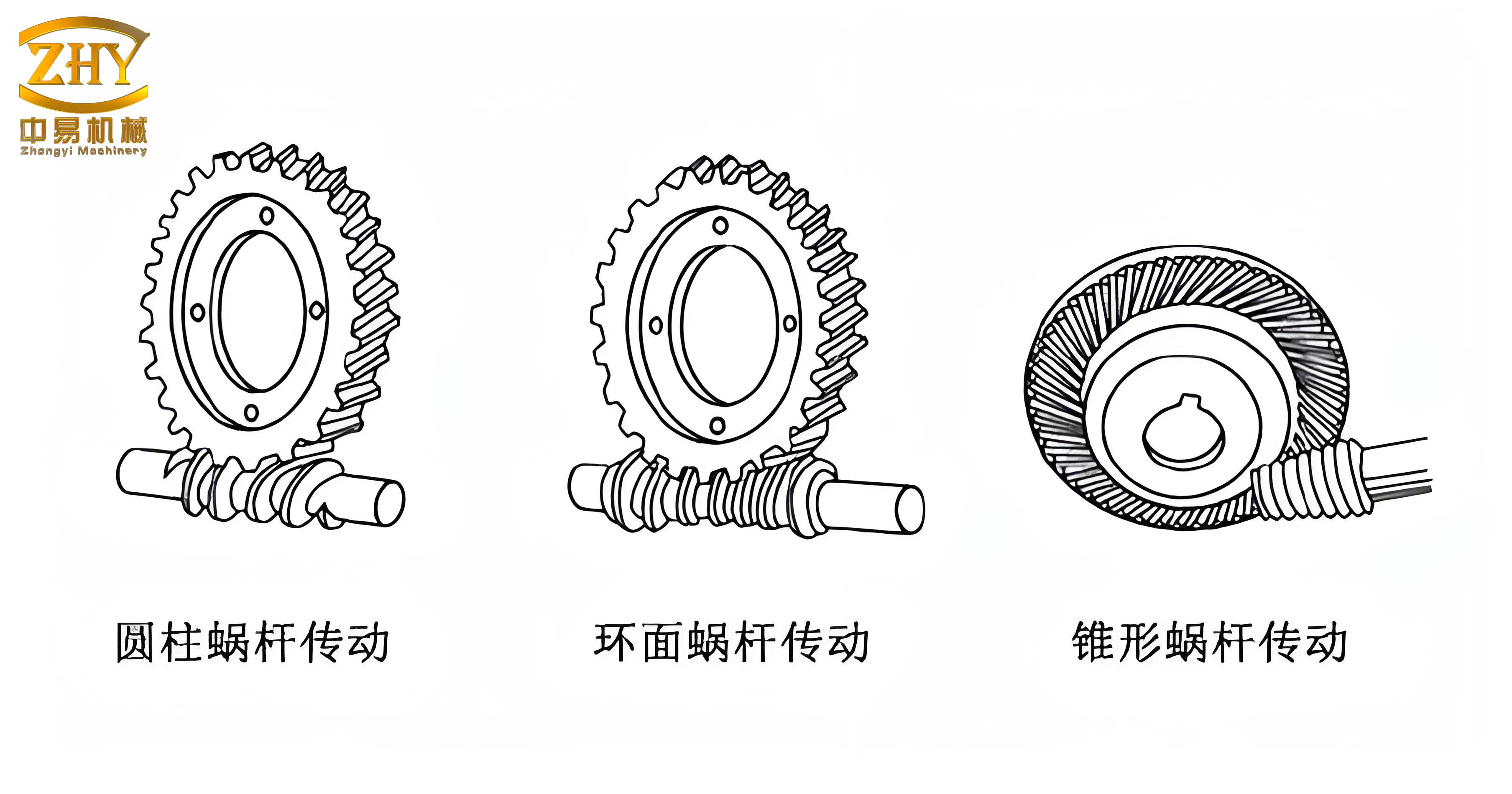
In practice, screw gear failures often manifest as tooth wear, pitting, or scoring. Based on my observations, I have compiled a table summarizing common issues and their causes in screw gear applications:
| Screw Gear Issue | Primary Cause | Symptoms |
|---|---|---|
| Tooth Wear | Abrasive particles, poor lubrication | Reduced tooth thickness, increased backlash |
| Pitting | Surface fatigue, overload | Small pits on tooth surfaces, noise |
| Scoring | Inadequate film thickness, high friction | Grooves on teeth, overheating |
| Misalignment | Improper installation, shaft deflection | Uneven wear, vibration |
To address these problems, I have developed repair protocols for screw gear components. One effective method is welding deposition, which restores worn tooth profiles. For the screw (worm), I use ordinary welding rods to build up material on damaged areas, followed by machining to achieve the original dimensions. The process involves cleaning the screw gear, positioning it horizontally for welding, and applying layers of weld metal with a 2-3 mm allowance for finishing. This approach has proven successful, extending the life of screw gear parts without compromising safety.
Similarly, for the gear (worm wheel), I employ bronze welding rods with oxyacetylene techniques. The key is to maintain the tooth surface level during welding and use a template to check the profile. In some cases, I sweep the flame over the welded area to create a smooth surface, eliminating the need for post-welding machining. This method not only repairs the screw gear but often enhances its durability compared to new components. I recommend initiating repairs when tooth wear reaches about 20% of the original thickness; beyond 30%, restoration becomes challenging for screw gear sets.
Beyond repair, optimizing screw gear performance involves leveraging thermal management. In one project, I integrated waste heat recovery into a system using screw gear drives. By utilizing residual heat from process fluids, I improved the temperature control of adjacent components, reducing energy consumption and wear on the screw gear. The efficiency gain can be modeled with: $$ \eta = \frac{Q_{out}}{Q_{in}} \times 100\% $$ where $\eta$ is the thermal efficiency, $Q_{out}$ is the useful heat extracted, and $Q_{in}$ is the heat input to the screw gear assembly. This innovation underscores the versatility of screw gear applications in industrial settings.
To further illustrate, let me detail a case study on screw gear maintenance in a gasifier system. The screw gear drive experienced severe wear due to dust ingress, similar to the scenario described in my earlier work. I implemented a routine inspection schedule, focusing on lubrication and alignment checks. The table below outlines the maintenance steps for such screw gear systems:
| Maintenance Activity | Frequency | Tools Required |
|---|---|---|
| Lubrication check | Weekly | Grease gun, oil gauge |
| Alignment verification | Monthly | Dial indicator, straight edge |
| Tooth thickness measurement | Quarterly | Calipers, template |
| Vibration analysis | Bi-annually | Vibration meter |
These practices have significantly reduced downtime for screw gear-driven equipment. Additionally, I advocate for using high-viscosity lubricants in open screw gear configurations to mitigate abrasion. The lubrication film thickness can be estimated with: $$ h = \frac{\eta v}{P} $$ where $h$ is the film thickness, $\eta$ is the lubricant viscosity, $v$ is the sliding velocity, and $P$ is the contact pressure on the screw gear teeth. Proper lubrication is paramount for screw gear longevity.
Another aspect I explore is the material selection for screw gear components. Typically, screws are made from hardened steel, while gears are cast from bronze or iron. However, for repaired screw gear parts, I often use overlay welding with compatible materials to match the original properties. The hardness ratio between the screw and gear should be optimized to minimize wear; a common rule is: $$ H_{screw} \approx 1.5 \times H_{gear} $$ where $H$ represents the Brinell hardness. This balance ensures that the screw gear set operates smoothly under load.
In terms of installation, I emphasize precise mounting for screw gear assemblies. Misalignment can cause premature failure, so I use shims and adjustable bases to achieve perfect meshing. The allowable tolerance for center distance in a screw gear pair is given by: $$ \Delta a \leq 0.02 \times m $$ where $\Delta a$ is the deviation and $m$ is the module. Following this guideline, I have successfully commissioned numerous screw gear systems with extended service intervals.
Looking ahead, advancements in screw gear technology include coated surfaces and predictive maintenance. For instance, applying diamond-like carbon coatings on screw gear teeth reduces friction and wear. I have experimented with such coatings, and the wear rate can be modeled as: $$ W = k \cdot P \cdot v \cdot t $$ where $W$ is the wear volume, $k$ is a material constant, $P$ is pressure, $v$ is velocity, and $t$ is time. By monitoring these parameters, I can predict when a screw gear might need attention, avoiding unplanned outages.
Furthermore, I incorporate thermal imaging to detect hotspots in screw gear drives, which indicate lubrication issues or overload. The temperature rise $\Delta T$ in a screw gear can be related to power loss: $$ \Delta T = \frac{P_{loss}}{c \cdot m} $$ where $P_{loss}$ is the power lost to friction, $c$ is the specific heat, and $m$ is the mass of the screw gear. This non-invasive technique complements traditional maintenance for screw gear systems.
To summarize, screw gear maintenance is a multifaceted discipline that requires attention to detail and innovative thinking. From repair techniques like welding to preventive measures such as alignment checks, each step contributes to the reliability of screw gear applications. I have found that regular upkeep, coupled with heat recovery initiatives, can transform screw gear performance in industrial plants. The key is to treat the screw gear as a system, considering all interacting factors.
In conclusion, my experience with screw gear systems has taught me that proactive care is more cost-effective than reactive repairs. By sharing these insights, I hope to empower others to optimize their screw gear operations. Whether it’s through mathematical modeling or hands-on welding, the goal remains the same: to ensure that every screw gear functions efficiently and safely. As technology evolves, I continue to explore new methods to enhance screw gear durability, always keeping an eye on sustainability and efficiency.