
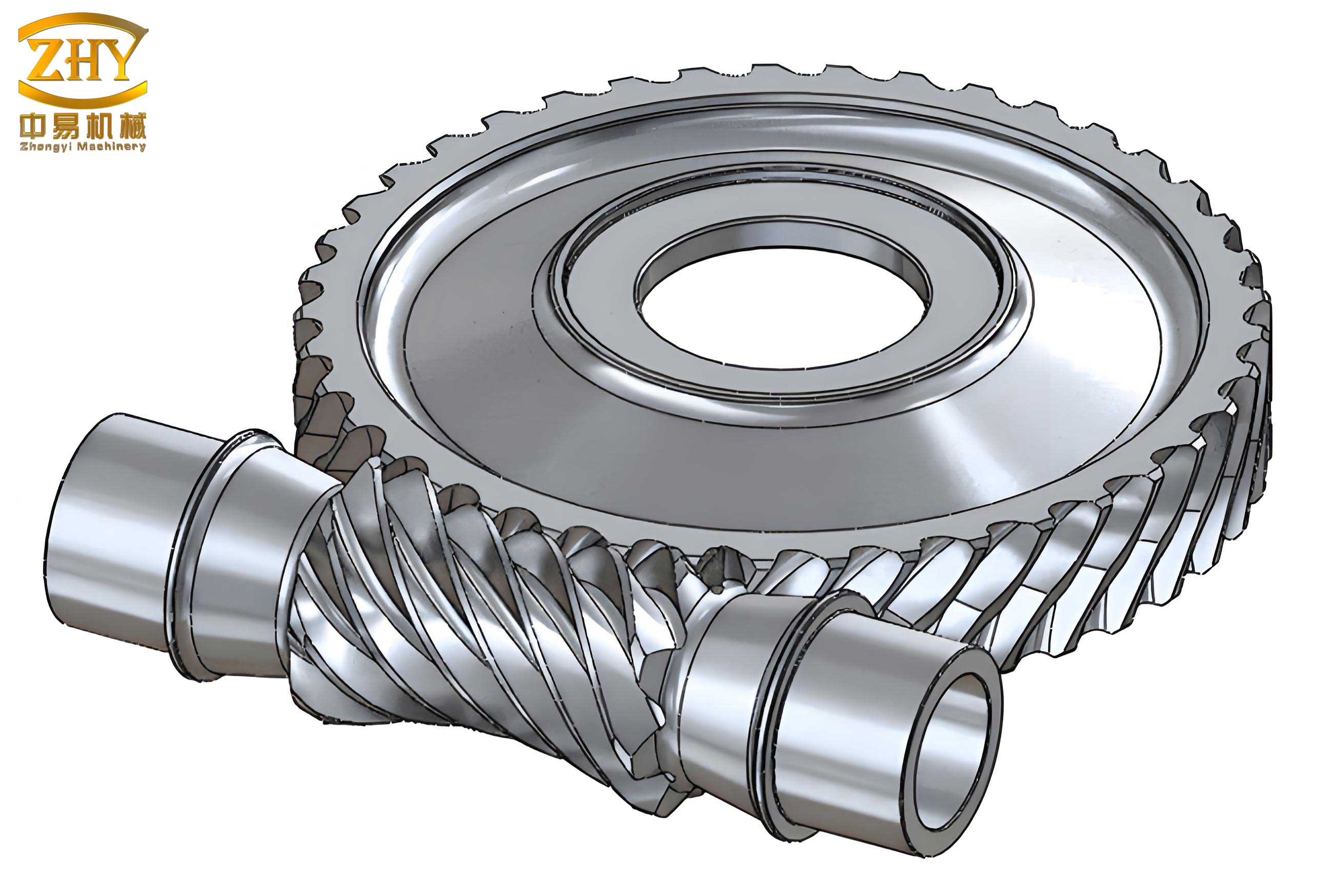
In the modern industrial landscape, the demand for high-performance lubrication solutions has grown exponentially, particularly for critical components like screw gears used in elevator traction systems. As the world’s largest manufacturer and market for elevators, China faces unique challenges in ensuring the reliability and efficiency of these systems. Screw gears, often referred to as worm gears in specific contexts, are integral to elevator reduction gearboxes, where a steel worm screw engages with a bronze worm wheel to transmit power. This configuration involves high sliding velocities, significant frictional heat, elevated temperatures, and risks such as dry scuffing, scoring, sintering, wear, and even adhesive failure under heavy loads. Traditional mineral oil-based lubricants for screw gears have limitations, including inadequate performance under heavy loads, vibration, shock, and temperatures above 100°C, which can lead to overheating at contact points. In contrast, synthetic lubricants like water-soluble polyethers offer superior viscosity-temperature characteristics, anti-wear, and friction-reduction properties compared to mineral oils, polyalphaolefins (PAOs), and ester-based oils. To expand market offerings and enhance the gear lubricant product chain, I embarked on developing a polyether-based lubricant specifically tailored for screw gears in elevator traction system reduction gearboxes. This article details the research process, from setting technical targets to formulation and performance evaluation, emphasizing the tribological advantages of polyethers for screw gear applications.
The development began by establishing technical indicators for the polyether screw gear lubricant, based on the performance of imported polyether lubricants that had passed certifications such as Siemens Flender. These indicators ensure the lubricant meets the rigorous demands of screw gear operation, including excellent viscosity-temperature behavior, anti-corrosion, oxidation resistance, and anti-wear properties. The key technical targets are summarized in Table 1, which outlines parameters like kinematic viscosity, viscosity index, pour point, flash point, copper corrosion, rust prevention, oxidation stability, and extreme pressure performance. These targets guide the formulation process to achieve a lubricant that outperforms mineral oils and rivals premium imported products.
| Property | Target Value | Test Method |
|---|---|---|
| Kinematic Viscosity at 40°C (mm²/s) | 288–352 | GB/T 265 |
| Kinematic Viscosity at 100°C (mm²/s) | Report | GB/T 265 |
| Viscosity Index | ≥220 | GB/T 1995 |
| Pour Point (°C) | ≤-25 | GB/T 3535 |
| Flash Point (Open) (°C) | ≥230 | GB/T 267 |
| T2 Copper Corrosion (100°C, 3 h) | ≤1b | GB/T 5096 |
| Liquid Phase Rust (Method A) | No Rust | GB/T 11143 |
| Oxidation-Corrosion Test (150°C, 50 h, 50 mL/min air) | See Below | SH/T 0450 |
| – Corrosion of 45# Steel (mg/cm²) | ±0.20 | SH/T 0450 |
| – Corrosion of T3 Copper (mg/cm²) | ±0.40 | SH/T 0450 |
| – Corrosion of LY11 Aluminum Alloy (mg/cm²) | ±0.20 | SH/T 0450 |
| – Change in Kinematic Viscosity at 40°C (%) | ±15.0 | SH/T 0450 |
| – Acid Number After Oxidation (mg/g) | Report | SH/T 0450 |
| Weld Load (N) | ≥1236 | GB/T 3142 |
| Wear Scar Diameter* (mm) | ≤0.40 | SH/T 0189 |
*Test conditions: 196 N, 60 min, 55°C, 1800 rpm.
The formulation of the polyether screw gear lubricant revolves around selecting an optimal base oil and additive package. For the base oil, I focused on water-soluble polyethers synthesized via the polymerization of ethylene oxide (EO) and propylene oxide (PO) under alkaline catalysis. This results in a copolymer polyether, designated as JM-A, which exhibits outstanding viscosity-temperature performance and low-temperature fluidity. The typical physicochemical properties of JM-A polyether are shown in Table 2. The high viscosity index and low pour point make it ideal for screw gear applications where operational temperatures vary widely.
| Property | Value |
|---|---|
| Appearance | Transparent Liquid |
| Density (g/cm³) | 1.084 |
| Kinematic Viscosity at 40°C (mm²/s) | 325.0 |
| Viscosity Index | 240 |
| Flash Point (Open) (°C) | 250 |
| Pour Point (°C) | -42 |
| Acid Number (mg/g) | 0.01 |
The viscosity index (VI) is a critical parameter for screw gear lubricants, as it indicates the oil’s resistance to viscosity changes with temperature. A higher VI ensures stable lubrication across a broad temperature range, which is essential for screw gears experiencing thermal fluctuations. The VI can be calculated using the standard formula:
$$ VI = \frac{L – U}{L – H} \times 100 $$
where (U) is the kinematic viscosity at 40°C of the oil, (L) is the viscosity at 40°C of a reference oil with VI=0 having the same viscosity at 100°C, and (H) is the viscosity at 40°C of a reference oil with VI=100. For JM-A polyether, the high VI of 240 demonstrates exceptional thermal stability, crucial for screw gear systems.
Additive selection is paramount to enhance the base oil’s performance. Screw gears operate under harsh conditions—high temperatures, humidity, and heavy loads—necessitating superior oxidation resistance, anti-corrosion properties, and anti-wear capabilities. I conducted systematic evaluations of antioxidants, rust and corrosion inhibitors, and anti-wear extreme pressure (EP) additives. For antioxidants, I tested hindered phenols, alkylated diphenylamines, and their combinations using oxidation-corrosion tests at 150°C for 50 hours with an air flow of 50 mL/min. The results, summarized in Table 3, show that a composite antioxidant of 0.5% hindered phenol and 0.5% alkylated diphenylamine provided the best oxidation stability, with minimal viscosity change and acid number increase.
| Antioxidant Formulation | Corrosion After Oxidation (mg/cm²) | Change in Kinematic Viscosity at 40°C (%) | Acid Number After Oxidation (mg/g) |
|---|---|---|---|
| 0.5% Hindered Phenol | 0.00 (all metals) | 7.18 | 0.34 |
| 0.5% Alkylated Diphenylamine | 0.00 (all metals) | 3.34 | 0.22 |
| 0.5% Hindered Phenol + 0.5% Alkylated Diphenylamine | 0.00 (all metals) | 1.02 | 0.16 |
Note: Oxidation test conditions: 150°C, 50 h, 50 mL/min air; metals include 45# steel, T3 copper, and LY11 aluminum alloy.
The oxidation kinetics of lubricants can be described by the Arrhenius equation, which relates the oxidation rate to temperature:
$$ k = A e^{-\frac{E_a}{RT}} $$
where (k) is the rate constant, (A) is the pre-exponential factor, (E_a) is the activation energy, (R) is the gas constant, and (T) is the absolute temperature. The composite antioxidant effectively increases (E_a), slowing oxidation and extending the lubricant’s service life in screw gear applications.
For rust and corrosion inhibition, screw gears often involve bronze or copper worm wheels susceptible to chemical attack. I evaluated several inhibitors, including sulfonates, sulfur-nitrogen heterocyclic compounds, and amines, using T2 copper corrosion tests at 120°C for 3 hours and liquid phase rust tests. As shown in Table 4, 0.3% sulfur-nitrogen heterocyclic compound achieved a 1b corrosion rating and no rust, meeting the stringent requirements for screw gear lubricants.
| Inhibitor (0.3%) | T2 Copper Corrosion (120°C, 3 h) | Liquid Phase Rust (Method A) |
|---|---|---|
| Sulfonate | 1b | Medium Rust |
| Sulfur-Nitrogen Heterocyclic Compound | 1b | No Rust |
| Amine | 1b | Medium Rust |
Anti-wear and EP additives are crucial to prevent surface damage in screw gears under high loads. I tested phosphorus-based, sulfur-based, and metal salt additives at 0.6% concentration, evaluating parameters like maximum non-seizure load, weld load, and wear scar diameter. The results in Table 5 indicate that the phosphorus-based additive offered the best performance, with a weld load of 1962 N and a wear scar diameter of 0.30 mm, making it suitable for protecting screw gear surfaces from scuffing and wear.
| Additive (0.6%) | Maximum Non-Seizure Load (N) | Weld Load (N) | Wear Scar Diameter* (mm) |
|---|---|---|---|
| Phosphorus-Based | 1236 | 1962 | 0.30 |
| Sulfur-Based | 618 | 1236 | 0.45 |
| Metal Salt | 785 | 1570 | 0.36 |
*Test conditions: 196 N, 60 min, 55°C, 1800 rpm.
The wear mechanism in screw gears can be modeled using the Archard wear equation:
$$ V = K \frac{W L}{H} $$
where (V) is the wear volume, (K) is the wear coefficient, (W) is the normal load, (L) is the sliding distance, and (H) is the hardness of the softer material. The phosphorus-based additive reduces (K) by forming protective films on screw gear surfaces, minimizing wear under boundary lubrication conditions.
Based on these evaluations, I formulated the polyether screw gear lubricant with the following composition: water-soluble JM-A polyether as the base oil, 1.0% composite antioxidant (0.5% hindered phenol + 0.5% alkylated diphenylamine), 0.3% sulfur-nitrogen heterocyclic compound as a rust and corrosion inhibitor, and 0.6% phosphorus-based anti-wear EP additive. This formulation aims to balance all required properties for screw gear lubrication.
To assess the performance, I conducted comprehensive tests on the developed polyether screw gear lubricant and compared it with an imported polyether screw gear lubricant used in elevator traction systems. The results, presented in Table 6, show that the developed lubricant meets all technical indicators and performs comparably to the imported product.
| Property | Developed Lubricant | Imported Lubricant |
|---|---|---|
| Kinematic Viscosity at 40°C (mm²/s) | 325.2 | 322.6 |
| Kinematic Viscosity at 100°C (mm²/s) | 56.32 | 55.69 |
| Viscosity Index | 241 | 240 |
| Pour Point (°C) | -41 | -37 |
| Flash Point (Open) (°C) | 250 | 250 |
| T2 Copper Corrosion (100°C, 3 h) | 1b | 1b |
| Liquid Phase Rust (Method A) | No Rust | No Rust |
| Oxidation-Corrosion Test (150°C, 50 h, 50 mL/min air) | ||
| – Corrosion of 45# Steel (mg/cm²) | 0.00 | 0.00 |
| – Corrosion of T3 Copper (mg/cm²) | 0.00 | 0.00 |
| – Corrosion of LY11 Aluminum Alloy (mg/cm²) | 0.00 | 0.00 |
| – Change in Kinematic Viscosity at 40°C (%) | 2.05 | 4.74 |
| – Acid Number After Oxidation (mg/g) | 0.18 | 0.17 |
| Weld Load (N) | 1962 | 1962 |
| Wear Scar Diameter* (mm) | 0.30 | 0.32 |
*Test conditions: 196 N, 60 min, 55°C, 1800 rpm.
The tribological performance was further analyzed using an SRV test machine to measure the friction coefficient over time. As illustrated in the friction curve, the developed polyether screw gear lubricant exhibited lower and more stable friction coefficients compared to the imported lubricant. This indicates superior anti-friction properties, which are vital for reducing energy losses and wear in screw gear systems. The friction behavior can be expressed using the Stribeck curve model, which describes the relationship between friction coefficient, viscosity, speed, and load:
$$ \mu = f \left( \frac{\eta v}{P} \right) $$
where (\mu) is the friction coefficient, (\eta) is the dynamic viscosity, (v) is the sliding speed, and (P) is the load per unit area. The polyether formulation enhances lubrication across boundary, mixed, and hydrodynamic regimes, optimizing performance for screw gears.
In addition to friction, the anti-wear performance is critical for screw gear longevity. The wear scar diameter results confirm that the developed lubricant provides better surface protection. This can be attributed to the synergistic effects of the polyether base oil and additives, which form robust tribofilms on screw gear surfaces. The film thickness in elastohydrodynamic lubrication (EHL) for screw gears can be estimated using the Hamrock-Dowson equation:
$$ h_{min} = 2.69 R’ U^{0.67} G^{0.53} W^{-0.067} (1 – 0.61 e^{-0.73k}) $$
where (h_{min}) is the minimum film thickness, (R’) is the reduced radius of curvature, (U) is the speed parameter, (G) is the material parameter, (W) is the load parameter, and (k) is the ellipticity parameter. The high viscosity index of polyethers maintains adequate film thickness under varying temperatures, preventing metal-to-metal contact in screw gears.
Oxidation stability is another key aspect, as screw gears can operate at elevated temperatures. The developed lubricant showed only a 2.05% change in kinematic viscosity after oxidation testing, compared to 4.74% for the imported lubricant. This superior resistance to oxidation degradation ensures longer oil life and reduced maintenance intervals for screw gear systems. The oxidation process can be modeled using first-order kinetics:
$$ \frac{dC}{dt} = -k C $$
where (C) is the concentration of oxidizable components and (k) is the rate constant. The composite antioxidant system effectively scavenges free radicals, slowing down the chain reaction and preserving lubricant properties.
Corrosion protection is essential for screw gears made from copper alloys. The T2 copper corrosion rating of 1b and no rust in liquid phase tests demonstrate that the sulfur-nitrogen heterocyclic inhibitor effectively passivates metal surfaces. This inhibitor works by adsorbing onto screw gear surfaces, forming a protective layer that blocks corrosive agents. The effectiveness can be quantified using corrosion rate calculations:
$$ \text{Corrosion Rate} = \frac{K \times W}{A \times T \times D} $$
where (K) is a constant, (W) is the weight loss, (A) is the area, (T) is the time, and (D) is the density. The low corrosion values indicate excellent protection for screw gear components.
The developed polyether screw gear lubricant also exhibits excellent low-temperature properties, with a pour point of -41°C, ensuring fluidity in cold starts—a common scenario in elevator systems. This is achieved through the molecular structure of the EO/PO copolymer, which inhibits wax crystallization. The relationship between pour point and molecular weight can be described by:
$$ T_p = a – b \log(M) $$
where (T_p) is the pour point, (M) is the molecular weight, and (a) and (b) are constants. The tailored synthesis of JM-A polyether optimizes this balance for screw gear applications.
Furthermore, the flash point of 250°C indicates high thermal stability, reducing fire risks in screw gear systems operating under heavy loads. This is particularly important for elevator safety standards. The flash point correlates with vapor pressure, as per the Clausius-Clapeyron equation:
$$ \ln P = -\frac{\Delta H_{vap}}{RT} + C $$
where (P) is the vapor pressure, (\Delta H_{vap}) is the enthalpy of vaporization, (R) is the gas constant, (T) is the temperature, and (C) is a constant. The high flash point of polyethers ensures minimal volatility at screw gear operating temperatures.
In terms of environmental and health considerations, water-soluble polyethers like JM-A offer advantages such as biodegradability and low toxicity compared to some mineral oils. This aligns with global trends towards sustainable lubrication for screw gear systems. The biodegradation rate can be expressed using the first-order decay model:
$$ B_t = B_0 e^{-kt} $$
where (B_t) is the biodegradable fraction at time (t), (B_0) is the initial fraction, and (k) is the degradation rate constant. This makes polyether lubricants a greener choice for screw gear applications.
To summarize the formulation benefits, I created a comprehensive table (Table 7) detailing the role of each component in the polyether screw gear lubricant and its impact on performance.
| Component | Concentration | Primary Function | Mechanism in Screw Gears |
|---|---|---|---|
| JM-A Polyether Base Oil | Base | Viscosity-Temperature Stability, Low-Temperature Fluidity | Provides hydrodynamic lubrication, reduces friction heat, maintains film thickness |
| Hindered Phenol Antioxidant | 0.5% | Oxidation Inhibition | Scavenges peroxy radicals, prevents viscosity increase |
| Alkylated Diphenylamine Antioxidant | 0.5% | Oxidation Inhibition | Donates hydrogen atoms, breaks oxidation chains |
| Sulfur-Nitrogen Heterocyclic Inhibitor | 0.3% | Rust and Corrosion Prevention | Adsorbs on metal surfaces, forms protective films |
| Phosphorus-Based Anti-Wear EP Additive | 0.6% | Wear Reduction, Load Carrying | Forms iron phosphide tribofilms, prevents scuffing |
The synergy between these components ensures that the lubricant performs reliably under the demanding conditions of screw gear operation. For instance, the polyether base oil’s high polarity enhances additive solubility, leading to better film formation on screw gear surfaces. This synergy can be quantified using interaction parameters in solubility models, such as the Hansen solubility parameters:
$$ \delta^2 = \delta_d^2 + \delta_p^2 + \delta_h^2 $$
where (\delta) is the total solubility parameter, and (\delta_d), (\delta_p), (\delta_h) are the dispersion, polar, and hydrogen bonding components, respectively. The match between polyether and additives optimizes performance in screw gears.
In conclusion, I successfully developed a polyether screw gear lubricant for elevator traction system reduction gearboxes. The formulation, based on water-soluble EO/PO copolymer polyether with a tailored additive package, meets all technical indicators and rivals imported products. Key achievements include a kinematic viscosity of 325.2 mm²/s at 40°C, viscosity index of 241, pour point of -41°C, flash point of 250°C, excellent oxidation stability (2.05% viscosity change), weld load of 1962 N, and wear scar diameter of 0.30 mm. Tribological tests revealed slightly better friction performance compared to imported lubricants. This development not only addresses the limitations of mineral oils but also enhances the gear lubricant product chain, offering a high-performance solution for screw gear applications. Future work could explore further optimization for extreme environments or integrate smart lubrication technologies for screw gear systems. The success of this research underscores the potential of synthetic polyethers in advancing lubrication science for critical mechanical components like screw gears.
The broader implications of this study extend to various industries where screw gears are employed, such as automotive, mining, and robotics. By improving lubricant performance, we can boost energy efficiency, reduce maintenance costs, and extend the service life of screw gear systems. Continued innovation in lubricant formulation will play a pivotal role in meeting the evolving demands of modern machinery, ensuring that screw gears operate smoothly and reliably under all conditions.