
In my experience with precision mechanical systems, the adoption of dual-pitch screw gears has proven to be a transformative approach in worm gear pair design. While conventional screw gear pairs have been widely used, dual-pitch screw gears offer distinct advantages in adjustability, accuracy, and longevity. Through practical application in a small indexing rotary table, I have observed that these screw gear pairs can significantly enhance performance without complicating design or manufacturing. This article shares insights into the principles, design methodologies, and manufacturing processes of dual-pitch screw gears, aiming to encourage their broader adoption in tooling, specialized equipment, and non-standard machinery.
Dual-pitch screw gears refer to a worm gear pair where the screw gear (worm) has unequal pitches on its left and right flanks. In a standard screw gear pair, both flanks share identical geometric parameters such as pitch, module, and pressure angle. However, in a dual-pitch configuration, as illustrated in the context of screw gear dynamics, the pitches differ—for example, $p_{\text{left}} \neq p_{\text{right}}$—leading to varying tooth thicknesses along the screw gear’s axis. This asymmetry allows for unique operational benefits. The mating gear, often called the dual-pitch worm wheel, is designed to conjugate with this screw gear, ensuring proper meshing across both flanks.
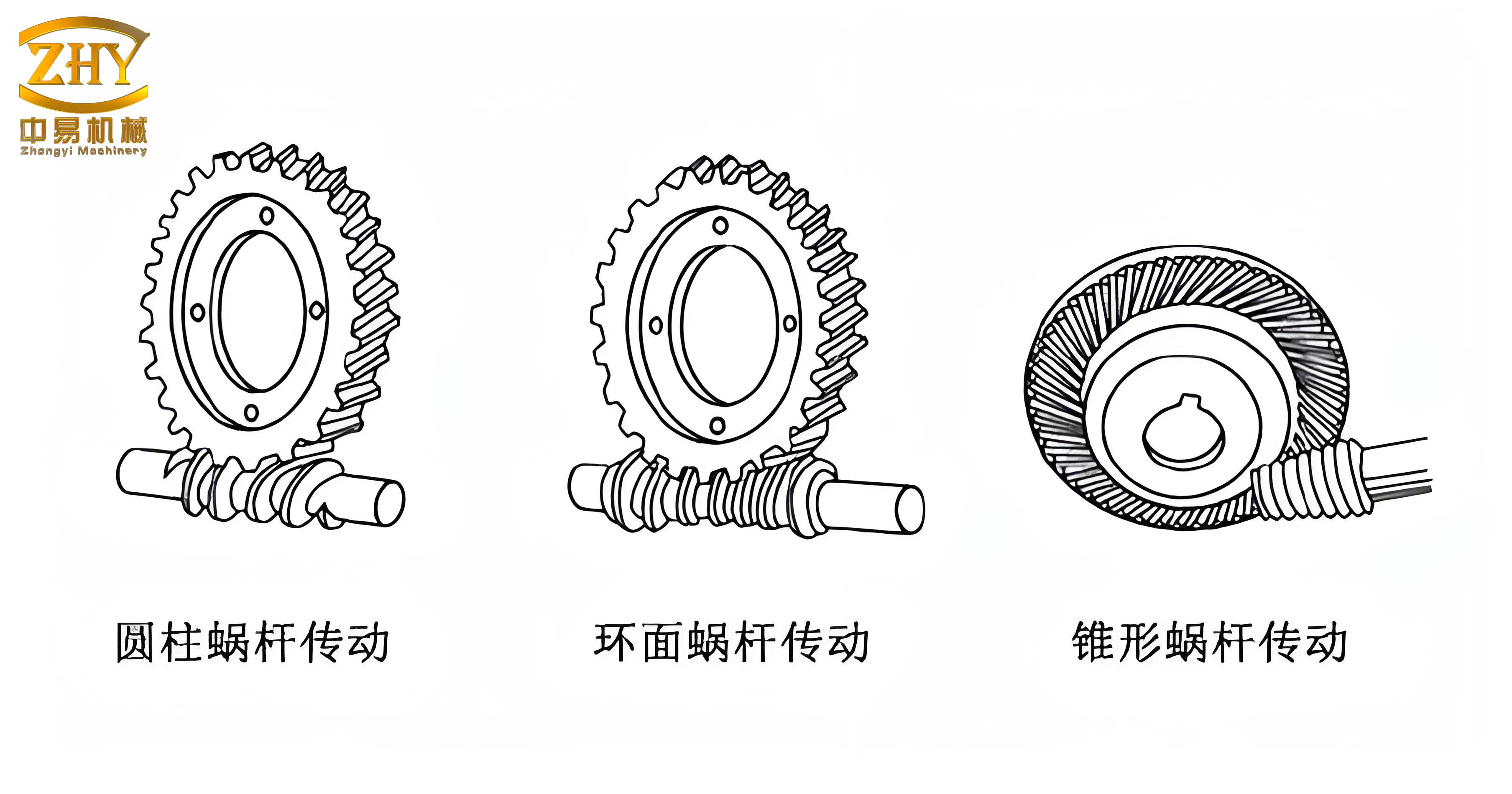
The advantages of dual-pitch screw gears over conventional screw gear pairs are substantial. First, adjusting the backlash becomes straightforward: merely shifting the screw gear axially modifies the meshing clearance, eliminating complex radial adjustment mechanisms. Second, transmission accuracy is higher because center distance changes—common in standard screw gear adjustments—are avoided, preserving the conjugate profile relationships. Third, improved contact patterns and reduced stress concentrations potentially extend the service life of the screw gear pair. Below is a table summarizing these benefits:
| Feature | Conventional Screw Gear Pair | Dual-Pitch Screw Gear Pair |
|---|---|---|
| Backlash Adjustment | Requires radial movement or dual screw gears; complex mechanisms | Axial movement of screw gear; simple and reliable |
| Transmission Accuracy | May degrade with center distance changes | Maintained by avoiding center distance alterations |
| Contact Stress | Potentially higher due to imperfect contact | Lower due to better contact patterns |
| Manufacturing Complexity | Standard tools often suffice | May require specialized tools for some methods |
The fundamental meshing relationship of a dual-pitch screw gear pair can be analyzed using the equivalent gear-rack system in the principal section. For an Archimedes screw gear, this section depicts a rack with straight flanks and a gear with involute profiles. Let $n$ be the rotational speed of the screw gear, and $p_{\text{left}}$ and $p_{\text{right}}$ be the pitches on left and right flanks, respectively. The linear velocities of the rack flanks are:
$$ v_{\text{left}} = n \cdot p_{\text{left}}, \quad v_{\text{right}} = n \cdot p_{\text{right}}. $$
The pitch circle radius $R$ of the gear is derived from the basic gear-rack kinematics. For conjugate action, the base circle radii $r_b$ and pressure angles $\alpha$ must satisfy:
$$ r_{b,\text{right}} \cdot \tan \alpha_{\text{right}} = r_{b,\text{left}} \cdot \tan \alpha_{\text{left}}. $$
This equation ensures simultaneous proper meshing on both flanks. From this, two design methods emerge: the standard gear method and the standard pressure angle method. The choice influences manufacturing and accuracy.
In the standard gear method, we set $r_{b,\text{right}} = r_{b,\text{left}}$, leading to a symmetric worm gear that matches conventional gears. The screw gear then has equal pressure angles but different pitches, and the pressure angles relate as:
$$ \tan \alpha_{\text{right}} / \tan \alpha_{\text{left}} = p_{\text{right}} / p_{\text{left}}. $$
This approach simplifies worm gear production using standard tools, but the screw gear requires custom machining. Conversely, the standard pressure angle method sets $\alpha_{\text{right}} = \alpha_{\text{left}}$, resulting in asymmetric worm gears with different base circle radii. Here, a dedicated hob matching the screw gear must be manufactured alongside the screw gear, often in a single setup to ensure high precision. The relationship becomes:
$$ r_{b,\text{right}} / r_{b,\text{left}} = p_{\text{right}} / p_{\text{left}}. $$
This method enhances accuracy but adds complexity. The following table outlines the design steps for dual-pitch screw gears:
| Step | Description | Key Equations and Considerations |
|---|---|---|
| 1. Nominal Parameters | Select module, number of starts, gear ratio, center distance based on load and precision requirements. | Use standard screw gear design formulas; e.g., module $m$, center distance $a = (d_w + d_g)/2$, where $d_w$ and $d_g$ are screw and gear pitch diameters. |
| 2. Backlash Adjustment $\Delta S$ | Determine allowable backlash adjustment along gear pitch circle or screw axis. | $\Delta S$ typically 0.02–0.10 mm; depends on module and application. |
| 3. Axial Movement $L$ | Choose screw gear axial travel length for adjustment. | $L$ usually 5–10 mm; balance structural feasibility and pitch variation. |
| 4. Adjacent Tooth Thickness Difference $\Delta S_{\text{adj}}$ | Compute thickness variation per pitch. | $\Delta S_{\text{adj}} = \Delta S / (L / p)$; adjust for manufacturability. |
| 5. Flank Pitches and Modules | Define pitches for left and right flanks; often one flank uses nominal pitch. | $p_{\text{right}} = p_{\text{nominal}}$, $p_{\text{left}} = p_{\text{right}} \pm \Delta S_{\text{adj}}$; ensure rational values for machining. |
| 6. Pressure Angles | Select pressure angles based on design method. | Standard gear: $\alpha_{\text{right}}$ given, $\alpha_{\text{left}}$ from equation; standard pressure angle: $\alpha_{\text{right}} = \alpha_{\text{left}}$. |
| 7. Drawing Specifications | Detail all parameters on part drawings, including reference section for measurements. | Specify modules, pressure angles, tooth thickness at reference section, tolerances. |
After designing the screw gear pair, thorough verification is essential. For the screw gear, we calculate tooth dimensions at critical sections—reference, weak, and ends—to check strength and avoid tip sharpness. The tooth thickness $S$ at pitch diameter in the reference section is key. For a screw gear with axial coordinate $x$, the pitch diameter tooth thickness variation can be expressed as:
$$ S(x) = S_{\text{ref}} \pm (p_{\text{right}} – p_{\text{left}}) \cdot \frac{x}{L}, $$
where $S_{\text{ref}}$ is the thickness at the reference section. The addendum and dedendum diameters at any section $x$ are:
$$ d_a(x) = d_a_{\text{ref}} \mp (p_{\text{right}} – p_{\text{left}}) \cdot \frac{x}{L}, $$
$$ d_f(x) = d_f_{\text{ref}} \mp (p_{\text{right}} – p_{\text{left}}) \cdot \frac{x}{L}, $$
with signs depending on flank orientation. Strength checks use the weak section thickness in bending stress formulas, such as:
$$ \sigma_b = \frac{F_t}{b m_n Y} \cdot K_a K_v K_m, $$
where $F_t$ is tangential load, $b$ face width, $m_n$ normal module, $Y$ form factor, and $K$ factors for application. For the worm gear, similar calculations apply, especially for asymmetric profiles in the standard pressure angle method. The tooth thickness at pitch circle is:
$$ S_g = \frac{\pi m}{2} \pm \Delta S_{\text{adj}} \cdot \frac{d_g}{2a}, $$
accounting for conjugacy. Contact patterns should be evaluated via staining tests to ensure adequate area.
Manufacturing dual-pitch screw gears demands careful processes. For the screw gear, machining involves separate operations for left and right flanks due to pitch differences. Typically, we use two tools with different setup parameters on a lathe or grinder, followed by a root-cleaning pass to remove steps at the tooth base. The sequence is: machine right flank with pitch $p_{\text{right}}$, machine left flank with $p_{\text{left}}$, and clean root with either pitch. To ensure accuracy, we often finish the screw gear and then grind the reference surface to control tooth thickness at the designated section. For high-precision screw gear pairs, the screw gear, hob, and honing tool should be produced in a single machine setup to minimize errors.
The worm gear manufacturing depends on the design method. With the standard gear method, a standard hob can be used, as the worm gear is symmetric. For the standard pressure angle method, a dedicated hob matching the screw gear geometry is required, with addendum increased by clearance. Hobbing parameters like center distance and axial alignment must be precisely controlled to mirror operational conditions. Post-hobbing, honing with an epoxy-resin abrasive stick—shaped identically to the screw gear—can further reduce accumulated errors. Free honing while measuring angular accuracy allows corrective adjustments, enhancing transmission precision. Throughout, stress relief heat treatments are recommended to stabilize dimensions.
Axial adjustment mechanisms for dual-pitch screw gears are crucial for backlash control. We have implemented various designs that prioritize simplicity, rigidity, and lubrication access. One effective design uses a threaded sleeve for fine axial movement, locked by a nut, ensuring stable positioning and easy lubrication. Another employs half-circle shims or nuts for limited adjustments, offering good rigidity but less convenience. These mechanisms leverage the inherent advantage of dual-pitch screw gears: axial movement directly modifies clearance without affecting center distance. This simplifies overall assembly and maintenance compared to conventional screw gear systems.
In practice, the performance of dual-pitch screw gears has been validated through applications like indexing tables. The backlash adjustability allows for precise tuning over time, compensating for wear or thermal effects. Moreover, the improved contact patterns reduce noise and increase load capacity. From a design perspective, iterative prototyping and testing are advisable to optimize parameters such as pitch differentials and pressure angles. Computational tools can simulate meshing behavior to predict stress distributions and efficiency.
To further illustrate, consider a numerical example for a dual-pitch screw gear pair. Suppose a nominal module $m = 2$ mm, screw gear with one start, and desired backlash adjustment $\Delta S = 0.05$ mm over axial travel $L = 8$ mm. Then, adjacent tooth thickness difference is $\Delta S_{\text{adj}} = \Delta S / (L / p) \approx 0.0125$ mm per pitch. Choosing right flank as nominal, $p_{\text{right}} = \pi m = 6.283$ mm, left flank pitch becomes $p_{\text{left}} = 6.271$ mm. If using standard pressure angle method with $\alpha = 20^\circ$, the base circle radii ratio must satisfy $r_{b,\text{right}} / r_{b,\text{left}} = p_{\text{right}} / p_{\text{left}} \approx 1.002$. This small asymmetry is manageable in manufacturing. Such calculations demonstrate the feasibility of dual-pitch screw gear designs.
In conclusion, dual-pitch screw gears represent a sophisticated advancement in power transmission technology. Their design, while requiring attention to detail, is not prohibitively complex and offers substantial rewards in adjustability, accuracy, and durability. By integrating these screw gear pairs into mechanical systems, engineers can achieve higher performance with simpler maintenance routines. As manufacturing techniques evolve, including additive manufacturing for prototypes, the adoption of dual-pitch screw gears is poised to expand across industries. I encourage further exploration and experimentation with these screw gear configurations to unlock their full potential in precision engineering applications.
Throughout this discussion, the term screw gear has been emphasized to highlight its centrality in the system. Whether referring to the worm component or the entire pair, screw gears play a pivotal role in motion control. Future research could delve into material innovations for screw gears, such as composite or coated surfaces, to enhance wear resistance. Additionally, dynamic modeling of dual-pitch screw gears under varying loads could provide deeper insights into their operational limits. By continuing to refine these screw gear technologies, we can drive progress in fields ranging from robotics to aerospace, where reliable and precise motion is paramount.