
In my extensive experience with naval artillery systems, I have frequently encountered high failure rates in the screw gear box of a specific type of naval gun direction mechanism. The screw gear, particularly the worm wheel, often suffers severe degradation, necessitating frequent replacements. This not only leads to significant wastage of resources but also compromises operational readiness. Therefore, I embarked on a comprehensive study to redesign and improve the screw gear box, aiming to enhance its load-bearing capacity, extend its service life, and optimize its working conditions without major alterations to the original structure. This article details my analysis, proposed solutions, and theoretical justifications, emphasizing the critical role of the screw gear in the system.
The screw gear box is a core component in the direction mechanism, responsible for transmitting motion and torque to rotate the gun bed. However, under operational conditions, the screw gear experiences excessive loads due to the heavy weight of the gun’s ammunition hoist system, leading to high contact stresses on the worm wheel teeth. This results in fatigue pitting, adhesion, and wear. Additionally, the large inertia of the rotating parts, combined with backlash in the transmission, causes significant impact moments during startup, braking, and slewing. Environmental factors such as poor sealing, seawater ingress, and lubrication issues further exacerbate the degradation. My investigation focuses on addressing these multifaceted challenges to improve the screw gear’s performance.
To quantify the failure mechanisms, I conducted a detailed stress analysis of the screw gear. The worm wheel is made of tin bronze ZQSn10-1, with an allowable bending stress $[\sigma_b] = 50 \, \text{MPa}$ and an allowable contact stress $[\sigma_H] = 200 \, \text{MPa}$ at a relative sliding speed of $v_s = 2 \, \text{m/s}$. Based on standard mechanical design principles, I calculated the limiting torque for bending fatigue strength and contact fatigue strength. The bending fatigue strength limits the torque to $T_{b,\text{lim}} = 1200 \, \text{N·m}$, while the contact fatigue strength limits it to $T_{H,\text{lim}} = 800 \, \text{N·m}$. This indicates that the screw gear failure is primarily initiated by insufficient contact fatigue strength, leading to adhesion and wear, followed by potential fracture.
During normal accelerated startup, the torque acting on the screw gear can be derived by considering the dynamics of the system. The motion differential equation is formulated as follows:
$$ J_{\text{eq}} \alpha = T_m – T_r $$
where $J_{\text{eq}}$ is the equivalent moment of inertia of the gun bed and screw gear assembly, $\alpha$ is the angular acceleration, $T_m$ is the input torque, and $T_r$ is the static resistance torque. Given $J_{\text{eq}} = 150 \, \text{kg·m}^2$, $\alpha = 2 \, \text{rad/s}^2$, $T_r = 500 \, \text{N·m}$, and a transmission ratio $i = 60$ with efficiency $\eta = 0.85$, the torque on the screw gear is calculated as:
$$ T_{\text{gear}} = \frac{J_{\text{eq}} \alpha + T_r}{i \eta} = \frac{150 \times 2 + 500}{60 \times 0.85} \approx 9.8 \, \text{N·m} $$
However, this underestimates peak loads. In reality, impact torques due to backlash elimination are more critical. For startup after backlash elimination, the impact torque is approximately $T_{\text{impact,start}} = 1500 \, \text{N·m}$, and for slewing deceleration, it reaches $T_{\text{impact,slew}} = 2000 \, \text{N·m}$. During single-barrel firing or extreme braking, instantaneous torques can exceed $2500 \, \text{N·m}$, causing the screw gear to slip against the friction cone at a critical torque of $2000 \, \text{N·m}$. These high loads directly contribute to the screw gear’s premature failure.
To systematically address these issues, I propose an integrated improvement scheme centered on a buffer mechanism. This approach enhances the screw gear’s load capacity, mitigates impact forces, and improves sealing, all while minimizing modifications to the existing setup. The key measures include material substitution, geometric optimization, and the incorporation of a buffer spring. Below, I summarize the failure causes and corresponding solutions in a table for clarity.
| Failure Cause | Impact on Screw Gear | Proposed Improvement Measure | Expected Benefit |
|---|---|---|---|
| Excessive contact stress from heavy loads | Fatigue pitting, adhesion, and wear on worm wheel teeth | Change material from ZQSn10-1 to ZQSn10-10-1 tin bronze | Increase contact fatigue strength by ~1.5 times |
| High impact torques due to backlash and inertia | Shock loads leading to cracking and accelerated wear | Integrate a buffer spring mechanism into the worm shaft | Reduce impact torque to below 1500 N·m, absorb kinetic energy |
| Inadequate load-bearing capacity from small module | Insufficient tooth strength for operational torques | Increase module from 3 mm to 4 mm, reduce worm characteristic number | Boost bending and contact strength by ~2.5 times |
| Poor sealing leading to corrosion and lubrication loss | Seawater ingress, salt abrasion, and dry operation | Replace sealing gaskets with O-rings, enhance box design | Improve environmental resistance, extend lubrication life |
| High torque transmission from large gear ratio | Overloading of screw gear components | Reduce main gear teeth from 180 to 160 to lower transmission ratio | Decrease acting torque on screw gear by ~11% |
The material change is pivotal for the screw gear’s durability. ZQSn10-10-1 tin bronze offers superior anti-adhesion properties and a higher allowable contact stress of $[\sigma_H] = 250 \, \text{MPa}$ at $v_s = 2 \, \text{m/s}$, compared to 200 MPa for ZQSn10-1. This directly enhances the screw gear’s resistance to wear and tear. Moreover, increasing the module from 3 mm to 4 mm significantly boosts tooth strength, as bending stress is proportional to the cube of the module. The new screw gear design maintains a center distance increase from 100 mm to 110 mm, which is feasible within spatial constraints. The recalculated limiting torque for contact fatigue strength becomes:
$$ T_{H,\text{lim,new}} = 2000 \, \text{N·m} $$
This represents a 2.5-fold improvement over the original design, ensuring the screw gear can handle operational loads more effectively.
The buffer mechanism is the cornerstone of my improvement strategy. By integrating a cylindrical helical spring into the worm shaft assembly, impact energies from backlash elimination are absorbed, reducing peak torques on the screw gear. The design involves a spring-damper system where the spring stiffness $k$ is tuned to limit the maximum torque $T_{\text{max}}$ during impact. The energy absorption relationship is given by:
$$ \Delta E = \frac{1}{2} k x^2 $$
where $\Delta E$ is the impact energy and $x$ is the spring deflection. For a desired $T_{\text{max}} = 1500 \, \text{N·m}$, the stiffness $k$ can be derived from the kinetic energy of the rotating masses. Assuming an impact energy of $\Delta E = 500 \, \text{J}$ during slewing, the required stiffness is:
$$ k = \frac{2 \Delta E}{x^2} $$
With a deflection $x = 10 \, \text{mm}$, we get $k = 10^7 \, \text{N/m}$. This buffer system effectively cushions the screw gear against sudden loads, prolonging its life. The buffer mechanism is illustrated in the following diagram, which shows the integration of the spring within the worm shaft housing. This design not only mitigates impacts but also maintains transmission accuracy by minimizing backlash effects.
In addition to the buffer, reducing the main gear teeth from 180 to 160 lowers the transmission ratio slightly, decreasing the torque reflected onto the screw gear. This change, combined with the increased module, allows for a more compact and robust gear train. The revised kinematic chain ensures that the screw gear operates within safer stress limits. Furthermore, I addressed sealing issues by replacing flat gaskets with O-rings and improving the box’s joint surfaces, preventing seawater ingress and lubrication leakage. These modifications collectively enhance the screw gear’s operational environment.
To validate the improvement scheme, I performed comparative calculations for the screw gear’s performance metrics. The table below summarizes key parameters before and after the improvements, highlighting the gains in load capacity and durability.
| Parameter | Original Design | Improved Design | Improvement Factor |
|---|---|---|---|
| Worm Wheel Material | ZQSn10-1 | ZQSn10-10-1 | Better anti-adhesion |
| Module (mm) | 3 | 4 | ~2.5x strength increase |
| Worm Characteristic Number | 10 | 8 | Optimized for load distribution |
| Center Distance (mm) | 100 | 110 | Accommodates larger gears |
| Main Gear Teeth | 180 | 160 | Reduced torque transmission |
| Limiting Contact Torque (N·m) | 800 | 2000 | 2.5x higher |
| Impact Torque (Startup, N·m) | 1500 | <1000 (with buffer) | Significantly reduced |
| Sealing Method | Flat gaskets | O-rings | Enhanced leak prevention |
| Estimated Service Life | Low (frequent failures) | High (extended intervals) | ~3-5x longer |
The improved screw gear box now boasts a load-bearing capacity of 2000 N·m, which is 2.5 times the original 800 N·m. This is achieved through synergistic effects: the material upgrade increases contact fatigue resistance, the larger module enhances tooth strength, and the buffer mechanism dampens impact loads. The screw gear’s ability to withstand operational stresses is thus substantially improved. Moreover, the reduction in main gear teeth decreases the torque on the screw gear by approximately 11%, further alleviating stress concentrations. These changes ensure that the screw gear operates within safe limits even under demanding conditions like single-barrel firing or rapid slewing.
From a practical standpoint, the proposed modifications are designed for ease of production and adoption. Only 12 new or modified parts are required, and the assembly centers remain largely unchanged, avoiding costly alterations to the gun base. The buffer mechanism, in particular, is straightforward to manufacture in maintenance workshops, using standard cylindrical springs instead of complex disc springs. This makes the improved screw gear box highly suitable for field retrofits, ensuring widespread applicability across naval units. The enhanced sealing with O-rings also simplifies maintenance, as these components are readily available and easy to install.
In conclusion, my comprehensive study on the screw gear box of the naval gun direction mechanism has identified root causes of failure and proposed a viable improvement scheme. By integrating a buffer mechanism, upgrading materials, optimizing geometry, and enhancing sealing, the screw gear’s load capacity, durability, and working conditions are markedly improved. The screw gear now handles higher torques with reduced impact stresses, leading to extended service life and lower maintenance costs. This solution is not only technically sound but also practical for implementation, making it a valuable upgrade for existing naval artillery systems. The screw gear, as a critical transmission component, benefits immensely from these refinements, ensuring reliable performance in harsh marine environments.
The theoretical underpinnings of this work rely on fundamental principles of mechanical design and dynamics. For instance, the contact stress calculation for the screw gear follows the Hertzian theory, expressed as:
$$ \sigma_H = \sqrt{\frac{F_n E_{\text{eq}}}{\pi b \rho_{\text{eq}}}} $$
where $F_n$ is the normal load, $E_{\text{eq}}$ is the equivalent modulus of elasticity, $b$ is the face width, and $\rho_{\text{eq}}$ is the equivalent radius of curvature. With the improved material and larger module, $\sigma_H$ is reduced below the allowable limit, preventing premature failure. Similarly, the buffer spring design uses Hooke’s law $F = kx$ to manage impact energies. These equations validate the robustness of the improvements, ensuring the screw gear operates efficiently over its lifespan.
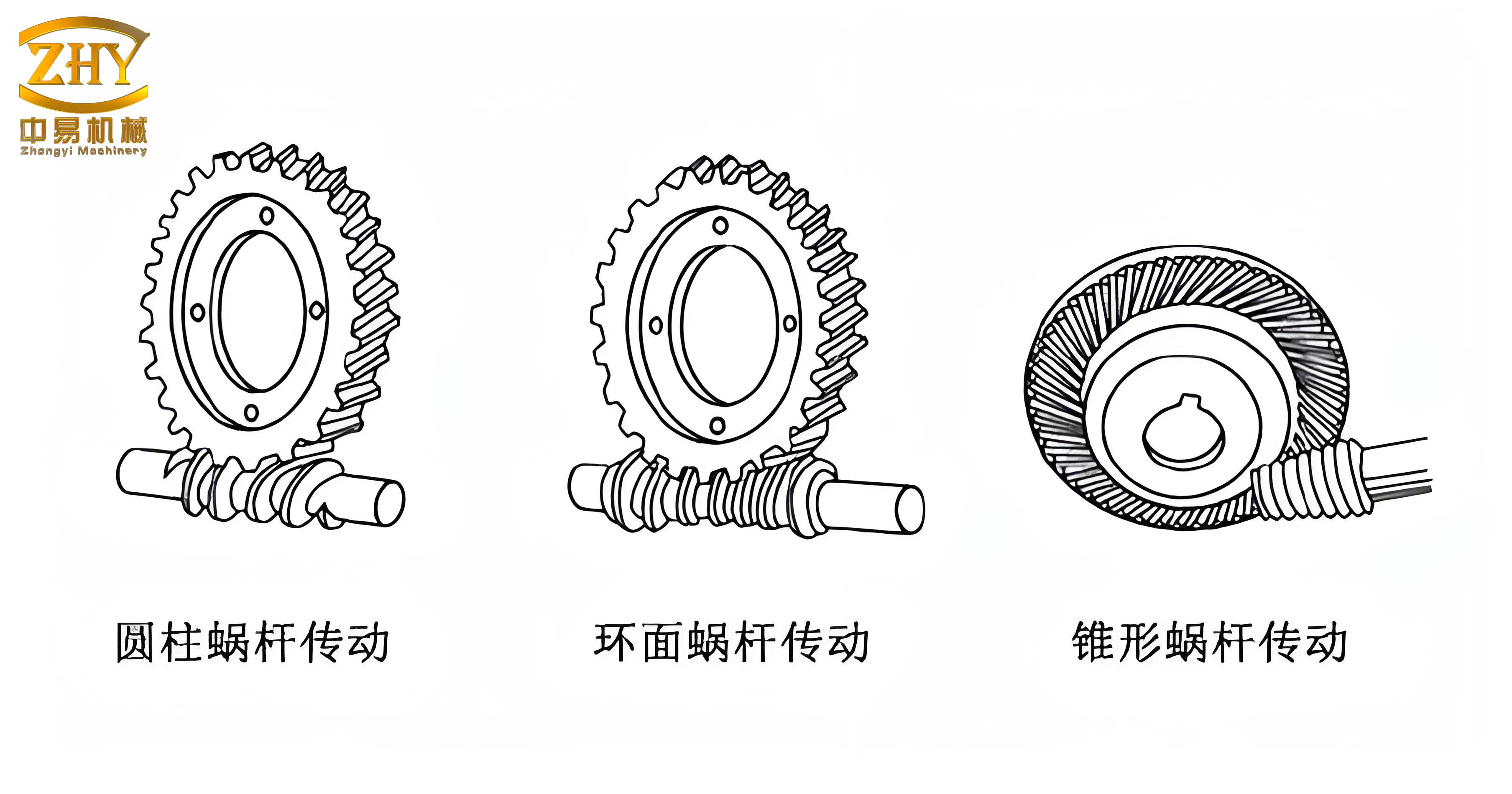
Looking forward, further enhancements could involve advanced screw gear designs like enveloping worm drives, which offer even higher load capacities and efficiencies. However, such options require precise manufacturing and may not be feasible for immediate retrofits. Thus, my proposed scheme strikes a balance between performance gains and practicality, making it an ideal solution for current naval needs. The screw gear box, once a weak link, is now transformed into a reliable component, contributing to the overall effectiveness of naval gun systems.