
The evolution of industrial machinery has led to the widespread adoption of high-performance gear systems. Among these, screw gear drives, also known as worm gear drives, represent a critical transmission technology. This mechanism evolved from crossed helical gear drives, where the pinion features teeth that wrap around its pitch cylinder more than once, resembling a screw (the worm), and the meshing gear is termed the worm wheel or screw gear. To optimize engagement, the worm wheel is often made with a throat to partially envelop the worm and is generated using a hob identical to the worm, resulting in line contact between tooth flanks capable of transmitting significant power.
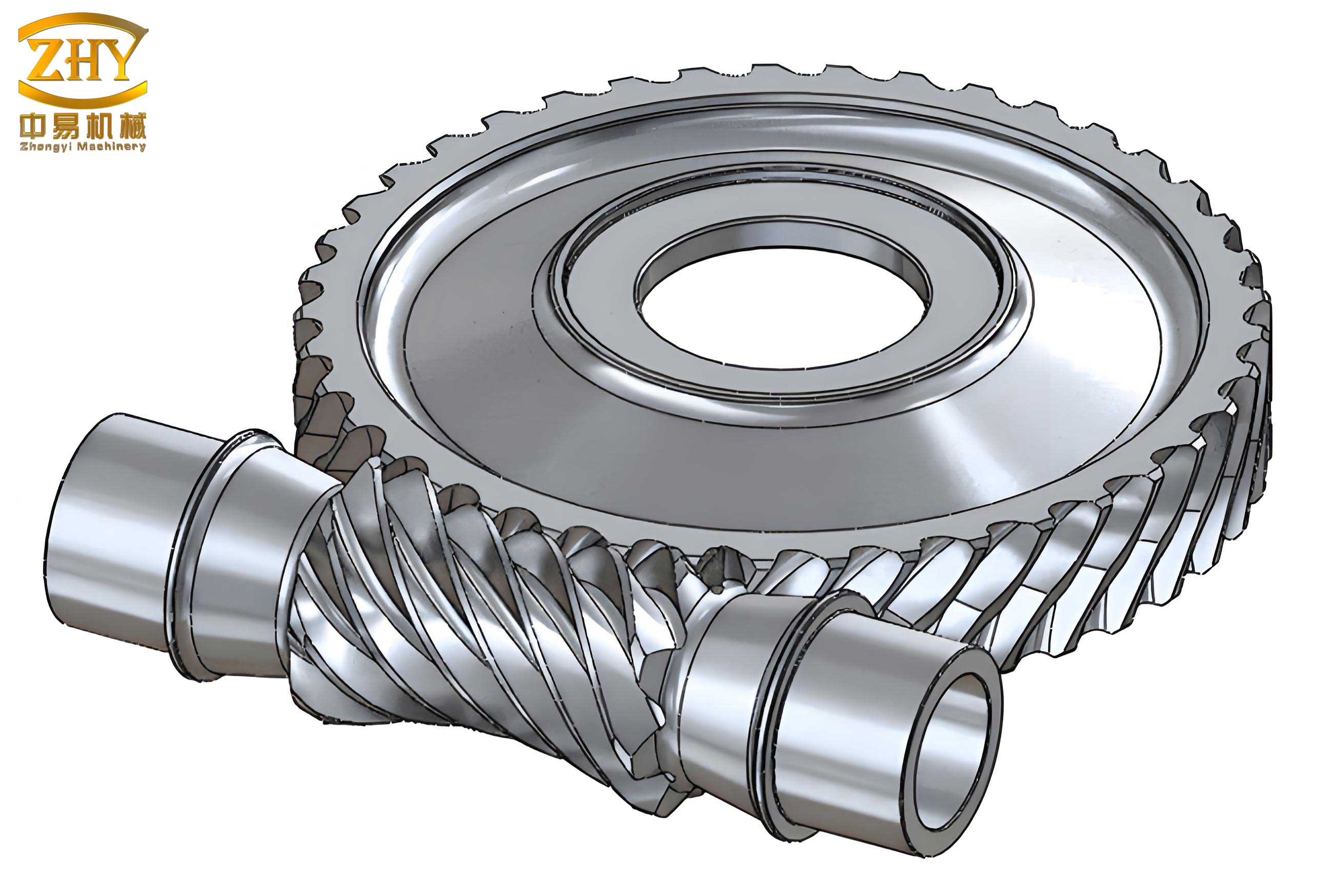
Screw gear transmission offers distinct advantages such as compact design, high reduction ratios, and smooth, quiet operation. However, its kinematic principle is predominantly based on sliding friction rather than rolling friction. The typical steel (worm) and copper-alloy (screw gear) friction pair operates with high sliding velocities, generating substantial frictional heat. This severe operating condition makes the system prone to issues like scoring, scuffing, seizure, and excessive wear. Furthermore, copper alloys are particularly sensitive to certain types of extreme pressure (EP) additives, especially highly active sulfur compounds commonly used in industrial gear oils. Consequently, manufacturers of screw gear equipment strongly recommend the use of dedicated lubricants specifically formulated for screw gear applications.
The dominance of sliding friction in screw gear operation imposes stringent requirements on the lubricant. It must possess exceptional film strength, anti-scuffing properties, and effective protection against rust and corrosion for both ferrous and non-ferrous metals, coupled with robust oxidation stability. This article details the research, formulation, and field application of an L-CKE/P 320 grade Extreme Pressure Screw Gear Oil designed to meet these demanding needs.
1. Technical Specifications and Performance Targets
The development target for the L-CKE/P 320 EP Screw Gear Oil was set to meet and exceed the requirements specified in the Chinese petroleum industry standard SH/T 0094—91, “Worm Gear Oils,” for the L-CKE/P 320 First Grade quality. This standard defines the essential physicochemical and performance characteristics, as summarized in Table 1.
| Property | Test Method | Specification Limit for L-CKE/P 320 |
|---|---|---|
| Kinematic Viscosity @ 40°C, mm²/s | GB/T 265 | 288 – 352 |
| Viscosity Index | GB/T 1995 | Report |
| Flash Point (COC), °C | GB/T 3536 | > 200 |
| Pour Point, °C | GB/T 3535 | < -6 |
| Copper Strip Corrosion (100°C, 3h) | GB/T 5096 | < 1b |
| Foaming Tendency/Stability (Seq I/II/III), mL/mL | GB/T 12579 | 75/10 max |
| Demulsibility (40-37-3 mL), min @ 54°C | GB/T 7305 | < 60 |
| Timken OK Load, lbf | GB/T 11144 | > 45 |
| Four-Ball Wear Scar Diameter (392N, 60min, 75°C, 1200rpm), mm | SH/T 0189 | < 0.5 |
| Rust Prevention (Distilled Water) | GB/T 11143 | Pass |
2. Product Development Methodology
2.1 Base Oil Selection
The base oil constitutes the primary component of any lubricant, and its quality fundamentally dictates the performance ceiling of the finished product. For this EP Screw Gear Oil formulation, two highly refined solvent-neutral base oils, 500SN and 150BS, were evaluated. Their key properties are presented in Table 2.
| Property | Test Method | 500SN | 150BS |
|---|---|---|---|
| Kinematic Viscosity @ 40°C, mm²/s | ASTM D445 | 95 – 105 | 500 – 550 |
| Kinematic Viscosity @ 100°C, mm²/s | ASTM D445 | 10 – 12 | 30 – 35 |
| Viscosity Index | ASTM D2270 | > 95 | > 95 |
| Pour Point, °C | ASTM D97 | < -9 | < -9 |
| Total Acid Number, mg KOH/g | ASTM D974 | < 0.05 | < 0.05 |
The data confirmed that both 500SN and 150BS offer excellent low-temperature fluidity, high viscosity index, and very low acidity, making them suitable candidates. A blend of these two base oils was selected to achieve the target viscosity of ISO VG 320 while providing an optimal balance of film strength, fluidity, and additive solubility, crucial for reliable screw gear lubrication.
2.2 Additive System Selection and Screening
The severe sliding conditions in a screw gear assembly necessitate properties beyond what base oils can provide. A synergistic additive package is required to impart extreme pressure (EP), anti-wear (AW), oxidation inhibition, rust prevention, and demulsibility. The unique challenge for screw gear oil lies in the copper-alloy component’s sensitivity. Highly active sulfur-based EP agents, effective for steel-on-steel contacts, can cause unacceptable corrosion to bronze or brass gears. Therefore, the selection process focused on achieving high load-carrying capacity without compromising copper compatibility.
2.2.1 Extreme Pressure / Anti-Wear Agent Screening
Fatty oils and esters are known for their superior friction-modifying properties but can adversely affect demulsibility and oxidation stability. The primary focus was on sulfur-containing EP agents with moderate activity. Three candidate additives from different suppliers, all with approximately 10% mass sulfur content but differing in chemical structure, were evaluated. They are designated as S1, S2, and A10. These were blended into the selected base oil blend at a treat rate designed to meet the target Timken OK Load. Key performance test results are shown in Table 4.
| Sample | EP Additive | Demulsibility (Time to 3mL emulsion), min | Copper Strip Corrosion (100°C, 3h) | Timken OK Load, lbf | Four-Ball Wear Scar Diameter, mm |
|---|---|---|---|---|---|
| 1 | S1 | 18 | 2a | 50 | 0.42 |
| 2 | S2 | 25 | 1b | 48 | 0.45 |
| 3 | A10 | 12 | 1a | 55 | 0.38 |
Sample 3, containing additive A10, demonstrated a superior overall performance profile: excellent demulsibility, the best copper corrosion rating (1a), and the highest Timken OK Load coupled with the smallest wear scar. This indicates that A10 provides outstanding protection for the sliding contacts in a screw gear system while being exceptionally gentle on copper alloys. Therefore, A10 was selected as the primary EP/AW component.
2.2.2 Rust Inhibitor Screening
Protection against rust in the presence of water is vital for industrial gear oils. The initial blend containing base oils and A10 additive failed the distilled water rust test (ASTM D665 A). Three common rust inhibitors, labeled RI-1, RI-2, and RI-3, were evaluated at a treat rate of 0.03% mass. The results are shown in Table 5.
| Sample | Rust Inhibitor | Treat Rate (% mass) | Rust Test Result (ASTM D665 A) |
|---|---|---|---|
| Base + A10 | None | 0 | Fail (Heavy Rust) |
| 4 | RI-1 | 0.03 | Pass |
| 5 | RI-2 | 0.03 | Pass |
| 6 | RI-3 | 0.03 | Pass (Slightly cleaner surface) |
All three inhibitors passed the test. Based on a combination of performance, cost-effectiveness, and compatibility with the other additives, RI-3 was chosen for the final formulation.
2.2.3 Antioxidant Screening
The high sliding speeds and localized flash temperatures in screw gear meshes demand excellent oxidation stability to prevent sludge and varnish formation, which can impede lubrication and heat transfer. The added EP agents can sometimes catalyze oxidation, making an effective antioxidant system essential. Three antioxidant combinations were evaluated using the Rotary Pressure Vessel Oxidation Test (RPVOT, ASTM D2272). The results are summarized in Table 6.
| Sample | Antioxidant Package | RPVOT Life (minutes) |
|---|---|---|
| 7 | AO-Combo 1 | 320 |
| 8 | AO-Combo 2 | 285 |
| 9 | AO-Combo 3 | 250 |
AO-Combo 1 provided the longest oxidation induction time, indicating the best potential for extended service life in the demanding thermal environment of a screw gearbox, and was therefore selected.
2.2.4 Demulsifier Optimization
Screw gear drives in steel mills are prone to water ingress from cooling systems or environment. Poor water separation can lead to the formation of stable emulsions, reducing lubricity and promoting rust and corrosion. To enhance the inherent demulsibility provided by the base oil and A10 additive, specific demulsifiers were investigated. A baseline blend (Base Oil + A10 + RI-3 + AO-Combo1) was prepared. Two demulsifiers, D1 and D2, were tested individually and in combination over a range of treat rates. Performance was assessed via the ASTM D1401 test, focusing on the volume of water separated in the first 5 minutes and the total time to reach 40-37-3 mL separation. Key findings are shown in Table 7.
| Sample | Demulsifier System (Treat Rate, mg/kg) | Water Separated in 5 min (mL) | Time to 40-37-3 mL (min) |
|---|---|---|---|
| Baseline | None | 25 | 15 |
| 10 | D1 (100) | 35 | 10 |
| 11 | D2 (100) | 32 | 12 |
| 12 | D1 (50) + D2 (50) | 39 | 8 |
The combination of D1 and D2 at a 1:1 ratio (by treat rate) showed a synergistic effect, achieving the fastest initial water separation and the shortest total separation time. Rapid initial water shedding is critical for field applications, as it minimizes the time water is in intimate contact with the lubricant and metal surfaces within the screw gear unit. This combination was adopted for the final formula.
3. Final Formulation and Comprehensive Performance Evaluation
Based on the systematic screening process, the final formulation for the L-CKE/P 320 EP Screw Gear Oil was established:
$$ \text{Final Formulation} = \alpha\% \, \text{500SN} + \beta\% \, \text{150BS} + \gamma\% \, \text{A10 (EP/AW)} + \delta\% \, \text{RI-3} + \epsilon\% \, \text{AO-Combo 1} + \zeta\% \, [\text{D1} + \text{D2}] $$
where the coefficients are optimized percentages to meet all target specifications.
A pilot-scale batch was manufactured according to this formula. The finished product underwent a full suite of tests against the SH/T 0094-91 standard. The results are presented in Table 8, confirming that the developed screw gear oil meets all first-grade requirements.
| Property | Test Method | Specification Limit | Developed Oil Result |
|---|---|---|---|
| Kinematic Viscosity @ 40°C, mm²/s | GB/T 265 | 288 – 352 | 328 |
| Viscosity Index | GB/T 1995 | Report | 102 |
| Flash Point (COC), °C | GB/T 3536 | > 200 | 242 |
| Pour Point, °C | GB/T 3535 | < -6 | -12 |
| Copper Strip Corrosion (100°C, 3h) | GB/T 5096 | < 1b | 1a |
| Foaming Tendency/Stability (Seq I/II/III), mL/mL | GB/T 12579 | 75/10 max | 20/0, 15/0, 20/0 |
| Demulsibility (40-37-3 mL), min @ 54°C | GB/T 7305 | < 60 | 8 |
| Timken OK Load, lbf | GB/T 11144 | > 45 | 55 |
| Four-Ball Wear Scar Diameter, mm | SH/T 0189 | < 0.5 | 0.38 |
| Rust Prevention (Distilled Water) | GB/T 11143 | Pass | Pass |
The data highlights the product’s exceptional load-carrying capacity (55 lbf Timken OK Load), excellent copper compatibility (1a rating), superior demulsibility (8 minutes), and outstanding anti-wear performance (0.38 mm scar). These characteristics are directly aligned with the lubrication challenges posed by screw gear drives.
4. Field Application and Performance Monitoring
The developed L-CKE/P 320 EP Screw Gear Oil was subjected to field trials in demanding industrial environments to validate its performance under real operating conditions. The primary application sites were the screw gear reducers in the screw-down mechanisms of rolling mills at a major steel plant and a plate mill. Key equipment parameters are listed in Table 9.
| Location | Equipment | Screw Gear Ratio | Input Power | Oil Sump Capacity (L) |
|---|---|---|---|---|
| Steel Plant – Hot Strip Mill | Screw-down Drive Reducer | 50:1 | 150 kW | ~500 |
| Plate Mill | Edger Screw Gear Reducer | 40:1 | 220 kW | ~750 |
Prior to the trial, a compatibility test was conducted by mixing the new screw gear oil with the incumbent lubricant at a 1:1 ratio. The results, shown in Table 10, indicated a slight increase in copper strip corrosion rating for the mixture compared to the pure oils.
| Property | Incumbent Oil | Developed Screw Gear Oil | 1:1 Mixture |
|---|---|---|---|
| Copper Strip Corrosion (100°C, 3h) | 1b | 1a | 2a |
| Demulsibility, min | >60 | 8 | 25 |
Based on this finding, a full system flush during a scheduled maintenance shutdown was recommended and performed before charging with the new L-CKE/P 320 screw gear oil. This ensured no adverse interactions from residual old lubricant.
Following the oil change, a condition monitoring program was implemented over a six-month period. Regular oil samples were taken from the reservoirs and analyzed for key physicochemical properties and wear metal content. The trend data from the plate mill reducer is summarized in Table 11.
| Monitoring Interval | Viscosity @ 40°C (mm²/s) | Acid Number (mg KOH/g) | Water Content (% vol) | Iron (Fe) Wear, ppm | Copper (Cu) Wear, ppm |
|---|---|---|---|---|---|
| Fresh Oil (Baseline) | 328 | 0.05 | < 0.05 | 0 | 0 |
| After 3 Months | 325 | 0.08 | 0.1 | 12 | 8 |
| After 6 Months | 320 | 0.12 | < 0.05 | 25 | 15 |
The monitoring data demonstrates excellent stability of the screw gear oil in service. The viscosity remained stable within acceptable limits, indicating minimal shearing or fuel dilution. The slow, steady increase in Acid Number suggests effective antioxidant performance. Notably, water ingress was detected at the 3-month mark but was below the detection limit by 6 months, confirming the excellent demulsibility and water-shedding characteristics of the formulation in a real-world screw gear application. The wear metal levels (Iron from the worm, Copper from the screw gear) were low and increased linearly at a very slow rate, which is indicative of normal, mild wear and the absence of catastrophic scuffing or adhesive wear. The equipment operated smoothly throughout the trial period with no lubricant-related issues, validating that the screw gear oil met all operational requirements.
5. Conclusion
The successful development and application of the L-CKE/P 320 Extreme Pressure Screw Gear Oil underscore the importance of a tailored approach to lubricating screw gear drives. The formulation strategy, centered on a blend of high-quality 500SN and 150BS base oils fortified with a carefully balanced additive system, directly addressed the unique tribological challenges of the steel-on-copper alloy sliding contact.
The selected EP/AW additive A10 provided an optimal balance of high load-carrying capacity and exceptional compatibility with copper alloys, a non-negotiable requirement for screw gear lubrication. The synergistic combination of demulsifiers ensured rapid water separation, protecting the system from the detrimental effects of emulsified water. The robust antioxidant package guaranteed thermal-oxidative stability under the high interfacial temperatures generated in the screw gear mesh.
Comprehensive laboratory testing confirmed that the final product exceeds the stringent requirements of the SH/T 0094-91 L-CKE/P 320 first-grade specification. Most importantly, extended field trials in severe industrial rolling mill applications demonstrated that this screw gear oil delivers reliable, long-term performance. It maintained stable physicochemical properties, effectively protected both worm and screw gear components from excessive wear, and provided superior water handling capability. The developed L-CKE/P 320 EP Screw Gear Oil is therefore a technically advanced and field-proven solution for protecting critical screw gear drives in demanding industrial environments.