
The increasing demand for passenger comfort and refined cabin acoustics in the modern automotive industry has placed stringent requirements on auxiliary systems, particularly on power-adjustable seat mechanisms. The drive motor for these seats is a critical component, where performance is directly linked to user experience. Key design objectives for these motors include compact size, lightweight construction, extended operational life, and critically, minimal noise and vibration generation. The primary transmission element within these motors is often a screw gears set, where a worm (screw) drives a worm wheel. The dynamic behavior of this screw gears pair is a dominant factor influencing the overall noise, vibration, and harshness (NVH) performance as well as the mechanical efficiency of the seat adjuster. Therefore, a deep understanding of its kinematic and dynamic characteristics is paramount for optimal design.
Traditional design and validation cycles relying on physical prototyping are time-consuming and costly. Virtual prototyping technology presents a powerful alternative, enabling comprehensive analysis and optimization in a digital environment before manufacturing. This study focuses on the screw gears transmission mechanism of an automotive seat motor. Utilizing advanced multi-body dynamics simulation, we construct and analyze a virtual prototype to investigate its operational behavior, providing a theoretical foundation for performance prediction and design refinement, ultimately contributing to the development of quieter and more reliable seat adjustment systems.
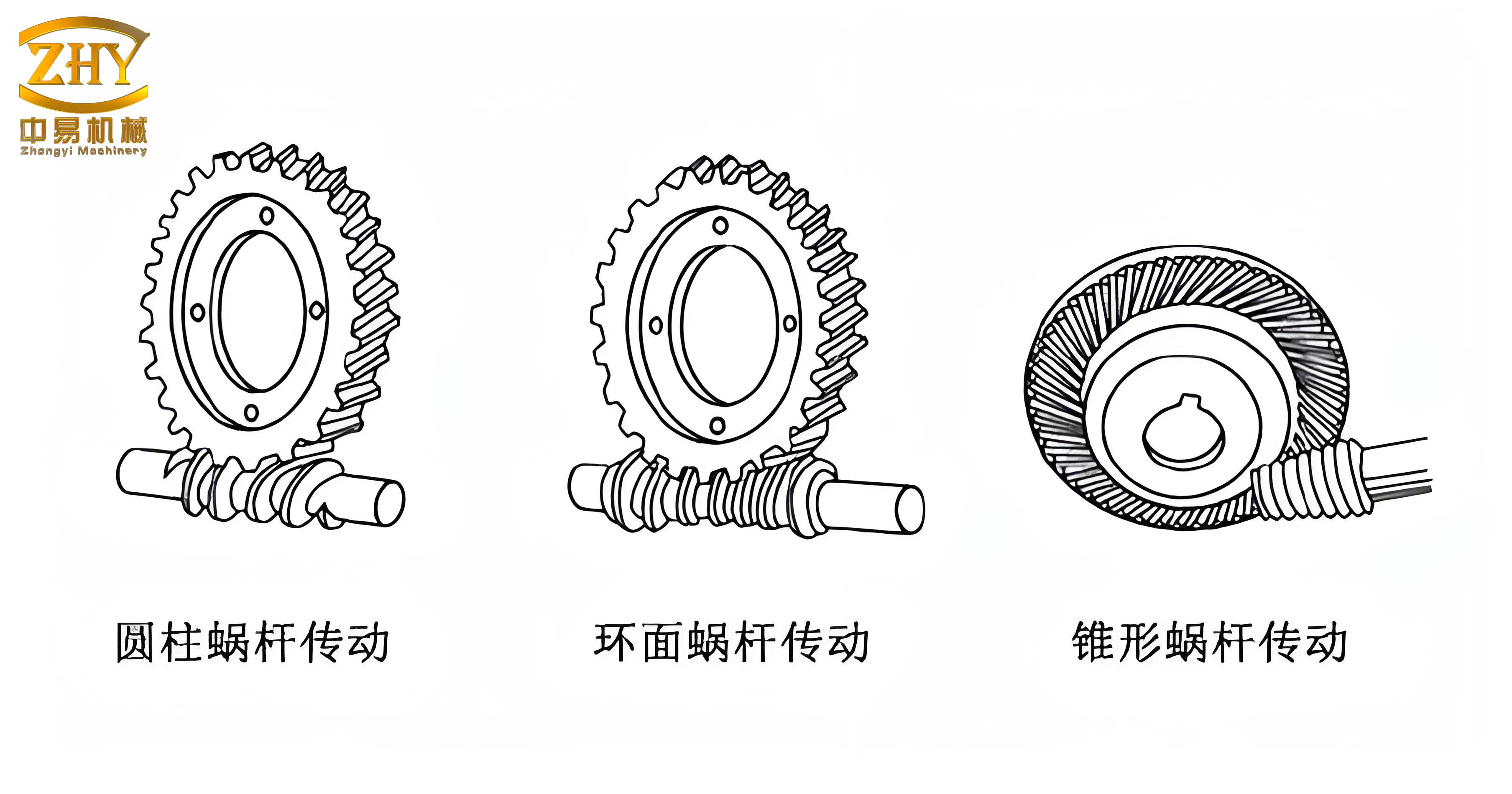
Geometric and Material Specifications of the Screw Gears Set
The accurate definition of geometry and material properties is the foundation for any meaningful simulation. The studied screw gears mechanism consists of a single-start worm (screw) and a multi-tooth worm wheel. The worm is manufactured from 45-grade steel, a common choice for its good strength and wear resistance. The worm wheel is injection-molded from Polyoxymethylene (POM), a high-performance engineering polymer favored for its low friction, good wear properties, and noise-damping characteristics, which are highly beneficial in such applications. The essential geometric parameters and material properties are summarized in Table 1.
| Parameter | Worm Wheel (POM) | Worm / Screw (45 Steel) |
|---|---|---|
| Normal Module, $m_n$ (mm) | 0.7 | 0.7 |
| Number of Teeth / Starts, $Z$ | 53 | 1 |
| Normal Pressure Angle, $\alpha_n$ (°) | 10 | 10 |
| Helix Angle / Lead Angle, $\gamma$ (°) | 4.48 | 4.79 |
| Young’s Modulus, $E$ (GPa) | 3.10 | 210 |
| Shear Modulus, $G$ (GPa) | 1.1 | 81 |
| Poisson’s Ratio, $\nu$ | 0.39 | 0.26 |
Three-Dimensional Modeling and Virtual Prototype Development
Geometric Modeling and Assembly
The three-dimensional solid models of the worm and the worm wheel were meticulously created using parametric computer-aided design (CAD) software, Pro/ENGINEER. The tooth profiles were generated based on the parameters in Table 1 to ensure geometric accuracy. Subsequently, the components were virtually assembled according to the designated center distance, ensuring proper initial meshing alignment. This assembly forms the precise geometric basis for the dynamic simulation.
Establishing the Multi-Body Dynamics Model
The CAD assembly was imported into the ADAMS (Automatic Dynamic Analysis of Mechanical Systems) software environment to create a virtual prototype. The following steps detail the model setup:
1. Component Definition and Material Assignment: Each part was assigned its corresponding material density based on Table 1, allowing ADAMS to automatically calculate mass and inertia properties, which are crucial for dynamic simulation.
2. Joint Constraint Application: Kinematic joints were applied to define the permissible motions. A revolute joint was created between the worm and the ground (fixed world reference frame), allowing the worm to rotate about its central axis. Similarly, a revolute joint was applied to the worm wheel. Finally, a coupled motion, often implemented via a gear constraint or a coupled motion equation, was defined to establish the kinematic relationship between the worm and wheel rotations, based on their gear ratio.
3. Defining Contact Forces for the Screw Gears Mesh: The core of the dynamic interaction in the screw gears pair is the intermittent contact between the teeth. A force-based contact algorithm (the Impact function in ADAMS) was applied between the engaging tooth surfaces. This model calculates a contact force based on penetration depth and relative velocity. The key parameters for this model are the contact stiffness $K$ and the damping coefficient.
The contact stiffness $K$ is derived from Hertzian contact theory, considering the geometry and material of the two contacting bodies. For two cylindrical surfaces in line contact (a reasonable approximation for segments of the screw gears teeth), the combined stiffness is calculated as:
$$K = \frac{\pi \cdot L \cdot E^*}{4}$$
where $L$ is the effective contact length of the teeth, and $E^*$ is the equivalent Young’s modulus, given by:
$$\frac{1}{E^*} = \frac{1-\nu_1^2}{E_1} + \frac{1-\nu_2^2}{E_2}$$
Substituting the values from Table 1 ($E_1 = 2.1 \times 10^5$ N/mm², $\nu_1=0.26$ for steel; $E_2 = 3.1 \times 10^3$ N/mm², $\nu_2=0.39$ for POM) and an estimated contact length $L = 5$ mm, the equivalent stiffness is computed.
$$ \frac{1}{E^*} = \frac{1-0.26^2}{210000} + \frac{1-0.39^2}{3100} \approx 0.000267 $$
$$ E^* \approx 3745 \text{ N/mm²} $$
$$ K = \frac{\pi \cdot 5 \cdot 3745}{4} \approx 14700 \text{ N/mm} $$
This calculated stiffness value was used as a primary input for the contact force model. Friction was also incorporated, with a static coefficient of 0.08 and a dynamic coefficient of 0.05, reflecting the lubricated condition of the screw gears.
| Parameter | Symbol | Value |
|---|---|---|
| Contact Stiffness | $K$ | 14700 N/mm |
| Force Exponent | $e$ | 1.5 (for metal-polymer contact) |
| Damping Coefficient | $C$ | 50 N·s/mm |
| Penetration Depth for Full Damping | $d$ | 0.01 mm |
| Static Friction Coefficient | $\mu_s$ | 0.08 |
| Dynamic Friction Coefficient | $\mu_d$ | 0.05 |
4. Applying Motions and Loads: A rotational motion was applied to the worm (input). To simulate a realistic startup, the speed was ramped up from 0 to 36 RPM (216 °/s) over 0.3 seconds using a step function: $Motion = STEP(time, 0, 0, 0.3, 216)$. A constant load torque of 24 N·m was applied to the output shaft of the worm wheel, representing the resisting torque from the seat mechanism. This load was also ramped up from 0 to its full value over a short period to improve simulation stability.
Simulation Results and Analysis
Kinematic Simulation Analysis
A kinematic simulation was first performed to verify the basic motion transmission. The output angular velocity of the worm wheel was measured. As the worm’s input speed linearly increased to 216 °/s (36 RPM), the worm wheel’s output speed increased correspondingly. The steady-state speed of the worm wheel was found to be approximately 4.075 °/s. The transmission ratio $i$ is calculated from the steady-state speeds:
$$ i = \frac{\omega_{worm}}{\omega_{wheel}} = \frac{216 \, ^\circ/\text{s}}{4.075 \, ^\circ/\text{s}} \approx 53.0 $$
This simulated ratio matches almost perfectly with the theoretical geometric ratio of the screw gears, which is simply the ratio of the number of teeth on the worm wheel to the number of starts on the worm:
$$ i_{theoretical} = \frac{Z_{wheel}}{Z_{worm}} = \frac{53}{1} = 53 $$
The excellent agreement ($\sim$0.2% error) validates the geometric accuracy of the 3D model and the correct setup of the kinematic constraints in the virtual prototype.
Dynamic Simulation Analysis
A dynamic simulation was then conducted over a longer duration (20 seconds) with a fine time step to capture the forces and vibrations during steady-state operation. The primary outputs of interest were the meshing forces between the screw gears in the plane of action.
1. Time-Domain Analysis of Meshing Forces: The contact forces were resolved into two key components relative to the worm wheel: the radial force (x-direction) and the tangential force (y-direction), which is primarily responsible for transmitting torque. The time-history plots of these forces are critical. Initially, during the 0.3-second ramp-up period, both force components show a rising trend as the load is applied. After the load stabilizes, the forces enter a steady-state regime characterized by periodic oscillations. These oscillations are the direct result of the cyclic meshing action of the screw gears teeth—each tooth pair comes into engagement, bears load, and then disengages. The periodic nature of the force variation confirms a continuous and smooth transmission with no abrupt impacts or loss of contact, which is a desirable characteristic for low-noise operation. The mean value of the tangential force relates directly to the output torque.
2. Frequency-Domain Analysis and Meshing Frequency: To understand the spectral characteristics of the vibration excitation, the time-domain force signals were processed using a Fast Fourier Transform (FFT) to obtain their frequency spectra. Both the radial and tangential force spectra showed a dominant peak at a specific frequency. This frequency is identified as the screw gears meshing frequency $f_m$. For the simulated mechanism, the peak was found at $f_{m(sim)} = 0.60$ Hz.
The theoretical meshing frequency is calculated based on the rotational speed of the worm and the number of times teeth engage per second. Since the worm has one start, each revolution causes one tooth on the worm wheel to be engaged. Therefore, the meshing frequency equals the rotational frequency of the worm:
$$ f_{m(theoretical)} = \frac{n_{worm}}{60} = \frac{36 \text{ RPM}}{60} = 0.60 \text{ Hz} $$
where $n_{worm}$ is the worm speed in revolutions per minute. The perfect correspondence between the simulated ($0.60$ Hz) and theoretical ($0.60$ Hz) meshing frequency provides strong validation of the dynamic contact model’s fidelity. This frequency is a fundamental parameter for NVH analysis; any structural resonance near this frequency or its harmonics could lead to amplified noise and vibration, guiding designers in optimizing system stiffness and mass distribution.
The root-mean-square (RMS) values and peak-to-peak variations of the meshing forces under steady-state load provide quantitative data for stress and wear analysis. A summary of key dynamic results is presented in Table 3.
| Metric | Symbol | Value | Notes |
|---|---|---|---|
| Simulated Transmission Ratio | $i_{sim}$ | 53.0 | Matches theoretical design. |
| Steady-State Worm Speed | $n_{worm}$ | 36 RPM | As per input motion. |
| Simulated Meshing Frequency | $f_{m(sim)}$ | 0.60 Hz | From FFT analysis of contact force. |
| Theoretical Meshing Frequency | $f_{m(theory)}$ | 0.60 Hz | Calculated from $n_{worm}/60$. |
| Mean Tangential Meshing Force | $F_{t, mean}$ | ~1200 N | Derived from output torque and pitch radius. |
| Peak-to-Peak Force Variation | $\Delta F_{t}$ | ~150 N | Indicates load fluctuation during meshing cycle. |
Discussion on Contact Modeling and Parametric Influence
The accuracy of the dynamic simulation hinges significantly on the contact force model. The use of the Impact function with Hertzian-based stiffness is a standard and effective approach for modeling gear contact in multi-body dynamics. However, for screw gears involving a polymer material, the contact mechanics become more complex. The viscoelastic nature of POM means its stiffness and damping are rate-dependent. While our simulation used constant values, a more advanced model could incorporate this dependency for even higher fidelity, especially in simulating transient events like sudden load changes or startup impacts.
The friction model also plays a crucial role. The chosen coefficients (0.08 static, 0.05 dynamic) for a lubricated interface directly affect the tangential forces and the system’s efficiency. The efficiency $\eta$ of the screw gears can be estimated from the simulation data by comparing input power (worm torque $\times$ worm speed) to output power (load torque $\times$ wheel speed). The significant losses are primarily due to this sliding friction inherent in screw gears operation. The simulation allows for a parametric study where the effect of different lubricants (modeled via changing friction coefficients) on efficiency and meshing forces can be quantitatively assessed, providing clear guidance for system optimization.
Furthermore, the virtual prototype enables investigation into the effects of manufacturing tolerances or assembly errors, such as slight variations in center distance or shaft misalignment. These imperfections can be introduced into the model to study their impact on load distribution across the tooth face, meshing forces, and the resulting vibration spectrum, offering valuable insights for setting quality control parameters.
Conclusion
This study successfully established and analyzed a detailed virtual prototype for the screw gears transmission mechanism within an automotive seat motor. The process encompassed accurate 3D geometric modeling, the development of a dynamic multi-body model with physically-based contact and friction forces, and comprehensive kinematic and dynamic simulation. The key outcomes are:
- Model Validation: The simulated transmission ratio (53.0) showed excellent agreement with the theoretical design value (53). The dominant frequency extracted from the dynamic meshing forces (0.60 Hz) precisely matched the theoretically calculated meshing frequency (0.60 Hz). This two-fold validation confirms the high fidelity and reliability of the constructed virtual prototype.
- Dynamic Behavior Characterization: The simulation revealed the periodic nature of the meshing forces in the screw gears pair, confirming smooth and continuous power transmission under the specified operating conditions. The quantification of force magnitudes and fluctuations provides essential data for subsequent fatigue life analysis and stress verification of the components, particularly the polymer worm wheel.
- Foundation for Optimization: The validated model serves as a powerful digital tool for further design exploration. It enables low-cost, rapid parametric studies to optimize critical factors such as tooth geometry modifications for reduced pressure, material selection (e.g., different polymer composites), lubrication strategies, and the evaluation of tolerance sensitivities. The identified meshing frequency is a critical input for NVH analysts to ensure the motor assembly’s natural frequencies are detuned from this excitation source, thereby minimizing noise.
In summary, the application of virtual prototyping technology to the screw gears in seat motors provides deep insights into its functional performance. This approach significantly reduces the dependency on physical prototypes during the design phase, shortens development cycles, and offers a scientific basis for creating more efficient, quieter, and more durable automotive seat adjustment systems. The methodology and findings are also broadly applicable to the analysis and improvement of screw gears used in other precision low-power drive applications.