
In my extensive experience with agricultural and light vehicular machinery, the proper upkeep of screw gears—specifically the worm and worm wheel assembly in steering mechanisms—is paramount for ensuring operational safety and longevity. As a critical component, screw gears transmit motion and torque at right angles, often under significant load. Failure to maintain these screw gears can lead to premature wear, metal fatigue, or catastrophic failure, resulting in loss of steering control. This guide, drawn from my firsthand observations and technical practice, delves into a comprehensive, first-person perspective on maintaining these vital screw gears. I will emphasize practical steps, supported by quantitative data, tables, and formulas, to help you preserve the integrity of your steering system’s screw gears.
The screw gears in a steering box, typically a worm and worm wheel pair, are susceptible to damage primarily on the tooth flanks. Common issues include abnormal wear, pitting, spalling, and even tooth fracture. These failures in screw gears are predominantly due to excessive operational loads, shock loads, shifting load application points, and improper technical alignment. Therefore, a disciplined approach to use and maintenance is non-negotiable. My discussion will revolve around three core pillars: ensuring optimal meshing conditions, guaranteeing impeccable lubrication, and adhering to correct operational practices—all centered on the health of the screw gears.
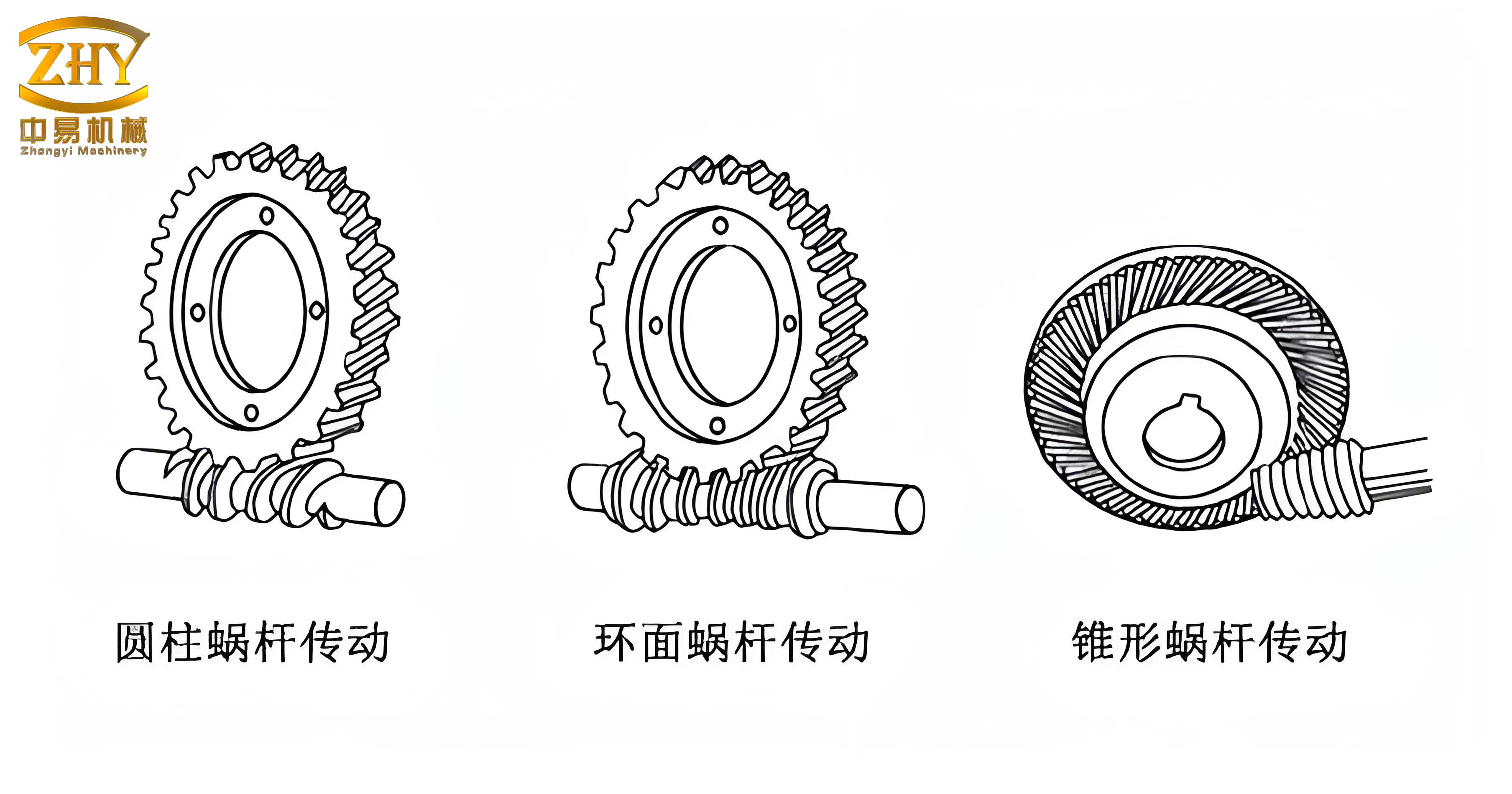
Let me begin with the most technical aspect: achieving and maintaining the perfect meshing state for the screw gears. The contact pattern between the worm wheel and the worm is the first indicator of health. For screw gears to function correctly, the contact area on the worm wheel tooth must be sufficient. During overhaul, I insist on a contact pattern that covers no less than 30% of the tooth height and 35% of the tooth width. In field service checks, I allow this to degrade to no less than 90% of the overhaul standard before intervention is mandatory. Inadequate contact area in screw gears exponentially increases unit pressure, leading to accelerated wear and surface fatigue. This contact ratio can be conceptualized by a simple area efficiency formula. If $A_{actual}$ is the actual contact area and $A_{potential}$ is the total potential contact area of the engaging tooth flank, the contact efficiency $\eta_c$ is given by:
$$\eta_c = \frac{A_{actual}}{A_{potential}} \times 100\%$$
For reliable performance of screw gears, $\eta_c$ should ideally be above 31.5% (0.30 * 0.35 * 100% for height and width combined) post-overhaul and not fall below approximately 28.5% in use. Two fundamental conditions govern this contact pattern in screw gears: perpendicularity of axes and appropriate backlash.
First, the perpendicularity between the worm shaft axis and the worm wheel axis is critical. Misalignment directly reduces the effective contact area of the screw gears. The maximum permissible deviation is quantified as a runout or offset. During repair, I ensure the perpendicularity error does not exceed 0.09 mm. In operational checks, I tolerate up to 0.12 mm. Exceeding this necessitates corrective machining or part replacement for the screw gears assembly. This tolerance can be related to the effective contact length. Consider a simplified model where the theoretical contact length $L_{th}$ is reduced by a misalignment factor $\delta$. The effective contact length $L_{eff}$ can be approximated as:
$$L_{eff} \approx L_{th} – k \cdot \delta$$
where $k$ is a geometry-dependent constant for the specific screw gears profile.
Second, the meshing backlash or clearance between the screw gears must be meticulously adjusted. Excessive backlash diminishes contact area and introduces hammering shock loads, which are detrimental to screw gears teeth. It also manifests as excessive free play in the steering wheel, creating dangerous steering lag. Insufficient backlash, while potentially increasing contact area, raises the contact pressure drastically, increases rotational resistance, squeezes out the lubricant film, and accelerates wear. The standard method is to measure the steering wheel’s free play angle, which correlates to the linear backlash at the screw gears pitch circle. The relationship is roughly proportional. The suitable backlash translates to a steering wheel free play of 50 to 150 arc-minutes (approximately 15 to 45 degrees). The adjustment is performed by rotating the eccentric bush that carries the worm wheel. The backlash $B$ relates to the free play angle $\theta$ (in radians) and the steering column’s effective radius $R_{sw}$ by:
$$B \approx R_{worm} \cdot \theta \cdot \frac{N_{sw}}{N_{worm}}$$
where $R_{worm}$ is the pitch radius of the worm, $N_{sw}$ is the number of turns from lock to lock, and $N_{worm}$ is the number of worm threads. For practical purposes, I monitor $\theta$ directly.
Furthermore, the axial end float of the worm shaft in its bearings is crucial. This axial play, essentially the bearing clearance, must be controlled. During overhaul, I set it between 0.1 and 0.2 mm. In service, I allow it up to 0.35 mm. This is adjusted via shims behind the bearing cover. Excessive axial play in the screw gears worm induces unwanted movement and alters the meshing point. Additionally, the fit between the worm wheel and its eccentric bush must be precise. The ideal clearance is 0.04 to 0.06 mm. For new screw gears components, a minimum of 0.02 mm is acceptable, and in service, a maximum of 0.085 mm is permissible. A tight fit increases turning resistance; a loose fit allows wheel tilt, breaking axis perpendicularity.
To summarize these quantitative guidelines for screw gears maintenance, I rely on the following reference table:
| Parameter | Overhaul Standard | In-Service Allowance | Adjustment Method |
|---|---|---|---|
| Contact Area (Wheel) | Height: ≥30%, Width: ≥35% | ≥90% of overhaul standard | Correct axis alignment & backlash |
| Axis Perpendicularity Error | ≤ 0.09 mm | ≤ 0.12 mm | Machine/Replace components |
| Steering Wheel Free Play | 50 – 150 arc-min | Monitor for sudden increase | Rotate eccentric bush |
| Worm Axial Play (Bearing) | 0.10 – 0.20 mm | ≤ 0.35 mm | Shims under bearing cover |
| Wheel-to-Bush Clearance | 0.04 – 0.06 mm | 0.02 – 0.085 mm | Re-bush or replace wheel |
Regular checks for smooth rotation, absence of binding, and monitoring free play are my routine for safeguarding screw gears.
The second pillar is lubrication. Screw gears operate under high sliding friction, making lubrication their lifeline. During assembly after repair or periodic保养, I meticulously clean all internal parts with diesel and pack the steering gear housing with a high-quality, clean calcium-based grease. This grease must have good adhesion and pressure resistance. I establish a strict periodic re-greasing schedule based on operating hours. The grease volume $V_g$ required can be estimated from the housing void volume $V_h$. I typically use:
$$V_g = 0.85 \cdot V_h$$
leaving some space for thermal expansion. Crucially, I avoid exposing the steering box to extreme heat, such as from engine compartment fires or improper warming, which can cause grease to liquefy, drain, or degrade. The viscosity $\mu$ of the grease as a function of temperature $T$ is critical. While a precise model is complex, the general rule is that grease stiffens at low $T$ and thins at high $T$. Operating outside the recommended range for the specific grease compromises the protection of the screw gears. I recommend using a grease with a wide operational temperature range, often denoted by NLGI grade and base oil viscosity.
The third pillar is correct and rational use. The load on the screw gears is not generated in isolation; it is a function of the entire steering linkage and vehicle dynamics. First, I ensure all linkages—tie rods, drag links, and kingpin bearings—are properly adjusted with minimal free play but without binding. Every stiff joint increases the force I must apply at the steering wheel, which is ultimately transmitted through the screw gears. The total steering resistance moment $M_{total}$ felt at the screw gears is the sum of moments from various sources:
$$M_{total} = M_{friction} + M_{alignment} + M_{terrain}$$
where $M_{friction}$ comes from linkage friction, $M_{alignment}$ from incorrect toe-in/toe-out, and $M_{terrain}$ from ground interaction. By minimizing $M_{friction}$ and $M_{alignment}$, I directly reduce the operational load on the screw gears.
Second, I focus on minimizing front wheel steering resistance. Key factors I monitor include:
- Wheel Condition: Excessive wheel bearing play, incorrect toe-in (front wheel alignment), and under-inflated tires drastically increase rolling resistance during turns. I regularly check and adjust toe-in to the manufacturer’s specification. The relationship between toe angle $\alpha$ (in radians) and the effective scrub radius can induce a self-aligning torque that affects screw gears load. The optimal $\alpha$ is usually a small positive value (toe-in).
- Weight Distribution: An overloaded front axle, from retained front ballast or carried weight, increases the normal force on the wheels, thereby increasing the turning torque required. This directly multiplies the force transmitted to the screw gears.
- Terrain Management: When operating on soft, muddy, or uneven ground, I plan my path to minimize unnecessary sharp turns, reducing the peak loads on the screw gears.
Third, and most critically, I absolutely avoid high-speed sharp turns. The screw gears in a steering box are often of a non-reversible or semi-reversible design, meaning shock loads from the road wheels can be transmitted back into the gear. During a high-speed turn, the lateral force $F_{lat}$ from the ground on the front wheels is substantial and can be impulsive. This force creates a torque $T_{shock}$ on the worm wheel:
$$T_{shock} = F_{lat} \cdot r_{tire} \cdot \cos(\phi)$$
where $r_{tire}$ is the tire’s effective radius and $\phi$ is the kingpin inclination angle. This shock torque acts directly on the teeth of the screw gears, and its impulsive nature is a primary cause of tooth fracture in screw gears. By reducing speed before turning, I allow the system to handle forces in a more quasi-static manner, protecting the screw gears.
Beyond these pillars, a proactive diagnostic approach is vital. I listen for unusual noises during steering—clicking or grinding can indicate advanced wear in the screw gears. I periodically feel for roughness or stiffness in the steering wheel rotation, which suggests lubrication breakdown or misalignment in the screw gears. Vibration in the steering column can also be a telltale sign of damaged screw gears teeth. For a more quantitative assessment, I sometimes measure the steering effort torque required to turn the wheels when stationary on a clean, level surface (assuming no power assistance). A sudden increase in this torque over time points to problems within the screw gears assembly or its lubrication.
Let’s delve deeper into the wear mechanisms of screw gears. The primary wear modes are adhesive wear, abrasive wear, and pitting fatigue. The Archard’s wear equation provides a foundational model for adhesive/abrasive wear:
$$V = K \frac{F_N \cdot s}{H}$$
where $V$ is the wear volume, $K$ is a wear coefficient (much higher for poorly lubricated screw gears), $F_N$ is the normal load on the teeth, $s$ is the sliding distance, and $H$ is the material hardness. This formula underscores why maintaining proper load ($F_N$) via good alignment and minimizing unnecessary steering ($s$) is critical, and why hard, well-lubricated surfaces (high $H$, low $K$) are essential for screw gears longevity.
For pitting, which is a surface fatigue phenomenon common in screw gears, the classic Lundberg-Palmgren or Ioannides-Harris bearing life theory can be adapted. The basic life relationship for a contact stressed volume is:
$$L_{10} \propto \left( \frac{C}{P} \right)^p$$
where $L_{10}$ is the rated life (number of cycles), $C$ is the dynamic load capacity, $P$ is the equivalent dynamic load, and $p$ is an exponent (e.g., 3 for point contact, 10/3 for line contact). For screw gears, the load $P$ is directly influenced by the factors I’ve discussed: misalignment increases $P$, and shock loads create peak $P$ values that drastically reduce $L_{10}$. Therefore, my maintenance practices are essentially efforts to minimize the operational $P$ on the screw gears.
To further illustrate the interdependence of factors, consider the following expanded table comparing good versus poor practices and their direct impact on screw gears:
| Aspect | Good Practice | Poor Practice | Direct Consequence for Screw Gears |
|---|---|---|---|
| Backlash Adjustment | Set to give 50-150 arc-min free play. | Ignore free play until steering is very loose. | Good: Optimal load distribution. Poor: Impact loads, reduced contact area, accelerated wear. |
| Lubrication | Packed with specified grease; periodic replenishment. | Infrequent or use of wrong lubricant; exposure to heat. | Good: Maintains protective film, reduces wear coefficient K. Poor: Boundary lubrication, high friction, scoring. |
| Linkage Maintenance | All joints free but with minimal play. | Loose or seized tie rod ends, worn kingpins. | Good: Minimizes $M_{friction}$. Poor: Increases operational torque on screw gears, induces off-center loads. |
| Wheel Alignment | Correct toe-in, tight wheel bearings. | Incorrect toe, excessive wheel wobble. | Good: Minimizes $M_{alignment}$. Poor: Increases rolling resistance torque, constant overload on screw gears. |
| Driving Habit | Smooth, planned turns; reduce speed before turning. | High-speed cornering, hitting curbs/potholes. | Good: Keeps load $P$ within design range. Poor: Generates shock loads $T_{shock}$, high risk of tooth fracture in screw gears. |
| Axial Play Check | Regularly verify and adjust to 0.1-0.2mm. | Ignore until noticeable steering wheel shake. | Good: Stable meshing geometry. Poor: Worm shaft movement alters contact pattern, causing localized high stress on screw gears. |
In conclusion, the maintenance of screw gears in a steering system is a holistic discipline combining precision adjustment, conscientious lubrication, and intelligent operation. From my perspective, each element feeds into the others: proper lubrication preserves the precisely set alignment, and gentle operation reduces the demands on that alignment and lubrication. The screw gears are the heart of the manual steering system, and their care cannot be an afterthought. By internalizing the principles and quantitative checks outlined here—regularly monitoring free play, ensuring perpendicularity, maintaining correct clearances, using the right lubricant, and driving with mechanical sympathy—you can dramatically extend the service life of these crucial screw gears. Remember, the steering system is your primary interface with the vehicle’s direction; investing time in maintaining its core component, the screw gears, is an investment in your own safety and the machine’s reliability. Let this guide serve as a comprehensive reference for keeping your screw gears in peak condition through all operating seasons.