
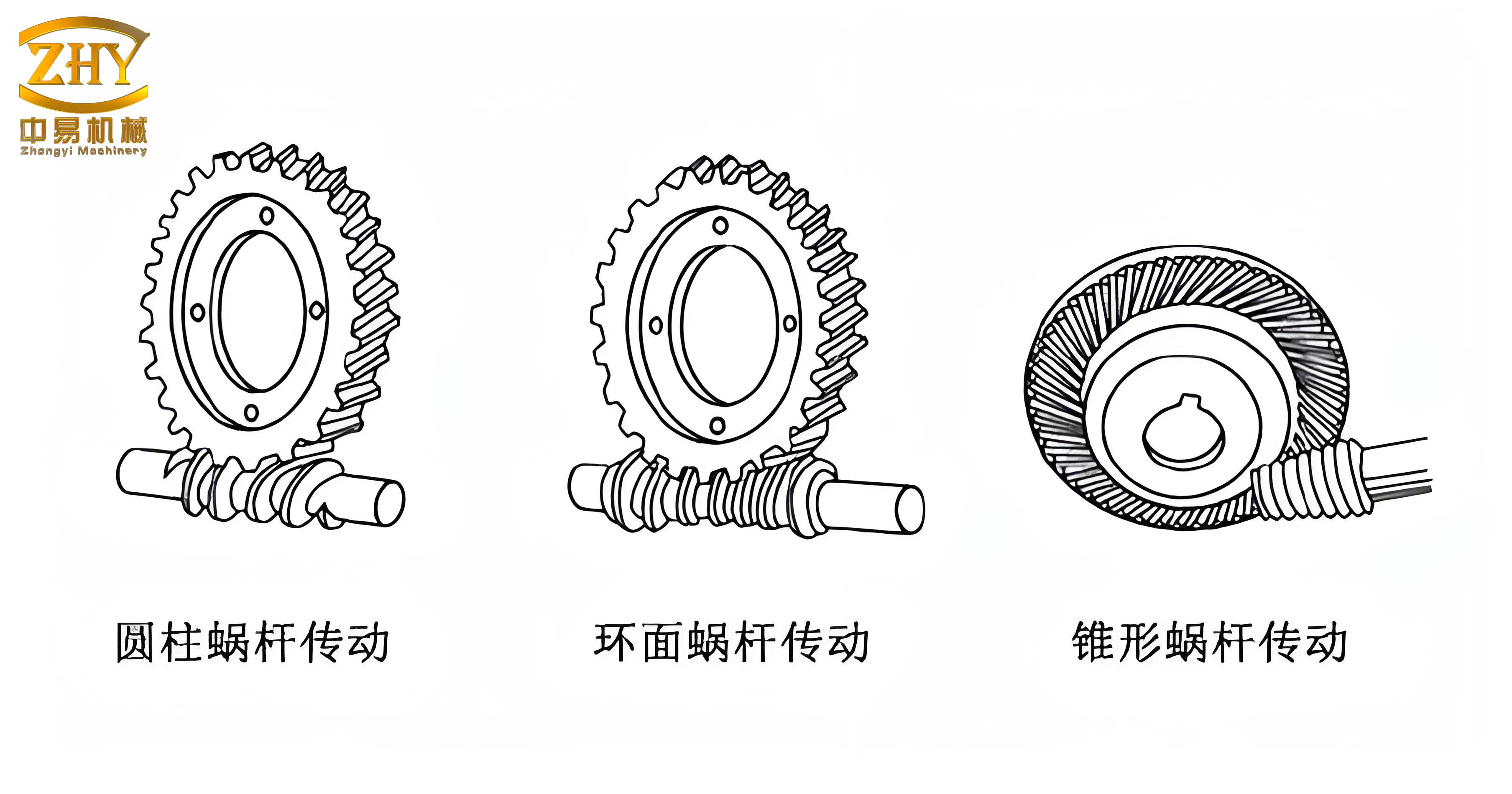
In the realm of mechanical power transmission, screw gears, more commonly referred to in specific configurations as worm gear sets, represent a cornerstone technology. Their unique ability to provide high reduction ratios, compact design, and self-locking characteristics makes them indispensable in applications ranging from automotive steering systems to heavy industrial machinery and precision instruments. The traditional design paradigm for these components, while established, often grapples with inherent uncertainties and subjective parameters that are not easily quantified using deterministic methods. This article presents a comprehensive, first-person perspective on applying fuzzy set theory to the reliability design of screw gears, moving beyond conventional approaches to account for the real-world vagueness in design parameters. The core objective is to synthesize a robust design framework that enhances the predictive accuracy of system reliability, thereby optimizing performance and lifespan.
The conventional design process for screw gears primarily guards against surface failure modes such as pitting, wear, and most critically, scuffing or adhesive wear. The bending strength of the worm wheel teeth is often a secondary check, as failure in this mode is less frequent under normal operating conditions. The fundamental contact stress equation forms the bedrock of this design approach:
$$
\sigma_H = Z_E \sqrt{\frac{9000 T_2 K}{m^3 q Z_2^2}} \quad \text{[MPa]}
$$
Where:
$\sigma_H$ = Calculated contact stress.
$Z_E$ = Elasticity coefficient of the material pair.
$T_2$ = Torque on the worm wheel shaft [Nm].
$m$ = Module of the screw gear set.
$q$ = Diameter quotient of the worm (worm diameter factor).
$Z_2$ = Number of teeth on the worm wheel.
$K$ = Overall load factor.
The overall load factor $K$ is itself a product of several sub-factors that encapsulate various operational and manufacturing uncertainties:
$$
K = K_\beta \cdot K_A \cdot K_v
$$
Here, $K_\beta$ accounts for uneven load distribution across the face width, $K_A$ is the application factor considering external load dynamics, and $K_v$ is the dynamic factor accounting for internal vibrations due to meshing. The traditional weakness of this model lies in the selection of these factors. For instance, $K_\beta$ might be chosen from a range like 1.0 to 1.5 based on “experience” regarding alignment and housing rigidity. Similarly, $K_v$ is selected from ranges (e.g., 1.0-1.2) depending on an estimated pitch line velocity. These choices are inherently fuzzy—they involve linguistic descriptors like “good alignment,” “moderate shock,” or “high precision,” which cannot be precisely bounded by classical set theory. Relying on singular, crisp values from these ranges ignores the spectrum of possibilities and can lead to under- or over-designed screw gears.
The probabilistic reliability $R$ of the gear set, based on the stress-strength interference model, is given by:
$$
R \geq 1 – \Phi\left(\frac{-(\bar{n} – 1)}{\sqrt{C_{\sigma_H}^2 + C_{[\sigma_H]}^2 + C_{\sigma_H}^2 C_{[\sigma_H]}^2 \bar{n}^2}}\right)
$$
Where $\bar{n} = \frac{[\bar{\sigma}_H]}{\bar{\sigma}_H}$ is the mean safety factor, and $C_{\sigma_H}$, $C_{[\sigma_H]}$ are the coefficients of variation of the acting stress and allowable stress, respectively. The uncertainty in $K$ directly feeds into the variance of $\sigma_H$, making its accurate, non-crisp evaluation critical for a truthful reliability prediction. This is where fuzzy logic provides a powerful alternative to purely statistical or deterministic methods, especially when statistical data is scarce but expert knowledge is available.
Fuzzy Mathematical Foundations for Screw Gear Analysis
Fuzzy set theory, introduced by Lotfi Zadeh, allows for membership in a set to be a matter of degree. This is a natural framework for handling the imprecise parameters in screw gear design. A fuzzy number $\tilde{A}$ is defined by its membership function $\mu_{\tilde{A}}(x)$, which maps a value $x$ to a membership grade between 0 and 1. For design parameters like $K_\beta$, we can define it as a fuzzy number over its possible crisp range. A common and practical representation is the triangular fuzzy number (TFN), defined by a triple $(a, b, c)$, where $a$ is the lower bound, $b$ is the most plausible value (membership = 1), and $c$ is the upper bound.
For example, the factor $K_\beta$ for a screw gear set with “good” manufacturing and alignment might be represented as a TFN (1.0, 1.1, 1.25). This acknowledges that while 1.1 is the most representative value, values as low as 1.0 or as high as 1.25 are also possible to a decreasing degree of confidence. The core of the fuzzy reliability design methodology is to perform the entire stress calculation and safety evaluation using fuzzy arithmetic, propagating the uncertainties from the input factors through the model to obtain a fuzzy reliability measure $\tilde{R}$.
The fuzzy contact stress $\tilde{\sigma}_H$ is computed using the extension principle:
$$
\tilde{\sigma}_H = \tilde{Z}_E \otimes \sqrt{\frac{9000 T_2 \otimes \tilde{K}}{m^3 \otimes \tilde{q} \otimes Z_2^2}}
$$
Where $\otimes$ denotes fuzzy multiplication or operation. Similarly, the allowable stress $[\tilde{\sigma}_H]$ can also be treated as fuzzy, reflecting uncertainties in material properties and lubrication conditions. The fuzzy safety factor $\tilde{n}$ is then:
$$
\tilde{n} = \frac{[\tilde{\sigma}_H]}{\tilde{\sigma}_H}
$$
Finally, the fuzzy reliability $\tilde{R}$ can be derived from the fuzzy probability of the event $\tilde{n} > 1$. The result is not a single number but a membership function for reliability, which provides much richer information: it shows all possible reliability values along with their degree of plausibility.
| Parameter | Symbol | Source of Fuzziness | Typical Fuzzy Representation (TFN Example) |
|---|---|---|---|
| Load Distribution Factor | $\tilde{K}_\beta$ | Assembly quality, housing stiffness, alignment. | (1.05, 1.15, 1.30) |
| Application Factor | $\tilde{K}_A$ | Nature of driven machine, torque fluctuations. | (1.00, 1.10, 1.25) |
| Dynamic Factor | $\tilde{K}_v$ | Manufacturing accuracy, meshing impact, speed. | (1.00, 1.05, 1.15) |
| Elasticity Coefficient | $\tilde{Z}_E$ | Material property tolerances, temperature effects. | (155, 160, 165) $\sqrt{\text{MPa}}$ |
| Diameter Quotient | $\tilde{q}$ | Standardization, design preference. | (8.0, 9.0, 10.0) |
The Fuzzy Comprehensive Evaluation (FCE) Model
Directly assigning a fuzzy number to a factor like $K_\beta$ can still be subjective. A more systematic approach is to use Fuzzy Comprehensive Evaluation (FCE). This method breaks down the assessment of a fuzzy parameter into evaluations of multiple influencing criteria, aggregating them in a weighted manner. For a screw gear set, determining $\tilde{K}_\beta$ via FCE involves the following steps:
1. Define the Factor Set (U): This is the set of criteria influencing the parameter. For $K_\beta$, relevant factors might include:
$U = \{u_1, u_2, u_3, u_4, u_5, u_6\}$ = {Design Sophistication, Manufacturing Precision, Assembly Skill, Housing Rigidity, Load Uniformity, Thermal Stability}.
2. Define the Evaluation Set (V): This is the set of possible linguistic assessments for each factor, which will later be mapped to numerical values. A simple set could be:
$V = \{v_1, v_2, v_3, v_4, v_5\}$ = {Very Poor, Poor, Fair, Good, Excellent}.
These linguistic terms are associated with fuzzy numbers on a scale (e.g., 0 to 1) or directly with sub-ranges of the target parameter $K_\beta$.
3. Construct the Weight Set (W): Not all factors are equally important. We assign weights reflecting their relative influence on $K_\beta$:
$W = (w_1, w_2, w_3, w_4, w_5, w_6)$, where $\sum_{i=1}^{6} w_i = 1$ and $w_i \geq 0$.
For instance, Manufacturing Precision and Assembly Skill might be assigned higher weights than others for $K_\beta$.
| Factor ($u_i$) | Weight ($w_i$) | Rationale |
|---|---|---|
| Design Sophistication | 0.15 | Influences initial nominal load distribution. |
| Manufacturing Precision | 0.25 | Directly affects tooth geometry and lead accuracy. |
| Assembly Skill | 0.20 | Critical for achieving proper alignment and backlash. |
| Housing Rigidity | 0.20 | Prevents deflection under load that misaligns gears. |
| Load Uniformity | 0.10 | Related to the driven system’s characteristics. |
| Thermal Stability | 0.10 | Affects dimensional stability and lubrication. |
4. Build the Single-Factor Evaluation Matrix (R): For each factor $u_i$, we evaluate its “rating” across all levels in $V$. This is often done by expert opinion or historical data. The result is a fuzzy subset for each factor. Collectively, they form the matrix $R$:
$$
R = \begin{bmatrix} r_{11} & r_{12} & r_{13} & r_{14} & r_{15} \\
r_{21} & r_{22} & r_{23} & r_{24} & r_{25} \\
r_{31} & r_{32} & r_{33} & r_{34} & r_{35} \\
r_{41} & r_{42} & r_{43} & r_{44} & r_{45} \\
r_{51} & r_{52} & r_{53} & r_{54} & r_{55} \\
r_{61} & r_{62} & r_{63} & r_{64} & r_{65}
\end{bmatrix}
$$
Where $r_{ij}$ is the degree to which factor $u_i$ is judged to belong to evaluation $v_j$. For example, if “Manufacturing Precision” is judged to be “Good” to a degree of 0.8 and “Excellent” to a degree of 0.2, then the corresponding row might be (0, 0, 0, 0.8, 0.2).
5. Perform Fuzzy Synthesis: The comprehensive evaluation result $B$ for the parameter $K_\beta$ is obtained by combining the weights with the evaluation matrix:
$$
B = W \circ R = (b_1, b_2, b_3, b_4, b_5)
$$
Where $\circ$ is a fuzzy composition operator, commonly the max-min composition: $b_j = \max_{i} [\min(w_i, r_{ij})]$.
6. Defuzzification: The result $B$ is a fuzzy set over the evaluation labels. To get a usable crisp (or fuzzy number) value for $K_\beta$, we assign a numerical score $s_j$ to each evaluation $v_j$ (e.g., Very Poor=1.0, Poor=1.1, Fair=1.2, Good=1.3, Excellent=1.4). The final crisp value can be calculated using the weighted average method:
$$
K_\beta = \frac{\sum_{j=1}^{5} b_j \cdot s_j}{\sum_{j=1}^{5} b_j}
$$
Alternatively, the process can output a fuzzy number directly by using the centroids of the fuzzy sets associated with each $v_j$. This FCE process is repeated for $\tilde{K}_A$ and $\tilde{K}_v$, using different but appropriate factor sets (e.g., for $K_A$, factors might include “Driven Machine Type,” “Startup Frequency,” “Torque Reversals”).
Integrated Design and Analysis Procedure
The complete fuzzy reliability design flow for screw gears integrates the principles above into a structured process.
Step 1: System Definition and Crisp Inputs. Define the basic requirements: power $P_1$, input speed $n_1$, desired ratio $i$, life target. Select materials (worm: hardened steel, wheel: bronze). These yield initial crisp values like wheel torque $T_2 = 9550 P_1 / (n_1 / i)$.
Step 2: Fuzzy Parameter Identification and Quantification. Identify all parameters with significant fuzziness. For each (like $\tilde{K}_\beta, \tilde{K}_A, \tilde{K}_v, \tilde{Z}_E, \tilde{q}$), define their possible range and most likely value. Use expert knowledge, historical data, or the FCE method described above to model them as fuzzy numbers (e.g., Triangular or Trapezoidal).
Step 3: Fuzzy Arithmetic Calculation of Stress. Using fuzzy arithmetic operations (addition, multiplication, square root), compute the fuzzy contact stress $\tilde{\sigma}_H$ and the fuzzy allowable stress $[\tilde{\sigma}_H]$. This requires solving the fundamental equation at various $\alpha$-cut levels (e.g., $\alpha = 0, 0.5, 1$).
Step 4: Fuzzy Reliability Assessment. Compute the fuzzy safety factor $\tilde{n} = [\tilde{\sigma}_H] / \tilde{\sigma}_H$. The fuzzy reliability $\tilde{R}$ is defined as the fuzzy probability that $\tilde{n} > 1$. This can be calculated using the fuzzy functional principle or simulation methods like fuzzy Monte Carlo simulation, where fuzzy inputs are randomly sampled based on their membership functions.
Step 5: Defuzzification and Design Decision. The final output $\tilde{R}$ is a fuzzy set. To make a decision, it is often defuzzified to a “most representative” crisp reliability value $R_{crisp}$ (using centroid, mean of maxima, etc.). The designer checks if $R_{crisp} \geq R_{target}$. More informatively, one can examine the entire membership function of $\tilde{R}$: a tall, narrow function centered above the target reliability indicates a robust design; a wide, low function indicates high uncertainty and potential risk, signaling a need for design revision (e.g., increasing module $m$, selecting a better material, or specifying tighter tolerances to reduce fuzziness in $K_\beta$).
| Parameter | $\alpha=0$ (Support) Range | $\alpha=1$ (Core) Value | Operation |
|---|---|---|---|
| $\tilde{K}$ | [1.10, 1.50] | 1.25 | Given |
| $\tilde{Z}_E$ [$\sqrt{MPa}$] | [155, 165] | 160 | Given |
| $\tilde{q}$ | [8.5, 9.5] | 9.0 | Given |
| $T_2$ [Nm] (Crisp) | 1273.2 | 1273.2 | Given |
| Inner Term $\frac{9000 T_2 \tilde{K}}{m^3 \tilde{q} Z_2^2}$ | Calculate Min/Max | Calculate with Core | Division/Mult. |
| $\tilde{\sigma}_H$ [MPa] | [$\sigma_{H,min}$, $\sigma_{H,max}$] | $\sigma_{H,core}$ | Square Root |
Case Study: Application to a Industrial Screw Gear Reducer
Consider the design of a closed screw gear reducer with the following specifications:
Input power $P_1 = 10 \pm 2$ kW, Worm speed $n_1 = 1500$ rpm, Ratio $i = 20$.
Worm material: 45 Steel, case-hardened to 45-50 HRC.
Wheel material: ZCuSn10Pb1 (Tin Bronze), with a fuzzy allowable stress $[\tilde{\sigma}_H]$ = (200, 220, 240) MPa.
Preliminary geometric selection: Module $m=8$ mm, Worm diameter factor $\tilde{q}$ = (8.5, 9.0, 9.5), Number of worm starts $Z_1=2$, Wheel teeth $Z_2=40$.
1. Crisp Calculation: Mean wheel torque $T_2 = 9550 \times 10 / (1500/20) \approx 1273.3$ Nm.
2. Fuzzy Load Factors via FCE:
- For $K_\beta$: After evaluation (using a process like Section 3 with appropriate U, W, R), a crisp value of 1.18 is determined, which we expand to a TFN to account for residual uncertainty: $\tilde{K}_\beta$ = (1.10, 1.18, 1.28).
- For $K_A$: Steady load, occasional moderate shocks: $\tilde{K}_A$ = (1.00, 1.05, 1.15).
- For $K_v$: Estimated pitch line velocity ~3 m/s: $\tilde{K}_v$ = (1.00, 1.05, 1.12).
3. Fuzzy Multiplication: The overall load factor $\tilde{K} = \tilde{K}_\beta \otimes \tilde{K}_A \otimes \tilde{K}_v$. Performing fuzzy multiplication at $\alpha$-cuts yields a resulting fuzzy number. Approximating the product of TFNs as a TFN gives $\tilde{K} \approx$ (1.10, 1.30, 1.65).
4. Fuzzy Stress Calculation: Using $\tilde{Z}_E = (155, 160, 165) \sqrt{MPa}$, and other parameters, we compute $\tilde{\sigma}_H$:
$$
\tilde{\sigma}_H = \tilde{Z}_E \otimes \sqrt{\frac{9000 \times 1273.3 \otimes \tilde{K}}{8^3 \otimes \tilde{q} \otimes 40^2}}
$$
At the $\alpha=1$ (core) level: $\sigma_{H,core} = 160 \times \sqrt{\frac{9000 \times 1273.3 \times 1.30}{8^3 \times 9.0 \times 1600}} \approx 186.5$ MPa.
Calculating the support bounds ($\alpha=0$) involves using the min/max combinations of the input parameters, yielding a range for $\tilde{\sigma}_H$ of approximately [168, 210] MPa.
5. Fuzzy Safety and Reliability:
The fuzzy safety factor is $\tilde{n} = [\tilde{\sigma}_H] / \tilde{\sigma}_H$ = (200, 220, 240) / (168, 186.5, 210). Performing fuzzy division (again via $\alpha$-cuts), we obtain $\tilde{n} \approx$ (0.95, 1.18, 1.43). The fact that the lower bound of the support (0.95) is less than 1 indicates a non-zero possibility that the design does not meet the stress requirement.
The fuzzy reliability $\tilde{R}$, interpreted as the fuzzy measure of $\tilde{n} > 1$, can be derived. A simplified interpretation is to calculate the reliability for the three characteristic points of $\tilde{n}$ using the conventional formula with corresponding coefficients of variation ($C_{\sigma_H}$, $C_{[\sigma_H]}$ assumed 0.08 each).
| Point | n value | Calculated R | Membership Grade ($\mu$) |
|---|---|---|---|
| Pessimistic (a) | 0.95 | ~0.45 | 0.0 |
| Most Plausible (b) | 1.18 | ~0.96 | 1.0 |
| Optimistic (c) | 1.43 | ~0.999 | 0.0 |
This forms a fuzzy reliability number $\tilde{R} \approx$ (0.45, 0.96, 0.999). Defuzzifying using the centroid method gives a crisp reliability $R_{crisp} \approx 0.92$. While the most plausible reliability is high (0.96), the fuzzy analysis reveals a significant “tail” of uncertainty extending to low reliability (~0.45), which would be completely hidden in a deterministic analysis using only the core values. This insight prompts a design improvement, such as increasing the module to $m=10$ mm.
6. Re-evaluation with $m=10$ mm: Recalculating $\tilde{\sigma}_H$ yields a lower stress. The new $\tilde{n}$ becomes approximately (1.15, 1.42, 1.75). The corresponding $\tilde{R}$ becomes (0.90, 0.998, >0.9999), with a centroid value >0.99. The possibility of unacceptably low reliability is now eliminated, demonstrating a robust design for the screw gears.
Advantages, Challenges, and Future Outlook
The fuzzy reliability design methodology for screw gears offers profound advantages over traditional methods. It systematically incorporates expert knowledge and linguistic information that are intrinsic to engineering judgment but elusive to probabilistic models requiring vast data. It provides a richer, more informative output—a fuzzy reliability—that exposes the spectrum of possible outcomes and their likelihoods, enabling a more nuanced assessment of risk. This approach is particularly powerful for one-off or small-batch productions of high-value screw gear drives, where statistical data is absent but failure consequences are severe. It transforms subjective choices (like selecting a “K factor”) into a transparent, auditable process based on multi-criteria evaluation.
However, challenges remain. The construction of membership functions and the assignment of weights in the FCE model still rely on expert judgment, which can introduce bias if not carefully calibrated. The computational complexity of full fuzzy arithmetic, especially for non-linear equations and multiple interacting fuzzy parameters, is higher than for crisp calculations. There is also a need for standardized guidelines on defining fuzzy parameters for common screw gear applications and materials.
Future developments in this field are promising. The integration of fuzzy logic with advanced probabilistic methods (forming “fuzzy-stochastic” or “fuzzy-random” models) could capture both epistemic (fuzzy) and aleatory (random) uncertainties simultaneously. Coupling this design methodology with AI and machine learning techniques could automate the learning of membership functions and evaluation matrices from field failure data or detailed simulation results (e.g., from finite element analysis of thermo-elastic behavior of screw gears). Furthermore, embedding this entire fuzzy design workflow into specialized CAD/CAE software for screw gears would make this powerful tool accessible to practicing engineers, moving it from academic research to industrial standard practice. This evolution will undoubtedly lead to the creation of screw gear systems that are not only stronger and more durable but also more efficiently and confidently designed.