
In the field of mechanical design, the evolution of optimization techniques and reliability theory has profoundly transformed engineering methodologies. Traditionally, design processes for components like screw gears often involved deterministic calculations with substantial safety factors. While ensuring functionality, this approach frequently leads to over-engineering—components that are heavier, more costly, and less resource-efficient than necessary. The core challenge lies in simultaneously achieving two potentially conflicting objectives: maximizing operational reliability while minimizing a cost function, such as weight, volume, or material expense. This necessitates a paradigm shift from deterministic to probabilistic design, where uncertainties in material properties, loads, and manufacturing tolerances are explicitly quantified and managed.
The integration of reliability-based design optimization (RBDO) provides a powerful framework to address this challenge. For power transmission elements like screw gears, which are critical in applications ranging from heavy machinery to precision positioning systems, failure can lead to significant downtime and cost. Therefore, moving beyond simple optimization or standalone reliability analysis is essential. This article explores a comprehensive RBDO methodology for screw gears, focusing on minimizing the overall volume of the gear pair under probabilistic constraints related to contact and bending fatigue strength. We will develop a full mathematical model, demonstrate its solution using advanced numerical tools, and present a comparative analysis against conventional design practices.
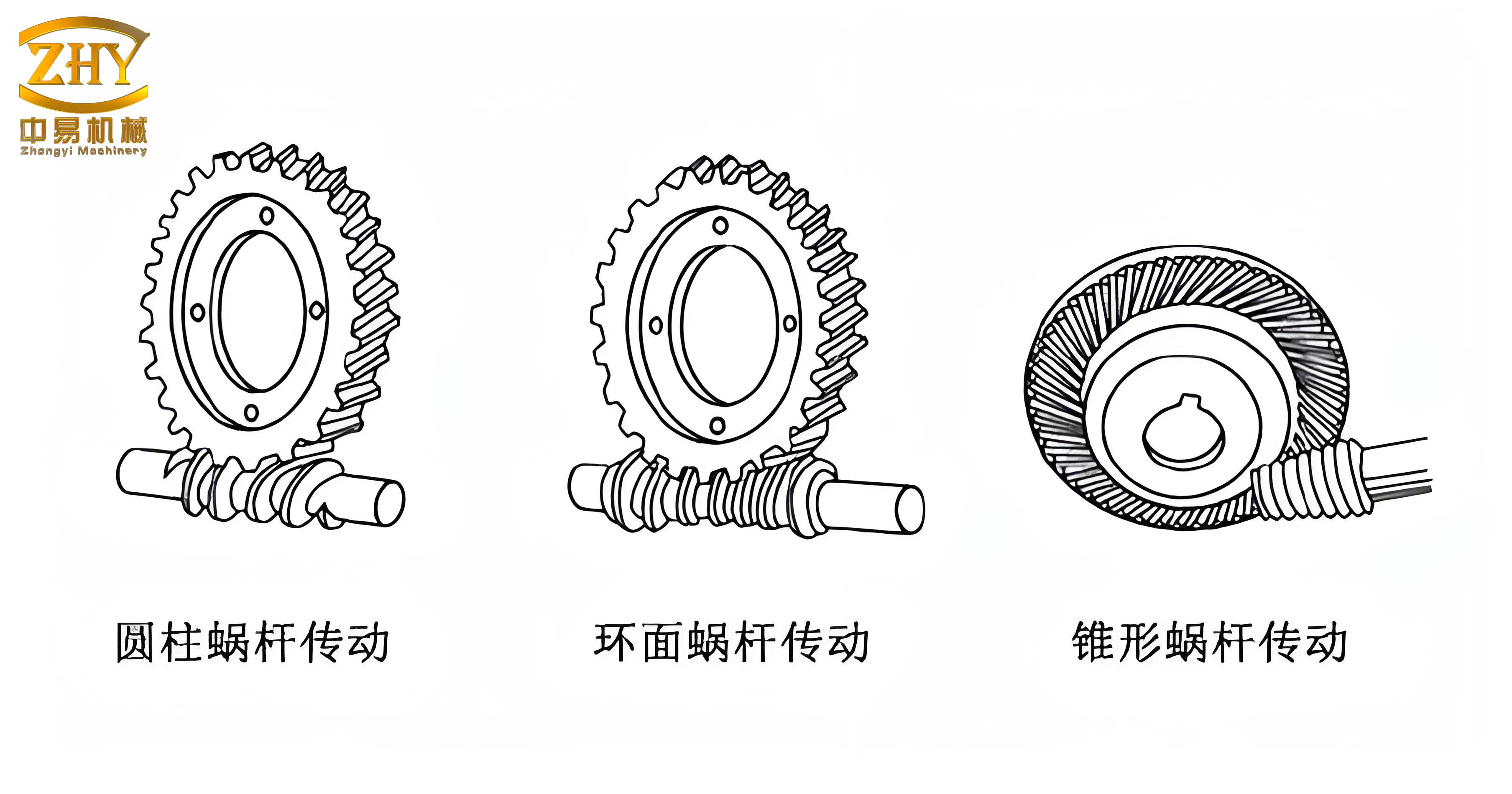
The fundamental premise of reliability engineering applied to screw gears is the recognition that both the stress acting on the gear teeth and the material’s strength are not fixed values but random variables following specific statistical distributions. The most common failure modes for screw gears—particularly for the worm wheel made of softer material like bronze—are pitting (surface contact fatigue) and tooth breakage (bending fatigue). The probability of failure is determined by the interference area between the probability density functions (PDFs) of stress and strength. A reliable design ensures this interference is acceptably small, corresponding to a high probability that strength exceeds stress throughout the component’s service life.
For this study, we assume both stress and strength follow the log-normal distribution. This distribution is particularly suitable for mechanical properties and stress responses as it precludes negative values and often provides a good fit for fatigue data. The reliability index or safety margin is then derived from the properties of these distributions. If \( S \) represents strength and \( \sigma \) represents stress, both log-normally distributed, the reliability \( R \) is defined as \( P(S > \sigma) \). The reliability coefficient \( Z_R \) can be calculated using the following relationship derived from the interference theory:
$$
Z_R = \frac{\ln(\bar{S}/\bar{\sigma})}{\sqrt{C_S^2 + C_{\sigma}^2}}
$$
where \( \bar{S} \) and \( \bar{\sigma} \) are the mean values of strength and stress, respectively, and \( C_S \) and \( C_{\sigma} \) are their coefficients of variation (standard deviation divided by the mean). The reliability \( R \) is directly linked to \( Z_R \) via the standard normal cumulative distribution function \( \Phi \): \( R = \Phi(Z_R) \). This formulation is central to establishing our probabilistic constraints.
Mathematical Modeling for Reliability-Based Optimization
The objective of the optimization is to minimize the total volume of the screw gear pair (worm and worm wheel). This objective directly correlates with material cost and overall system compactness. The primary design variables that govern the geometry and size of screw gears are:
- \( x_1 = Z_1 \): Number of threads/starts on the worm.
- \( x_2 = q \): Diameter quotient of the worm (\( q = d_1 / m \), where \( d_1 \) is the worm pitch diameter).
- \( x_3 = m \): Axial module of the gear set.
Given a fixed gear ratio \( \mu \), the number of teeth on the worm wheel is \( Z_2 = \mu Z_1 \). The vector of design variables is thus \( \mathbf{X} = [x_1, x_2, x_3]^T = [Z_1, q, m]^T \).
Objective Function: Volume Minimization
The total volume \( V_{total} \) is approximated as the sum of the volumes of the worm’s threaded section and the worm wheel’s rim. The objective function is formulated as:
$$
\begin{aligned}
\min f(\mathbf{X}) = & 0.78539 \left[ B_2 (m Z_2)^2 + L’ m^2 q^2 \right. \\
& \left. + m^2 (q – 2.4)^2 (0.9 m Z_2 – L’) \right]
\end{aligned}
$$
where:
\( B_2 \) is the face width of the worm wheel, calculated as \( B_2 \approx m[\sin(50^\circ)(q+2) – 0.5] + 0.8m \).
\( L’ \) is the length of the worm’s threaded portion, \( L’ = m(12.5 + 0.09Z_2) + 25 \).
The constants 2.4 and 0.9 are derived from standard geometrical relationships for screw gears.
Probabilistic Constraints
The constraints ensure the design meets specified reliability targets for both contact (\( R_H \)) and bending (\( R_F \)) fatigue. We require \( R_H \geq [R_H] \) and \( R_F \geq [R_F] \), where \( [R_H] \) and \( [R_F] \) are the target reliabilities (e.g., 0.99). Using the reliability index formulation, these are transformed into inequality constraints.
1. Contact Fatigue Reliability Constraint:
The mean contact stress \( \bar{\sigma}_H \) on the worm wheel tooth surface is given by:
$$
\bar{\sigma}_H = Z_E \sqrt{\frac{9 K \bar{T}_2}{q m^3 \mu^2 Z_1^2}}
$$
where \( Z_E \) is the elasticity coefficient, \( K \) is the load factor, and \( \bar{T}_2 \) is the mean output torque. Its coefficient of variation \( C_{\sigma_H} \) aggregates the variations of its constituent parameters.
The mean contact fatigue strength \( \bar{S}_H \) accounts for modifying factors (life \( Z_N \), lubricant \( Z_L \), roughness \( Z_R \), velocity \( Z_v \)):
$$
\bar{S}_H = \bar{\sigma}_{Hlim} \cdot Z_N \cdot Z_L \cdot Z_R \cdot Z_v
$$
where \( \bar{\sigma}_{Hlim} \) is the mean nominal contact endurance limit. Its variation \( C_{S_H} \) is similarly aggregated.
The constraint is formulated using the reliability coefficient \( Z_{R_H} \):
$$
g_1(\mathbf{X}) = Z_{[R_H]} – Z_{R_H} \leq 0
$$
where \( Z_{[R_H]} = \Phi^{-1}([R_H]) \) and
$$
Z_{R_H} = \frac{\ln(\bar{S}_H / \bar{\sigma}_H)}{\sqrt{C_{S_H}^2 + C_{\sigma_H}^2}}.
$$
2. Bending Fatigue Reliability Constraint:
A similar approach is taken for bending stress \( \bar{\sigma}_F \) and bending strength \( \bar{S}_F \) (involving factors \( Y_N, Y_\omega, Y_\beta \)). The constraint is:
$$
g_2(\mathbf{X}) = Z_{[R_F]} – Z_{R_F} \leq 0
$$
with
$$
Z_{R_F} = \frac{\ln(\bar{S}_F / \bar{\sigma}_F)}{\sqrt{C_{S_F}^2 + C_{\sigma_F}^2}}.
$$
Deterministic and Geometric Constraints
These ensure practical manufacturability and functionality:
- Worm Start Count: \( 2 \leq Z_1 \leq 4 \).
- Worm Wheel Teeth: \( 30 \leq Z_2 = \mu Z_1 \leq 80 \).
- Module: \( 2 \leq m \leq 18 \) mm (for typical power sizes).
- Diameter Quotient: \( 7 \leq q \leq 20 \).
- Worm Shaft Stiffness: Deflection at the mesh point must be limited to prevent misalignment and edge loading. The constraint is:
$$
y = \frac{F L^3}{48 E J} \leq 0.01 m
$$
where \( F \) is the resultant force on the worm, \( L \approx 0.9 m Z_2 \) is the support span, \( E \) is Young’s modulus, and \( J = \frac{\pi}{64} m^4 (q – 2.4)^4 \) is the area moment of inertia of the worm root diameter.
Numerical Solution Using MATLAB Optimization Toolbox
The formulated RBDO problem is a constrained nonlinear optimization with three variables and multiple linear and nonlinear constraints. The Sequential Quadratic Programming (SQP) algorithm, renowned for its efficiency and robustness in handling such problems, is employed via MATLAB’s `fmincon` function. The solution process involves:
- Coding the objective function `f(X)`.
- Coding a function that returns the values of the nonlinear constraints \( g_1(X), g_2(X), \) and the stiffness constraint \( g_3(X) \).
- Defining linear inequality constraints (for bounds on \( Z_1, Z_2, m, q \)) in matrix form.
- Providing an initial feasible guess \( X_0 \).
- Calling `fmincon` with appropriate syntax: `[x_opt, fval] = fmincon(@objfun, x0, A, b, Aeq, beq, lb, ub, @nonlcon)`.
Case Study: Design of a Drive Mechanism
To demonstrate the methodology, we consider the design of a screw gear set for a drive mechanism with the following specifications:
| Parameter | Symbol | Value |
|---|---|---|
| Output Torque | \( T_2 \) | 4.2e5 N·mm |
| Worm Wheel Speed | \( n_2 \) | 6 rpm |
| Gear Ratio | \( \mu \) | 18 |
| Worm Wheel Material | – | ZCuSn10P1 (Tin Bronze) |
| Nominal Contact Fatigue Limit | \( \sigma_{Hlim} \) | 220 MPa |
| Nominal Bending Fatigue Limit | \( \sigma_{Flim} \) | 56 MPa |
| Target Contact Reliability | \( [R_H] \) | 0.99 (\( Z_{[R_H]} = 2.326 \)) |
| Target Bending Reliability | \( [R_F] \) | 0.99 (\( Z_{[R_F]} = 2.326 \)) |
| Design Life | \( t \) | 8 years |
Statistical parameters for coefficients of variation (e.g., for load, material properties, life factors) are taken from engineering handbooks. After substituting all numerical relationships and constants, the specific optimization problem for this case becomes:
Objective:
Minimize \( f(\mathbf{X}) \) as defined above.
Nonlinear Constraints (Simplified Form):
$$
\begin{aligned}
g_1(\mathbf{X}) & = 2.326 – \left[3.1726 \ln(x_1^2 x_2 x_3^3) – 23.977\right] \leq 0 \\
g_2(\mathbf{X}) & = 2.326 – \left[4.4563 \ln(x_1 x_2 x_3^3) – 23.943\right] \leq 0 \\
g_3(\mathbf{X}) & : \text{Stiffness constraint as defined.}
\end{aligned}
$$
Bounds:
\( 2 \leq x_1 \leq 4 \), \( 7 \leq x_2 \leq 20 \), \( 2 \leq x_3 \leq 18 \), and \( 30 \leq 18x_1 \leq 80 \).
Running the optimization in MATLAB yields the following optimal solution:
| Design Variable | Optimal (Continuous) | Rounded/Discrete Optimal |
|---|---|---|
| Worm Starts, \( Z_1 \) | 2.1622 | 2 |
| Diameter Quotient, \( q \) | 9.1917 | 9 |
| Module, \( m \) (mm) | 4.5270 | 5 |
| Optimal Volume, \( V_{opt} \) (mm³) | 1.1701 × 10⁶ | 1.34 × 10⁶ |
The rounded values represent a practical, manufacturable solution close to the true mathematical optimum, resulting in a total volume of approximately \( 1.34 \times 10^6 \, \text{mm}^3 \).
Comparative Analysis: RBDO vs. Conventional Design
The benefits of the RBDO approach become clear when compared to a conventional design based on deterministic formulas and standard safety factors for the same input parameters. A typical conventional design might yield the following parameters:
| Design Method | \( Z_1 \)** | \( q \)** | \( m \) (mm) | Volume (mm³) |
|---|---|---|---|---|
| Conventional Design | 2 | 10 | 6 | 2.26 × 10⁶ |
| RBDO (This Study) | 2 | 9 | 5 | 1.34 × 10⁶ |
*The volume reduction achieved through RBDO is approximately **40.7%**. This is a significant saving in material, particularly the expensive bronze used for the worm wheel, leading to direct cost reduction and a more compact drive system.
Reliability Performance Over Time
More importantly, the RBDO solution is “right-sized” for the required reliability target over the intended lifespan. The conventional design, while safe, is overly conservative. We can analyze the contact fatigue reliability \( R_H \) over the 8-year design life, accounting for the reduction in the life factor \( K_N \) over time. The results are shown below:
| Service Time (Years) | Life Factor \( K_N \)** | Conventional Design \( Z_{R_H} \) / \( R_H \)** | RBDO Design \( Z_{R_H} \) / \( R_H \)** |
|---|---|---|---|
| 1 | 1.358 | 6.12 / >0.999999 | 4.05 / 0.999974 |
| 3 | 1.184 | 5.25 / 0.999999 | 3.18 / 0.99926 |
| 5 | 1.111 | 4.84 / 0.999993 | 2.77 / 0.9972 |
| 8 | 1.047 | 4.47 / 0.999996 | 2.40 / 0.9918 |
| 10 | 1.018 | 4.29 / 0.99999 | 2.22 / 0.9868 |
This comparison reveals a crucial insight: The conventional design maintains an extraordinarily high reliability (often with multiple “9”s after the decimal) far beyond the required 0.99, indicating substantial over-design. In contrast, the RBDO design gracefully meets the target reliability of 0.9918 at the end of the 8-year design life. It utilizes material optimally without unnecessary excess, embodying the principle of “design for reliability, not for infinite life.”
Discussion and Conclusions
The presented methodology successfully integrates probabilistic reliability analysis with numerical optimization for the design of screw gears. By formulating constraints based on the log-normal stress-strength interference model, the design process explicitly accounts for the inherent uncertainties in loading and material behavior. The use of MATLAB’s Optimization Toolbox, specifically the `fmincon` function with the SQP algorithm, provides an efficient and accessible platform for solving the resulting nonlinear constrained optimization problem.
The case study demonstrates tangible benefits: a reduction in total volume by over 40% compared to a conventional approach, while still satisfying the strict reliability target of 0.99 over the specified service life. This leads to direct savings in material cost, especially for the bronze worm wheel, and contributes to lighter, more efficient mechanical systems.
Key advantages of this RBDO approach for screw gears include:
- Economic Efficiency: Eliminates over-conservatism, optimizing material usage.
- Quantified Risk: Provides a clear, probabilistic measure of safety (reliability) rather than an ambiguous safety factor.
- Systematic Framework: Offers a structured method that can be adapted to different failure modes, distributions, or objective functions (e.g., minimizing cost or weight).
Potential limitations and future work directions include:
- The accuracy of the results depends heavily on the quality of the input statistical data (means and coefficients of variation). More comprehensive data collection for screw gear materials and application loads is always beneficial.
- The model assumes independence between some random variables and uses specific distributions (log-normal). Exploring other distributions (Weibull for fatigue) or employing more advanced techniques like First-Order Reliability Method (FORM) or Monte Carlo Simulation within the optimization loop could be investigated.
- The current objective function focuses on volume. Multi-objective optimization could simultaneously consider volume, efficiency, and manufacturing cost.
In conclusion, the reliability-based optimization design represents a significant advancement over traditional methods for designing screw gears. It bridges the gap between ensuring safe operation and achieving economic design, providing engineers with a powerful, rational tool for developing high-performance, cost-effective, and reliable power transmission systems. The principles and workflow demonstrated here are not limited to screw gears but are widely applicable to a broad spectrum of mechanical component design challenges.